Why the 'where' matters more than the 'best' in Italy
Italy has no national cuisine — it has twenty regional ones, and a cooking class makes sense only when the place teaches the dish the place is famous for. A Roman chef teaching tagliatelle al ragù in Trastevere is technically competent, but you've just taken a class in the wrong city: tagliatelle al ragù was codified in Bologna by the Accademia Italiana della Cucina (the Italian Academy of Cuisine — the body that registers official regional recipes), and the egg-pasta sheet is hand-rolled differently here than anywhere else. The same logic flips: nobody books a class in Bologna to learn how to grill a bistecca alla fiorentina (a thick T-bone steak, 1.2–1.5 kg, 4–5 cm tall, cut from Chianina cattle and grilled rare over hardwood embers — Tuscany's signature meat dish). Place dictates dish. Twenty Slow Food Presidia projects across Italy protect this exact alignment between food, technique and territory. Pick the destination first, the class type second, the chef third.
Where to take a cooking class in Italy: the 12 destinations that actually fit a tourist itinerary
Below is our destination-by-destination map, ordered the way real travellers move through Italy: classic Florence–Rome–Venice loop first, coastal stop next, then northern lakes and southern depths. For each, we name the regional signature, the format that suits the place, a real 2026 price range, and the dish or technique worth learning specifically there. Browse our network of cooking class experiences across Italy for the full national catalogue. Two sibling pieces complement this one without overlapping: our region-by-region selector with school-name picks if you want a shortlist of named providers, and our decision guide on formats, prices and timing if you've already chosen the where and now need to choose the how.
Florence — your first-stop class on the classic Tuscany–Rome–Venice loop
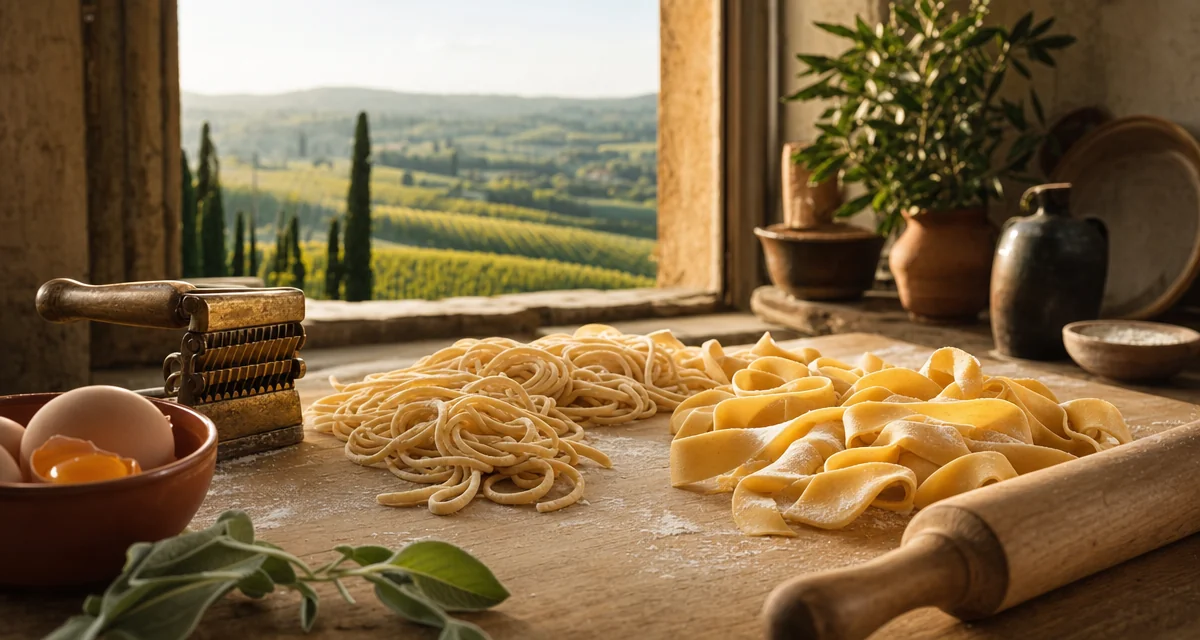
Florence (capoluogo of Tuscany — Italy's Renaissance capital, on the Arno) is the most-booked cooking-class city in Italy for one reason: logistics. You're already here for the Uffizi and the Duomo, English-language classes are everywhere, and the local cuisine — pici (a hand-rolled thick spaghetti from Siena, just flour and water), ribollita (a winter bread-and-bean soup from the Tuscan peasant tradition, refried the next day), bistecca alla fiorentina — is photogenic and accessible. Expect €70–€150 per guest for a 3-hour group class in the historic centre, or €150 per adult / €60 per child for a private at-apartment Pasta Class + Dinner. The dish worth learning here: hand-rolled pici with a wild-boar or duck ragù. The pitfall: avoid the tourist-trap classes near the Duomo packing 15 strangers into a basement kitchen. For deeper Florence options see our Florence cooking-class picks or our beginner-friendly Florence selector. Network: browse private chefs in Florence for at-villa formats.
Bologna — book here if you want a real pasta skill, not a tourist demo
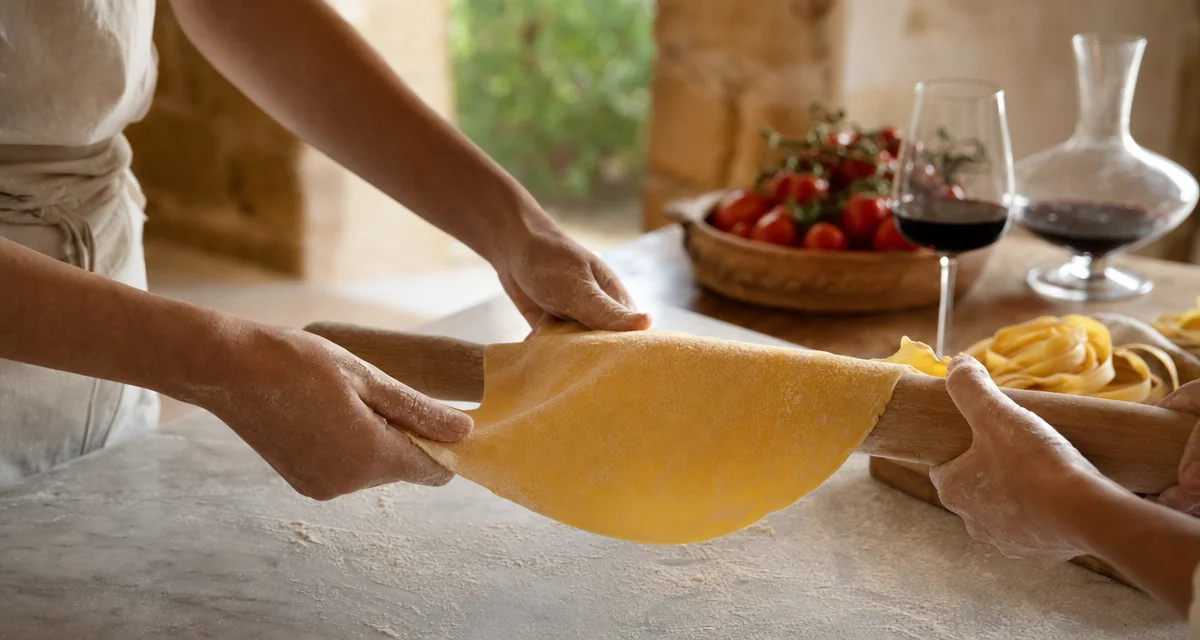
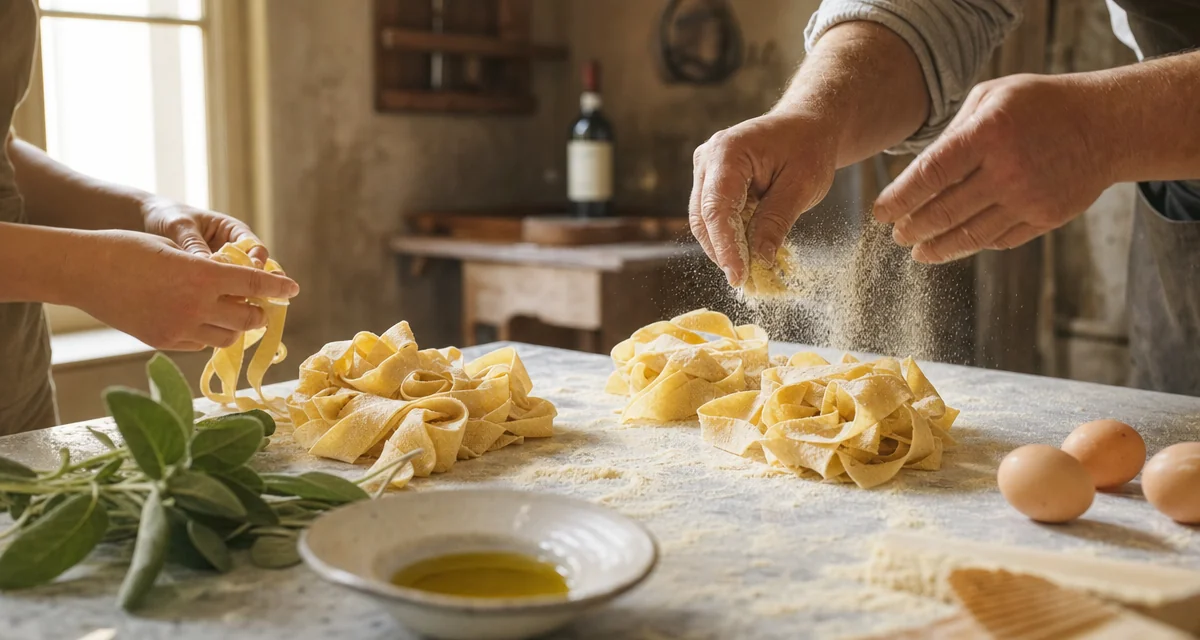
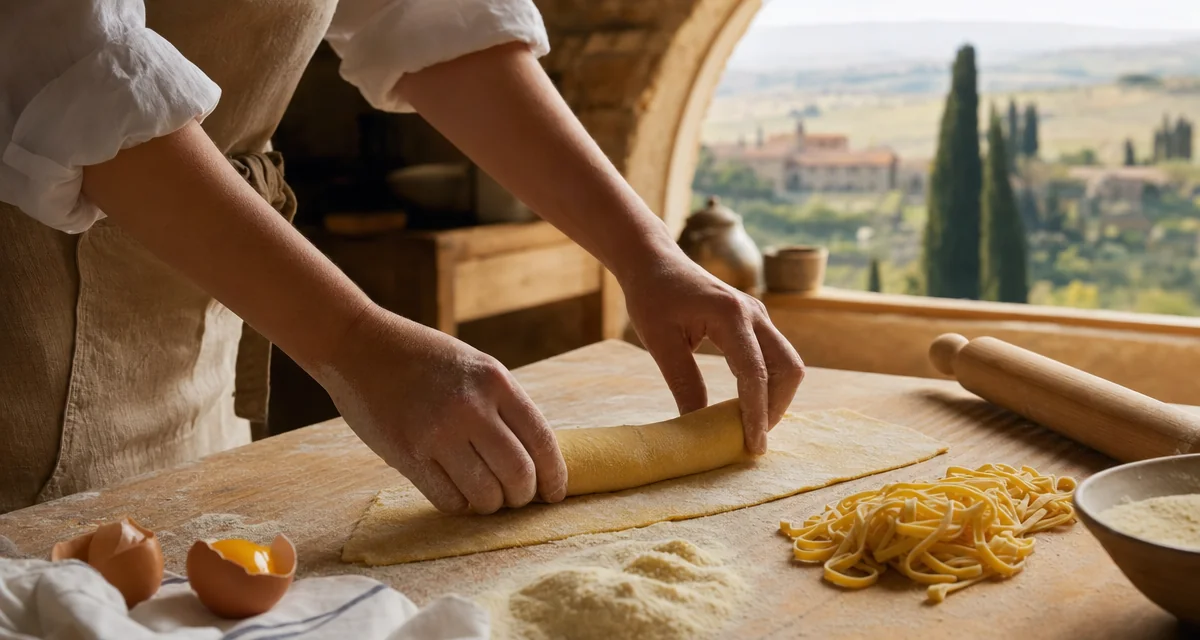
Bologna (capital of Emilia-Romagna, nicknamed La Grassa — 'the fat one' — for its dense food culture) is the country's pasta-technique capital. Tortellini, tagliatelle al ragù, lasagne verdi alla bolognese and tortelloni were either invented or codified here. The class format that fits: 4-hour hands-on private or small-group lesson at a sfoglina's home or a culinary academy, €80–€180 per guest, often two pasta shapes plus the proper Bolognese sauce. The dish worth learning specifically here: tortellini in brodo — the small ring-shaped fresh pasta filled with pork, prosciutto and Parmigiano, hand-folded one at a time, served in capon broth. Bologna is best for: travellers who want a transferable skill (you'll cook tagliatelle at home from memory months later) and who appreciate that the city sits 35 minutes by high-speed train from both Florence and Venice, slotting cleanly into a northern-Italy leg. Pair the class with a Parmigiano-Reggiano dairy visit in Reggio Emilia or a balsamic-vinegar tasting in Modena — both 25 minutes away.
Tuscan countryside (Chianti, Val d'Orcia, Maremma) — best for farm-to-table half-days and at-villa private classes
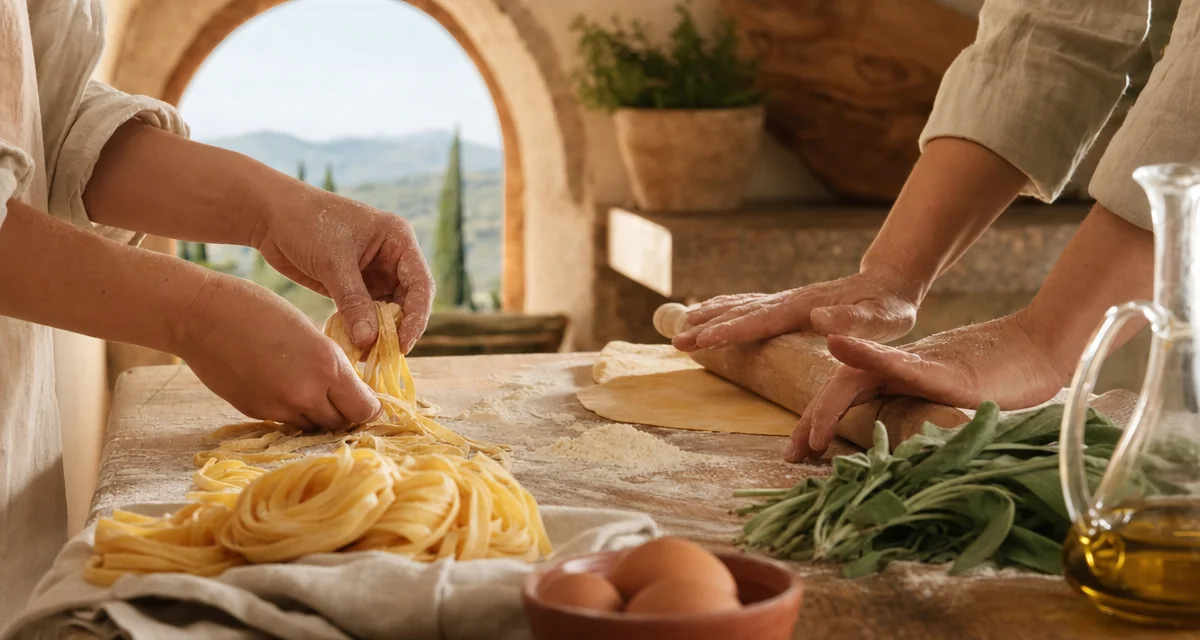
If your trip includes a Tuscan villa or agriturismo stay, this is where the cooking class becomes the highlight rather than a detour. Chianti and the Val d'Orcia (a UNESCO-listed valley in southern Tuscany — the cypress-stippled hillside on every Tuscan postcard, between Montalcino, Pienza and Montepulciano) offer farm-to-table half-days at €170–€220 per guest with Chianti Classico DOCG or Brunello di Montalcino DOCG pairings. The Maremma (Tuscany's wilder coastal-and-inland southwest, less polished than Chianti) suits travellers looking for genuine peasant cuisine without polish. The dish worth learning here: a Tuscan ragù bianco with pappardelle, or panzanella (a summer salad of stale bread, tomato, cucumber, onion and olive oil — the Tuscan answer to gazpacho). At your villa, our most-booked format is the Pasta Class + Dinner: 4–5 hours, two pasta shapes (one long, one short) plus two sauces, antipasti and tiramisù, €150 per adult / €60 per child — chef arrives at the property with all ingredients. Browse private chefs across Tuscany for at-villa availability, or our cooking vacations primer if you want a multi-night format.
Rome — best first-stop class for travellers new to Italian cooking
Rome (Italy's capital, in the Lazio region) is the most beginner-friendly cooking-class destination because the four canonical Roman pastas — cacio e pepe (Pecorino Romano, black pepper, pasta water — three ingredients, the hardest of the four to nail), carbonara (guanciale, egg yolk, Pecorino, pepper — no cream, ever), amatriciana (guanciale, tomato, Pecorino) and gricia — are foundational, universally beloved, and use ingredients you'll find in any supermarket back home. A 3-hour group class in Trastevere or Monti runs €80–€130 per guest; at-apartment private formats with a chef are €150 per adult / €60 per child. The dish worth learning here: real carbonara. The pitfall: many central-Rome classes drift into pizza-making, which Rome is not famous for — pizza belongs to Naples, 70 minutes south by train. Rome works especially well if it's your first or second Italy trip; pair it later in the route with a Bologna or Tuscany class for the contrast. Network: private chefs in Rome.
- Match the dish to the destination. Don't take a tagliatelle class in Rome or a carbonara class in Bologna — book the regional flagship where it was codified.
- Slot the class on day 2 or 3 of the stay in that city, not day 1 (jet-lag) or the final day (packing pressure).
- Verify English fluency of the chef, not just the booking host. The aggregator's English-speaking page doesn't guarantee the instructor is.
- If you have a villa, book the class at the villa. The setting is part of the memory — you've already paid for the property.
- Two classes maximum across a two-week trip. Spread them across regions for contrast; back-to-back classes flatten palate and attention.
Amalfi Coast and Sorrento — go for the lemons and the view, but choose private
The Amalfi Coast (a 50 km stretch of coastline south of Naples in the Campania region — UNESCO-listed, hairpin road, lemon terraces) and Sorrento (its main town, 30 minutes from Pompeii) sell more cooking classes per kilometre than anywhere else in Italy. That density is a warning: many are rushed, staged for cruise-ship day-trippers, with limonata corso tacked on. The format that works here: a private class at your hotel terrace or villa, or a small-group session at a working limoneto (lemon grove). Expect €130–€250 per guest, depending on whether seafood is involved. The dish worth learning: a proper Neapolitan pizza (San Marzano DOP tomatoes, fior di latte mozzarella, 60-second wood-fired bake — UNESCO-listed as Intangible Cultural Heritage since 2017), or scialatielli ai frutti di mare (a short, thick pasta native to the coast with mixed seafood). Skip Capri-island classes — boat logistics swallow half the day. Stay-side bases that work better: Positano, Sorrento, Amalfi, with chef coming to the property.
Naples — for pizza fundamentalists only
Naples (capital of Campania, birthplace of pizza) makes sense as a cooking-class stop only if you're booking pizza-making — and you are seriously committed to the rabbit hole. The Associazione Verace Pizza Napoletana (the consortium that certifies authentic Neapolitan pizza) sets brutal rules: 60–90 second bake at 485°C in a wood-fired oven, only San Marzano DOP tomatoes from the volcanic soil of Mount Vesuvius, only fior di latte or buffalo mozzarella from Campania. A 2–3 hour pizzeria class is €60–€110 per guest. The dish worth learning here: the dough hydration ratio and the 8-hour fermentation, both impossible to teach in an Anglo-Saxon kitchen at home, but useful to witness once. Naples is best as a 1-night stop between Rome and the Amalfi Coast — not a base. For something more relaxed, see our pillar private chefs in Naples for at-apartment dinners that include a pizza lesson without committing to a full half-day. Browse all our Italian cooking-class destinations for alternatives.
Venice and the Veneto — pick this if you want to learn something nobody at home recognises
Venice is the most overlooked cooking-class destination in Italy, partly because tourists associate it with overpriced lunches and partly because Venetian cuisine doesn't travel well — which is exactly the reason to take a class here. The Rialto fish-market visit at 7am with a chef, followed by a 3-hour class, is the format that fits the city. Expect €150–€280 per guest including the market tour. The dishes worth learning: sarde in saor (sardines marinated with sweet-and-sour onions, pine nuts and raisins — a fisherman's preservation dish from the Venetian Republic), risi e bisi (a soupy rice with peas, the historical dish offered to the Doge each spring), and cicchetti (Venetian small bites, the city's bar-counter alternative to a sit-down meal). On the mainland, Padua, Verona and the Prosecco hills around Conegliano (UNESCO-listed) offer agriturismo-based classes — a quieter and cheaper alternative to Venice's island prices. Don't confuse Venetian cuisine with risotto alla milanese (saffron, marrow — that one belongs to Milan).
Sicily and Palermo — Italy's densest regional repertoire in one class
Sicily (Italy's largest island and southernmost region) teaches more in a single class than anywhere else because the cuisine layers Arab, Norman, Spanish and Greek influences in one menu. Palermo (the capital) and Catania (the eastern hub, at the foot of Mount Etna) are the two viable bases. Anna Tasca Lanza, the cooking school inside the Regaleali wine estate in central Sicily, runs week-long stays and 1-day classes. Half-day group classes in Palermo or Taormina run €90–€160; private at-villa classes €180–€280. The dishes worth learning: arancini (deep-fried saffron-rice balls stuffed with ragù or mozzarella — the perfect Sicilian street-food technique), caponata (a sweet-and-sour aubergine relish that pairs with grilled fish), and cannoli siciliani (the iconic ricotta-filled fried-pastry tubes — local ricotta is non-negotiable). Sicily works best as a 5–7 night extension to a Rome-or-Naples trip rather than a 2-day side-quest. Browse private chefs in Palermo for at-villa or at-trullo formats.
Tourists ask me where to take a cooking class in Italy, and I always answer with another question: where are you staying for at least three nights? If it's a villa in Chianti, you don't go anywhere — the class comes to you, and the kitchen you cook in is the same one you'll have breakfast in the next morning. That continuity is the whole point. Chef Lorenzo, Florence-based ambassador of Chef On Demand Tuscany
Milan and Lake Como — best for risotto and a slow Lombard rhythm
Milan (capital of Lombardy, Italy's economic centre) and the lakes (Como, Maggiore, Garda) sit on a different axis from the Florence–Rome loop and deserve their own logic. Milan's class scene leans technical and structured — half-day risotto-and-ossobuco classes at €100–€180 per guest. The dishes worth learning here: risotto alla milanese (saffron-yellow short-grain Carnaroli rice, finished with beef-marrow broth — the technique for the 18-minute mantecatura is the lesson), ossobuco alla milanese (cross-cut veal shank braised with white wine, finished with gremolata — lemon zest, parsley, garlic), and cotoletta alla milanese (a thick bone-in breaded veal cutlet, butter-fried). On Lake Como, classes are at the villas themselves: a private at-villa format makes more sense here than driving 40 minutes from Bellagio to a class venue in town. Browse private chefs in Bellagio and along the lake, or our private chefs in Milan for urban-stay options.
| Destination | Best format | Price per guest (group of 6) | Dish worth learning |
|---|---|---|---|
| Bologna (Emilia-Romagna) | 4-hour sfoglina home or academy class | €80–€180 | Tortellini in brodo |
| Tuscany countryside (Chianti, Val d'Orcia) | Farm-to-table half-day or at-villa Pasta Class + Dinner | €110–€220 (€150/adult at-villa) | Pici with wild-boar ragù |
| Florence | City-centre group or at-apartment private | €70–€150 | Hand-rolled pici |
| Rome | Trastevere group class or at-apartment | €80–€150 | Carbonara |
| Amalfi Coast / Sorrento | Private at-villa or lemon-grove small group | €130–€250 | Scialatielli ai frutti di mare |
| Naples | Wood-fired pizzeria class (2–3h) | €60–€110 | Neapolitan pizza dough |
| Venice / Veneto | Rialto market visit + 3h class | €150–€280 | Sarde in saor |
| Sicily (Palermo, Taormina) | Palermo half-day or at-villa private | €90–€280 | Arancini and caponata |
| Milan / Lake Como | Half-day risotto class or at-villa lake-side | €100–€220 | Risotto alla milanese |
Where to take a cooking class in Italy by itinerary length
Match the class to the shape of your trip, not to social-media noise. A 7-day Italy trip (Florence + Rome + one extra) calls for exactly one class — book it in Florence or the Tuscan countryside, not Rome, because the format options (at-villa, farm-to-table, city school) are widest in Tuscany and the dishes most memorable. A 10-day classic loop (Florence + Rome + Venice + countryside stop) calls for two classes maximum: one at-villa Pasta Class + Dinner in Tuscany, one short half-day in Bologna on the train-day between Florence and Venice. A 14-day trip that adds the Amalfi Coast or Sicily justifies a third class only if it's a private at-villa format on the coast — the lemon-and-seafood lesson is worth it once. A multi-region road trip (Tuscany + Umbria + Lazio + Campania over 2 weeks) belongs to a different category: consider a 3-day cooking holiday in one place (Tuscookany or a Sicilian estate) rather than four scattered classes. For a structured multi-day format, see our 5-day cooking course guide.
Where to take a cooking class in Italy if you're staying in a villa or holiday rental
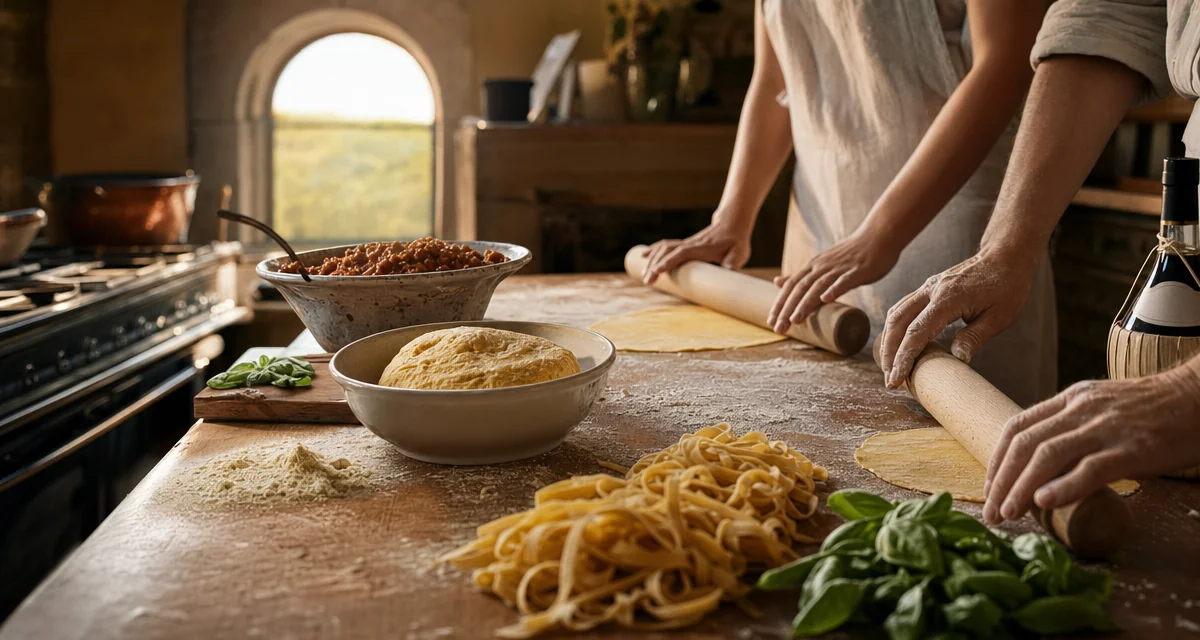
If your itinerary involves a villa, an agriturismo or a holiday-rental apartment for three nights or more, the decision changes entirely: don't go to the class — bring the class to you. Chef On Demand's flagship format for international travellers in Italy is the Pasta Class + Dinner Experience, delivered exclusively at the guest's location. The chef arrives at your villa, apartment or farmhouse with all ingredients and equipment, teaches a 2-hour pasta-making class covering two shapes (one long such as tagliatelle, pappardelle or pici; one short such as orecchiette, farfalle or maltagliati), then cooks a seated dinner of antipasti, the two pastas with their sauces, and homemade tiramisù. Total experience runs 4–5 hours. Prices: €150 per adult, €60 per child, for groups of 4–10 guests in standard regions (Tuscany, Lazio, Campania, Lombardy). The advantages over a cooking-school trip: privacy (only your group at the table), full personalisation of menu and pace, family-friendliness (children can join the class or play in the next room while older relatives sit down to the same dinner), zero transfer logistics (no driving, no parking for 8 people, no rush between two venues), and continuity from class to dinner on the same table. Particularly in rural villa regions — Chianti, Val d'Orcia, the Amalfi Coast, Lake Como — reaching a class venue from the property can mean a 40-minute drive each way for the whole group; the at-villa format eliminates that entirely. Browse our network at the cooking-class hub for Italy.
Why this matters for your Italian holiday
The cooking class is the souvenir nobody else gets — it's the half-day of your Italy trip that ten years later you'll still be retelling. But the half-day pays off only when the destination earns it. A class in the right place teaches you a dish whose name now means something specific (Bologna's tagliatelle al ragù, Tuscany's pici, Naples' Neapolitan pizza, Sicily's caponata), with a technique you can replicate at home from muscle memory. A class in the wrong place is a generic kitchen activity you could have booked anywhere on holiday. The difference is the alignment between region, ingredient and chef. Across our network of private chefs in Italy, the highest guest-satisfaction scores come not from the most expensive bookings but from the ones that fit cleanly into a trip's existing geography — a Pasta Class + Dinner at the Chianti villa you'd already rented, a half-day at a Bologna sfoglina between train legs, a Neapolitan pizza class at the Amalfi terrace where you're already watching the sunset. The chef walks through the door of the place you're already in, brings the ingredients, teaches you something specific, sits you down to dinner, and leaves with the kitchen cleaner than they found it. That's where to take a cooking class in Italy: at the centre of the trip you're already on.