What exactly is a 'cooking course' in Florence?
In Florence the phrase 'cooking course' covers everything from a 3-hour drop-in workshop to a 12-week residential programme at Florence Culinary Arts School (FCAS) or similar academies. For an international traveller on a one-to-two-week holiday, only three formats are realistically bookable: the short group class (half-day or full-day, usually fresh pasta or Tuscan classics), the multi-day intensive (3–7 consecutive afternoons covering pasta, risotto, sauces, regional dishes, sometimes a market visit), and the private in-home experience (a single bundled session held at the property you've rented). Florence — a city of 367,000 in the heart of Tuscany, UNESCO-listed for its Renaissance centre — concentrates the highest density of cooking schools per square kilometre in Italy, so options are abundant; the difficult part is matching format to holiday rhythm. A retired couple staying ten nights in Fiesole may want a 5-day intensive. A family of eight in a Chianti villa for one week almost always wants a single high-quality session at the villa, not five hotel-to-school transfers.
How much does a cooking course in Florence cost in 2026?
As of May 2026, Florence cooking-course prices cluster into four bands. Half-day group classes (3–4 hours, 6–12 participants, set menu of 2–3 dishes) run €60–€90 per person at established schools and €31–€55 on aggregator platforms like Viator. Full-day immersions (6–7 hours, market visit + 4-course meal) sit at €120–€180 per person. Multi-day intensives (3–5 consecutive days, professional-style curriculum) range from €600 for a 3-day amateur course to €1,400–€2,200 for a 5-day intensive at FCAS or Apicius. In-villa private experiences on the Chef On Demand platform — our Pasta Class + Dinner bundle — are priced at €150 per adult and €60 per child, all-inclusive: the chef brings ingredients and equipment, teaches the class, cooks dinner and cleans up. At a typical group size of 6 adults that's €900 total for a 4–5 hour private experience including a full seated dinner; the equivalent at a school is one €70 class (food only, no dinner) per person — €420 with cooking ending around 5pm and no evening meal.
When clients book a cooking class at a school in town, they get the recipe. When they book Pasta Class + Dinner at the villa, they get the recipe, the dinner, and the holiday — they don't lose an afternoon to logistics. Chef Lorenzo, Florence-based ambassador of Chef On Demand Tuscany
School cooking course vs in-villa Pasta Class + Dinner: which fits your trip?
The right answer depends on three things: group size, accommodation type, and how you've planned the rest of the week. A solo traveller in a city-centre apartment for three nights is genuinely best served by a school class — you'll meet other travellers and the venue is around the corner. A family or friend group of 4–10 staying in a villa in Chianti or the Val d'Orcia (a UNESCO-listed valley in southern Tuscany — the cypress-stippled hillside on every Tuscan postcard, which produces pecorino di Pienza DOP, Brunello di Montalcino DOCG and Vino Nobile di Montepulciano DOCG within a 30 km radius) almost always benefits from browsing our Tuscan chef network instead: the maths simply works out. Six adults paying €70 each at a school = €420 for a 3-hour class with strangers and no dinner. The same group booking the Pasta Class + Dinner with our chef in Florence, Greve in Chianti or Fiesole = €900 total for a 4–5 hour private experience with two pasta shapes, antipasti, two sauces, tiramisù, and dinner served on the villa's own terrace. Cost-per-memory: not comparable.
- Count your group honestly — under 4 people, schools usually win on social value; from 4 upwards, in-villa becomes more cost-effective and more personal.
- Map your accommodation distance — anything beyond 25 km from Santa Maria del Fiore (the Duomo) makes the transfer tax brutal. Villas in southern Chianti, Val di Pesa or Mugello are de facto in-villa-only territory.
- Decide whether you want dinner or just a class — schools deliver the cooking experience and a tasting; only the bundled in-villa format gives you the full seated dinner as part of the booking.
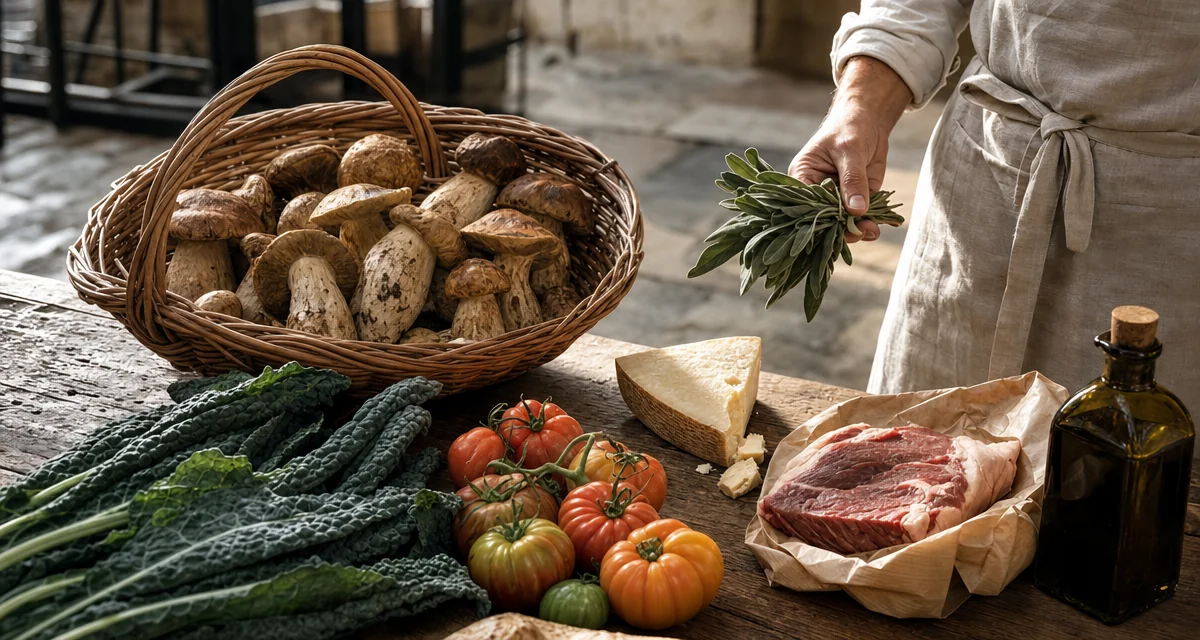
- Choose the cuisine focus — pasta-making (the most-booked format), Tuscan classics (ribollita, panzanella, bistecca), wine-pairing dinners, or a market-tour-and-cook combo.
- Confirm dietary requirements in writing 48–72 hours before — schools work with fixed menus; private chefs build the menu around your party's needs.
| Format | Duration | What you get | Total cost (6 adults) | Best for |
|---|---|---|---|---|
| Half-day group class (school) | 3–4 hours | 2–3 dishes hands-on, communal tasting, no dinner | €360–€540 | Solo travellers, couples, 3-night city stays |
| Full-day immersion (school) | 6–7 hours | Market visit + 4 dishes + 4-course tasting meal | €720–€1,080 | Foodies on a 1-day deep-dive |
| 3–5 day intensive (academy) | 15–30 hours total | Professional curriculum, multiple cuisines, certificate | €3,600–€8,400 | Serious amateurs on a dedicated culinary trip |
| In-villa Pasta Class + Dinner (Chef On Demand) | 4–5 hours | 2 pasta shapes + 2 sauces + antipasti + tiramisù + full seated dinner at your villa | €900 flat | Families and groups of 4–10 in a villa or apartment |
What does the Chef On Demand Pasta Class + Dinner actually include?
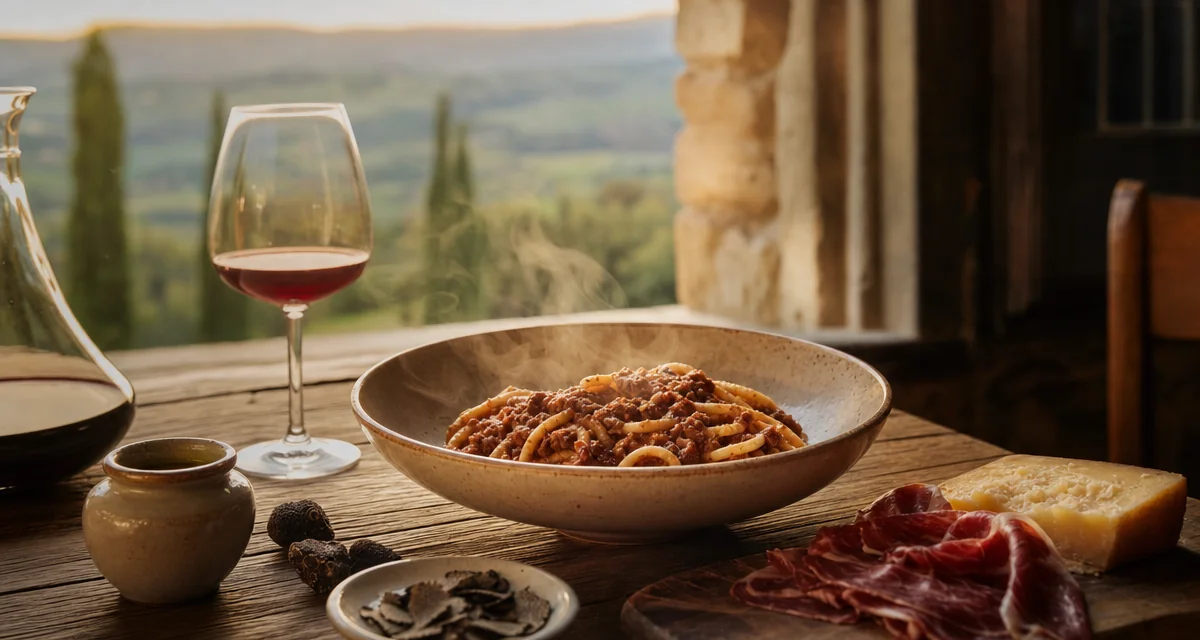
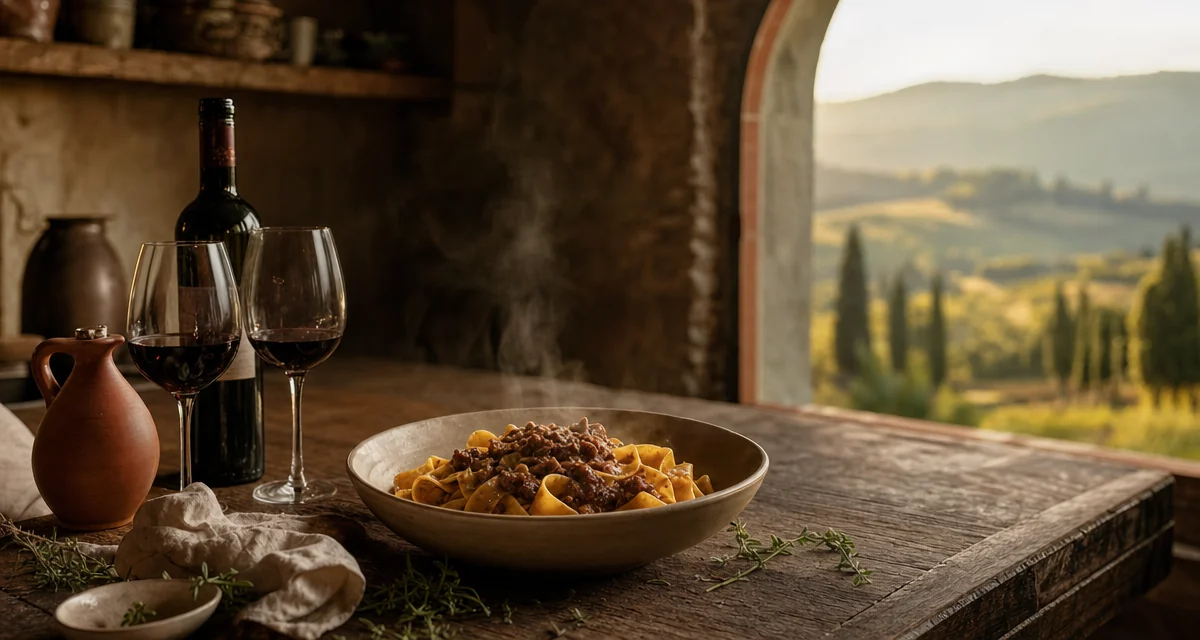
The Pasta Class + Dinner is a single bundled booking delivered exclusively at the property you're staying in — your villa, apartment or holiday rental in Florence or anywhere in Tuscany. The chef arrives with all ingredients, dough boards, rolling pins, pasta cutters and pots; you provide the kitchen and the dining table. The structure is fixed: a 2-hour hands-on cooking class (typically 2pm–4pm) during which the chef teaches your group two fresh-pasta shapes — one long and one short, for example pappardelle (a wide, flat egg-pasta ribbon, 2–3 cm across, traditionally paired with rich game ragù in Tuscany) and pici (a hand-rolled, thick fresh pasta from the hills around Siena, similar to a fat spaghetti and usually dressed with garlic-breadcrumb sauce or wild-boar ragù). While the pasta rests, the chef prepares two sauces — typically a meat ragù for the long pasta and a vegetable, tomato or seafood sauce for the short — a selection of antipasti (2–3 regional small plates such as crostini neri, toasted Tuscan bread topped with a paste of chicken livers, capers and anchovies — the signature Tuscan starter), and a homemade tiramisù for dessert. Then the seated dinner: same kitchen, same table, the pasta your group shaped, served course by course, plated by the chef. Cleanup included.
When should you book — and what's the best time of year?
Off-season (November to March, excluding Christmas and New Year), schools and private chefs in Florence can usually take a booking with 3–7 days' notice. From April through October, demand spikes hard: book at least 14–21 days ahead for June, July, August and September, and 30+ days for the second week of September during the Florentine wine harvest (vendemmia — the annual grape harvest that takes over Tuscan farms from early September to mid-October, when villas, country stays and local chefs are simultaneously at peak demand). The sweet spot for a cooking course in Florence is mid-September to late October: temperatures drop to a comfortable 18–24°C, tomatoes and basil are at their seasonal best, white truffle from the Tuscan hills (San Miniato is the white-truffle capital, with its festival running each November) starts appearing on menus, and new-vintage Chianti Classico DOCG — a 100% or near-100% Sangiovese red from the gallo-nero territory between Florence and Siena, aged at least 12 months, recognisable by the black-rooster seal on the bottleneck — arrives in wine cellars. Avoid Ferragosto week in mid-August (when many independent businesses close) and 24 December–1 January (chef availability drops sharply, surcharges apply).
Why this matters for your Florence holiday
A cooking course in Florence is the rare souvenir you can take home: muscle memory for kneading dough, the smell of a slow-simmered ragù, the moment your kids realised pasta isn't made in a factory. Whether you book a school class because you're a solo traveller in a city-centre apartment, or you book the in-villa Pasta Class + Dinner because you've rented a farmhouse with seven other people, the goal is the same — bring Tuscany home in your hands, not just your camera roll. Chef On Demand was built specifically for the second case: international travellers in villas, apartments and rural farmhouses who don't want a one-size-fits-all class with strangers. Our verified network of 12+ chefs spans the region — many trained in Michelin-starred kitchens, several featured in Gambero Rosso–rated restaurants or on MasterChef and Top Chef Italia — and you can book a Tuscany private chef experience from a list of available profiles for your dates, or browse private chef experiences across Italy and the UAE. For a dinner-only evening without the lesson, the Tuscany private chef page lists every available profile. The villa is already the setting you paid for. Let the chef bring the lesson, the dinner, and the cleanup to the doorstep. You stay where you are; Tuscany comes to your table.