What makes a cooking class in Florence actually 'the best'?
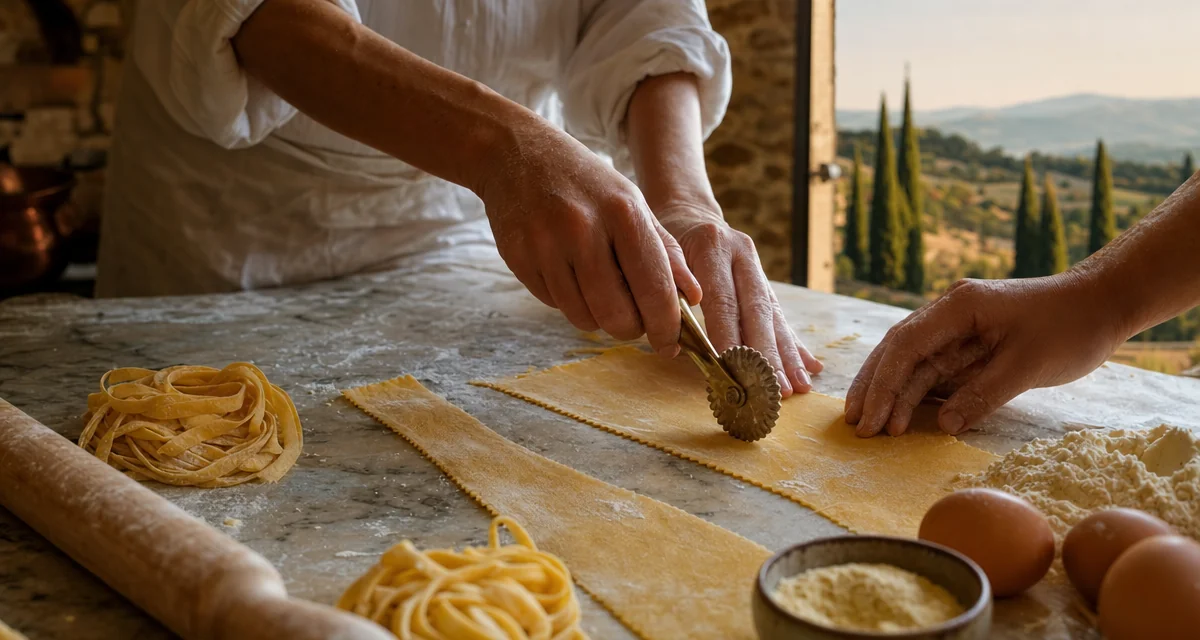
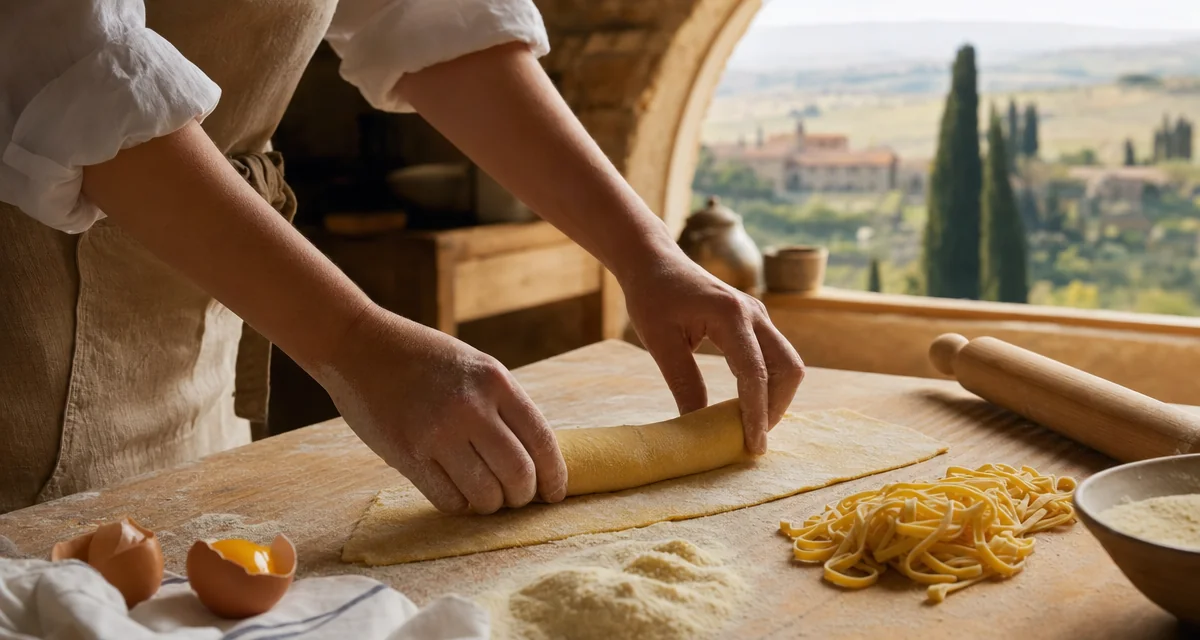
A great Florence cooking class delivers four things: a hands-on syllabus you can recreate at home, a small enough group that the chef actually corrects your technique, a setting that feels like Italy rather than a classroom, and a real meal at the end — not a tasting of what you made. Most 2-hour walk-in classes on aggregators check one or two of these boxes; the top-rated experiences check all four. Group size is the single strongest predictor of satisfaction: classes capped at 8 guests routinely score 4.8–5.0 on Tripadvisor, while classes of 12–16 average 4.2–4.5. The second predictor is content density: a real class teaches at minimum two pasta shapes — one long (tagliatelle, pappardelle or pici, the hand-rolled Sienese 'shoelaces') and one short (orecchiette, farfalle or maltagliati) — plus the sauces that pair with each. Anything that promises 'pasta in 90 minutes' is a demonstration with a roll of dough, not a class. A school in the historical centre lets you walk from your hotel; a class at your villa lets the experience become the evening itself.
How much do the best cooking classes in Florence cost in 2026?
Expect €70–€95 per person for a group class at a Florence cooking school (8–14 guests, 3 hours, pasta + tiramisù, house wine included), €140–€220 per person for a private school class (your group only, same kitchen, 3–4 hours), and around €150 per adult for the in-villa Pasta Class + Dinner format we operate — a 4–5 hour bundled experience for your group only, at your rental property, with one chef shopping, teaching, cooking and cleaning up. Children pay roughly €60 per child in the in-villa format. Half-day market tour + cooking class combinations sit between, typically €110–€150 per adult, with the chef meeting you at Mercato Centrale or Sant'Ambrogio (Florence's two main food markets — the first a 19th-century cast-iron hall in San Lorenzo, the second the locals' market east of the centre). Wine pairings add €15–€30 per person. Christmas, New Year's Eve and Easter weeks carry a 35% premium across most operators.
School class vs in-villa Pasta Class + Dinner: which to choose?
A school class is right when you're staying at a hotel in the historical centre, travelling solo or as a couple, want to meet other travellers, and need a 2–3 hour experience that finishes by 5pm so you can do something else for dinner. The in-villa Florence Pasta Class + Dinner we coordinate is right when you've rented a villa or apartment in Florence, Fiesole, Greve in Chianti or the surrounding Tuscan countryside, your group is 4–10 people, and you want the cooking to be the evening itself. The structural difference matters: at a school you cook, eat at a communal counter, then leave; in-villa, the chef arrives at 2pm, you knead and roll pasta for two hours, the chef prepares the sauces and antipasti while the dough rests, and at 7pm your group sits down to dinner on the terrace — antipasti, two pasta courses, tiramisù. The chef cleans your kitchen before leaving. One booking, one chef, one location; no transfer, no shared cohort, no rigid 'next class waiting'.
The single biggest upgrade you can make to a Florence cooking class is removing the room full of strangers. The moment the class becomes only your group, in the kitchen of the house you've rented, the chef can adapt the menu in real time — your daughter needs a coeliac-safe pasta, your father-in-law wants pici instead of tagliatelle, your sister wants to learn the tiramisù from the start. None of that happens with twelve people on the schedule. Chef Lorenzo, Florence-based ambassador of Chef On Demand Tuscany
What does the in-villa Pasta Class + Dinner format actually include?
The bundled experience runs 4–5 hours and is built around four phases, all at the villa or apartment you've rented in or around Florence. Phase one is the pasta-making class, typically 2pm to 4pm: the chef arrives with semolina, '00' flour, fresh eggs and all the tools, and your group learns two fresh pasta shapes — one long (pappardelle, tagliatelle, or pici, the hand-rolled Sienese specialty) and one short (orecchiette, farfalle or maltagliati, the irregular 'badly-cut' Tuscan offcuts). Phase two: while the pasta rests, the chef prepares two sauces — usually a slow-cooked ragù paired with the long shape and a seasonal vegetable or seafood condiment for the short — plus Tuscan antipasti (crostini neri with chicken liver pâté, finocchiona salami, panzanella in summer) and a homemade tiramisù. Phase three is the seated dinner on your terrace or in your dining room: antipasti, the two pasta courses you shaped, dessert. Phase four is cleanup — kitchen left as the chef found it. Wine pairings are optional: drink what you've already bought at a local enoteca (wine bar / shop), or ask the chef to bring a Chianti Classico DOCG and a glass of Vin Santo (traditional Tuscan dessert wine, served with the tiramisù or with cantucci almond biscotti).
- Confirm hands-on in writing — you knead, roll, shape your own pasta from raw flour, not pre-made dough
- Confirm the two-shape rule: a serious class teaches one long shape AND one short shape, not 'pasta' as a vague single skill
- Verify the group cap — under 10 guests is the line between a real class and a tourist activity
- Ask whether the experience finishes with a proper seated dinner or a quick standing tasting; the seated dinner is what makes a cooking class memorable
- If you're staying in a villa more than 20 minutes from central Florence, price in the in-villa format — the transfer cost for 8 people via taxi is €40–€60 each way
- Check dietary accommodation policy — small-group and private formats handle coeliac diets, vegetarian menus and nut allergies far better than 12-person cohorts
| Format | Group size | Duration | Price per adult | Best for |
|---|---|---|---|---|
| School group class | 8–14 strangers | 2.5–3 h | €70–€95 | Solo travellers, couples in a central hotel, social mixing |
| School private class | Your group only (4–10) | 3–4 h | €140–€220 | Families and groups staying in central Florence |
| Market tour + class | 4–10 | 4–5 h | €110–€150 | Foodies who want to shop at Mercato Centrale first |
| In-villa Pasta Class + Dinner | Your group only (4–12) | 4–5 h | €150 per adult | Villa renters, families with mixed ages, evening event |
Where are the best cooking classes in Florence located?
The historical centre concentrates the highest density of cooking schools — most within a 10-minute walk of Santa Maria del Fiore (the Duomo). The Oltrarno, the artisan district on the south bank of the Arno, hosts smaller more atmospheric kitchens in restored palazzos. Sant'Ambrogio, the district east of the centre around the eponymous market, has become the heart of contemporary Florentine food culture and several of the city's most-reviewed classes operate from converted workshops there. For travellers staying outside the city — in Fiesole, Bagno a Ripoli, or the Chianti hills towards Greve in Chianti, Siena (see also the Siena cooking class and Siena pici masterclass dedicated pages) (see also the Siena cooking class and Siena pici masterclass dedicated pages) (see also the Siena cooking class and Siena pici masterclass dedicated pages) and San Gimignano — the in-villa format is almost always the better answer: chefs from our Tuscan network travel to villas across the region, with a 30–45 minute drive from Florence factored into the quote. The villa setting also upgrades the dinner phase: a long oak table on a terrace overlooking cypress trees and vineyards beats a cooking-school dining counter, and the rural location lets the chef cook outdoors on a wood-fired grill if your property has one (typical for Chianti farmhouses).
How do I book the right Florence cooking class for my trip?
Start from where you're sleeping. If you're in a central hotel, shortlist 2–3 school-based classes on TripAdvisor or GetYourGuide filtered by 'small group' and 4.8+ rating, then check the menu page on the operator's own site to verify the two-shape rule and hands-on policy. If you're renting a villa or apartment, skip the aggregators and request a quote from our Florence cooking class concierge: tell us the property address, dates, group size (adults plus children), any dietary requirements, and we send back a personalised proposal — typically within 24 hours, from a chef who lives within driving distance. Average booking lead time across our Tuscan network is 7–14 days for peak season (June through September); 3–5 days off-season. Christmas, New Year's Eve and Easter weeks book out 4–6 weeks ahead. For groups of 8 or more, book 3 weeks in advance — the best Florence-based chefs (many of whom come from Michelin-starred kitchens, Gambero Rosso–rated restaurants, MasterChef and Top Chef Italia) get reserved early. Chef On Demand operates a verified network of 12+ private chefs across Tuscany, with eight based in or around Florence.
Why this matters for your Italian holiday
A cooking class in Florence isn't really about pasta. The pasta is the souvenir — the dough on your hands, the photo of you holding a tray of tagliatelle. What you're actually buying is an evening in Tuscany that doesn't feel rented: a chef who knows the markets, the ragù your grandmother never quite got right, the difference between Chianti Classico and Brunello di Montalcino (the 100% Sangiovese benchmark from the Val d'Orcia hills), the technique behind a tiramisù that doesn't separate by morning. The 'best' Florence cooking class is the one that fits the way you're already travelling — your hotel or your villa, your group size, your evening or your afternoon. Our job is to match you with a chef whose kitchen would have been the right answer anyway: one of the eight chefs in our private chef network across Italy who'll come to your villa with a wooden pasta board under one arm. And if what you want is the Tuscan dinner without the lesson, browse every private chef in Tuscany available for your dates. With a 4.7/5 Trustpilot rating based on 800+ guests served since 2025, the cooking class people remember is the one where the chef knew their name.