What counts as the 'best' cooking class in Italy in 2026?
The best cooking class in Italy is the one that matches your travel party and the property you're staying in — not the one with the most TripAdvisor reviews. Three variables decide it: regional cuisine, format (group school vs private at-villa), and what you want to walk away with. Bologna teaches the most transferable pasta technique — home of tortellini in brodo (small ring-shaped fresh pasta filled with pork, prosciutto and Parmigiano, served in capon broth) and tagliatelle al ragù, ribbon pasta with the meat sauce the city codified. Tuscany teaches rustic pici (a hand-rolled thick spaghetti from Siena, just flour and water) and bistecca alla fiorentina, a thick T-bone cut from Chianina cattle, grilled rare over hardwood embers. Amalfi teaches lemon-forward seafood and pizza. Sicily teaches the densest regional repertoire in Italy — Arab, Norman and Spanish influences in one menu. Pick the region first, the format second.
Best cooking classes in Italy by region (the honest selector)
Below is our region-by-region pick, scored on three things: how distinctive the regional cuisine is, how reliable the established schools are, and how well the region accommodates a private at-villa format. Tuscany, Bologna and Sicily are the three we recommend most often. Lake Como villas pair perfectly with a private chef format — reaching a class from a lakeside property can mean a 40-minute drive each way. Browse our cooking class experiences across Italy for the full national catalogue, or our network of private chefs across Tuscany if you're locked into a farmhouse stay there.
Best cooking classes in Bologna — the pasta technique capital
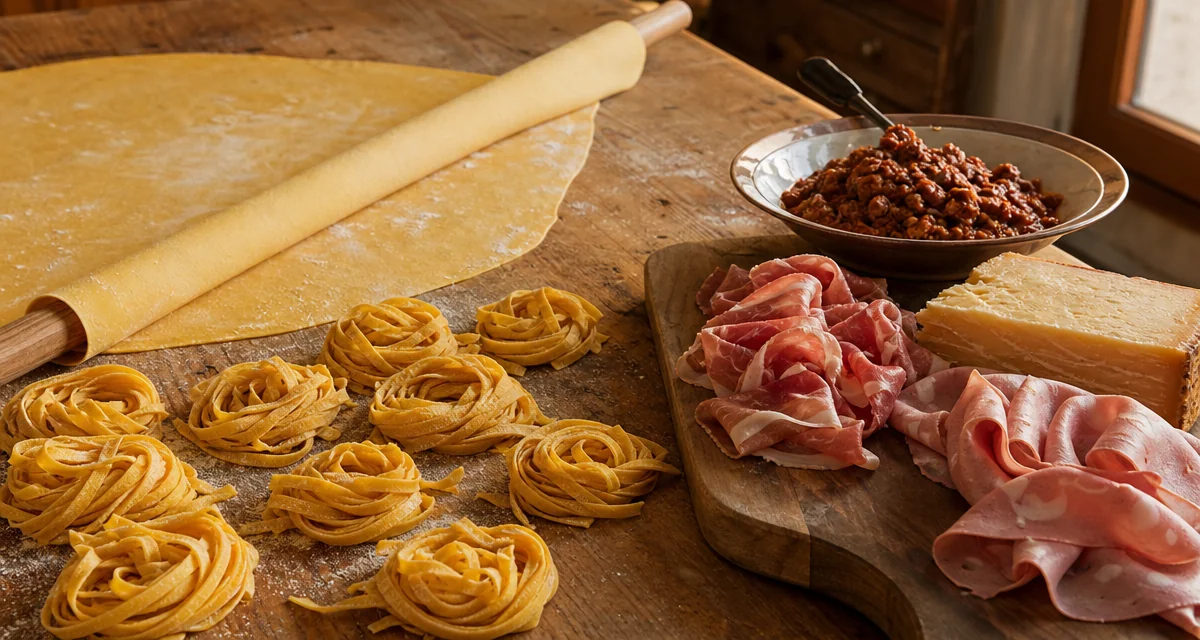
Bologna is Italy's pasta city, full stop. Established half-day group classes (4 hours, 6–12 students, around €95–€140 per guest) teach you to laminate pasta dough by hand, shape tortellini and run a Bolognese ragù — a slow-cooked sauce of beef, pork, soffritto, tomato and milk that bears no resemblance to the cream-laden 'bolognese' served abroad. The best schools start with a 30-minute walk through Mercato delle Erbe or Mercato di Mezzo. For groups of 8+ we serve Emilia-Romagna with at-villa classes in agriturismi around Modena and Parma; smaller parties should pick a city-school class here.
Best cooking classes in Tuscany — farmhouse immersions and at-villa experiences
Tuscany is where format matters most. A half-day class at an established Florence school (market visit to Mercato Centrale, around €140–€220 per guest) is excellent if you're city-based — see our deep dives on best cooking classes in Florence and cooking courses in Florence. But if you're staying in a Chianti farmhouse, a Val d'Orcia villa or a Maremma agriturismo (a working farm with rooms and a kitchen), driving 45 minutes each way is a wasted day. Our most-booked Tuscan experience is the at-home Pasta Class + Dinner: 4–5 hours in your villa kitchen, two pasta shapes, two sauces, antipasti and tiramisù — around €110–€135 per guest at the Taste of Italy tier with 6 adults. Pair with Chianti Classico DOCG (Sangiovese red with the gallo nero black rooster seal) or Brunello di Montalcino DOCG (100% Sangiovese, aged at least 5 years). Cities: Florence, Siena, Greve in Chianti, Montalcino, Pienza.
Best cooking classes in Rome — carbonara, cacio e pepe and market-driven menus
Rome's signature classes teach the four Roman pastas — carbonara (guanciale, egg yolk, Pecorino Romano, black pepper — no cream), cacio e pepe (just Pecorino and black pepper, emulsified with pasta water), amatriciana (tomato, guanciale, Pecorino) and gricia (the white version of amatriciana). Group classes in central palazzi cost €110–€160 per guest for a 3-hour hands-on session; serious half-day classes with a Campo de' Fiori or Testaccio market visit run €170–€220. Rome is one of the few cities where the city-school format is worth doing in town — the historic-palazzo settings are part of the experience. Private chef at the apartment is the better pick for groups of 6+ in Trastevere or Monti rentals.
Best cooking classes in Amalfi, Sorrento and Positano — where private at-villa beats the school
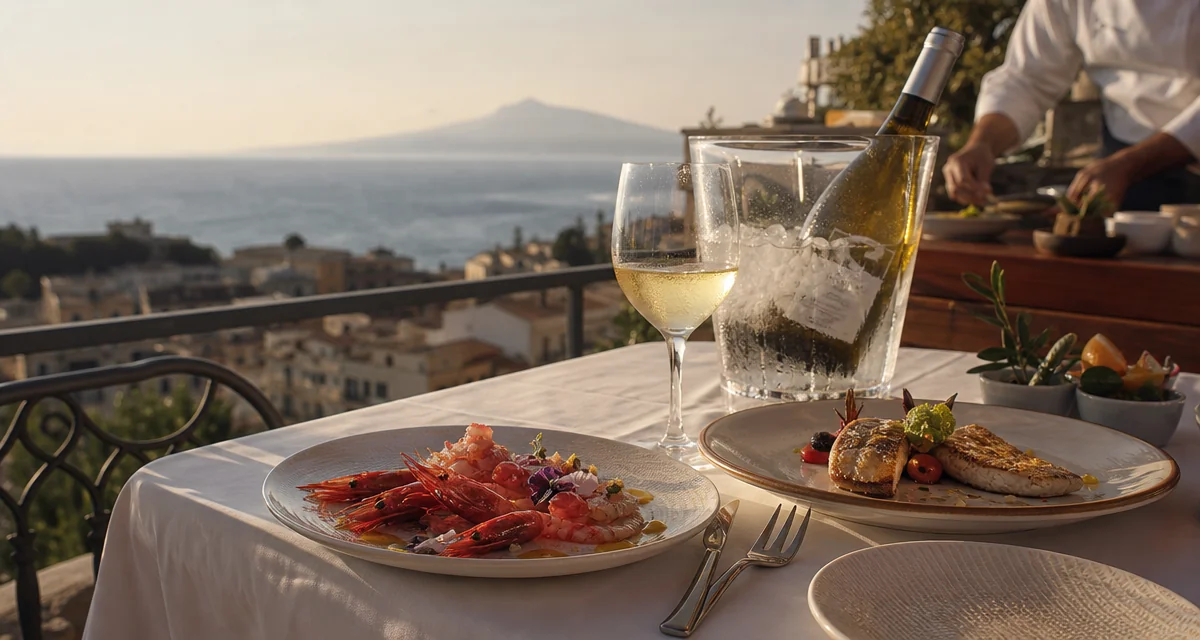
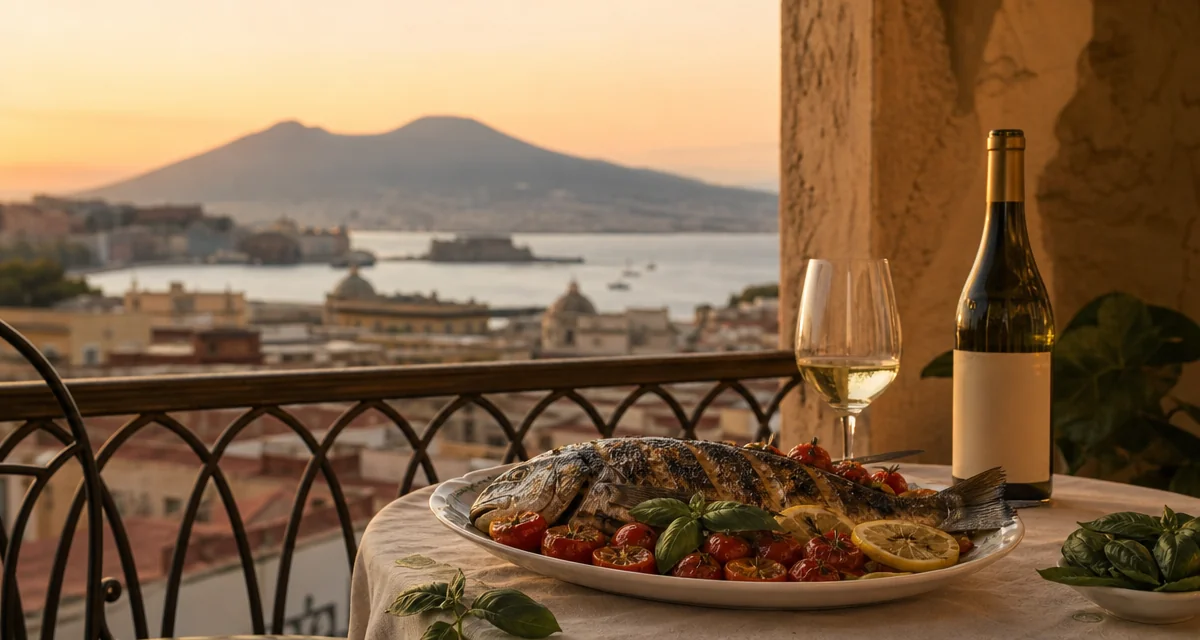
The Amalfi Coast has the most uneven cooking-class market in Italy: a great class is transcendent (sea-view terrace, lemon ricotta cake, fresh seafood); a bad one feels like a cruise-ship demo. The cuisine is exceptional — scialatielli ai frutti di mare (a short, thick fresh pasta with mixed shellfish), spaghetti alle vongole with Sorrento lemons, limoncello from Sfusato Amalfitano lemons, and pizza from neighbouring Naples (UNESCO-recognised intangible heritage). Group classes in Sorrento and Positano range €120–€250 per guest. But in a villa in Positano, on the Amalfi Coast or in Sorrento, the at-villa class transforms it: the lemon terrace IS the venue, chef brings everything. Expect €120–€150 per guest at the Taste of Italy tier with 6 adults.
The best Italian cooking class is the one that ends with you sitting down to eat what you just made, in the place you've travelled to see — not a kitchen demonstration you leave hungry. Chef Lorenzo, Florence-based ambassador of Chef On Demand Tuscany
How much does a cooking class in Italy actually cost in 2026?
Pricing in 2026 falls into four bands. Half-day group classes in a city school (6–12 students) start at €80 per guest and reach €150 at top schools with a market visit. Full-day immersive classes (6–7 hours, 3–4 courses, wine pairings) run €170–€300 per guest. Multi-day residential schools in Tuscan or Umbrian farmhouses (3 to 7 nights, accommodation included) cost €500–€2,000+ per guest. The private at-villa format sits between the half-day and full-day bands at €110–€180 per guest for 6 guests, scaling down sharply with group size: at 10 guests the same Tuscan Taste of Italy menu drops to roughly €90–€110 per head.
| Format | Duration | What's included | Price per guest |
|---|---|---|---|
| Group class in city school (Bologna, Florence, Rome) | 3–4 hours | 6–12 students, hands-on cooking, sit-down meal, often wine | €80–€150 |
| Full-day with market visit | 6–7 hours | Market walk, 3–4 courses, wine pairings, smaller group (6–10) | €170–€300 |
| Multi-day farmhouse immersion (Tuscany, Umbria) | 3–7 nights | Accommodation, multiple classes, excursions, all meals | €500–€2,000+ |
| At-villa private — Essential tier (4 courses) | 4–5 hours | Chef travels to villa, all ingredients, 2 pasta shapes, sit-down dinner | €85–€100 |
| At-villa private — Taste of Italy tier (5 courses) | 4–5 hours | Curated regional menu, antipasti + 2 pastas + tiramisù, served at your property | €110–€135 |
| At-villa private — Luxury tier (6+ courses) | 5+ hours | Truffle/seafood/aged cuts, multi-pairing wine flight, premium courses | €160–€180 |
Group class in a school kitchen vs private chef at your villa: which to pick?
The honest answer depends on where you're staying, who you're travelling with, and what you want to take home. Group classes in a city school are social, cheaper per head, and great for solo travellers, couples or groups of 2–4 — perfect if you want the experience of walking through Mercato Centrale or Campo de' Fiori with a chef-led group. The downside: rigid timing, a fixed menu the cohort all cooks together, and a working teaching space, not the kitchen you remember. The at-villa private format flips all of those: only your party, menu and pace tailored, the kitchen is the rural farmhouse or sea-view terrace you're already paying for, and no transfer logistics. Trade-off: it costs more per head at small group sizes (a private Taste of Italy class for 4 guests is around €135–€150 per head vs €110 for a city-school equivalent).
Best cooking classes in Italy for families with kids
Most city-school group classes have a minimum age (typically 8–10) and don't handle mixed-age parties well. Pasta-making is the most kid-friendly format, but a school setting rarely allows for the mess and pace a younger cook needs. The at-villa private format is significantly better for families with kids under 10: children can join, take a nap, or play in the next room and rejoin for dinner; relatives who don't want to cook still sit down to the same meal. We've coordinated multi-generational bookings where two kids made orecchiette (small ear-shaped Puglian pasta, rolled with a thumb against a wooden board) alongside their grandfather drinking Chianti. Pricing is sympathetic: in Italy children count at 50% only in the chef fee, never in the client price — so a class for 4 adults + 2 children is priced as 4 adults.
How to book the right cooking class in Italy (checklist)
Most disappointing classes come from a mismatch between booking expectation and actual experience. The checklist below is the one our concierge team uses internally — adapt it for any class, school or private, before paying.
- Confirm the maximum group size — anything over 12 students is closer to a demo than a class.
- Verify the class is 100% hands-on (not a demo) and you'll make 2 pasta shapes minimum plus a proper sit-down meal.
- Check whether wine is included or sold separately; pairings with DOC/DOCG bottles typically cost extra.
- For at-villa, confirm the chef brings all ingredients, equipment, dough boards and cleanup — you provide only the kitchen.
- For city-school classes, calculate transfer time honestly — over 30 minutes each way and the at-villa format wins.
- Ask about dietary adaptations (vegetarian, coeliac, allergies); for groups of 6+, request a custom quote rather than booking individually.
Multi-day cooking holidays in Italy: what to expect
Multi-day cooking holidays are a separate decision from one-off classes. Established residential schools run 3 to 7-night programmes with accommodation, multiple classes per day, excursions (truffle hunting in Umbria, vendemmia — the grape harvest — in season) and all meals; prices run €500–€2,000+ per guest. The alternative we serve through our Italy cooking-class network is a multi-day private chef in a villa your group has already rented: the chef cooks 2–3 dinners plus a long lunch across the week. Three lodging configurations affect cost: chef stays at the villa (cheapest), local chef commutes daily (only in Chianti, Amalfi, Lake Como), or chef takes nearby lodging (line-itemed in the quote). Quotes are always custom.
Why this matters for your Italian holiday
A cooking class in Italy isn't a souvenir — it's the part of the trip you'll cook from for a decade. Five years from now you won't remember which restaurant you ate at on the third night in Florence, but you'll remember the afternoon you made pappardelle on a stone counter in a Chianti farmhouse, the chef opening a Chianti Classico DOCG while the ragù finished. Match the region to what you want to learn; match the format to your accommodation. Budget honestly: €110–€180 per guest at 6 adults, dropping under €100 per head at 10. Across our network of 12+ Tuscan chefs (drawn from Michelin-starred kitchens, Gambero Rosso-rated restaurants, MasterChef and Top Chef Italia), the most-cited post-stay memory isn't the dishes themselves — it's the unhurried afternoon at the villa. Browse cooking-class experiences across Italy, our wider Italian private chef network, or the deep dives on pasta-making in Florence and Nonna's pasta in a Tuscan villa.