What is a 5-day cooking course in Italy?
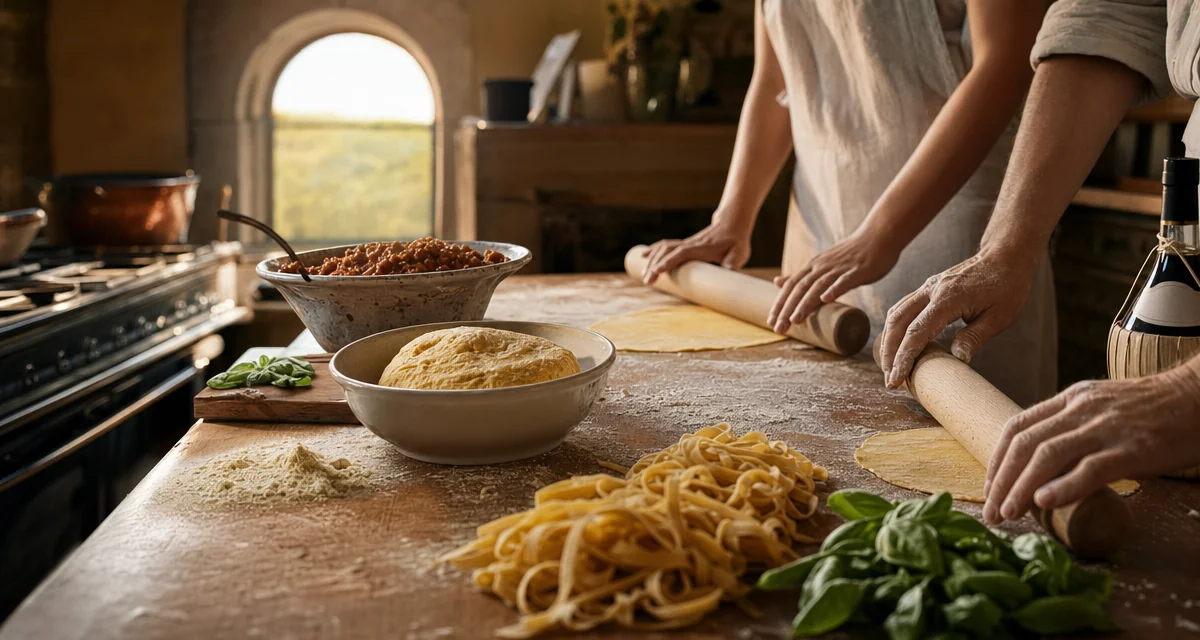
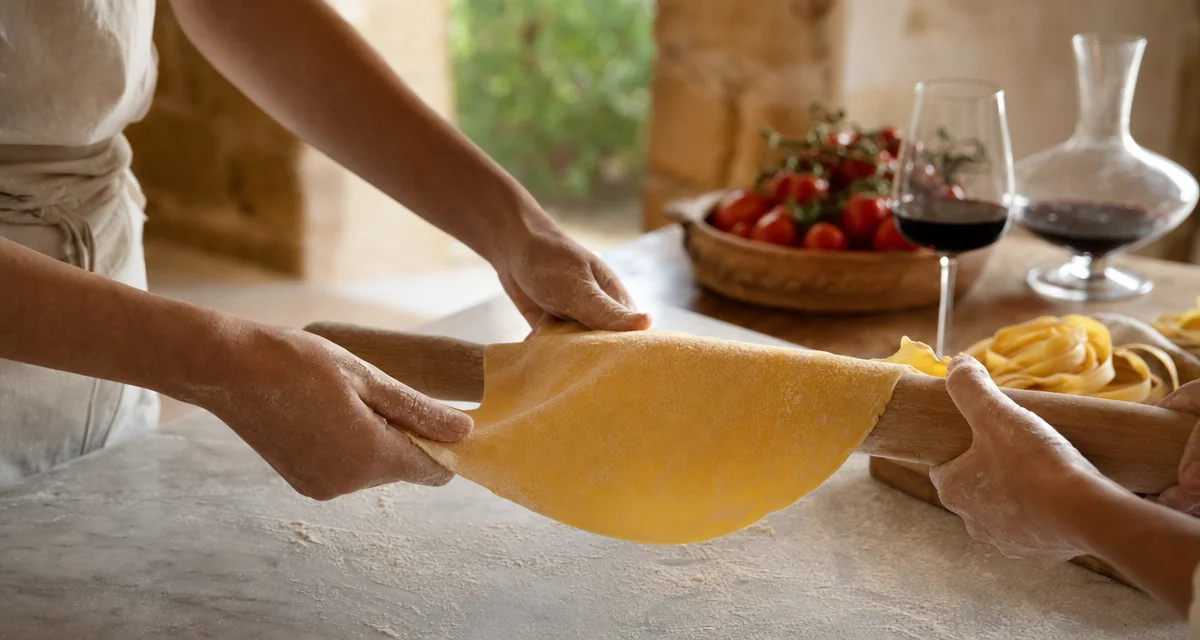
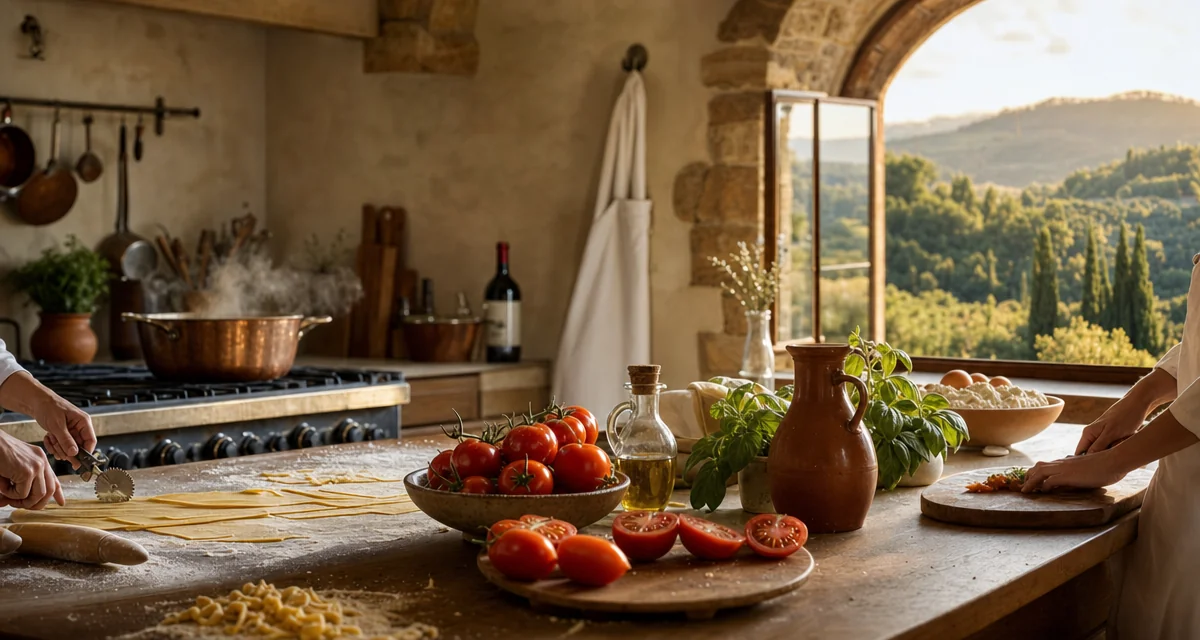
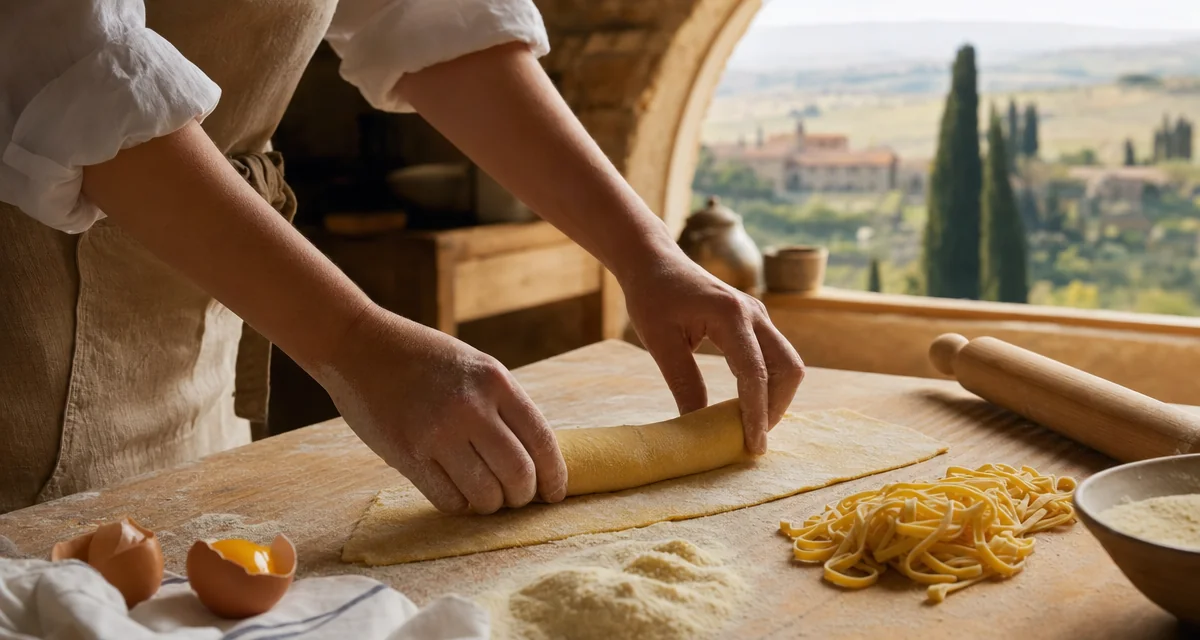
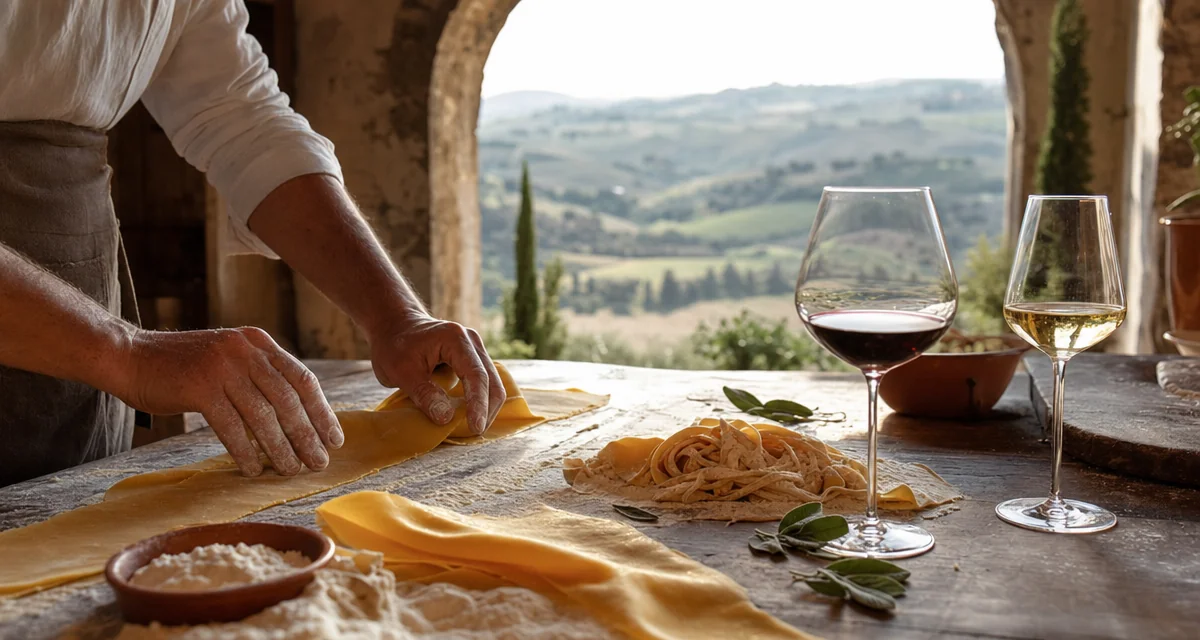
A 5-day cooking course in Italy is a Saturday-to-Wednesday (or Sunday-to-Thursday) residential programme that bundles four mornings of hands-on cooking, three to four afternoon excursions, four nights of villa or farmhouse accommodation and every meal into one all-inclusive booking. The format was popularised in Tuscany in the early 2000s and now spans most regions of the country. Classes typically run from 09:30 to 13:00, producing the day's lunch, while afternoons cover one of three pillars: a market tour, a winery and olive-mill visit, or a guided walk through a nearby medieval town. The defining trait is integration: you cook, you eat what you cooked, you sleep where you cooked. There is no commute, no separate hotel, no school-then-restaurant rhythm. Group sizes range from 6 to 14 students, with most operators capping at 12 to ensure each participant rolls their own pasta, butchers their own fish or shapes their own focaccia rather than watching a demonstration. The teaching language is English at every reputable school; the chef is almost always Italian and almost always a regional specialist (a Tuscan teaches Tuscan, a Piedmontese teaches Piedmontese). Across the top operators in Tuscany, Umbria and Piedmont, 5-day 2026 dates run April through October with a shorter October–November truffle window.
How much does a 5-day cooking course in Italy cost in 2026?
Expect to pay between €1,800 and €2,600 per person in 2026 for a 5-day cooking course in Italy with shared accommodation, full board, four to five classes and three excursions. The lower band (€1,800–€2,200) covers Umbria and inland Tuscany at farmhouse-style operators such as Cookinumbria or La Tavola Marche; the mid band (€2,200–€2,500) is the standard for Tuscany luxury villa programmes (Tuscookany, Organic Tuscany) and Piedmont (Montalero in Monferrato); the upper band (€2,500–€2,800) covers the Amalfi Coast and dedicated truffle weeks in Alba during October. Solo travellers pay a single supplement of €150–€400 depending on operator. Flights, travel insurance and tips are never included. The all-inclusive line typically covers four nights' accommodation, every meal from welcome dinner to final breakfast, four cooking classes, one winery visit, one market tour, one guided town walk and airport transfers from a designated meeting point (rarely from your inbound airport directly). The honest test for value: divide the total by 5 to get the per-night cost; if it lands above €600 per night and the school doesn't include a winery visit or sommelier session, the pricing is closer to a luxury villa rental than a culinary programme.
Where are the best 5-day cooking schools in Italy?
The five regions that dominate the 5-day intensive market are Tuscany, Umbria, Piedmont, Emilia-Romagna and the Amalfi Coast, each anchored by a distinct culinary identity. Tuscany is the most-booked region: the kitchen teaches pici (a thick, hand-rolled pasta from the Siena countryside), ribollita (a Tuscan bread-and-bean soup, the canonical cucina povera dish) and bistecca alla fiorentina (a 1.2–1.5 kg T-bone steak from Chianina cattle, grilled rare). Umbria — quieter, cheaper, less crowded — focuses on truffle handling, pasta strangozzi, and Castelluccio lentils. Piedmont teaches Piemontese cuisine: tajarin (thin egg-yolk-rich tagliatelle), vitello tonnato, agnolotti del plin, and pairings with Nebbiolo. Emilia-Romagna — the heartland of Parmigiano Reggiano DOP, prosciutto di Parma DOP and balsamic vinegar of Modena IGP — runs around Bologna and Modena and is the only region where pasta tradition (tortellini, tagliatelle, lasagna) gets its own dedicated week. The Amalfi Coast adds Mediterranean seafood, hand-pulled mozzarella di bufala campana DOP and lemon-based desserts; expect a higher price for the sea-view setting. Our work coordinating private chef experiences in Tuscany confirms the regional skew: 62% of 5-day enquiries reach us pointed at Tuscany — but Umbria and Piedmont deliver comparable hands-on quality at €200–€400 less per person.
After a week, my students don't remember every recipe — they remember the rhythm of an Italian kitchen. That's the real takeaway: how to slow down, taste constantly, and let the season decide the menu. Chef Lorenzo, Florence-based ambassador of Chef On Demand Tuscany
What does a typical day on a 5-day cooking course look like?
A typical day on a 5-day cooking course in Italy follows a predictable rhythm: 08:00–09:00 breakfast at the villa, 09:30–13:00 hands-on cooking class, 13:00–14:30 lunch built from what you cooked, 15:30–18:30 afternoon excursion (market, winery, guided town walk), 19:30–22:00 dinner at the villa or at a paired restaurant. Day 1 is travel-and-welcome only — arrival between 15:00 and 18:00, a settle-in tour of the property, then a relaxed welcome dinner cooked by the school's chef so you can taste the regional style before you cook it. Days 2, 3 and 4 follow the cook-eat-excursion-dinner template, with each cooking class anchored to a different course or technique: fresh pasta on one day, regional second courses on another, traditional desserts plus a sauce masterclass on the third. Day 5 is the lightest: a shorter morning session (often bread or a regional signature like Tuscan focaccia), an early lunch, then check-out by 14:00. Across the week, you'll typically produce 30–40 distinct dishes from antipasto to dolce. The hidden value is the excursion afternoons: a guided walk through the bustling central food markets of Florence with a chef who can name every cheese, or a winery visit explaining why a 2019 Brunello tastes different from a 2020, lifts the experience above 'just classes' into a regional immersion.
- Confirm the maximum group size in writing (target: ≤12, refuse: >16).
- Ask which dishes you'll cook on each day — reputable schools share a 5-day menu draft before deposit.
- Check the chef's regional credentials (born local, family-trained or worked in a regional Michelin/Slow Food kitchen).
- Verify what 'excursion' really means — a walking market tour with the chef differs greatly from a 90-minute coach drop-off.
- Read the cancellation policy — most schools require 90-day balance and 60-day non-refundable cutoff.
| Region | Typical price (per person, shared) | Signature dishes taught | Best for |
|---|---|---|---|
| Tuscany | €2,200–€2,500 | Pici, ribollita, bistecca alla fiorentina, panzanella | First-time visitors, classic Italian benchmarks |
| Umbria | €1,800–€2,200 | Strangozzi, truffle technique, Castelluccio lentils | Budget-conscious, quieter rural setting |
| Piedmont | €2,200–€2,600 | Tajarin, agnolotti del plin, Barolo pairing, vitello tonnato | Wine-led travellers, autumn truffle (Oct–Nov) |
| Emilia-Romagna | €2,100–€2,500 | Tortellini, tagliatelle al ragù, Parmigiano + balsamic masterclass | Pasta-focused weeks, Bologna day trips |
| Amalfi Coast | €2,400–€2,800 | Mozzarella di bufala, lemon desserts, seafood pasta | Sea-view setting, late spring & early autumn |
Do you get a certificate after a 5-day cooking course?
Almost every reputable 5-day cooking school in Italy issues a printed participation certificate on day 5, but it is decorative, not professional. The certificate states that you completed approximately 20 hours of hands-on instruction in a specific regional cuisine — useful as a holiday memento and a fine LinkedIn line for keen amateurs, irrelevant for restaurant employment. Only the longer programmes confer formal qualifications: ALMA (Colorno, Parma) runs a 9-month Italian Cuisine course; ICIF (Costigliole d'Asti, Piedmont) offers 4-month Master of Italian Cuisine programmes; Apicius (Florence) runs semester and full-year career programmes; Florence Culinary Arts School delivers 6-month diplomas. These cost €8,000–€25,000 plus accommodation and include internships in working kitchens. If a 5-day operator markets a 'professional certificate' or 'industry recognition' for a week-long course, treat it as marketing language rather than a credential. The honest framing: a 5-day course delivers a transformed home cook, not a working chef. That's the right expectation to book with.
5-day cooking school vs at-home villa chef: which to choose?
The comparison between a 5-day cooking school and an at-home villa chef experience comes down to fixed schedule vs flexibility. A school imposes a structured week: pre-set menu, fixed times, mixed cohort of strangers, no children under 12 in most kitchens, and a property you don't choose. An at-home option — booking a private chef directly into the villa you've already rented — flips every variable. Our private chefs across Tuscany deliver two distinct formats: a one-evening Pasta Class + Dinner Experience (a 2-hour pasta class teaching one long shape and one short shape, then a seated dinner of antipasti, both pastas with sauces, and homemade tiramisù — all at the villa you've rented, around €150 per adult), and a multi-day chef stay where a chef accompanies your party for the whole holiday, shopping daily at local markets and cooking 2–3 dinners plus 1 long lunch across the week. The multi-day quote is custom: it depends on whether the chef stays at your property (lowest day rate), commutes daily from a nearby village, or books lodging nearby (a surcharge is line-itemed transparently). Neither replaces a culinary school for someone who genuinely wants 20 hours of structured instruction. But if your real goal is one or two intensive cooking sessions inside an otherwise open week — keeping your villa, your group, your timing, your wines — the at-home format wins on flexibility and on price (often €600–€1,200 per person across a week, depending on configuration). The school wins on depth of curriculum and the social rhythm of a mixed cohort. You can browse our Tuscan chef network for a sense of who's available in each sub-region.
Best time of year for a 5-day cooking course in Italy
The 5-day cooking course calendar in Italy runs from late April to early November, with three distinct windows. Spring (April–June) is the most-booked period: ingredients are at their freshest after winter, the weather supports outdoor cooking, and excursions through Tuscany or Umbria pass through wildflower season. Expect higher prices and 6-month-ahead booking lead times for Tuscany and Amalfi. Late summer to early autumn (September–October) is the connoisseur window: the grape harvest (vendemmia) is in full swing across Chianti and Piedmont, schools fold winery visits into the curriculum, and white truffles emerge in Alba from mid-October. Many Piedmont operators run dedicated 'truffle weeks' priced €200–€400 above standard. High summer (July–August) sees most rural schools close: the heat in central Italy pushes kitchens past 32°C and the operators relocate to mountain or coastal locations. If you specifically want the Amalfi Coast or Lake Como, July is workable; if you want Tuscany or Umbria inland, avoid it. Across our network coordinating villa stays since 2024, the September booking peak is the most consistent year-on-year — secure your dates 4–6 months in advance for the second and third weeks of September.
Why this matters for your Italian holiday
A 5-day cooking course in Italy is a specific product designed for a specific traveller: someone who wants their holiday organised around a regional kitchen, who's happy to share the week with a small cohort of strangers, and who values the discipline of a fixed schedule over the flexibility of self-direction. It is not a culinary qualification, it is not a generic 'cooking holiday', and it is not the same as booking a private chef into your own villa. The choice between school and villa-chef is a choice between two valid formats — one structured, one bespoke — and the right answer depends on whether your group prefers to be guided through a curriculum or to design the week themselves. Whichever you choose, Italy delivers what no other country quite does: a culinary culture where the line between domestic and professional cooking is genuinely thin, where a Tuscan grandmother's pici and a Michelin chef's tortelli are versions of the same conversation, and where the regional identity of food is still actively defended by consortia, Slow Food Presidia and DOP/DOCG certifications. Whether you spend five days at a school in Monferrato or five evenings with a private chef in a Chianti farmhouse, you'll come home cooking differently. For traveller-direct private chef options across the country, see our private chef in Italy hub for region-by-region availability, or jump straight to our Tuscany private chef directory if your villa is already booked.