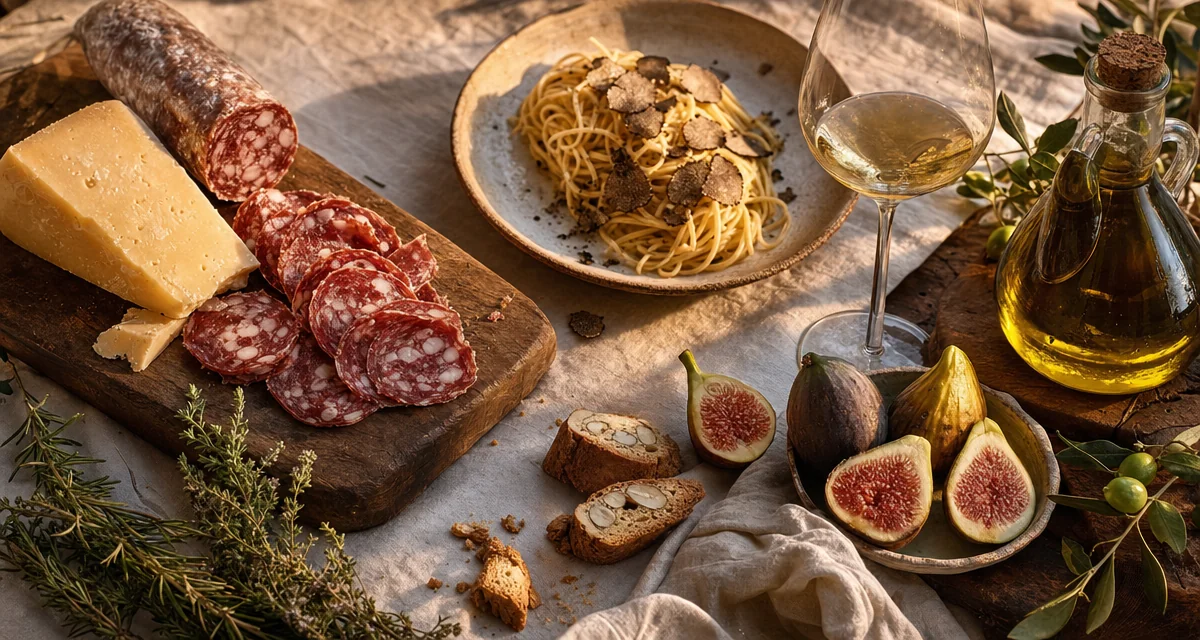
What is a private chef experience in Tuscany, Italy?
It is a fully orchestrated dinner — and sometimes lunch or breakfast — where a vetted Tuscan chef arrives at your accommodation 2 to 3 hours before service, brings ingredients sourced that morning, cooks in your kitchen, plates each course at the table, and leaves the kitchen cleaner than they found it. A typical timeline runs 4 hours total: 2 hours of prep, a 90 to 120-minute service window, then 30 minutes of clearing. For groups of 5 or more, our chefs usually bring an assistant who handles service and the dishwasher. Menus lean local: pappa al pomodoro (a thick Tuscan summer soup of stale country bread, ripe San Marzano tomatoes, garlic and fruity olive oil — peasant food elevated by the quality of each ingredient), hand-rolled pici, ribollita in autumn (literally 're-boiled': a hearty cabbage-and-bean stew thickened with day-old bread, born from Tuscan farmers' refusal to waste anything), peposo from the Impruneta tradition (a slow-braised beef and red-wine stew laced with whole black peppercorns, said to have been invented by the kiln workers who fired the terracotta tiles for Brunelleschi's Florence cathedral dome in the 1400s), and bistecca alla fiorentina with a 28-day-aged Chianina sirloin where the kitchen permits — a thick-cut T-bone from the ancient white Chianina cattle of the Val di Chiana, grilled rare over oak embers and seasoned only with salt, pepper and Tuscan olive oil. Wine is usually selected to match: Chianti Classico DOCG (the strict-production Sangiovese red from the heart of the Chianti hills, marked by the Black Rooster seal), Brunello di Montalcino DOCG (a 100% Sangiovese aged at least five years and grown only on the chalky hills around the medieval town of Montalcino — widely considered one of Italy's three greatest reds), Vernaccia di San Gimignano DOCG (Tuscany's most distinguished white, beloved by Renaissance popes and Michelangelo), and Vin Santo with cantucci to close — a sweet, amber-coloured 'holy wine' aged in small barrels for years and traditionally sipped while dipping crunchy almond biscuits. The format works equally well for a couple's anniversary dinner, a family of eight in Val d'Orcia (the UNESCO-listed valley of cypress-lined hills, hilltop villages and pecorino farms south of Siena), or a group of 12 in a Versilia villa near Forte dei Marmi (the chic seaside resort on the Tyrrhenian coast where Florentine and Milanese families have summered since the 1920s). Chef On Demand operates a verified network of 12+ private chefs across Tuscany, with 4.7/5 Trustpilot rating based on 800+ guests served since 2025.
How much does a private chef in Tuscany cost in 2026?
For a standard dinner in Tuscany in 2026, expect €85 to €180 per adult guest, plus wine. The exact figure moves with three variables: tier, group size, and date. The Essential tier is a four-course classic Tuscan set menu and runs roughly €95 per head for 6 guests, dropping to €85 per head at 8 to 10 guests. The Taste of Italy tier — five courses, the brand's signature regional showcase — sits at €120 per head for 6 guests and €100 per head for 10 guests. The Luxury tier is six or more courses with truffle, seafood, aged cuts and a multi-pour wine flight: €180 per head for 6 guests, €150 per head for 10 guests. Children (under 12) count at 50% in the chef's fee in Italy — a small but useful detail for families. Christian holidays (Easter, Pentecost, Christmas Day, Epiphany) carry a +35% client surcharge across all tiers, and December 24 to 26 plus December 31 use fixed group prices set by the chef. Wine is almost always extra: budget €25 to €60 per bottle for DOCG-level pairings sourced through your chef's network of small producers in Chianti or Montalcino. Browse our Tuscan chef network to see live menu samples by city.
| Tier | Courses | 6 guests (per head) | 10 guests (per head) | Typical menu signature |
|---|---|---|---|---|
| Essential | 4 (fixed) | €95 | €85 | Crostini misti, pici al ragù, peposo, cantucci with Vin Santo |
| Taste of Italy | 5 (fixed) | €120 | €100 | Tuscan board, hand-rolled pasta course, secondo + contorno, cheese, dessert |
| Luxury | 6+ courses | €180 | €150 | Truffle pasta or seafood, Chianina or game, aged pecorino flight, multi-wine pairing |
Where in Tuscany do private chefs typically operate?
Pan-Tuscany — but each sub-region has its own dining personality. In Florence and the surrounding hills (Bagno a Ripoli, Fiesole — the latter an Etruscan hilltop town with sweeping views over the city), chefs lean urban-elegant: bistecca alla fiorentina from a Chianina butcher, Florentine peposo, ribollita in winter. The Chianti corridor between Greve in Chianti (the wine country's unofficial capital, with its triangular medieval piazza) and Siena (the Gothic city of the Palio horse race and the deep-red brick towers) revolves around Chianti Classico DOCG pairings and Tuscan grill culture — peposo, tagliata di manzo (sliced grilled beef fanned over rocket and shaved Parmigiano), pecorino with chestnut honey. In Val d'Orcia (Montalcino, Montepulciano, Pienza — three hilltop towns that together produce two of Italy's most prestigious reds and its most famous sheep's cheese) menus pivot to Brunello and Vino Nobile di Montepulciano pairings (the latter a structured Sangiovese-based DOCG aged in oak), pici all'aglione (the same hand-rolled fat spaghetti served with a slow-cooked sauce of tomato and the giant 'aglione' garlic, milder and sweeter than common garlic), and pecorino di Pienza DOP at every cheese course. San Gimignano — the so-called 'medieval Manhattan' for its surviving cluster of stone tower-houses — brings Vernaccia DOCG and saffron-based dishes from a tradition that pre-dates the Renaissance: local saffron has been cultivated on the surrounding hills since the 13th century and once helped pay for the town's defensive towers. The Forte dei Marmi Versilia coast and Lucca (the perfectly preserved walled city ringed by Renaissance ramparts you can walk or cycle the entire way around) tilt seafood-forward — cacciucco (the Livorno-style fisherman's stew built from at least five fish and shellfish over garlic-rubbed bread), spaghetti alle arselle (pasta with tiny local clams from the Versilia sands), branzino al sale (whole sea bass baked in a salt crust) — while keeping Tuscan basics in the entrées. Lead times vary by zone: peak season in Forte dei Marmi (July to August) often books out 4 weeks ahead, while Maremma (the wilder, less-travelled south-western corner of Tuscany known for free-range cattle, wild boar and unspoilt beaches) and inner Chianti remain bookable inside 2 weeks. You can compare profiles across these areas via private chef experiences in Tuscany on a single page.
- Confirm your villa or apartment allows external chefs — many Tuscan rentals have an approved-chef list written into the contract.
- Lock the date 2 to 4 weeks before peak season (June to September) and 1 week minimum for shoulder months (April, May, October).
- Share group size, dietary restrictions and allergies in writing — list them as bullet points, not prose, to reduce interpretation errors by roughly 90%.
- Pick a tier (Essential, Taste of Italy, Luxury) before discussing the menu — it sets the per-head budget and the chef's shopping list.
- Decide on wine: bring your own (BYO with corkage), let the chef pair, or buy a wine flight from the chef's network of DOCG producers.
- Confirm the kitchen has at least 4 working hobs, an oven, a grill if you want bistecca, and refrigerator space for two prep crates.
- Plan the timing: arrival of the chef 2 to 3 hours before service, 90 to 120-minute service window, 30-minute clearing — total footprint roughly 4 hours.
- Settle payment terms before the day: most professional networks (including Chef On Demand) take a deposit at booking and the balance after the dinner.
Private chef vs restaurant vs villa: which to choose in Tuscany?
All three deliver authentic Tuscan food, but the trade-offs differ sharply. A Michelin or Gambero Rosso restaurant in Florence or Siena (Gambero Rosso is Italy's most respected national food and wine guide, akin to a domestic counterpart to Michelin) gives you a chef-driven tasting menu but locks you into their dining room, their hours, and their seating noise — and a fine-dining table for 6 in central Florence routinely lands at €150 to €250 per head before wine. An villa dinner — a meal served on a working Tuscan farm under regional law, where most ingredients must come from the farm itself — is hyper-local, deeply seasonal, and often the cheapest path at €40 to €70 per head — but you go to them, on their schedule, with a fixed menu and shared seating. A private chef at your villa costs roughly the same per head as fine dining (€85 to €180 in 2026) but converts the experience into something fundamentally different: zero travel after dinner, full menu customisation, unlimited table conversation, kids welcome at any hour, and the chef explaining each plate at your pace. For groups of 6 or more, private chef typically beats restaurant on cost-per-head once you add transport and gratuity. For couples chasing chef-driven discovery, a Michelin-starred restaurant remains a peak the villa format cannot replicate.
| Format | Typical cost per head | Where | Best for |
|---|---|---|---|
| Private chef at villa | €85 to €180 | Your accommodation, your schedule | Groups of 4 to 12, families, anniversaries, full menu control |
| Michelin restaurant | €150 to €250 | Florence, Siena, coast | Couples, foodie pilgrimages, chef-driven discovery menus |
| Villa dinner | €40 to €70 | Working farm, on their schedule | Casual dinners, daytime escapes, in-region exploration |
How do you book a private chef in Tuscany, and what should you ask?
Booking a private chef in Tuscany generally takes three steps: send a brief (date, location, guests, dietary needs, tier preference); receive 1 to 3 chef proposals with sample menus and a quote; confirm the chef and pay a deposit (typically 30 to 50% at booking, balance after service). According to Chef On Demand's network data of 800+ bookings since 2024, the median lead time across Tuscany is 9 days — though July weddings and Easter weeks comfortably need 4 weeks. Five questions to ask any Tuscan chef before confirming: (1) Where do you source your meat and produce — and can you name the suppliers? (2) What happens if a guest has a coeliac or shellfish allergy? (3) Do you bring an assistant for groups of 6+? (4) Do you handle wine, or do we BYO? (5) Are you on the villa's approved list, or will you need a written authorisation? Many of our chefs come from Michelin-starred kitchens, Gambero Rosso–rated restaurants and Top Chef Italia — credentials worth asking about.
When is the best time to plan a private chef dinner in Tuscany?
Tuscany's culinary calendar shapes the answer. April to early June is shoulder season: artichokes, fava beans, the first wild asparagus, baby lamb at Easter, and chef availability inside 7 days at most price tiers. Mid-June to early September is peak: tomatoes, peaches, melon, fresh seafood on the Versilia coast, and a 7 to 14-day lead time across our network. Mid-September to late October is the connoisseur window — vendemmia (the grape harvest, when entire wine estates work day and night for two to three weeks; some chefs can arrange a vineyard visit alongside dinner), white truffle around San Miniato (the small Tuscan hill town between Florence and Pisa whose surrounding oak woods produce one of the world's most coveted white truffles, hunted from October with trained dogs and shaved raw over pasta or eggs), porcini mushrooms, fresh olive oil from late October (the new oil is bright green, peppery and best tasted on grilled bread — fettunta — within weeks of pressing) — and arguably the best food month of the year. November to March is quietest but rewarding: ribollita, peposo, wild boar ragù (cinghiale slow-simmered with red wine, juniper and aromatic herbs, traditionally served over wide pappardelle pasta — wild boar are abundant in Tuscany's woods and a defining winter flavour), black truffle, citrus from the coast, and unrushed chefs who can cook the slower regional classics that summer dinners skip. Christmas Day, December 26, December 31 and January 1 carry fixed group surcharges set by each chef. Planning your stay around the Sagra del Tartufo Bianco in San Miniato (October to November — Tuscany's biggest white-truffle festival, drawing hunters, restaurateurs and visitors for three consecutive weekends) or Brunello en Primeur week (February in Montalcino, when wine critics and buyers gather to taste the newest vintage straight from the barrel) is a way to time your private dinner to a regional moment your chef can lean into.
The dinner that stays with my guests is never the most expensive one. It's the one where the menu reflected exactly who was at the table — the kid who hated tomatoes, the grandparent who only eats fish, the friend who came for Brunello. A private chef in your villa is permission to make the meal yours. Chef Lorenzo, Florence-based ambassador of Chef On Demand Tuscany
Why this matters for your Italian holiday
A holiday in Tuscany is rarely about ticking off restaurants — it is about the quiet hours between them, when your group lingers around a table that is already yours. A private chef inside your villa does not replace the Michelin pilgrimage or the villa lunch; it adds a third axis: a meal that ends when you stop talking, in a kitchen that smells the way your stay should smell. Once the format clicks for your group, the next step is matching — and browsing our Tuscan chef network by city and menu sample saves a long evening of email. Many Tuscan rentals are remote enough that a 9 p.m. drive back from Florence with five guests and two children quietly destroys what was meant to be a relaxed evening. The chef coming to you reverses that geometry. If you are still scoping options across regions, Chef On Demand's network of private chefs across Italy covers every major culinary zone — but Tuscany remains the region where the format clicks most naturally, because the cuisine is built around long tables, slow courses, and wines that ask to be discussed. The right chef makes those instincts work for your group, your villa and your dates — not against them.