What does a pasta making class in Florence include?
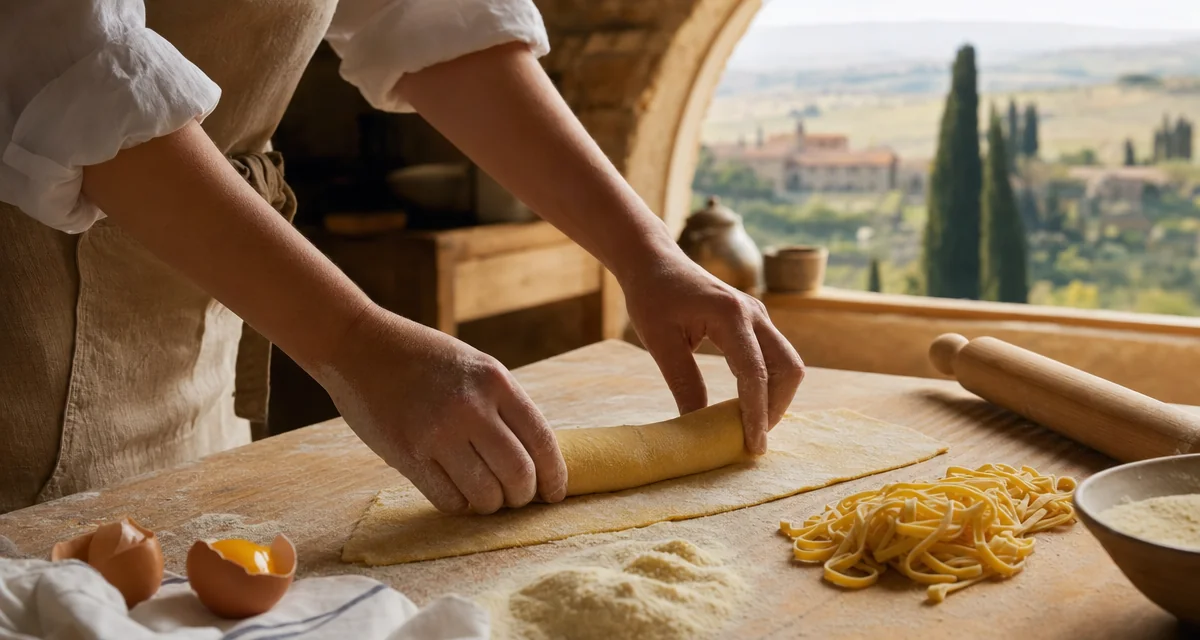
A private pasta making class in Florence is a bundled 4 to 5 hour experience at your villa or apartment that combines a 2-hour hands-on cooking lesson with a full seated dinner cooked from what you've made. The chef arrives with everything — semola di grano duro, 00 flour, eggs, sauces, antipasti, mascarpone for tiramisu — plus dough boards, rolling pins, pasta cutters, pots and serving plates. You do not visit a cooking school, a restaurant kitchen or a culinary academy. The class teaches two fresh-pasta shapes: one long format (tagliatelle, pappardelle or pici — the thick hand-rolled Tuscan spaghetti from the Siena hills) and one short format (orecchiette, farfalle or maltagliati). While the pasta rests, the chef prepares the two sauces — typically a slow-cooked meat ragu paired with the long shape and a vegetable or seafood sugo with the short shape. Around 6pm you sit down at your own dining table and the chef serves the full menu: 2 to 3 antipasti, both pastas with their sauces, and homemade tiramisu. The booking covers ingredients, the chef's time, equipment, service and cleanup. Total cost is EUR 150 per adult and EUR 60 per child in 2026 — flat rate regardless of group size.
How much does a pasta making class with a private chef cost in Florence in 2026?
A private pasta making class in Florence with a chef coming to your villa costs EUR 150 per adult and EUR 60 per child in 2026 — fully inclusive, regardless of whether you're four guests or twelve. The price covers ingredients, the chef's time for the full 4 to 5 hour experience, all equipment, plating, serving and cleanup. For practical math: 6 adults pays EUR 900 total, 8 adults EUR 1,200, 10 adults EUR 1,500. A family of 2 adults + 3 children comes to EUR 480. This is a flat rate experience, not tiered — there's no Essential / Taste of Italy / Luxury split because the format is a single bundled offer. Compare that with the dominant cooking-school option in central Florence (the GetYourGuide / Viator pattern), which runs around EUR 45 to 75 per person for a 2.5 to 3 hour class in a shared kitchen with 10 to 15 strangers — cheaper per person, but no seated dinner, no villa setting, and you typically have to taxi a group of eight into town and back. Wine pairing is a separate add-on: most guests buy bottles at the local enoteca, drink from the villa cellar, or ask the chef in advance to include a curated Chianti and Vernaccia flight.
Guests are always surprised how quickly they're elbows-deep in dough. I tell them: in 30 minutes you'll be cutting pappardelle by hand on the same table where you'll eat them at 7pm. That continuity — class on the left side of the kitchen, dinner on the right — is the whole point. Chef Lorenzo, Florence-based ambassador of Chef On Demand Tuscany
Where does the class happen — your villa or a cooking school?
A private pasta making class booked through our Florence pasta making class workshop always happens at the guest's location — the villa, apartment or holiday rental you're already staying in. The chef travels to you with ingredients and equipment, never the other way around. This is the structural difference between the at-villa private format and the standard Florence cooking-school model. Cooking schools (the GetYourGuide / Viator / Cookly listings ranked above this article) are venue-based: you book a slot, arrive at a kitchen in central Florence at a fixed time, cook in a cohort of 10 to 15 strangers, eat at a communal counter, and leave. The at-villa model inverts that: privacy (your group only), tailored pace, and your own setting (a Chianti farmhouse, a Fiesole hillside terrace, an apartment in Oltrarno) as part of the memory. There are practical reasons too: villas in Greve in Chianti, San Gimignano or Montepulciano can be 30 to 50 minutes from central Florence, turning a class in town into a 2 to 3 hour transfer round trip. Families with children or grandparents tend to prefer the at-villa format — kids can nap, older guests can read on the terrace, everyone joins back at the table.
- Confirm the group size early: 4 to 12 guests is the sweet spot; smaller groups still pay the per-adult rate (no minimum group), larger groups need 7 days lead time for chef scheduling.
- Tell the chef about allergies and preferences 48 hours in advance: pasta dough can be made without gluten using rice flour, sauces can swap meat ragu for vegetable sugo, and tiramisu has eggless and dairy-light versions on request.
- Decide on wine before the booking is confirmed: either source Chianti Classico DOCG from a local enoteca, drink from your villa cellar, or ask the chef in advance to bring a curated flight at additional cost — most don't carry wine inventory.
- Choose the time slot that works with sunset: a 2pm class start lands dinner around 6 to 7pm, which is the magic Tuscan light window for terrace dining (June to September especially).
- Pick the pasta shapes in advance: ask for pici (long, thick, hand-rolled, Siena hills) plus orecchiette (short, ear-shaped) if you want the most visually distinctive duo — both are harder than tagliatelle and create the best video moments.
| Feature | Private chef at your villa | Cooking school in Florence centre |
|---|---|---|
| Location | Your villa, apartment or rental (in or near Florence) | Shared kitchen venue in central Florence |
| Group composition | Your party only, 4 to 12 guests | Cohort of 10 to 15 strangers, fixed schedule |
| Duration | 4 to 5 hours total (class + seated dinner) | 2 to 3 hours (class only, no seated dinner) |
| What you cook | Two pasta shapes (one long + one short), two sauces | Two or three pasta shapes, occasionally tiramisu |
| Dinner format | Full seated dinner with antipasti + both pastas + tiramisu | Tastings of what you cooked, eaten at a counter |
| Cost per adult | EUR 150 (all inclusive, flat rate) | EUR 45 to 75 (class only) |
| Wine | Bring your own from the villa cellar, or chef-curated pairing add-on | Usually unlimited house wine included during tasting |
| Transfer logistics | None — chef comes to you | 30 to 50 minute taxi each way from rural villas |
| Best for | Families, multi-generation groups, anniversary parties, groups already in a villa | Solo travellers, couples staying central, budget-first |
Which pasta shapes and sauces will you actually cook?
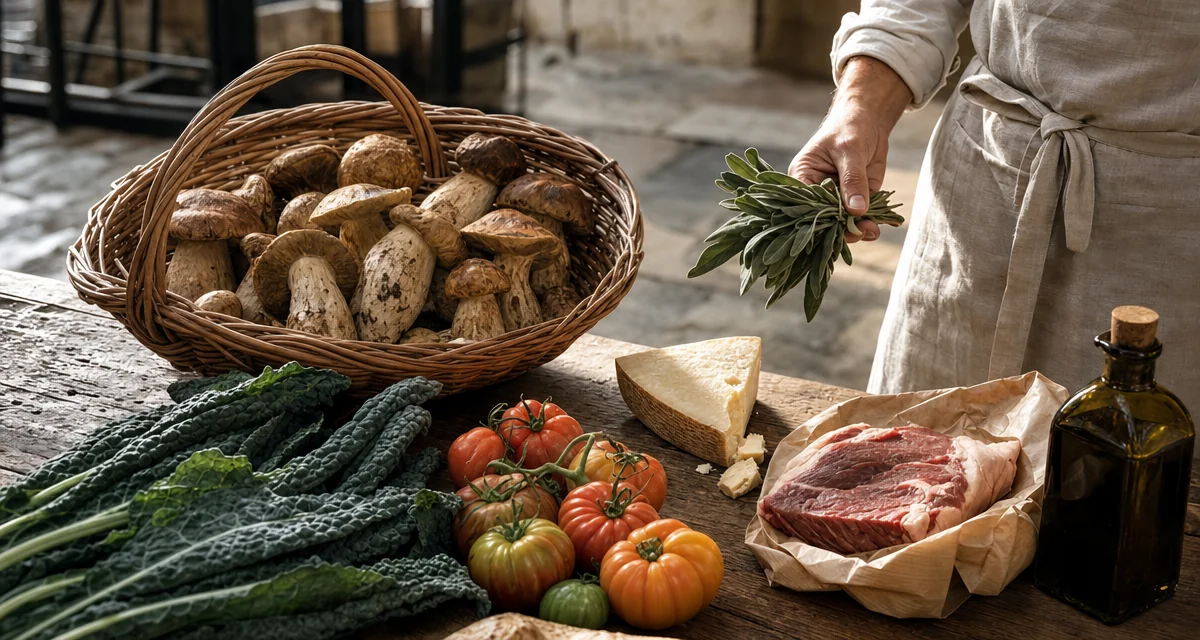
Most chefs in our Florence network build the class around one rule: one long pasta + one short pasta + two sauces that contrast in texture and weight. The classical Tuscan default is pappardelle (long, wide, hand-cut ribbon, perfect for chunky meat sauces) paired with maltagliati (short, irregularly cut scraps left over from rolling out sheet pasta — translates literally as 'badly cut'). Sauces follow: a slow-cooked wild boar or veal ragu for the pappardelle, a vegetable sugo or tomato-and-basil for the maltagliati. If you want something more distinctive, ask for pici — hand-rolled thick spaghetti from the Val d'Orcia (the UNESCO-listed valley south of Siena famous for cypress-stippled hills, Brunello di Montalcino and pecorino di Pienza), made with just water and durum flour. Children can roll it too. The short-pasta swap is orecchiette (ear-shaped, originally from Puglia but increasingly taught in Tuscany because it's the most photogenic). Antipasti typically include crostini with chicken liver pate (the genuine Florentine starter), tomato bruschetta with Tuscan olive oil, and a board of pecorino with chestnut honey. Dessert is tiramisu — built layer by layer with mascarpone, savoiardi biscuits and espresso, rested 30 minutes in the fridge while you finish the pastas.
How does wine pairing work with a pasta making class?
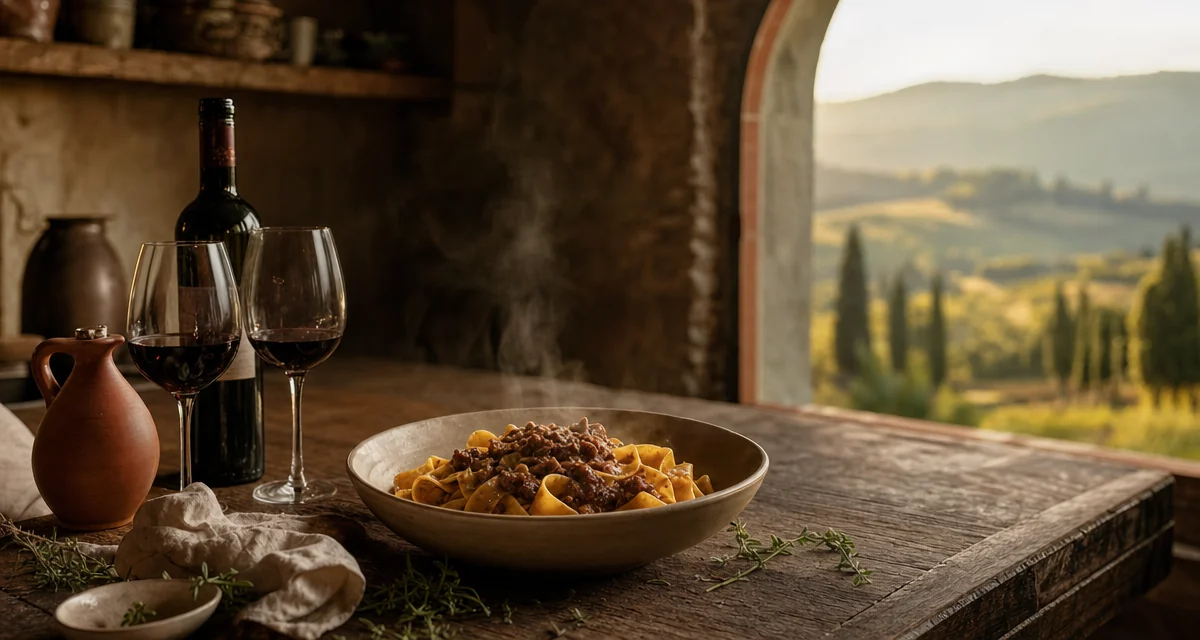
Wine is a separate decision from the class itself. The EUR 150 per adult rate covers the cooking experience and the meal — not the wine. Three ways travellers in our network handle pairing in 2026. First, source the wine yourself: most villas in Chianti are 5 to 15 minutes from an enoteca (a wine bar / shop) stocking Chianti Classico DOCG (the Sangiovese-based red from the historic zone between Florence and Siena, identifiable by the black rooster gallo nero seal), Vernaccia di San Gimignano DOCG (Tuscany's most famous white, dry and citrusy, ideal with vegetable sauces and pecorino), and Vin Santo (the sweet dessert wine traditionally paired with cantucci almond biscuits). Budget EUR 15 to 35 per bottle, one bottle every two adults. Second, drink from the villa cellar if your rental includes one — Tuscan villa (farm-stay properties with rooms and a working farm) often produce their own wine. Third, ask the chef to bring a curated 3 to 5 wine pairing flight matched to the antipasti, both pastas and tiramisu. This add-on runs EUR 25 to 60 per adult and needs 5 days lead time. The classic flight: Vernaccia with antipasti, Chianti Classico with the long pasta + ragu, Sangiovese rose with the short pasta + vegetable sugo, Vin Santo with the tiramisu.
What are the best chef profiles for a pasta class in Florence in 2026?
Chef On Demand operates a verified network of 12+ private chefs across Tuscany, with eight based in or within 30 minutes of central Florence and four covering Chianti, San Gimignano and Lucca. Many come from Michelin-starred kitchens, Gambero Rosso-rated restaurants, MasterChef and Top Chef Italia, but for the pasta class format we deliberately prioritise chefs with strong nonna-style fresh-pasta training — the goal is that your group can replicate at least one shape at home, not be intimidated. Typical profiles in our Florence pasta making class roster: a chef from central Florence with classical training plus three years in a Sant'Ambrogio market trattoria; a chef in Bagno a Ripoli on the Florence outskirts specialising in pici and pappardelle; a chef from Fiesole with a pastry-school background ideal for groups who want the tiramisu to be a real lesson; a Chianti-based chef in Greve in Chianti for farmhouse-rental guests. We currently see a 4.7/5 Trustpilot rating across 800+ bookings since 2025; average lead time for the pasta class is 7 to 14 days in peak season (June to September). Submit your request via our Tuscan pasta making class booking flow and we send 2 to 3 chef profiles within 24 hours so you can pick the personality that fits — English-fluent vs Italian-only, child-friendliness, pace.
Why this matters for your Florence holiday
A pasta making class in Florence is one of those experiences that ends up on every traveller's highlight reel — the photo of your child holding up a string of pappardelle, the video of nonna-style pici rolling, the dinner under fairy lights on the villa terrace. The decision is not whether to do a pasta class, it's where to do it. Booking a 2.5-hour cohort class in central Florence and adding a taxi round trip from your rural villa costs roughly the same as the at-villa private chef format once you count transfers and a separate dinner — but you leave with a memory of a shared counter in a tourist kitchen instead of your villa kitchen on a July evening. The at-villa class scales naturally to the group you're already travelling with (4 to 12 is normal), accommodates kids and grandparents in the same room, and ends with everyone seated at your own table. After 800+ bookings since 2024, the pattern is consistent: the at-villa group remembers the dinner more than the class itself; the cohort group remembers the trattoria they went to that night, not the class. If you're already staying somewhere with a kitchen, the pasta class belongs in that kitchen. Browse the wider pasta making class network across Italy if you want to extend the at-villa format beyond a single class — multi-day stays with the chef cooking your dinners are increasingly common in Tuscany. For the broader Florence picture, see our Florence pasta making class pillar page, our Florence cooking course guide 2026 and our Tuscany food market villa chef guide.