




Pasta Making Class in Siena: hand-roll pici in your Crete Senesi agriturismo

Free cancellation up to 30 days before 800+ happy travelers 4.7 star review

Pici, the iconic Sienese pasta shape — taught by a local chef in your agriturismo

Hand-picked Sienese chefs travelling to your agriturismo, villa or farmhouse anywhere in the Siena province — Crete Senesi, Val d'Orcia, Montalcino, Montepulciano, Pienza, Chianti south, Castelnuovo Berardenga, San Gimignano — to teach the single pasta shape that defines Sienese cuisine: pici. Hand-rolled with semolina and lukewarm water (a touch of '00' flour to bind), no eggs, no machine, no press — only your palms against the wooden board and the pizzicare gesture passed down from grandmother to grandchild in the Crete Senesi. No shared workshop, no group ticket — one Sienese instructor, your group only, at individual pici-rolling stations.

Two full hours of focused pici-rolling — roughly 100 pici per guest by the end. Then the dinner the chef plates with the pici you produced: two Sienese antipasti, two pici courses with two of the four traditional Sienese sauces (cacio e pepe, all'aglione, cinghiale, or alle briciole), a Sienese dolce. The pici on your plate is the pici you pinched and rolled yourself an hour earlier.

topchef-private-chef-italy
gambero-rosso-private-chef-italy
michelin-star-private-chef-italy
private-chef-masterchef-logo
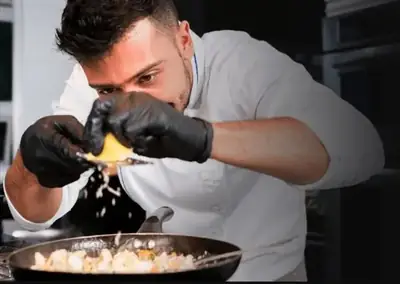
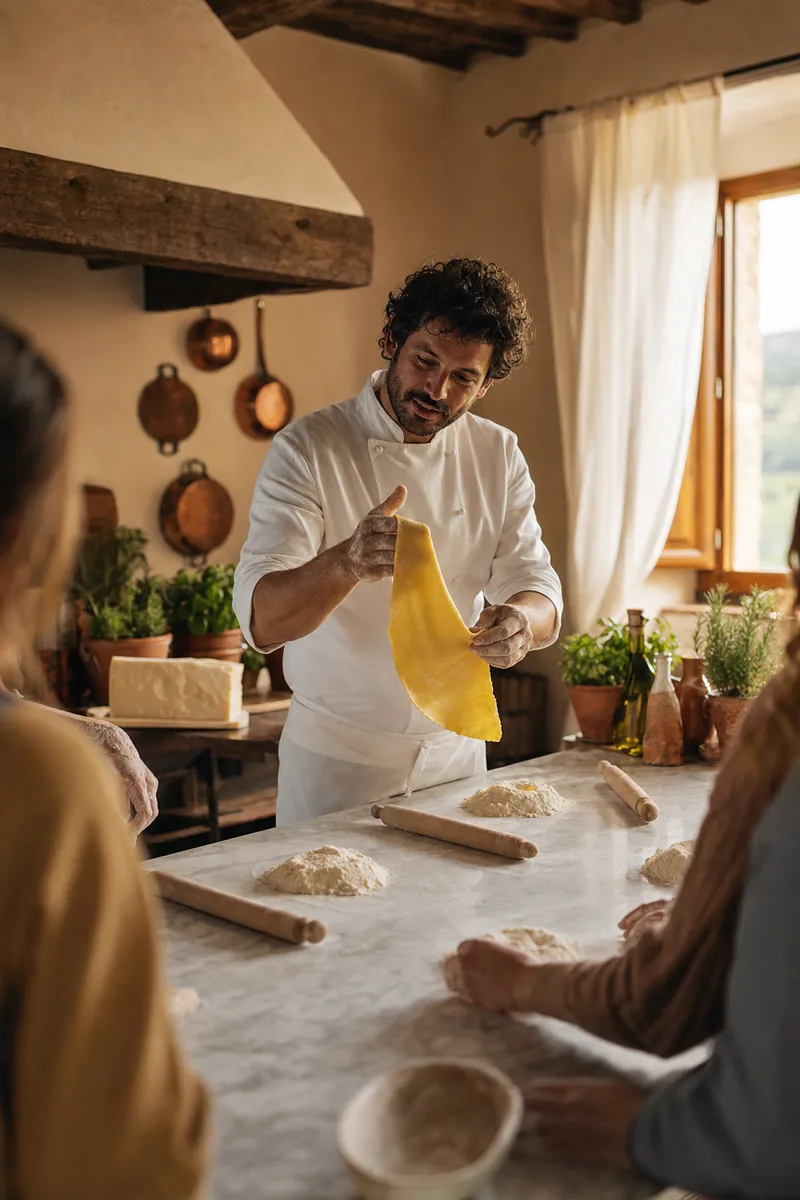
Local Sienese instructor demonstrating the proper pizzicare palm gesture for hand-rolling pici with four guests at individual wooden boards in an agriturismo kitchen in the Crete Senesi south of Siena
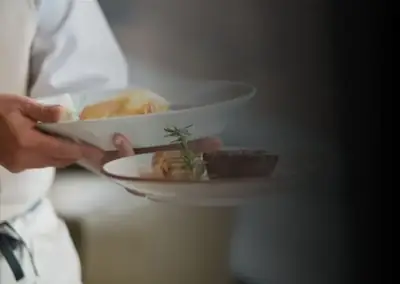
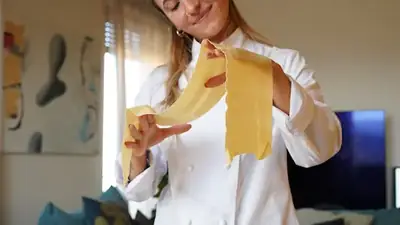
Private chef holding pasta sheet
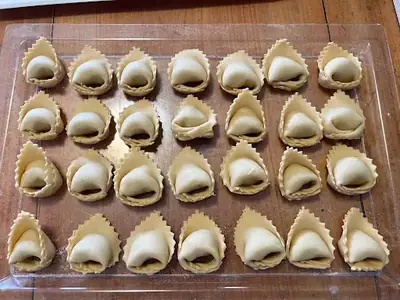
Private chef handmade tortellini tray
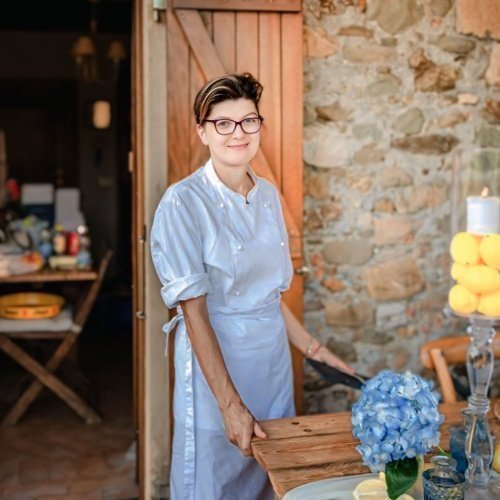
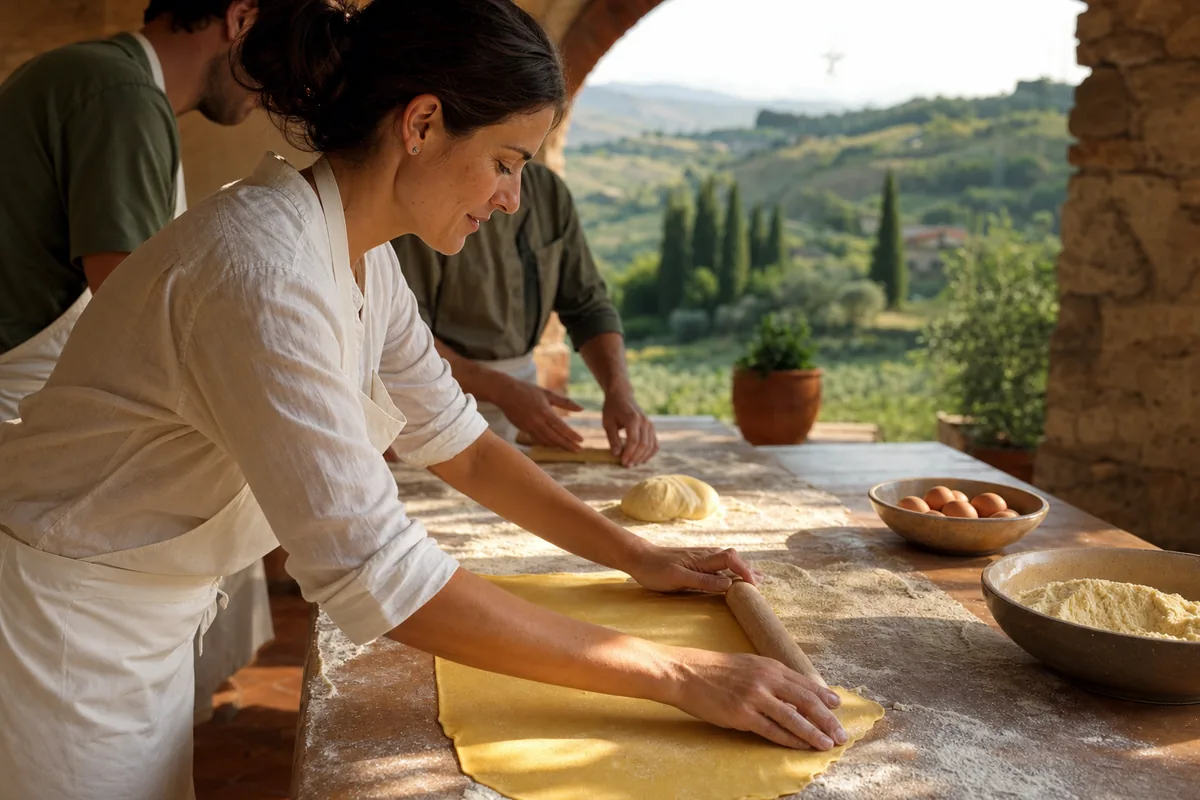
Female Sienese instructor rolling a single pico strand by hand against the wooden board with semolina dusting during a private pici masterclass on a Val d'Orcia agriturismo patio near Pienza
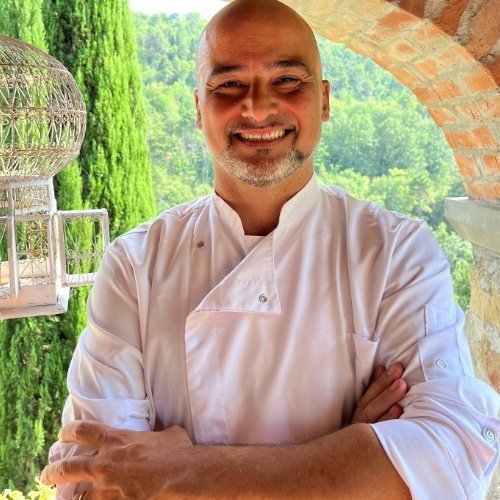
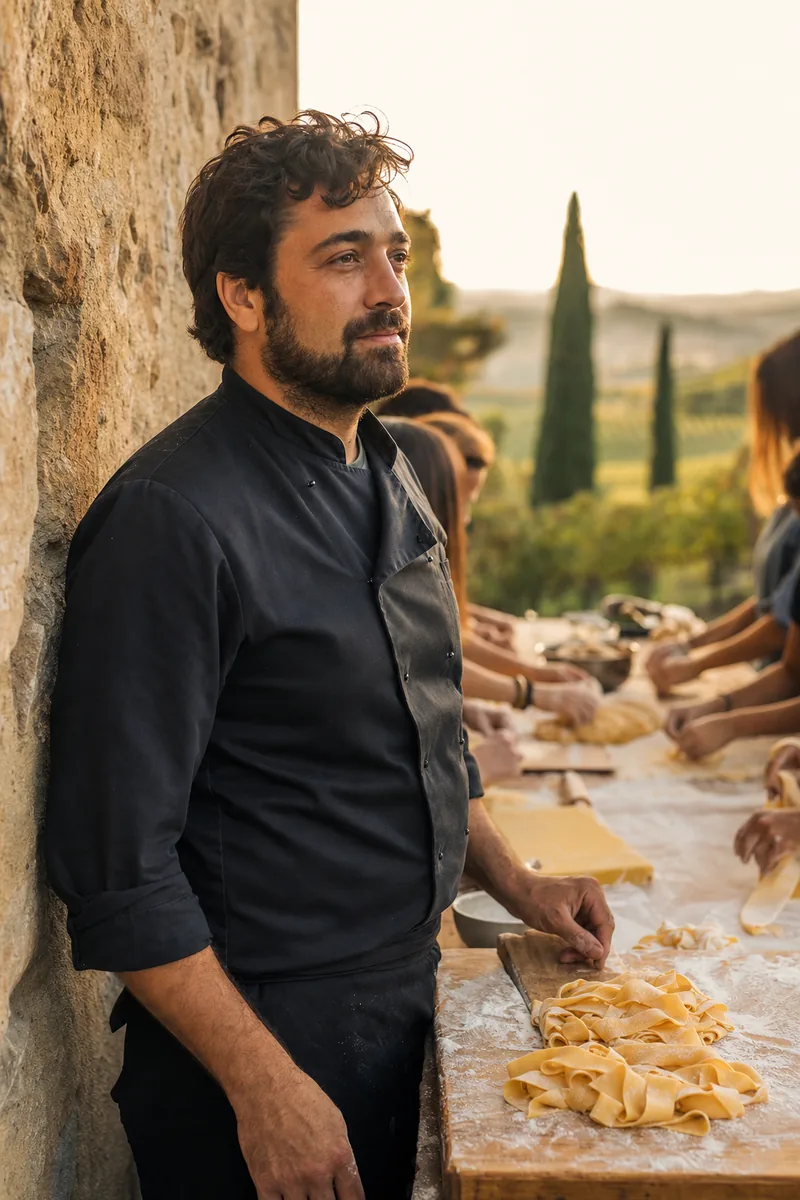
Bearded Sienese pici-making instructor at a Brunello di Montalcino vineyard agriturismo patio during golden hour with workshop participants hand-rolling pici at their semolina-dusted wooden board stations in the background, Val d'Orcia near Siena

The Siena pici workshop structure: two hours of hand-rolling, then the dinner

This pasta making class in Siena is fully one-to-one — one Sienese instructor, your group only, no shared workshop, no other guests pinching alongside you. For three to four hours he stays in your agriturismo or villa and runs both the pici masterclass and the dinner himself.

Hours one and two · the Pici Masterclass. The chef sets up a personal pici-rolling station for each guest: wooden board dusted with semolina, the kneaded dough already wrapped and resting (eight to ten minutes per guest of kneading happens at the start), a bowl of extra semolina for drying, a small mound of '00' flour for the binding, and the aglione bulbs split open to reveal the giant cloves. He teaches the proper Sienese technique step by step — cut the dough into thin strips, pinch off a marble-sized piece (the pizzicare gesture, palm flat against the board), roll the strand back and forth from the centre outward with even palm pressure until it becomes a fat 5-6 millimetre irregular noodle a hand-and-a-half long, dust with semolina, lay it on the floured board to dry. Each guest hand-rolls 100+ pici from scratch. Every mistake corrected one-on-one. The chef rolls alongside you continuously, demonstrating palm pressure, dough hydration and the rolling rhythm. Real teaching, not a chef demo with passive audience.

After the workshop · the Sienese Dinner. While you wash semolina off your hands and pour the first glass of Brunello di Montalcino (or Vino Nobile di Montepulciano, or Chianti Classico), the chef finishes plating two Sienese antipasti, brings the two pici sauces to a simmer (Pecorino di Pienza for cacio e pepe, the aglione confit for all'aglione, Crete Senesi wild boar reducing for cinghiale, the toasted breadcrumbs for alle briciole), drops your fresh pici into salted water (15 grams of salt per litre, 7 to 9 minutes to al dente — much longer than spaghetti), and serves the dinner course by course on your patio. The dinner is the celebration of what you produced — closes with a Sienese dolce (panforte di Siena with Vin Santo, or ricciarelli, the soft almond biscuits, or cantucci dipped in Vin Santo). He clears the kitchen, you leave with printed recipe cards in English plus digital notes on the 60-percent-hydration semolina ratio for replicating pici at home.

320

Dining experiences delivered

800+

Customers served

93%

Client satisfaction rate

What happens during your Siena pici masterclass, minute by minute

A three-to-four-hour evening structured as a focused pici masterclass with dinner at the end. The Sienese chef arrives forty minutes early at your agriturismo, villa or farmhouse to set up each pici-rolling station — wooden board dusted with semolina, kneaded dough already resting wrapped in cling film, semolina dusting bowl, a small bowl of '00' flour for binding, the aglione bulbs split open showing the giant cloves, the Pecorino di Pienza wheel ready to grate at the table.

Workshop minutes 0-20 · the dough. Volcano of semolina (the only flour pici uses in the traditional Sienese recipe — '00' is only a small binder), lukewarm water poured into the well, a pinch of salt, sometimes a drizzle of Tuscan olive oil. No eggs. Mix with a fork from the centre outward, then knead by hand for 8 to 10 minutes — push with the heel, fold, rotate a quarter turn. The dough should be silky, slightly tacky, springing back when pressed. Wrap in cling film and rest for 30 minutes.

Workshop minutes 20-40 · the demonstration. While the dough rests, the chef demonstrates the pizzicare gesture in slow motion: pinch off a marble-sized piece, place it on the semolina-dusted board, roll it back and forth from the centre outward with the centre of your palm, working the strand into a fat 5-6 millimetre irregular noodle a hand-and-a-half long. He shows the common mistakes — too much pressure (pico breaks), too little pressure (pico stays a stub), uneven palm angle (pico is conical instead of cylindrical), wrong board temperature (dough sticks). He prepares the antipasti in the background and starts the four sauces on simmer (the aglione confit for all'aglione, the wild boar ragù for cinghiale, the breadcrumbs toasting for alle briciole, the pepper toasting in the pan for cacio e pepe).

Workshop minutes 40-120 · the pici-rolling. Eighty minutes of pure pinching and rolling. Each guest cuts their flat dough into thin strips, then rolls strand by strand. The chef circulates continuously, correcting palm pressure, dough hydration, the rolling rhythm. By the end each guest has 100+ pici drying on their floured board. Hands are dusted with semolina, the kitchen smells of aglione confit and toasted pepper. The wrists ache. The muscle memory is forming. This is the deepest pici technique transfer you can get outside of a Sienese grandmother's kitchen.

The dinner. Two Sienese antipasti, your fresh pici into salted water (7 to 9 minutes — much longer than spaghetto), tossed in the chef's skillet with two of the four traditional sauces, plated on your patio. Cacio e pepe creamed with Pecorino di Pienza DOP and starchy pasta water; all'aglione finished with a final drizzle of Tuscan olive oil; cinghiale plated with a grating of pecorino; alle briciole topped with the toasted breadcrumbs and a final crack of pepper. A Sienese dolce closes the evening — panforte di Siena with Vin Santo (the dense Sienese spiced fruitcake, a Christmas tradition served year-round), or ricciarelli (soft almond biscuits dusted with icing sugar), or cantucci dipped in Vin Santo del Chianti Classico. Then the chef cleans the kitchen and leaves you with the printed recipe cards, the 60-percent-hydration semolina ratio, a sourcing list for aglione delle Crete Senesi (where to buy it in the area or via online producers back home), and a folder of digital recipes by email the next morning.

The Sienese pici menu you will produce in the workshop

A pici-led Sienese menu — every dish is either pici you hand-rolled in the workshop or a Sienese accompaniment that lets the pici shine:

Two Sienese antipasti to start. Crostini con fegatini di pollo all'uso senese (the chicken-liver pâté on saltless Tuscan bread, slightly sharper than the Florentine version with capers and a splash of Vin Santo) · prosciutto di Cinta Senese DOP (the heirloom Sienese black pig, cured for 18+ months, paired with a slice of pecorino dei Pastori delle Crete or a wedge of Pecorino di Pienza DOP). Seasonal swap: pinzimonio of Sienese vegetables with new-pressed olio nuovo of Castelnuovo Berardenga in November.

Two pici courses, both produced by you in the workshop. Two of the four traditional Sienese pici sauces, paired with the pici you hand-rolled:
· Pici al cacio e pepe — the Sienese masterclass of simplicity, Pecorino di Pienza DOP grated and emulsified with starchy pasta water into a creamy mantecatura, freshly cracked black pepper toasted in the pan;
· Pici all'aglione — heirloom Sienese giant garlic from the Crete Senesi (slow-confited, never burned), San Marzano-style tomato, a hint of chilli and Tuscan olive oil from Castelnuovo Berardenga producers;
· Pici con cinghiale — Crete Senesi wild boar slow-braised for four hours in Vino Nobile di Montepulciano with juniper, cloves and bay (Cinta Senese pork is offered as a milder alternative for guests who prefer a less gamey profile);
· Pici alle briciole — the medieval "poor man's" sauce of the Sienese contadini, toasted saltless Tuscan breadcrumbs in olio nuovo with garlic, anchovy and chilli, finished with parsley.
The chef confirms the two sauces at booking based on your group's preferences. Most guests pick cacio e pepe (the technique-teaching sauce) plus one rustic option (all'aglione or cinghiale).

One Sienese dolce. Panforte di Siena with Vin Santo — the dense, spiced, almond-and-candied-fruit Sienese fruitcake born in the medieval pharmacies of Siena and protected as a IGP product, served in thin slivers with a glass of Vin Santo del Chianti Classico. Seasonal alternatives: ricciarelli (the soft almond biscuits with crackled icing-sugar tops, a Sienese specialty), or cantucci dipped in Vin Santo, or cavallucci (the spiced honey biscuits with walnuts and candied orange) in autumn.

Wine pairing is offered as an optional paid add-on: Brunello di Montalcino, Vino Nobile di Montepulciano, Chianti Classico, Vernaccia di San Gimignano — with or without a dedicated Sienese sommelier. Many guests prefer to bring bottles from their agriturismo cellar. Workshop format: 2 to 12 guests, beginner-friendly, kids 6+ welcome on the pinching and rolling steps (children love the pizzicare gesture).

The set menu is fixed by design — vegetarian, vegan, gluten-free and allergy adaptations always available on request.
How to book your pici masterclass in Siena

Tell us your agriturismo or villa address in the Siena province (Crete Senesi, Val d'Orcia, Montalcino, Montepulciano, Pienza, Chianti south, Castelnuovo Berardenga, San Gimignano), the date, how many adults and children. Within twenty-four hours we send you a local Sienese chef profile — verified, English-speaking, from the area where your agriturismo sits, with photographs of previous pici masterclasses — and a fixed quote at €140 per adult and €60 per child, all-inclusive. He is yours alone for the evening.

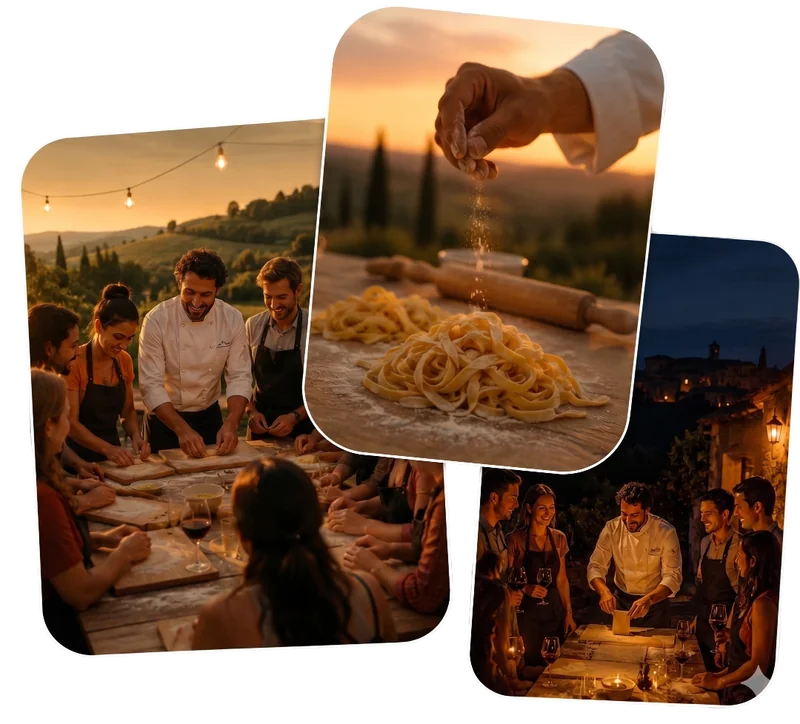
Pasta Class & Dinner Experience in Tuscany — chef teaching guests to roll fresh pasta at a Tuscan villa patio at sunset, close-up of tagliatelle being floured, dinner served on the patio at night

1. Send us your Sienese agriturismo details

Agriturismo or villa address in the Siena province, date, number of guests, dietary needs, plus which two of the four traditional Sienese pici sauces you want at dinner — cacio e pepe, all'aglione, con cinghiale or alle briciole. 60 seconds.

2. Meet your local Sienese pici instructor

Within twenty-four hours you receive a Sienese chef profile — photos, bio, languages, the area he is from (Crete Senesi for cinghiale, Val d'Orcia for cacio e pepe, Montepulciano for Vino Nobile pairing), prior pici masterclasses, his teaching style — and the all-inclusive quote: €140 per adult, €60 per child under 12.

Optional workshop upgrades: secondary shape (pici lunghi or hand-rolled pappardelle), vegan dough variant (pici is already egg-free), Brunello or Vino Nobile sommelier pairing, professional photographer of the rolling and dinner, white truffle from San Giovanni d'Asso in late autumn.

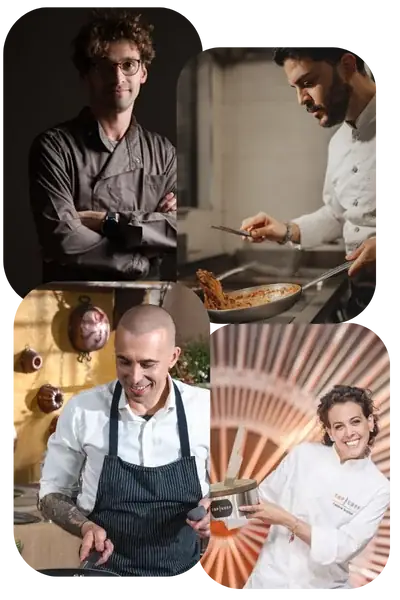
Private chef chefs collage
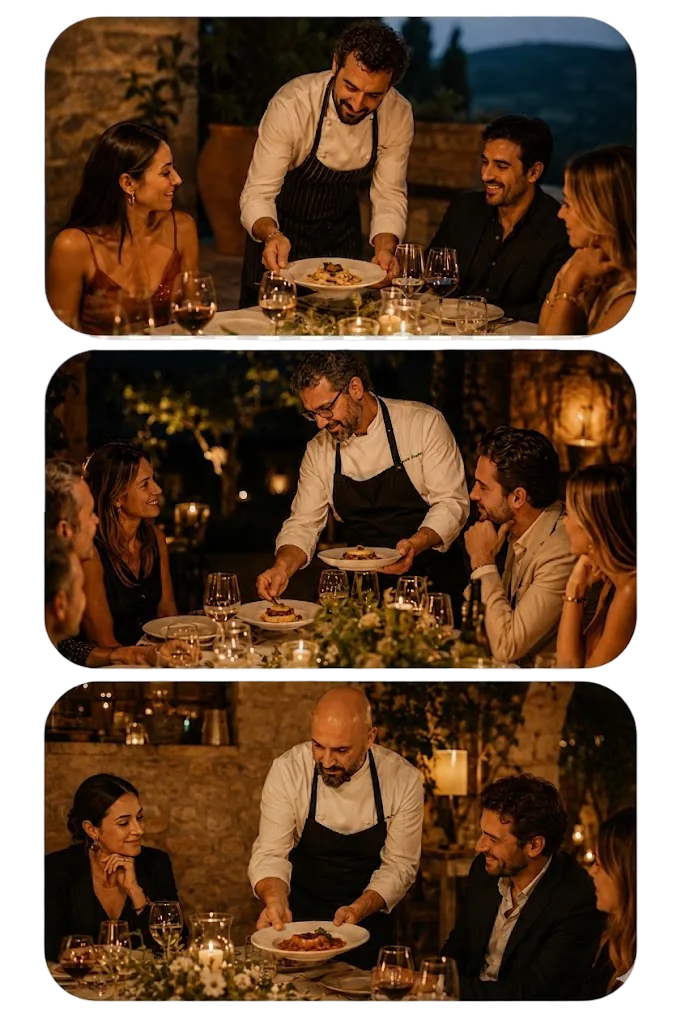
Sienese chef serving the four traditional pici sauces on a Crete Senesi agriturismo patio at night during a pici masterclass workshop — three moments of pici al cacio e pepe with Pecorino di Pienza, pici all'aglione with heirloom Sienese giant garlic, and pici con cinghiale wild boar ragù being plated for guests

3. The chef runs the pici masterclass and the dinner

He arrives forty minutes early at your Sienese agriturismo with fine semolina from Val d'Orcia mills, a small amount of '00' flour for the binding, aglione from the Crete Senesi (Slow Food presidium), Pecorino di Pienza DOP, Crete Senesi wild boar or Cinta Senese for the ragù, saltless Tuscan bread for the alle briciole breadcrumbs, panforte or ricciarelli — plus all professional equipment (wooden boards, semolina dusting bowls). The first two hours are the hands-on pici masterclass: kneading the egg-free semolina dough, resting, cutting, pinching, hand-rolling each strand against the wooden board. 100+ pici per guest. After the workshop he plates the dinner on your patio with the pici you produced and two of the four traditional Sienese sauces. Full clean-up before he leaves. You keep printed recipe cards plus digital 60-percent-hydration notes by email.

🔒 Booking protection

Fraud protection | Flexible cancellation policy | Dedicated customer support

All you do is show up at your pici station — six things the Sienese chef handles

Six things your local Sienese instructor takes care of so you can focus on the pinching, the palm pressure and the pizzicare rhythm. He runs the pici masterclass alone in your agriturismo or villa — no shared classes, no other tables, no other guests rolling alongside you.

Chef make a quote

1. Pici sauces confirmed with you

Two of the four traditional Sienese pici sauces confirmed (cacio e pepe, all'aglione, con cinghiale, alle briciole), plus two Sienese antipasti, the Sienese dolce (panforte, ricciarelli or cantucci with Vin Santo). Optional secondary shape (pici lunghi or hand-rolled pappardelle) flagged in advance. Dietary swaps confirmed in writing before the workshop.

Chef looking for the best ingredients for the private chef experience

2. Semolina, aglione & Pecorino di Pienza sourced

Fine semolina from Val d'Orcia mills (the only flour authentic pici uses; '00' is only a small binder), aglione delle Crete Senesi Slow Food presidium (sourced from Cetona, Sarteano or Chiusi producers), Pecorino di Pienza DOP from Val d'Orcia sheep farmers, Crete Senesi wild boar (or Cinta Senese pork as the milder alternative), saltless Tuscan bread for the alle briciole breadcrumbs, Tuscan olive oil from Castelnuovo Berardenga producers, panforte di Siena IGP from Antica Drogheria Manganelli or local artisan bakeries. Wine pairing — Brunello di Montalcino, Vino Nobile di Montepulciano, Chianti Classico, Vernaccia di San Gimignano — offered separately as an optional add-on.

Chef bring the grocery for the private chef experience

3. Travel to your Sienese agriturismo with the pici kit

Wooden pici-rolling boards (one per guest, dusted with semolina), semolina dusting bowls, additional drying boards for the rolled pici, a fork for the well, knives, dough scrapers, and aprons — one full pici-rolling station per guest. If a secondary shape is added (pappardelle), the chef also brings the mattarello and the fettuccia. He arrives forty minutes early at your Sienese agriturismo to set up each station and pre-knead the dough so it has time to rest properly.

Chef cooking

4. The Pici Masterclass — two full hours

Two full hours of focused pici-rolling: semolina mound, water in the well, kneading rhythm, 30-minute resting, then 80 minutes of pure pizzicare — pinch off a marble-sized piece, place it on the semolina-dusted board, roll it back and forth with the centre of your palm from the middle outward until it becomes a fat 5-6 millimetre irregular noodle a hand-and-a-half long. 100+ pici per guest by the end. The Sienese chef circulates continuously, correcting palm pressure, dough hydration, the rolling rhythm — mistakes corrected one-on-one in real time. This is the deepest pici technique transfer outside a Sienese grandmother's kitchen.

Chef serves for private service

5. Sienese dinner with the pici you rolled

Two Sienese antipasti (crostini con fegatini, Cinta Senese prosciutto or Pecorino di Pienza selection), the pici you hand-rolled in the workshop with two of the four traditional Sienese sauces (cacio e pepe with Pecorino di Pienza DOP, all'aglione with Crete Senesi giant garlic, con cinghiale with Crete Senesi wild boar ragù, or alle briciole with toasted breadcrumbs in olive oil), Sienese dolce — panforte with Vin Santo, ricciarelli, or cantucci dipped in Vin Santo del Chianti Classico. Course-by-course service on your patio after the masterclass ends.

Chef cleaning

6. Clean-up + pici recipe cards + hydration notes

The chef leaves the Sienese agriturismo kitchen exactly as he found it. You keep printed recipe cards in English for the four traditional Sienese pici sauces, the 60-percent-hydration semolina-and-water pici dough ratio, the pizzicare gesture annotated step by step, a sourcing list for aglione delle Crete Senesi and Pecorino di Pienza DOP available via online producers, plus digital recipe versions emailed the next morning. Past guests have replicated pici al cacio e pepe and pici all'aglione at home in Boston, Sydney, Berlin and Tokyo within weeks of the workshop.

Real pici masterclass stories from across the Siena province

Frederick A.

2026-04-18

★ 5.0/5

"Booked the pici masterclass for our tenth anniversary in an agriturismo near Pienza in Val d'Orcia. The Sienese chef was from the area — he walked us through the pizzicare rhythm in slow motion for ten minutes before letting us loose. Two solid hours of rolling, my wrists hurt for two days afterwards in the best possible way. Each guest hand-rolled well over a hundred pici. The cacio e pepe he served with our pici and Pecorino di Pienza was the cleanest, most balanced plate of pasta I have eaten in twenty years of trips to Italy. We now make pici on Sundays in Boston with the 60-percent-hydration ratio he wrote on the recipe card — the muscle memory genuinely transferred. Worth every euro and the absolute highlight of a two-week Tuscan trip."

Mei-Ling Z.

2026-03-22

★ 4.5/5

"Family of six staying in a Crete Senesi farmhouse near Asciano, three generations including my mother (who had wanted to learn pici for forty years). The chef brought the aglione bulbs split open so we could see the giant six cloves — none of us had realised aglione was a different vegetable from common garlic. Workshop was rigorous: he showed the pinching, then watched each of us for two hours and corrected palm angle and wrist tension one by one. We did the all'aglione for dinner with the pici we rolled, plus pici al cinghiale with wild boar from the Crete Senesi forests. The cinghiale ragù had been simmering for four hours by the time we sat down — best meal of the trip by far. Three months later my mother makes pici al cacio e pepe every two weeks at home in Vancouver. The Sienese chef became a friend; we are going back next year."

Tomasz K.

2025-11-09

★ 5.0/5

"Four of us, agriturismo on a hillside outside Montalcino with a view of the Brunello vineyards. We had asked specifically for the alle briciole sauce because we were curious about the medieval breadcrumb tradition, and the chef agreed to teach pici lunghi as a secondary shape so we could compare the standard pici with the extra-long version used historically for cinghiale ragù. The breadcrumbs toasted in Tuscan olive oil with garlic and anchovy were a revelation — a 600-year-old peasant sauce that turned out to be the most flavour-packed thing we ate in two weeks. The Sienese chef brought a bottle of Brunello from a small Montalcino producer he knew, and we ended the evening on the patio looking at the vineyards as the sun set behind Monte Amiata. Best 140 euros each I have ever spent in my life — and I have eaten in two-star Michelin restaurants. The pizzicare rhythm is the kind of skill that stays with you forever."

4.7 star review on Trustpilot

Review chef on demand trustpilot

Sienese pici insider tip

Ask the chef to walk you through the pizzicare rhythm in slow motion before he releases you to roll on your own. The pizzicare gesture has three distinct beats — pinch (a marble-sized piece between thumb and index finger), place (drop it on the semolina-dusted board, centre of palm above), roll (back and forth from the middle outward, with the centre of your palm only, never the heel and never the fingertips). The locals describe the rhythm as one-and-two-and-three — pinch on the one, place on the and-two, roll on the and-three — and they emphasise that the palm must stay flat, never cupped, and the wrist must be relaxed. A flat palm gives an even cylindrical pico; a cupped palm gives a conical pico that cooks unevenly. Take the first ten minutes purely to internalise this rhythm: most beginners try to skip ahead and roll fast, but the muscle memory only locks in if you go slowly for the first dozen pici. The Sienese chefs in our network — most of whom learned this rhythm at four or five years old at their grandmothers' tables — say if you can roll a good pico in ten seconds by the end of the workshop, you have transferable muscle memory for life. Book a workshop in the Crete Senesi or Val d'Orcia if you can — that is the source of the tradition, and the chefs there are the deepest pici teachers we have.

FREQUENTLY ASKED QUESTIONS

Your questions answered

Here are the most frequently asked questions by other customers before booking with Chef On Demand: there is probably one you are looking for an answer to.

What happens if I need to cancel my Pasta Class & Dinner in Florence?

Plans change. Free cancellation up to 30 days before the date with full refund. Within 30 days a partial fee applies because the chef has already locked the ingredient sourcing for that evening. Flexible rescheduling to another date during your Tuscan stay is always free.

How long does the Pasta Class & Dinner Experience last?

About three to four hours total from class start to last bite of tiramisù. The first two hours are the hands-on Pasta Class, followed by the dinner the chef cooks and serves (roughly one to two hours more). He arrives forty minutes early to set up and stays after the dessert to clean the kitchen — total presence in your villa is around four to five hours from arrival to leaving.

How much does the private Pasta Class & Dinner cost in Florence?

€140 per adult and €60 per child (under 12), all-inclusive of the experience itself. The price covers the private Pasta Class, '00' flour and fresh eggs, two antipasti, two fresh pastas with two sauces, homemade tiramisù, all professional equipment, printed recipe cards and full clean-up. The chef is dedicated exclusively to your group — no shared classes, no other guests. Wine pairing is not included in the base price — it is an optional paid add-on (Chianti, Rosso di Montepulciano, Brunello, with or without sommelier). Other optional add-ons: professional photographer, second pasta-shape upgrade. Send us your villa details for a precise quote.

Can I book the Pasta Class & Dinner for a group?

Yes — from a private couple (two guests) up to twelve guests works perfectly. Above twelve, we split the class into two consecutive Pasta Classes with two chefs or move it to a partner villa kitchen with the extra space. Hen parties, milestone birthdays, anniversaries, family gatherings and small corporate retreats are all standard formats.  

Some of our chefs in Siena

Verified profiles, client-reviewed and hand-picked for Siena.

Chef On Demand is Italy's private chef marketplace connecting clients with 12 verified professional chefs serving Siena, with prices from €85 per person. Brand rating 4.7/5 on 73+ Trustpilot reviews, first custom proposal in under 24 hours, fresh ingredients, service and cleanup included.

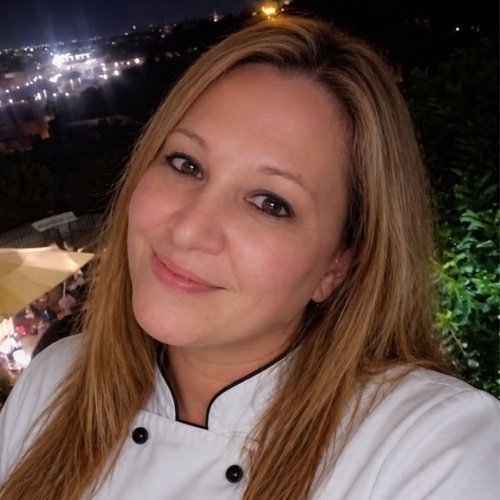
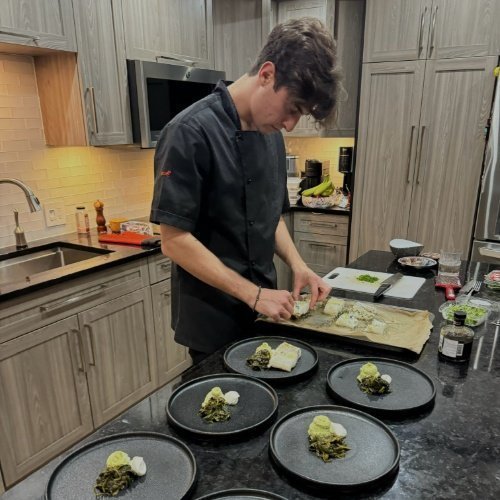
Chef Valentina

Valentina

Siena

I am Valentina, a chef with an innate passion for cooking that has accompanied me for over 15 years. My career is a journey through the…

Discover
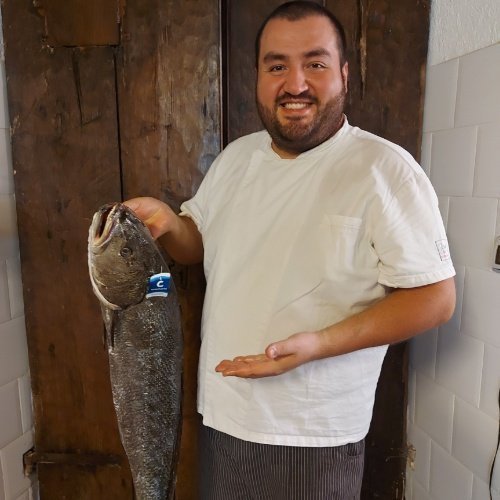
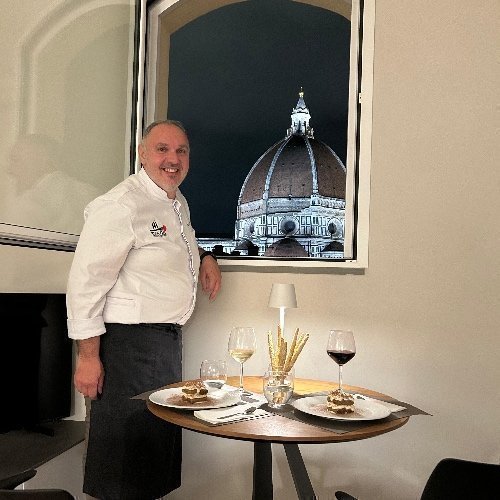
Chef Alessandro

Alessandro

Siena

I am Alessandro, an enthusiastic Italian chef with deep roots in the enchanting land of Tuscany. My passion for cooking was born amidst the…

Discover
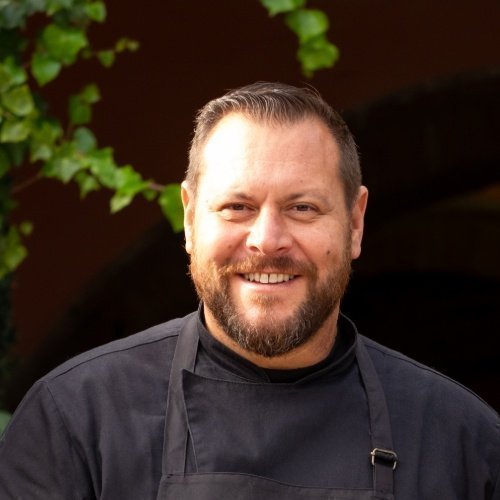
Chef Alessandro

Alessandro

Siena

I am Alessandro, a passionate ambassador of Italian cuisine, born and raised amidst the aromas and flavours of Tuscany. My passion for…

Discover
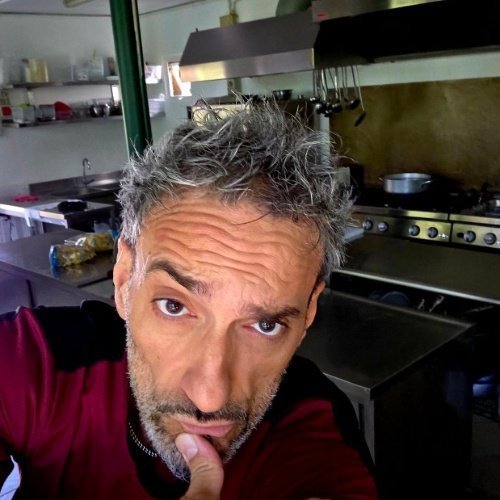
Chef Amine

Amine

Siena

I am Amine, an enthusiastic Italian chef who has found in cooking a way to express my creativity and dedication to the culinary arts. My…

Discover
Chef Gabriella

Gabriella

Siena

I am Gabriella, Italian by origin, and my cuisine is a journey through flavours and traditions that blend with innovation. Raised in the…

Discover
Chef Nicholas

Nicholas

Siena

I am Nicholas, a culinary enthusiast who has found in gastronomy an art capable of telling stories and evoking emotions. Italian by origin…

Discover
Chef Fusi

Fusi

Siena

I am Fusi, a passionate ambassador of Italian cuisine, born and raised amidst the hills of Tuscany. My passion for cooking is deeply rooted…

Discover
Chef Bartolo

Bartolo

Siena

I am Bartolo, a passionate Italian chef by origin, deeply connected to my homeland, Tuscany. My love for cooking was born among the aromas…

Discover
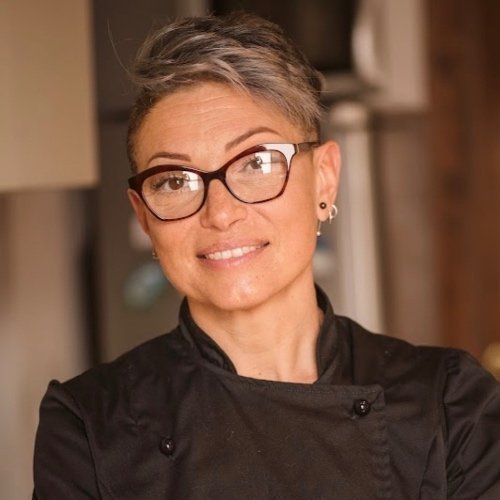
Chef Roberta

Roberta

Siena

I am Roberta, an Italian by origin with an innate passion for cooking that is deeply rooted in the tradition and culture of my country…

Discover
Chef Andrea

Andrea

Siena

I am Andrea, an Italian chef by origin, nurtured with a deep love for cooking that is deeply rooted in Tuscan tradition. My passion for the…

Discover
Chef Maria Virginia

Maria Virginia

Siena

I am Maria Virginia, an Italian chef by origin, born and raised in the picturesque region of Tuscany. My passion for cooking was born among…

Discover
Chef Fabio

Fabio

Siena

I am Fabio, an Italian by birth with an innate passion for cooking, passed down to me by my Tuscan grandparents. From a young age, I found…

Discover
Curated by the Chef On Demand Editorial Team · Reviewed by professional chefs from the COD network · Last updated: