What makes a Bologna private chef dinner different for food lovers?
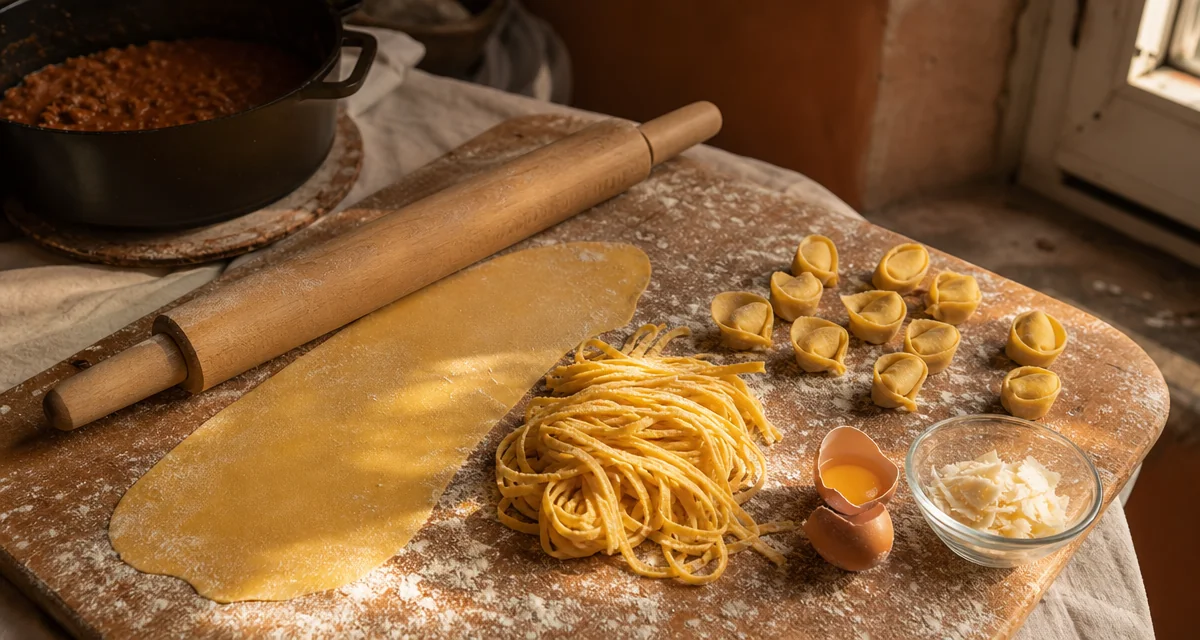
The difference is sourcing radius and technique. Bologna sits at the centre of Italy's Food Valley, so a chef can build an entire menu from products made within 60 kilometres, and the signature dishes are defined by hand skills rather than by expensive ingredients. That combination is unusual. In most Italian cities the luxury sits in the produce, but here it sits in the wrists of whoever rolls the pasta. A sfoglina is the pasta artisan (traditionally a woman) who rolls egg dough into a single translucent sheet using a long wooden pin instead of a machine, and that sheet, the sfoglia, is the foundation of nearly everything Bologna is famous for. Roll it too thick and the tagliatelle goes rubbery; roll it too thin and the tortellini split in the broth. Chefs in our Bologna network still train the old way, which is why the same menu tastes different when it is made in front of you rather than plated in a kitchen three streets away. And because you are eating at your own table, the pace belongs to your group: two hours between the antipasti and the dessert is normal, not rushed.
Tagliatelle al ragu, cut to the width filed at the Chamber of Commerce
Tagliatelle al ragu is Bologna's defining plate: ribbons of egg pasta, roughly one egg per 100 g of flour, dressed with a slow-cooked meat sauce of beef, pancetta, soffritto, a little tomato and milk. The city takes the specification seriously. A glass case in the Bologna Chamber of Commerce holds a solid gold replica of a single tagliatella showing the correct cooked width of 8 mm, which works out at 6.5 to 7 mm uncooked. The sauce is filed there too: the Italian Academy of Cuisine deposited a classic ragu recipe in 1982 and lodged a revised version in 2023. Spaghetti bolognese, incidentally, is not a Bolognese dish at all. Ask any of the chefs across our Bologna network and you will get the same answer, usually with a raised eyebrow. What you should ask for instead is tortellini in brodo, tiny hand-folded parcels of pork, prosciutto, mortadella and Parmigiano served in clear capon broth, which locals treat as the true test of a cook.
How much does a private chef in Bologna cost per person in 2026?
A private chef dinner in Bologna costs €85 to €180 per guest in 2026, before wine and before holiday surcharges. Group size moves the number more than anything else, because the chef's travel, market shopping and setup are fixed costs spread across the table. Six guests on a 4-course Essential menu pay around €95 per head; the same menu for 10 guests settles at €85. Step up to Taste of Italy, our 5-course regional showcase, and 6 guests pay about €120 each while 10 guests pay €100. The Luxury tier of 6 or more courses, which is where white truffle from the Apennine foothills, aged culatello and a multi-wine flight appear, runs €180 per person at 6 guests and €150 at 10. Those figures cover the groceries, the chef's time cooking and serving, and the cleanup, so the comparison against a restaurant is closer than it first looks. Two caveats worth knowing: Christian holidays including Easter and Christmas add 35% to the client price, and Bologna is not classified as a premium surcharge zone the way Florence, Venice and the Amalfi Coast are, so you are not paying a postcode premium here.
| Tier | Courses | 6 guests | 10 guests | Typical Bologna menu |
|---|---|---|---|---|
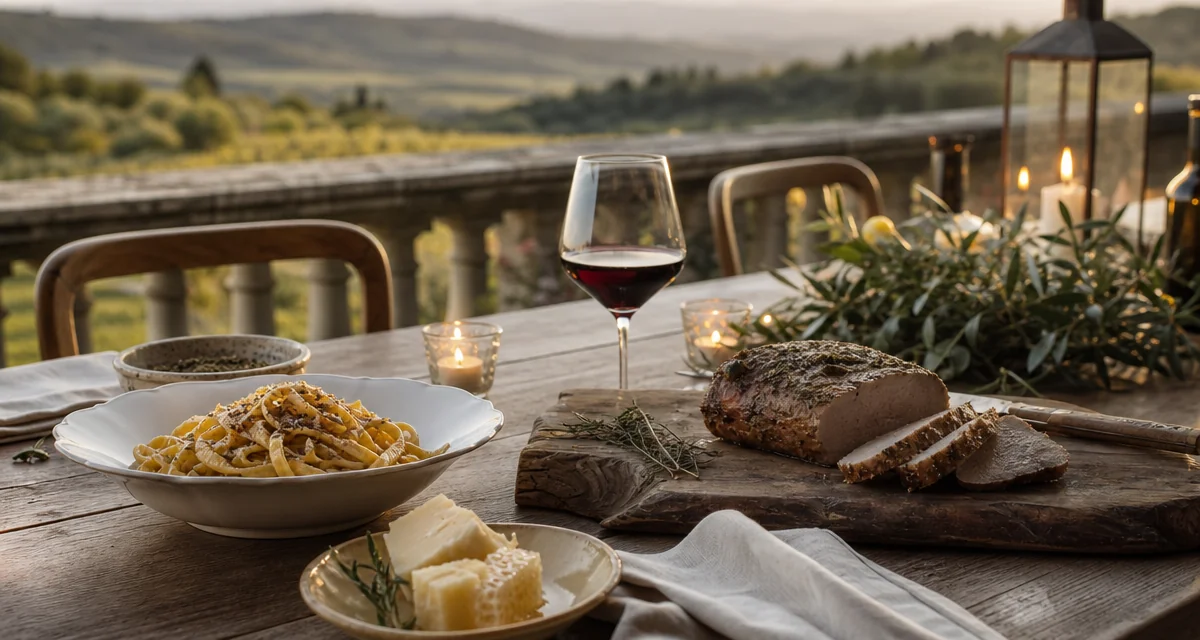
| Essential | 4 fixed | €95 | €85 | Mortadella and squacquerone antipasto, tagliatelle al ragu, roast pork loin, zuppa inglese |
| Taste of Italy | 5 courses | €120 | €100 | Salumi board, tortellini in brodo, tagliatelle al ragu, guinea fowl, torta di riso |
| Luxury | 6 or more | €180 | €150 | Culatello and 36-month Parmigiano, tortellini, tagliolini with Apennine truffle, aged beef, wine flight |
Where does your chef actually shop in Bologna?
Market shopping is part of the booking, not an add-on. The chef does a sourcing round on the morning of your dinner, usually across two or three addresses in the old centre. The Quadrilatero is the tight grid of medieval trading streets behind Piazza Maggiore, where Via Pescherie Vecchie and Via Drapperie still hold fishmongers, butchers and fresh pasta windows in shopfronts barely three metres wide. A few hundred metres north on Via Ugo Bassi sits the Mercato delle Erbe, a covered market trading since 1910 and the place chefs go for greens, herbs and seasonal fruit rather than for show. What that means for you is simple: you are eating produce bought hours earlier, not stock rotated through a restaurant fridge. If you want to see the shopping for yourself, ask the chef whether you can join the round. Some will happily bring one or two guests along. It is their working sourcing trip rather than a guided tourist market tour, which is precisely why it is interesting.
Parmigiano Reggiano DOP, Prosciutto di Parma and balsamico: how the sourcing works
Three protected products anchor almost every menu here, and a good chef will tell you the numbers behind them. Parmigiano Reggiano DOP is a raw-milk cow's cheese aged a minimum of 12 months, 18 to 24 for vecchio and 24 to 36 for stravecchio, and its production zone covers Parma, Reggio Emilia, Modena, the part of Bologna province west of the River Reno, and Mantua south of the Po. So a wheel opened at your table may well have been made inside the same province you are staying in. Prosciutto di Parma is a dry-cured ham made with nothing but pork and sea salt, aged at least 12 months and often far longer, sweet rather than salty. Aceto Balsamico Tradizionale di Modena DOP is a different animal from supermarket balsamic: cooked grape must aged in a descending battery of wooden casks for a minimum of 12 years, with an extravecchio gold cap at 25 years. It arrives by the teaspoon, over Parmigiano or vanilla ice cream, and it is worth every drop of the ceremony.
In Bologna nobody is impressed by an expensive ingredient. They are impressed by a sheet of sfoglia you can read a newspaper through. Chef Stefano, Bologna-based ambassador of Chef On Demand Emilia-Romagna
Can you make the pasta yourself? The Pasta Class + Dinner experience
Yes, and it is the format most food-focused travellers end up choosing in Bologna. The Pasta Class + Dinner experience is a single 4 to 5 hour booking that runs entirely at the villa, apartment or holiday rental you are staying in. The chef travels to you with every ingredient, board, pin and cutter, so there is no cooking school to reach and no transfer between the lesson and the meal. The class itself lasts about two hours and teaches two fresh-pasta shapes, one long and one short, which in Bologna almost always means tagliatelle plus a short shape such as maltagliati or garganelli. You knead, you roll, you cut. While the pasta rests on your own worktop the chef builds two sauces, one for each shape, typically a slow meat ragu for the long pasta and a vegetable or seasonal sauce for the short one, along with two or three regional antipasti and a homemade tiramisu. Then everyone sits down at your table and eats what the group just made. It costs €150 per adult and €60 per child, and the price covers ingredients, equipment, professional set-up and full clean-up.
- Confirm the kitchen surface. Measure your largest worktop or dining table and send the dimensions, because rolling a sfoglia by hand needs roughly 80 by 80 cm of clear space.
- Choose your two shapes with the chef. One long and one short is the fixed structure, but tagliatelle, pappardelle, maltagliati and garganelli are all on the table in Bologna.
- Declare allergies and dietary needs as a bullet list, not as prose, at least 72 hours before the date.
- Decide who is actually cooking. Children and non-cooking guests can drift in and out; only the participants need aprons and space.
- Sort the wine in advance. Buy a bottle of Pignoletto and one of Lambrusco at a local enoteca, or ask the chef to bring pairings.
- Block the afternoon. A 2pm start puts you at the table around 6.30pm, which suits families and leaves the evening open.
How a Bologna pasta making class with dinner compares to a cooking school
A cooking school in the centre puts you in a fixed cohort of ten or twelve strangers, on a fixed menu, in a rented classroom, usually finishing at a communal counter. The at-home format changes five things that matter to a food lover. Privacy: only your group is at the table. Personalisation: the menu, the pace and the dietary adjustments are built around your party rather than around an average of twelve people. Setting: you use the terrace or the vaulted kitchen of the property you are already paying for, instead of trading it for a classroom. Zero transfer logistics: no parking in the ZTL, no taxi for eight, no rushing between two venues, which matters even more if you are staying out in the Colli Bolognesi, the wine hills 20 to 30 minutes south of the city. Continuity: the pasta you shaped is on your plate half an hour later, at a proper seated dinner, not eaten standing up before the next class arrives.
Private chef, food tour or cooking school: which suits a food lover in Bologna?
All three work, and they answer different questions. A group food tour is the right call on your first morning, when you want to taste eight things in three hours and learn the geography of the Quadrilatero. A cooking school suits solo travellers and couples who want the technique and do not mind sharing a bench. A private chef in Bologna is the right call when the group is four or more, when there are dietary complications, when there are children or older relatives who will not stand for three hours, or when you simply want an evening that belongs to your party alone. The maths shifts too. Food tours in Bologna typically sit around €90 to €120 per person for a half day of tastings, cooking schools around €85 to €159 for a class with lunch, and a private chef dinner at €85 to €180 with the whole evening included. Many of our guests do a tour on day one and a private dinner on the last night, and honestly that sequence works: you arrive at the table already knowing what a 36-month Parmigiano tastes like.
| Format | Where it happens | Group | Indicative cost per person | Best for |
|---|---|---|---|---|
| Private chef dinner | Your villa or apartment | Your party only, 2 to 12 typical | €85 to €180 | Groups of 4+, families, dietary needs, celebrations |
| Pasta Class + Dinner | Your villa or apartment | Your party only | €150 adult, €60 child | Travellers who want the technique and the meal in one evening |
| Group food tour | City streets and markets | Shared, 8 to 14 people | €90 to €120 | Orientation on day one, solo travellers, tasting breadth |
Can the chef stay for the whole week, and cook in Modena and Parma too?
Yes. The multi-day format runs across 3 to 7 days, and for each day you choose which meals the chef cooks: breakfast, lunch, dinner, or any combination. Most groups pick 2 or 3 dinners plus one long lunch across a week, because nobody wants to give up every restaurant night in a region this good. Daily market shopping, on-site cooking and a menu that never repeats unless you ask are all built in. Cost depends on one variable people rarely think about, which is where the chef sleeps. There are three configurations: the chef stays at the property when there is a spare room, which gives the lowest daily rate; a local chef commutes daily from home, which works well around Bologna because the network is dense here; or the chef books lodging nearby, which appears as a transparent line item in the quote. Multi-day quotes are always custom, so we will not pretend there is a single per-day rate. From a base in the Emilia-Romagna countryside the same chef can cook while you day-trip to Modena for balsamic cellars, Parma for ham and culatello, Ferrara for cappellacci di zucca, or Ravenna for mosaics and Adriatic fish.
When is the best time to visit Bologna for food?
Bologna is one of the few Italian food cities with no dead season, but the menus swing hard. September to November is the strongest window: white truffle appears in the Apennine foothills, the Colli Bolognesi harvest brings new Pignoletto (a crisp white from the Grechetto gentile grape, the local aperitivo wine), and porcini and chestnuts arrive from the hills. December and January belong to tortellini in brodo, and the broth genuinely tastes better when it is 2°C outside. Spring is asparagus, artichokes and young sheep's cheese, and it is the quietest booking period, so lead times drop to around 5 to 7 days. July and August are hot and humid on the plain, which is when groups head for the hills or the Adriatic near Rimini, and a chef cooking at your rented villa is far more pleasant than a queue outside a trattoria at 38°C. Across our network the average booking lead time is 7 to 14 days in peak season, June through September, and longer around Christmas.
Why this matters for your Emilia-Romagna holiday
Most people arrive in Bologna having read the same three articles and eat the same three dishes in the same four restaurants, then leave slightly puzzled about why everyone calls it the food capital. The city does not really give itself up in a dining room with a laminated menu. It gives itself up on a worktop, at the point where somebody hands you a pin and says the sheet is not thin enough yet. That is the whole argument for hiring a private chef for your stay in Bologna instead of booking another table: you get the technique, the sourcing story and the DOP geography explained by someone who buys these products every week, and you get them sitting down, with your own people, for as long as you want to stay at the table. Chef On Demand holds a 4.7 out of 5 Trustpilot rating from 800+ guests served since 2025, and many of the chefs in the network come from Michelin-starred kitchens, Gambero Rosso-rated restaurants and Italian television kitchens. You can see the full network across the country on our private chef hub, or start with the chefs we work with in Bologna itself. If you want more on the class format first, our guide to cooking classes in Bologna and our round-up of private chef dinner party menus in Italy both go deeper. The last image most guests keep is the same one: a bowl of tagliatelle they cut themselves, 8 mm wide, going round the table twice.