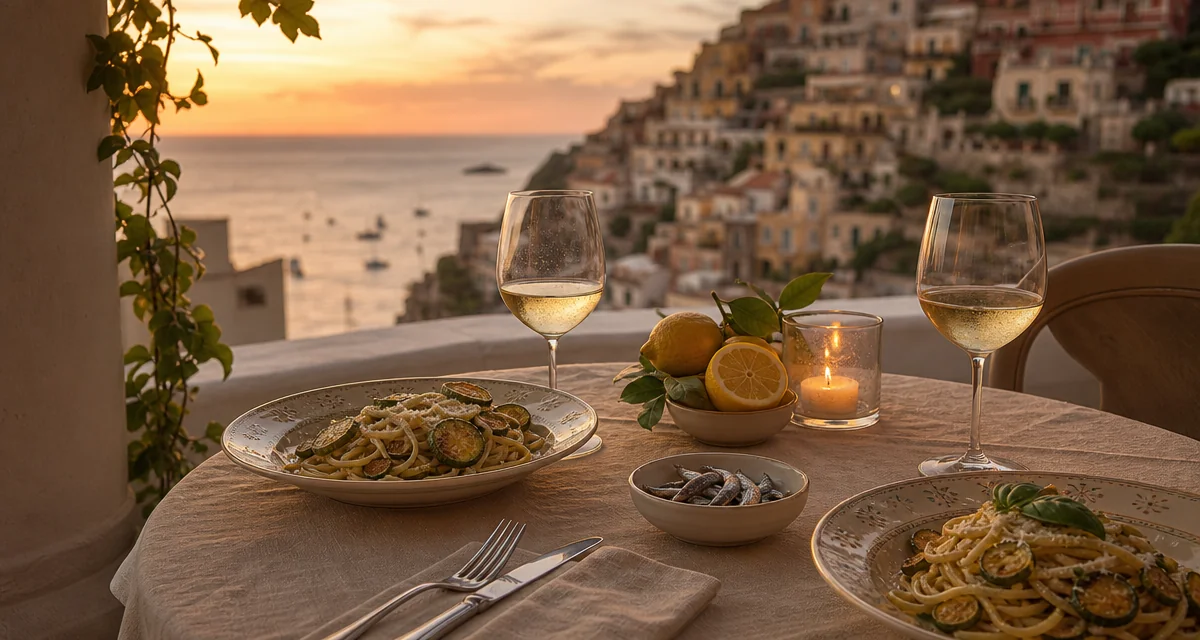
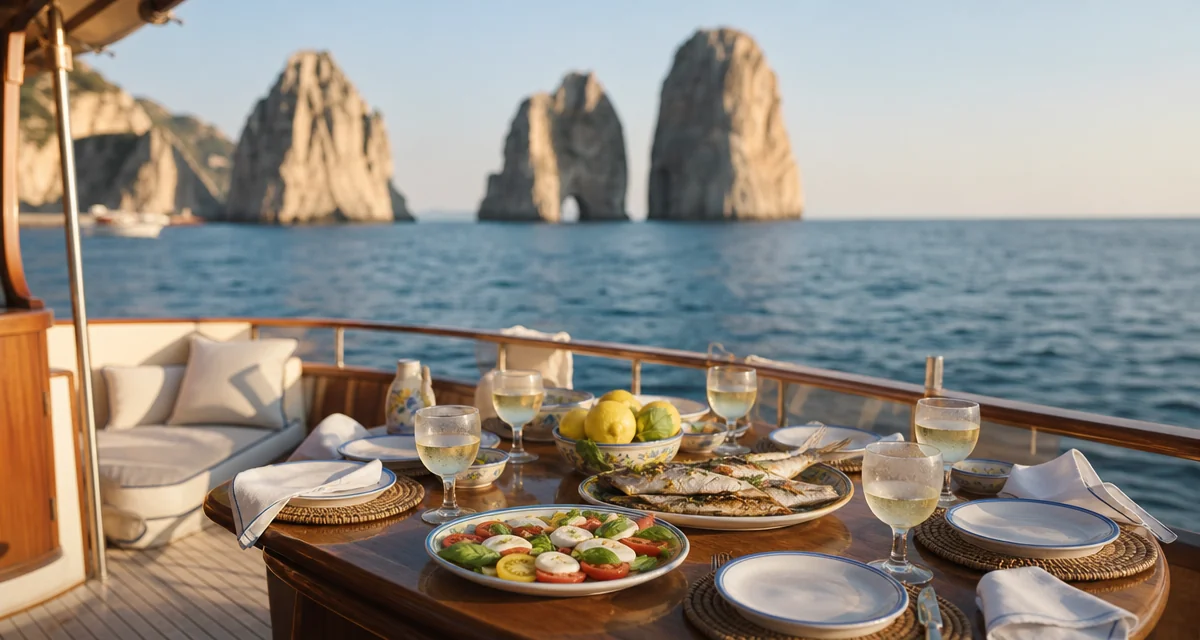
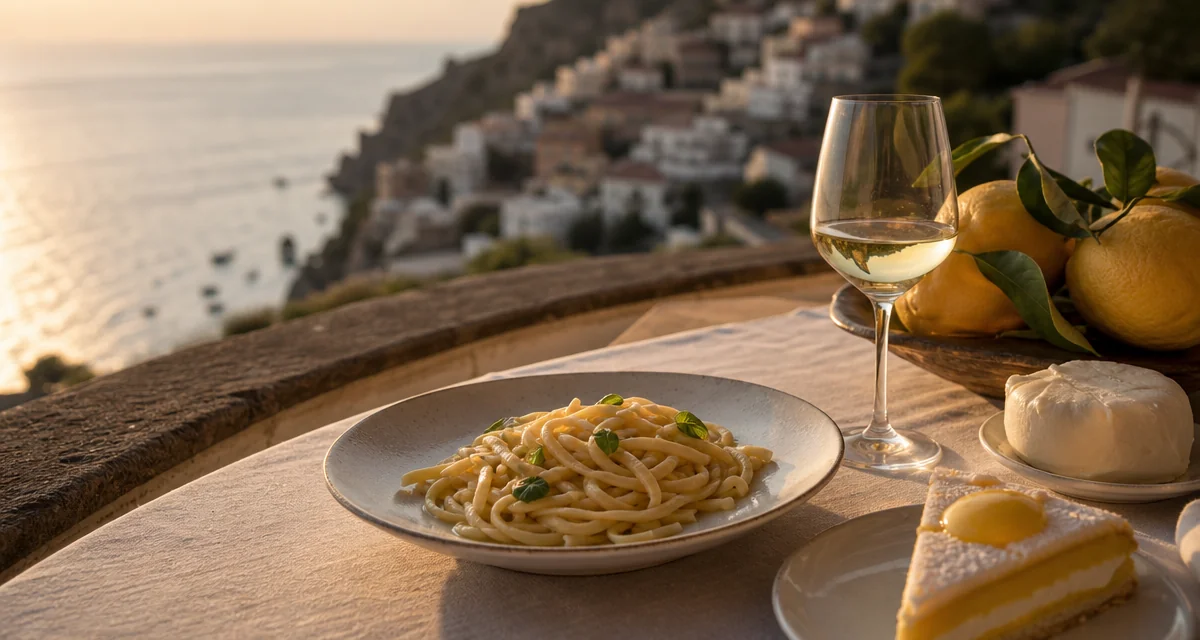
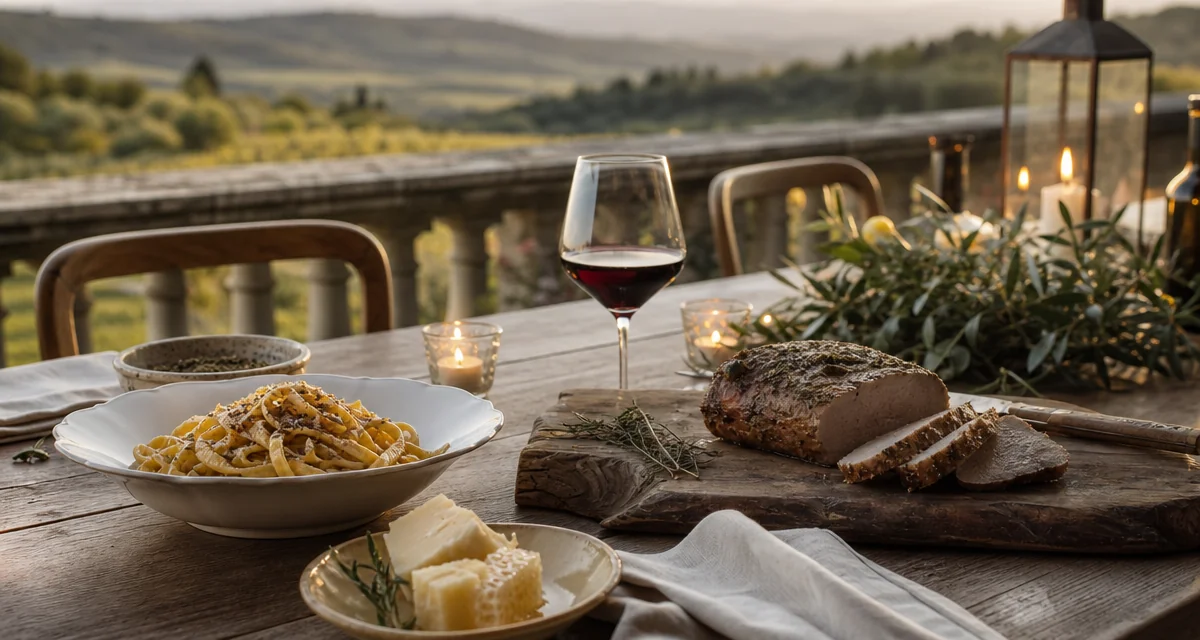
What does a private chef dinner party in Naples actually include?
A private chef dinner party in Naples includes menu design, market shopping on the day, cooking in your own kitchen, table service through every course, and a full clean-up before the chef leaves. One booking covers one chef, plus an assistant above roughly 12 guests, within a service window of two to four hours.
Everything starts with the shopping rather than the cooking, and in Naples that is not a marketing line. Chefs buy where the city buys: La Pignasecca, the dense street market behind Via Toledo trading produce, fish and cheese for centuries, or Porta Nolana, the fish market near the central station where the night's catch is sold from crates on the pavement and largely gone by nine. What comes back in the crate is what you eat, so a menu agreed in April can shift slightly by the time you sit down in July, and that is a feature rather than a problem. The chef arrives carrying groceries, knives and whatever equipment your kitchen lacks, then works around your hob instead of expecting a professional line. Mozzarella di Bufala Campana DOP, the fresh buffalo-milk cheese made in the plains between Caserta and Salerno and protected by EU origin rules since 1996, is usually bought within hours of service because it loses its texture fast. The typical Naples booking across our network is 4 to 12 guests, and Chef On Demand holds a 4.7/5 Trustpilot rating from 800+ guests served since 2025. You can browse private chefs working across Naples before you decide on a format.
How much does a Naples private chef dinner party cost in 2026?
A private chef dinner party in Naples costs roughly €85 to €180 per guest in 2026, before wine and holiday surcharges. The range is set by two things: the tier you choose (Essential, Taste of Italy or Luxury) and how many people sit down, because fixed costs spread across more covers.
Group size does more work than most people expect. An Essential menu of four courses is around €95 per head for 6 guests and €85 once you reach 9 or more, while the same jump on a Luxury menu of six or more courses takes you from €180 to about €150 per person. Small tables carry the opposite maths: a couple booking Taste of Italy pays around €200 each, because one chef, one shopping run and one clean-up are absorbed by two covers instead of ten. The city itself is the quiet saving. Naples is not classified as a premium location in our pricing, unlike Capri, Sorrento and the Amalfi Coast towns, so the identical five-course menu that costs €120 per head in a Chiaia apartment is closer to €135 per head in a Positano villa forty minutes down the coast. Christmas week and Easter shift the numbers again, adding roughly 35% to the per-guest rate, and 24 to 26 December plus New Year's Eve are quoted as fixed group prices rather than per person. If you are comparing coastlines, our Amalfi Coast cost guide breaks down the same tiers with sea-view assumptions.
| Format | What lands on the table | 6 guests | 10 guests |
|---|---|---|---|
| Essential | 4 courses, classic Neapolitan set menu | ≈ €95 per guest | ≈ €85 per guest |
| Taste of Italy | 5 courses, curated regional showcase | ≈ €120 per guest | ≈ €100 per guest |
| Luxury | 6+ courses, Gulf seafood or aged cuts, multi-wine pairing | ≈ €180 per guest | ≈ €150 per guest |
| Pasta class + dinner | 2-hour hands-on pasta class, then the full seated dinner | €150 per adult (€60 per child) | €150 per adult (€60 per child) |
What goes on a Neapolitan menu beyond pizza?
A Neapolitan dinner menu is built on slow-cooked meat sauces, seafood from the Gulf, and vegetables from the volcanic soil around Vesuvius. Pizza is the city's export, but the food Neapolitans cook at home for a celebration is ragù, genovese, seafood pasta and a dessert with a century of argument behind it.
Ragù napoletano is the Sunday centrepiece: whole cuts of beef and pork braised in tomato for four to six hours until the meat falls apart and the sauce turns almost black, served first on pasta and then as a second course with the meat itself. Its rival is the genovese, which despite the name has nothing to do with Genoa: it is a sauce of onions (six to eight kilos of them for a family pot) cooked down with beef for hours until they collapse into something sweet and beige, traditionally served with ziti snapped by hand. Between them sits parmigiana di melanzane, layers of fried aubergine, tomato, basil and cheese baked into a slab that Campania and Sicily still argue over. For dessert expect babà, a yeast cake soaked in rum syrup that arrived with the Bourbon court in the eighteenth century, or pastiera, the wheat-and-ricotta Easter tart scented with orange-flower water. Tomatoes matter as much as technique here: San Marzano DOP plum tomatoes from the volcanic Sarno valley give the long sauces their low acidity, while Pomodorino del Piennolo del Vesuvio DOP, the small thick-skinned tomatoes hung in clusters on the volcano's slopes and kept through winter without refrigeration, go into the quick seafood dishes.
Guests arrive asking for pizza and leave talking about the genovese. Six kilos of onions and four hours of patience will beat a wood oven at a dinner table, every time. Chef Salvatore, Naples-based ambassador of Chef On Demand Campania
Seafood from the Bay of Naples
If your dinner falls between May and October, seafood is where a Naples chef will spend your money. Spaghetti alle vongole (clams, garlic, oil, parsley and nothing else) is the benchmark, and a good chef cooks the pasta two minutes short and finishes it in the clam liquor. Frittura di paranza, the mixed fry of small fish from the trawlers, is the sound of a Neapolitan table starting: anchovies, red mullet, tiny squid, thirty seconds each in hot oil. Polpo alla luciana, octopus stewed with tomatoes, olives and capers in the style of the old Santa Lucia fishermen, is the winter counterpart. Two Campanian ingredients elevate all of it: colatura di alici di Cetara, the amber anchovy sauce aged in chestnut barrels in a single Amalfi Coast village and protected as a Slow Food Presidium, and lemons from the Sorrento peninsula, whose thick fragrant peel goes into everything from marinated raw fish to the delizia al limone dessert. Ask your chef what came off the boats that morning, because in Naples that question changes the answer.
Private chef dinner ideas for a Naples apartment
The best Naples apartment menus are built around dishes that finish fast and travel three metres to the table. A workable five-course shape: marinated anchovies and buffalo mozzarella to start, then a seafood pasta, then a slow-braised meat that has been in the oven since afternoon, a simple escarole or friarielli side, and babà to close. Wine keeps you in Campania without effort. Lacryma Christi del Vesuvio DOC, grown on the volcano's slopes in white (Coda di Volpe) and red (Piedirosso) versions, answers almost any course. Fiano di Avellino DOCG brings hazelnut and honey notes that hold up against fried fish, while Greco di Tufo DOCG is sharper and more mineral, which is exactly what clams want. Falanghina, the everyday Campanian white, sits in the middle and costs less. For more menu architecture before you brief a chef, our guide to private chef dinner party menu ideas in Italy works through the same problem region by region.
How is an apartment or terrace dinner different from a villa on the coast?
A Naples apartment dinner is a logistics exercise that a coastal villa dinner is not. Villas offer parking, big kitchens and space to stage courses. City flats offer a terrace with a volcano view, a two-burner hob, a lift built in 1930 and a restricted-traffic zone between the chef's van and your front door.
None of this is a reason to book a restaurant instead, but it does change the brief. The historic centre of Naples, a UNESCO World Heritage site and one of the densest inhabited old towns in Europe, is largely a limited-traffic zone, so the chef may park several streets away and carry everything in. Tell them the floor number and whether the lift works: four flights with 25 kilos of ingredients adds twenty minutes to a set-up. Terraces bring their own arithmetic, because serving 10 people outside means the food crosses the flat twice per course, so chefs favour dishes that hold their temperature (braises, baked pasta, fried fish eaten immediately) over anything that must hit the table in ninety seconds. Buildings here sit close together and sound carries, so a terrace dinner running past midnight is a conversation to have with the neighbours rather than the chef. Dinner also starts late: 20:30 is normal, 21:00 is common in July, and a chef briefed for 19:30 will be waiting in an empty flat.
- Measure the table, not the room. A 5-course dinner for 10 needs about 70 cm of table width per guest plus space for shared plates.
- Count your burners and open the oven. Two rings and a 45 cm oven is a normal Naples rental and shapes the menu significantly.
- Check lift dimensions and floor number, then say so in the enquiry so the chef schedules the extra load-in time.
- Confirm your address sits inside or outside the ZTL, since restricted-traffic access decides where the chef can unload.
- Agree the serving time in local rhythm: 20:30 for a city dinner, 21:00 in high summer if you want the terrace at dusk.
- Ask what fish landed that morning at Porta Nolana and let the chef swap one course accordingly.
- Tell the chef about neighbours, shared terraces or building curfews before the menu is finalised, not on the night.
Dinner with a view: terraces in Chiaia, Posillipo and the Vomero
Half the reason to eat at home in Naples is the view you're already paying for. Chiaia, the elegant seafront district between the Riviera and Piazza dei Martiri, gives you the bay at eye level, while Posillipo, the headland where the city climbs above the water, delivers the postcard: Vesuvius on the left, Capri on the horizon, the whole Gulf in between. The Vomero, up behind the Certosa di San Martino, looks down on the rooftops and catches the breeze the lower city misses. Restaurants with those views charge accordingly and impose a two-hour table with a 20:00 or 22:15 sitting. On your own terrace the sunset lasts as long as you want it to, the wine is whatever you carried back from the enoteca, and nobody asks you to leave. Plan for wind (candles in glass), insects in July and August, and a plan B indoors if a September storm rolls in off the sea.
How do you book a private chef in Naples, and what should you tell them?
You book by sharing five things: date and serving time, exact address with floor and lift details, number of adults and children, any allergies or dietary rules, and the tier you have in mind. Everything else, including the menu itself, is designed backwards from those constraints by the chef.
Lead time across our network averages 7 to 14 days in peak season, which in Naples means June to September plus the Christmas and Easter weeks. Outside those windows a good chef can often be secured 3 to 5 days out, though the best ones book earlier because they also work weddings on the Sorrento peninsula. Allergies deserve their own line rather than a mention in prose: write them as a list, name the guest, and separate a true allergy from a preference, because a shellfish allergy in a city that cooks with clam liquor changes the whole menu structure rather than one dish. Flag children too, since Neapolitan chefs will happily cook a plain pasta al pomodoro alongside the adult courses. Groups splitting time between city and coast often pair a Naples evening with a stay in Positano or a day trip out to Procida. You can see who cooks in the city on our Naples chef network page.
Private chef or personal chef: which one are you booking?
The two terms get used interchangeably online, but they describe different jobs. A personal chef cooks regularly for one household, often batch-preparing several days of meals. A private chef, which is what you're booking for a dinner party in Naples, designs and cooks a single event: one menu, one evening, served course by course at your table, then a clean kitchen and goodnight. Searches like 'private italian chef near me' or 'chef at home Naples' surface both, while the Italian equivalent, 'chef a domicilio Napoli', mostly returns the second. The practical distinction: you want someone who arrives with the shopping done, cooks for two to four hours, serves, and leaves the kitchen as they found it.
Can you add a pasta class, or book a chef for the whole stay?
Yes to both. The Pasta Class + Dinner Experience is a single booking of roughly four to five hours that begins with a two-hour hands-on lesson and ends with a full seated dinner. Multi-day bookings put a chef with your group for three to seven days, cooking the meals you choose on each day.
The class happens entirely at the apartment or villa you've rented, never at a cooking school or a restaurant kitchen. The chef arrives with all the ingredients, boards, rolling pins and cutters, and teaches your group two fresh shapes: one long (tagliatelle or pappardelle) and one short (orecchiette or maltagliati). While the dough rests on your worktop, the chef prepares two sauces, one per shape, two or three antipasti, and a homemade tiramisù. Then everyone sits down at your table, on your terrace if you have one, and eats what they made. At €150 per adult and €60 per child it costs more than a straight dinner, and the reasons people choose it are specific: only your group is in the kitchen, the menu bends to your allergies and your children's patience, there is no 40-minute drive to a class venue and back, and the timing is yours rather than a school's rota. Multi-day stays work differently. The chef shops daily at Pignasecca or Porta Nolana and cooks the meals you've agreed (a common weekly pattern is two or three dinners plus one long lunch, leaving room for restaurant nights). Cost depends on lodging: the chef either stays at the property, commutes daily from home in the Naples area, or takes a room nearby with the accommodation line-itemed in the quote, so those quotes are always built for your specific dates.
Why this matters for your stay in Naples
Naples is a hard city to eat well in as a visitor, not because the food is poor but because the good tables are booked, the tourist streets are loud, and the best cooking has always happened in houses rather than dining rooms. Every family here has an opinion about ragù they will defend at length, and none of that reaches you across a counter on Via dei Tribunali. Hiring a chef flips the geometry. Instead of ten of you negotiating a reservation and splitting across two tables, you have one table on a terrace with the volcano going purple behind it, a chef explaining why the genovese needed six kilos of onions, and a bottle of Lacryma Christi someone bought that afternoon three doors down. Children eat when they're hungry, nobody drives, and the evening ends when you decide. For roughly the price of a group restaurant meal in a tourist district you get the food the city actually cooks, in the flat you rented for the view. That is the difference between visiting Naples and eating in it. When you're ready to compare cities or coastlines, our full private chef network across Italy covers the mainland and the islands, and you can book a private chef in Naples directly. The evening usually ends the same way: the chef gone by eleven, the kitchen spotless, and somebody on the terrace insisting there's room for one more slice of babà.