How does a private chef service in Italy actually work?
A private chef service in Italy is a single-event booking in which one chef and (for groups of 5 or more) an assistant arrive at your accommodation 2 to 3 hours before service with fresh ingredients shopped that morning, cook the agreed menu in your kitchen, plate every course at the table, pour the wine pairings if you have asked for them, and leave the kitchen cleaner than they found it. The full window runs roughly 4 hours: 2 hours of mise en place (the French restaurant-kitchen term Italian chefs still use for prep — chopping, marinating, fresh-pasta dough resting), a 90 to 120-minute service spread across courses paced to the table, and 30 minutes of clearing and dishwasher loading. The format is private — only your party at the table, no other guests, no shared cohort, no set menu imposed on you. The menu is bespoke: you brief the chef on dietary needs, dishes you have read about and want to try, the wine you have bought at the local enoteca (wine bar and shop where you can taste and buy regional bottles), and the chef returns a menu draft 7 to 10 days before the event. Chef On Demand operates a verified network of 12+ private chefs across Italy, with a 4.7/5 Trustpilot rating based on 800+ guests served since 2025.
How is a private chef in Italy different from catering, a personal chef and a restaurant?
The three terms get used interchangeably online, but the Italian market draws clear lines that matter at booking time. Catering (Italian: catering or servizio rinfresco) prepares the food in a central kitchen and transports it to your venue in heated trays — efficient for 40-guest weddings and corporate buffets, weak on à-la-minute pasta and seared cuts. A personal chef in the Italian market (chef personale) is closer to the US definition — a recurring weekly arrangement for residents or long-stay expats, with batch-cooked meals stored in the fridge; not a holiday format. A private chef service (chef privato a domicilio) is the holiday-friendly one: one chef, one event, all cooking on-site, plated course by course. And the restaurant remains itself — you travel to it, the chef cooks for 60 covers at once, the wine list is theirs. For a group of 4 to 12 inside a villa, the private chef format is usually the right choice; for 30+ guests, talk to a caterer. International authorities on Italian food culture — ENIT, the Italian National Tourist Board, and Slow Food's Presidia programme — emphasise the same principle: the closer the kitchen is to the table and to the source ingredients, the better the food.
When clients ask the difference, I tell them this: a restaurant cooks the menu they want to cook; a private chef cooks the menu you want to eat. Everything else is logistics. Chef Lorenzo, Florence-based ambassador of Chef On Demand Tuscany
What can you actually book through a private chef service in Italy in 2026?
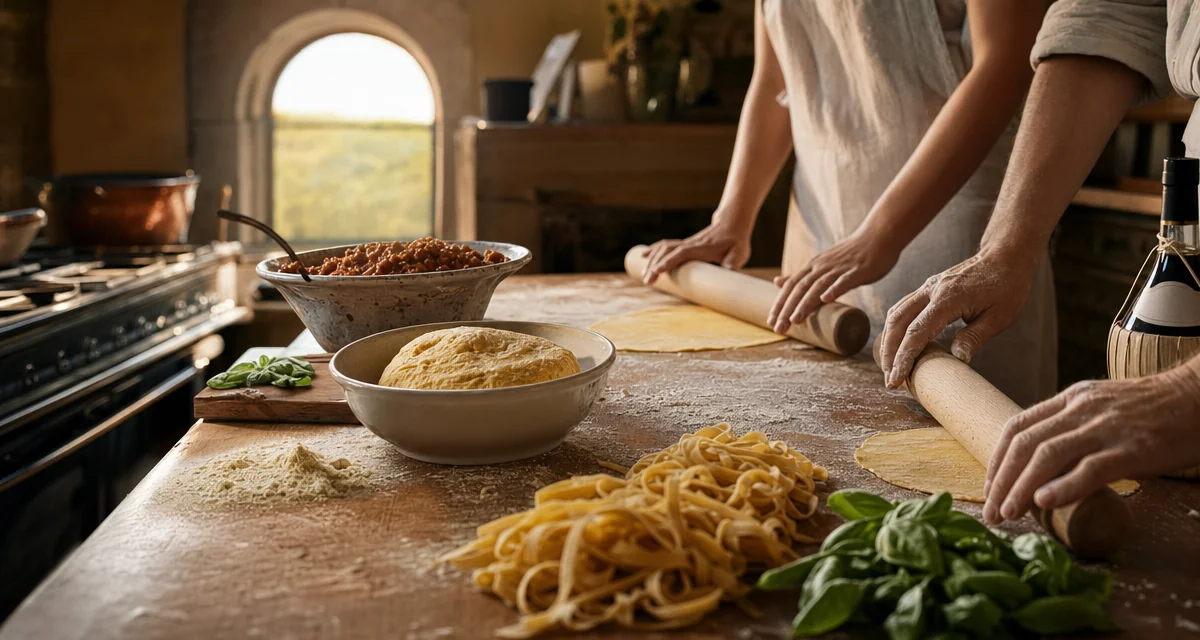
Three formats cover almost every booking we receive. Single-event dinner, lunch or breakfast — the most common: chef arrives at your villa, cooks one meal, leaves; pricing is per person across the three Italian tiers (Essential, Taste of Italy, Luxury). Multi-day stay (the multi_days service): the chef accompanies your group for the whole week or fortnight, you pick which meals each day — a typical pattern is 2 to 3 dinners plus a long lunch across 7 days, not three meals daily, because most groups still want some restaurant nights. Multi-day quotes are custom because the chef-day rate changes with three lodging configurations — chef stays at the property (cheapest, when the villa has a spare room), local chef commutes daily (in dense regions like Chianti or the Amalfi Coast where resident chefs live within 30 to 45 minutes), or chef books nearby lodging factored transparently into the quote. Pasta Class plus Dinner Experience — the flagship experiential format we sell to international travellers in Italy: a 2-hour hands-on pasta class teaching two fresh-pasta shapes (one long like pappardelle or pici, one short like orecchiette or maltagliati) followed by a seated dinner where the chef cooks the pasta you shaped with two regional sauces, antipasti and homemade tiramisù — 4 to 5 hours total, entirely at your villa or apartment, never at a cooking school. For a deeper breakdown of every quote line, see our full 2026 cost guide.
- Clarify the format — single dinner, multi-day or pasta class plus dinner — before requesting quotes; the math is different for each.
- State the group size precisely: 6 adults plus 2 children at half-price, not 'about 8' — group size moves the per-head price by 15 to 25 percent.
- Share the kitchen reality: photos of the hob, oven, fridge and counter space, plus whether there is a dishwasher or an outdoor barbecue.
- Flag every dietary need in writing: coeliac (no gluten), nut allergy, vegetarian, kosher, halal, pregnancy-safe ingredients — bullet points, not prose.
- Confirm the wine arrangement: chef-supplied pairings, your own bottles, or a mix — settle this 10 days ahead so labels can be sourced.
- Read the villa's chef clause: many Amalfi and Tuscan rentals keep an approved list; outside chefs may need owner sign-off 48 hours in advance.
What does a private chef service in Italy cost per person in 2026?
Expect EUR 85 to EUR 180 per adult guest for a single in-villa dinner in 2026, in mainland Italy, before wine and holiday surcharges. The range is real, not a marketing band — it is driven by two factors: tier (Essential, Taste of Italy or Luxury) and group size. Concretely, a Taste of Italy menu of 5 courses costs around EUR 120 per head for 6 guests and drops to roughly EUR 100 per head for 9 guests or more, because the chef's fixed labour spreads across more covers. An Essential 4-course menu sits at EUR 95 per head for 6 and EUR 85 from 9 guests up. Luxury, with truffle, seafood, aged Chianina cuts and a wine flight, runs EUR 180 per head for 6 and EUR 150 from 9 up — figures we see consistently across our Tuscan chef network and the rest of mainland Italy. Children under 12 count at 50% only in the chef's fee, never in your invoiced price. Christian holidays (Easter, Pentecost, Christmas) add a +35% client surcharge across Italy; December 24 to 26 and December 31 switch from per-person rates to fixed group prices because availability collapses. Premium zones such as central Milan, central Rome and Forte dei Marmi add roughly EUR 15 per head. For the full granular table — tier by tier, group size by group size, with USD and GBP equivalents at May 2026 rates — see our dedicated 2026 cost guide.
| Tier (courses) | 6 guests (EUR / head) | 8 guests (EUR / head) | 9+ guests (EUR / head) | Best for |
|---|---|---|---|---|
| Essential (4 courses) | EUR 95 | EUR 85 | EUR 85 | Classic Italian set menu, approachable |
| Taste of Italy (5 courses) | EUR 120 | EUR 110 | EUR 100 | Curated regional showcase, signature mid-tier |
| Luxury (6+ courses) | EUR 180 | EUR 160 | EUR 150 | Truffle, seafood, aged cuts, wine flight |
Which Italian region fits your group: Tuscany, Amalfi Coast, Lake Como or Sicily?
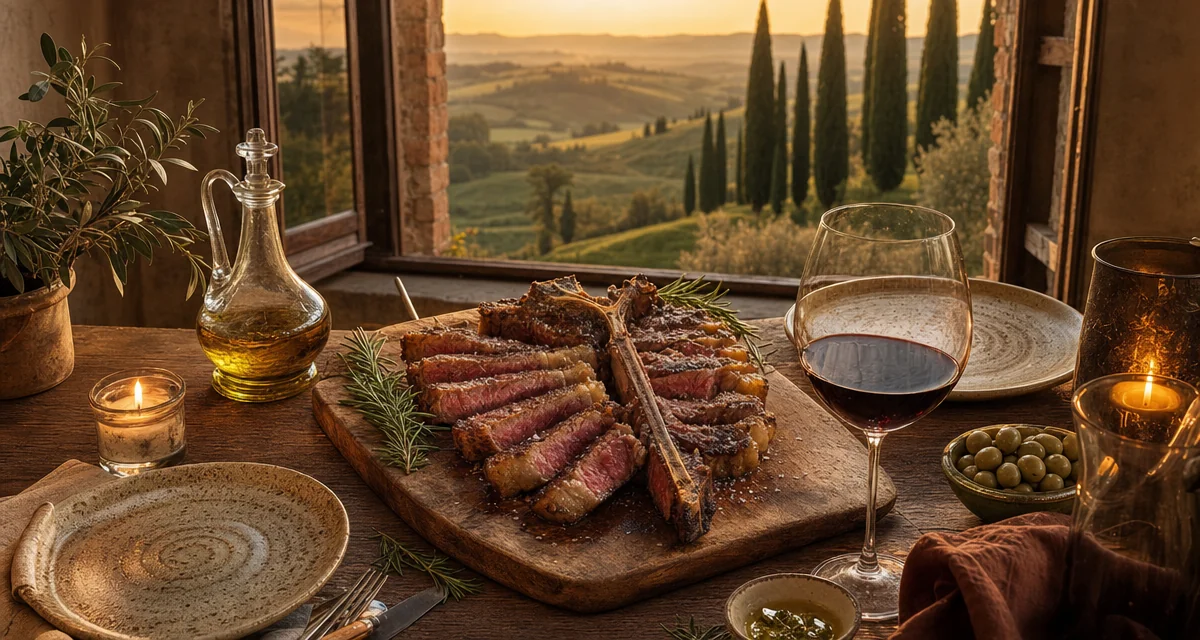
The Italian regions are not interchangeable backdrops — each pushes a different menu, a different rhythm and a different group profile. Tuscany is the all-rounder: rolling Chianti hills, the largest concentration of private-chef-ready farmhouses in Italy, the deepest red-wine list (Chianti Classico DOCG, Brunello di Montalcino DOCG, Vino Nobile di Montepulciano DOCG) and the canonical Tuscan menu — pappa al pomodoro, hand-rolled pici, ribollita, bistecca alla fiorentina. Best for families of 6 to 12 in a villa for a week. Browse our private chefs across Tuscany or read the deep-dive on a Tuscany private chef experience. The Amalfi Coast trades hills for cliffs: lemon-and-anchovy menus, scialatielli ai frutti di mare (a thick hand-cut Amalfitan pasta with seafood), buffalo mozzarella from inland Campania, sunset service on a terrace facing the Tyrrhenian — best for couples and small groups in Positano, Amalfi or Sorrento. Lake Como leans Northern: lake fish (perch, lavarello, missoltino), risotto, Lombardy beef, Franciacorta sparkling wine; villas in Bellagio or Cernobbio often host smaller, dressier dinners. Sicily rewards the curious — Greek-Arab-Norman layered cooking, pasta alla Norma, swordfish involtini, caponata, and Marsala wine — best for travellers who want a less-trodden Italy. Pick by the menu you want to eat, not by which name is more famous.
When should you book and how far in advance?
Booking lead time in our network averages 7 to 14 days for peak season (June to September), 3 to 4 weeks for high holidays (Christmas week, Easter weekend, Ferragosto on August 15), and 5 to 7 days for shoulder months (April, May, October). The single hardest week to book in Italy is the second week of August: domestic ferragosto demand (the mid-August summer holiday when most Italians go on vacation themselves) collides with peak international tourism, and the best regional chefs are often booked 6 weeks ahead. Christmas Eve, Christmas Day and New Year's Eve work on a different model entirely — fixed group prices, not per-person rates, with availability decided in October. If your dates are flexible, the sweet spot for value is the third week of May and the second half of September: peak-quality produce (asparagus, peas, broad beans in spring; porcini, white truffle, new-pressing olive oil in autumn), pre- and post-peak chef availability, and 15 to 20% lower weekday pricing. The opposite hard rule: never expect to book in Italy with less than 48 hours' notice in August. The chefs you want are not available; the chefs available that quickly are not the chefs you want.
What about Italian payment, invoicing and cancellation norms?
Italian hospitality operates on conventions that international travellers often only discover at booking time. Deposits are standard practice: expect to pay 30 to 50% at confirmation and the balance at the end of the evening (cash, bank transfer or card on a Stripe link). IVA (Italian VAT) at 10% on food service is usually already included in the per-person quote you receive; if you need a fattura (formal invoice) for business expense or tax purposes, request it at booking — chefs and platforms can issue it but need your fiscal details upfront. Cancellations typically follow a sliding scale: full refund 30+ days out, 50% inside 14 days, deposit forfeit inside 72 hours unless the chef can rebook the date. Tipping is appreciated but never expected in Italy the way it is in the US — a 5 to 10% gesture for an exceptional evening is generous; service is not built into the menu like in American restaurants. For wire transfers, Italy uses IBAN (you will receive one starting with IT followed by 27 characters); SDD (SEPA direct debit) is rare for one-off bookings. Read your quote carefully: a transparent quote line-items the chef's fee, ingredient cost, IVA, assistant fee for 5+ guests, and any travel surcharge for villas more than 30 km from the chef's base.
Why this matters for your Italian holiday
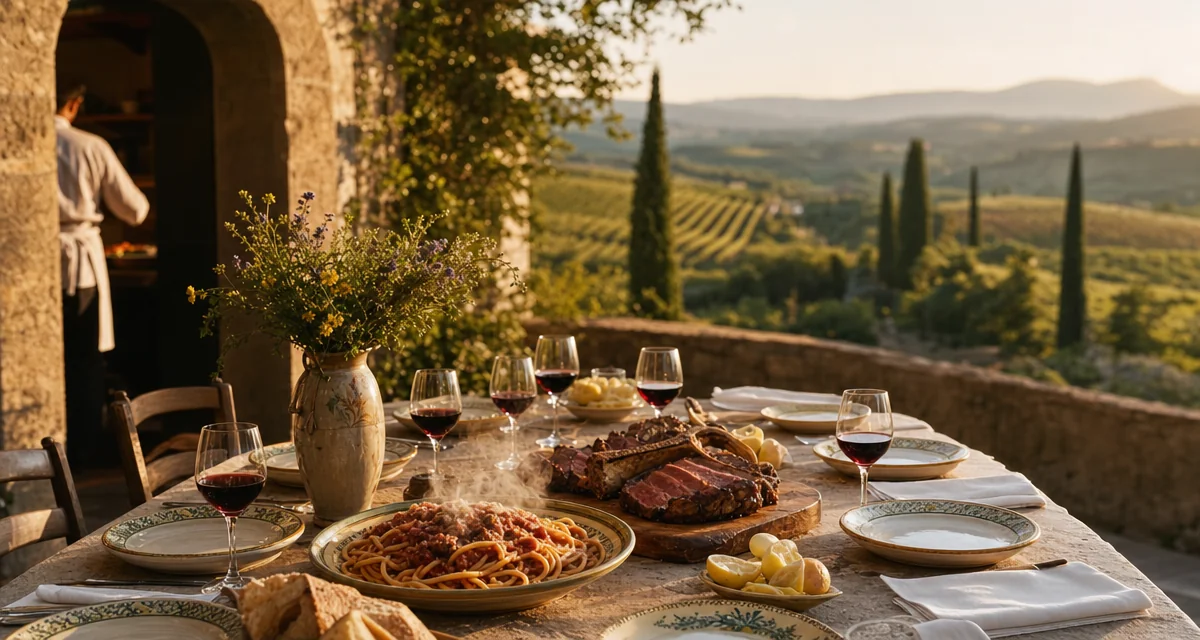
An Italian holiday is the rare trip on which the meal is the destination, not the after-thought. Restaurants are wonderful and you should still go to them — but for one evening of your week, perhaps two, the kitchen you have rented is the better room. The view through your villa's window is the one you signed the contract for; the table on the terrace is the one your group can actually linger over until midnight without a waiter circling for the bill; the menu can be the dish your grandmother once mentioned and you have never found in a restaurant. A private chef service in Italy turns that intuition into a competent, dependable booking — the kitchen comes to you, the produce arrives that morning, the wine is paired or left to your bottles, the cleanup happens without you. Eight years ago this was a luxury reserved for celebrities; in 2026, with networks like Chef On Demand — anchored in flagship regions such as Tuscany and expanding across every Italian region — it is simply the way more and more international travellers choose to anchor at least one evening of a holiday in Italy. Picture the table being cleared — bowls of cantucci, the last vin santo being poured — and your group settling back without anyone reaching for car keys. That is the value of the service. The rest, as Chef Lorenzo says, is logistics.