What exactly is an online cooking class for adults in 2026?
An online cooking class for adults is a structured cooking lesson delivered over a video platform, typically Zoom, in which a chef cooks from their kitchen while you cook along in yours. The dominant 2026 formats split into three. Live interactive classes (Sur La Table, Cozymeal, ICE, Jamie Oliver Cookery School) run 60 to 120 minutes, capped at 20 to 80 attendees, and let you raise a hand in real time. Pre-recorded courses (MasterClass with Gordon Ramsay and Massimo Bottura, Rouxbe, ATK Online Cooking School, Skillshare) trade interactivity for production polish, usually behind a $10 to $25 monthly subscription. Hybrid memberships like Rouxbe add small-cohort feedback windows where a chef reviews your photos asynchronously. Adult learners aged 35 to 65 typically start with one paid live class and migrate to a subscription within 3 months.
How much do online cooking classes for adults really cost?
Pricing on the major platforms in 2026 sits in three clear bands. Entry ($25 to $50): Sur La Table household classes from $39, Cozymeal weeknight sessions from $29, ClassBento beginner classes from £25 in the UK. Mid ($55 to $99): ICE live classes, Cozymeal date-night and small-group sessions, Salt Lake Culinary Education evening sessions. Premium and kit-included ($100 to $135): Cozymeal kit-included classes with ingredients shipped, private one-on-one sessions through The Chef and The Dish, Gordon Ramsay Academy masterclasses. Subscriptions sit alongside: MasterClass around $120 per year, ATK Online Cooking School around $80 per year, Rouxbe $19 to $30 per month. Free options (Homemade Cooking, Skillshare trials, YouTube) trade interactivity for sponsor-driven content.
What can an online cooking class actually teach an adult?
Quite a lot, and more than the snobs admit. A well-run online class teaches recipes and ingredient sequencing (the underrated skill of what order things hit the pan), visual cues (what a properly emulsified cream sauce looks like before it splits, what a Maillard crust looks like at the right moment), vocabulary and confidence (mise en place, blooming spices, deglazing, resting meat), cuisine breadth (a Thai class on Tuesday, a Sicilian one on Friday, French pastry the next weekend) and, in live formats, real-time problem solving when your sauce breaks. Adult learners report meaningful improvement at dinner parties within 6 to 8 weeks of weekly classes. For someone working a 50-hour week in Boston or Berlin, it's a powerful, low-friction format. The wall comes when you need feedback the camera can't deliver.
A screen can show you the chiffonade. It cannot tell you that your knuckles are 2 centimetres too far back, that your elbow is locked, and that this is why you keep stalling at speed. Chef Lorenzo, Florence-based ambassador of Chef On Demand Tuscany
What online cooking classes cannot teach (and why this matters)
Four skills resist the webcam, and they are the ones that separate a competent home cook from someone who cooks like an Italian. Knife grip and posture: muscle memory builds through repetition and correction, roughly 2 to 3 weeks of daily practice for basic safety and 6 to 12 months for professional speed. A chef in your kitchen corrects your pinch grip in 90 seconds. A chef on Zoom will not see that you're white-knuckling the handle. Dough hydration feel: pasta dough at 60 percent hydration has a tactile signature (slightly tacky, smooth, springs back slowly) that no instructor can transmit through a screen. You learn it under hands that have made it 10,000 times, in the same room. Sauce emulsion timing: the window between a creamy carbonara and a scrambled one is roughly 15 seconds. The camera shows you the result, not the chef moving the pan off the heat half a second early. Plating discipline: tongs position, sauce-dot pressure, herb placement, plate temperature. These are sensorial corrections, not visual ones. For a hobby adult, the gap is mild. For one chasing real proficiency, the gap is the whole game.
- Choose a live interactive class over a pre-recorded one whenever budget allows: the Q&A loop is half the value
- Cook the recipe a second time within 48 hours while the chef's voice is still in your head, because that's where muscle memory starts
- Buy decent tools before buying more classes: a serious 8-inch chef's knife (€80 to €150), a heavy-bottomed pan, a digital scale. Bad tools defeat good teaching
- Pick one cuisine and stick with it for 6 to 8 weeks rather than dabbling across five, because depth beats breadth for adult skill acquisition
- After your third or fourth class, ask honestly whether you've plateaued. If yes, the answer is in-person, not another subscription
Online platform vs in-person Italian class: a side-by-side comparison
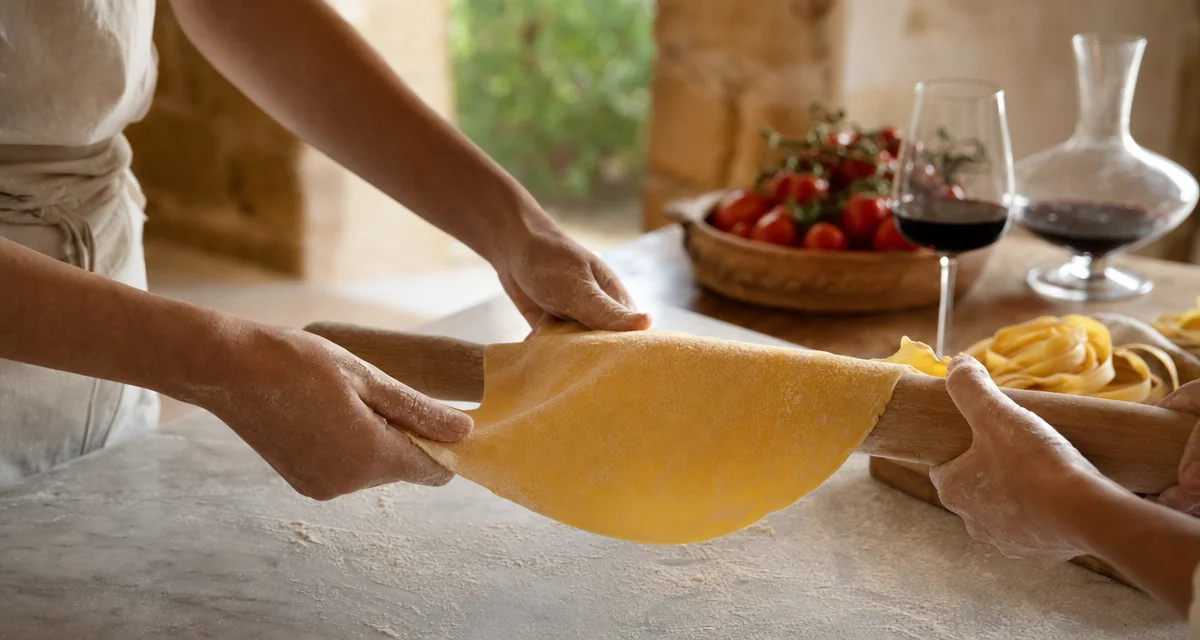
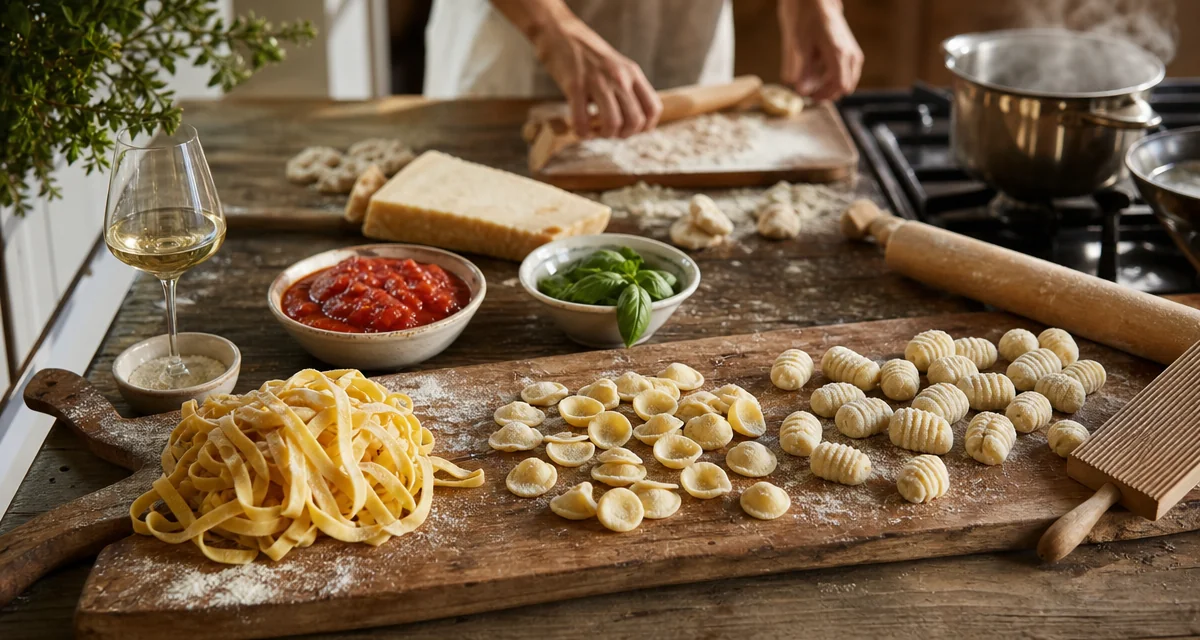
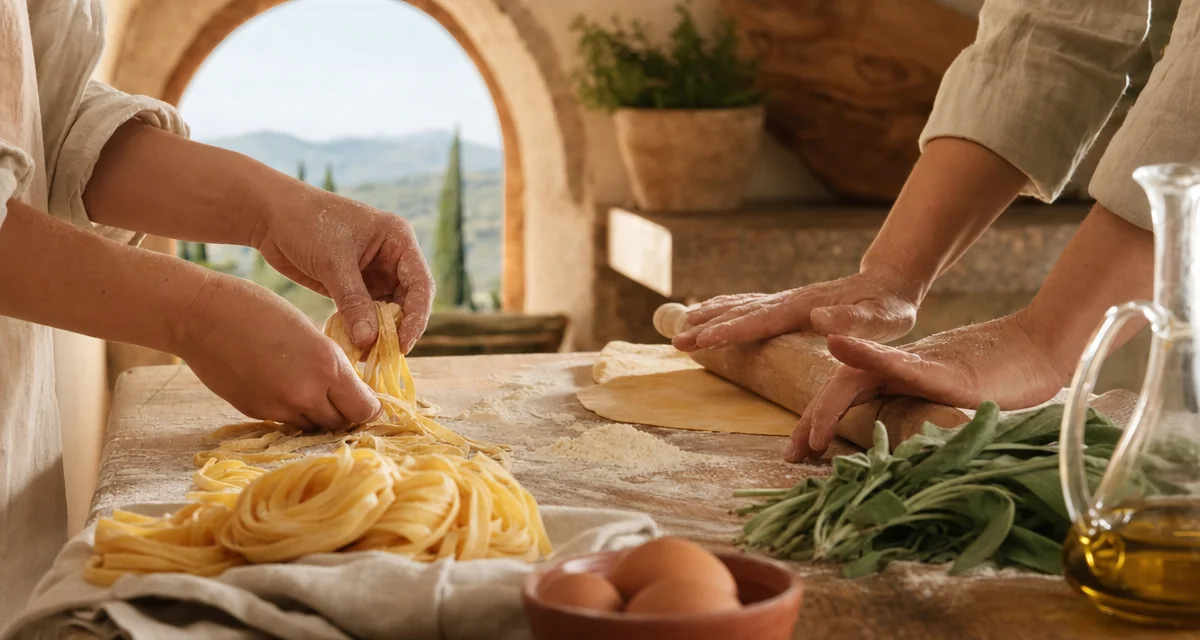
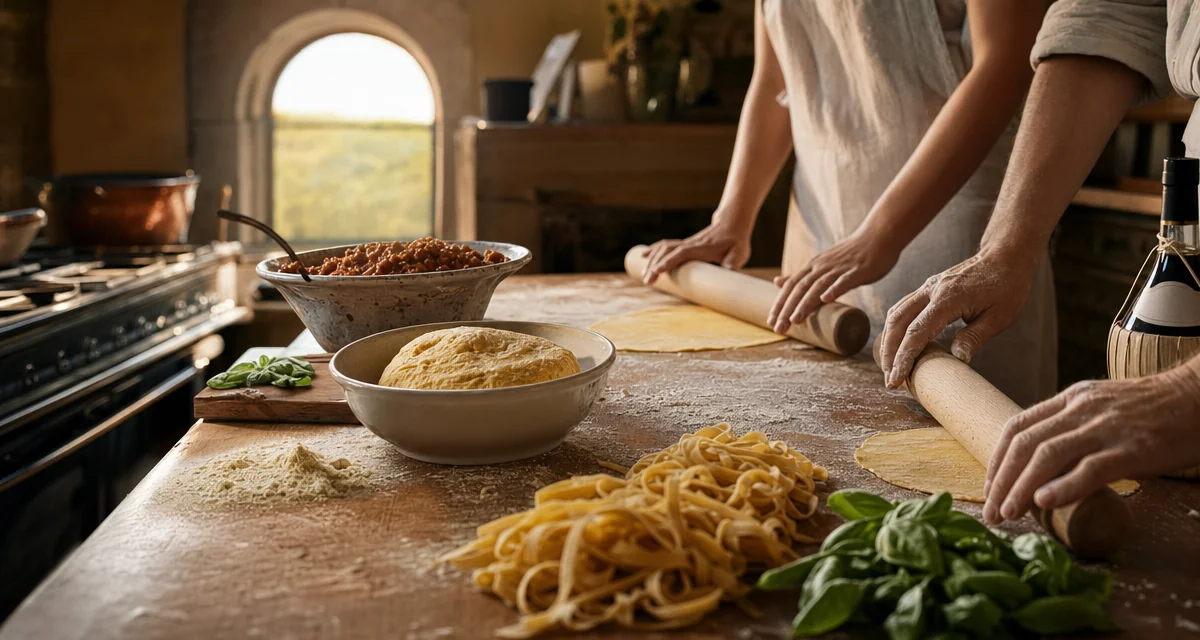
The honest comparison is not 'which is better' (different jobs) but 'which fits the moment'. The Italian column below refers to Chef On Demand's Pasta Class and Dinner: a bundled 4 to 5 hour experience at the villa or apartment you've rented in Italy. A chef arrives with all ingredients and equipment, teaches a 2-hour hands-on class on two pasta shapes (one long like pappardelle or pici, one short like orecchiette or maltagliati), then cooks dinner with two pasta sauces, antipasti and homemade tiramisù, served at your table. One booking, one chef, one location, no transfer to a school. More on this format on our cooking class in Italy hub page, with regional variations on our Tuscany cooking experiences and Florence private chef cooking classes.
| What you're buying | Online (Sur La Table / Cozymeal / ATK / MasterClass) | In-person Italy (Pasta Class and Dinner with Chef On Demand) |
|---|---|---|
| Price per person | $29 to $135 single class, $80 to $120 yearly subscription | Around €150 per adult, all-inclusive (class plus dinner) |
| Duration | 60 to 120 minutes (live) or self-paced (recorded) | 4 to 5 hours (2-hour class plus seated dinner) |
| Chef physically with you | No, video link only | Yes, in your villa kitchen |
| Hands-on correction | Limited (camera sees result, not grip) | Continuous (chef stands beside you, hands guiding) |
| Ingredients | You shop or platform ships a kit ($15 to $40 extra) | Chef shops at the local Italian market, all included |
| Pasta shapes taught | One per class, typically demo-only | Two shapes hand-shaped by you (one long, one short) |
| DOP and DOCG ingredients | Substitutes from your supermarket | Real, sourced that morning from Italian producers |
| Setting | Your kitchen at home | Your rented Tuscan farmhouse, Amalfi terrace or Lake Como villa |
| Group size | 1 to 80 strangers in parallel | Only your party (private) |
| What you take home | A recipe you can repeat (if you remember) | Muscle memory of the shapes coached under the chef's hands, plus the dinner produced together |
| Best for | Budget, frequency, dietary specialisation | Holiday-paired learning, technique, terroir |
When to choose online, and when to book the Italian class
Choose online cooking classes when your priority is frequency over depth, when budget is tight (under $50 per session), when geography keeps you 90+ minutes from any hands-on cooking school, or when you want to specialise (gluten-free, plant-based, low-FODMAP, kosher Italian, halal Mediterranean). MasterClass and Rouxbe also shine for adult learners who want long-form storytelling around food culture. Choose an in-person Italian class when you're already booking a 5 to 7 day holiday in Italy and want one anchor experience that becomes the memory of the trip, when you've hit a plateau after 20+ online classes and need a chef to physically reset your technique, or when the occasion (a milestone birthday, an anniversary, a family holiday of 6 to 12 guests) deserves something a Zoom invite cannot deliver. Our serious adult learners typically arrive with 12 to 24 months of online classes behind them, ready for the in-person correction that finally unlocks what the screen described.
Where in Italy do online learners get the most out of an in-person class?
Four regions reward the screen-trained home cook disproportionately. Tuscany is the canonical choice: hand-rolled pici (a thick, eggless long pasta from the hills around Siena), pappardelle with wild boar ragù, ribollita (a Tuscan bread-and-bean soup), and the chance to taste real Brunello di Montalcino DOCG, a 100 percent Sangiovese aged at least 5 years. Amalfi Coast and Campania for hand-cut scialatielli, San Marzano DOP tomato sauces and the lemon-and-fish vocabulary the screen tends to flatten. Emilia-Romagna for fresh egg pasta done at source, with Parmigiano Reggiano DOP (minimum 24 months aged) and tortellini hand-shaped by hand. Sicily for the Arab-Norman flavour spectrum (saffron, pine nuts, raisins, capers) that no online class teaches with conviction. Browse our regional pages on private chefs in Tuscany, private chefs on the Amalfi Coast, and private chefs at Lake Como for the local network.
Why this matters for adult learners who have outgrown the screen
There is a moment in every serious home cook's learning curve when the online classes stop teaching and start repeating themselves. You spot it in the kitchen: the recipes get longer but the dishes don't get noticeably better, the techniques you most want to master (dough by feel, sauce by ear, plating by eye) feel just out of reach. That is the moment to step away from the webcam and into a real Italian kitchen, ideally a villa you've rented for 5 to 7 days, with a chef who walks in carrying San Marzano tomatoes from the market and a wedge of Parmigiano Reggiano DOP. Chef On Demand operates a verified network of 12+ private chefs across Italy's main holiday regions, with a 4.7 out of 5 Trustpilot rating from 800+ guests served since 2025. Many of our chefs come from Michelin-starred kitchens, Gambero Rosso-rated restaurants, and Italian MasterChef and Top Chef. In a single 3-hour class they do what 12 months of screens could not. Start with our private chef hub for Italy.