What is an olive oil tour in Tuscany?
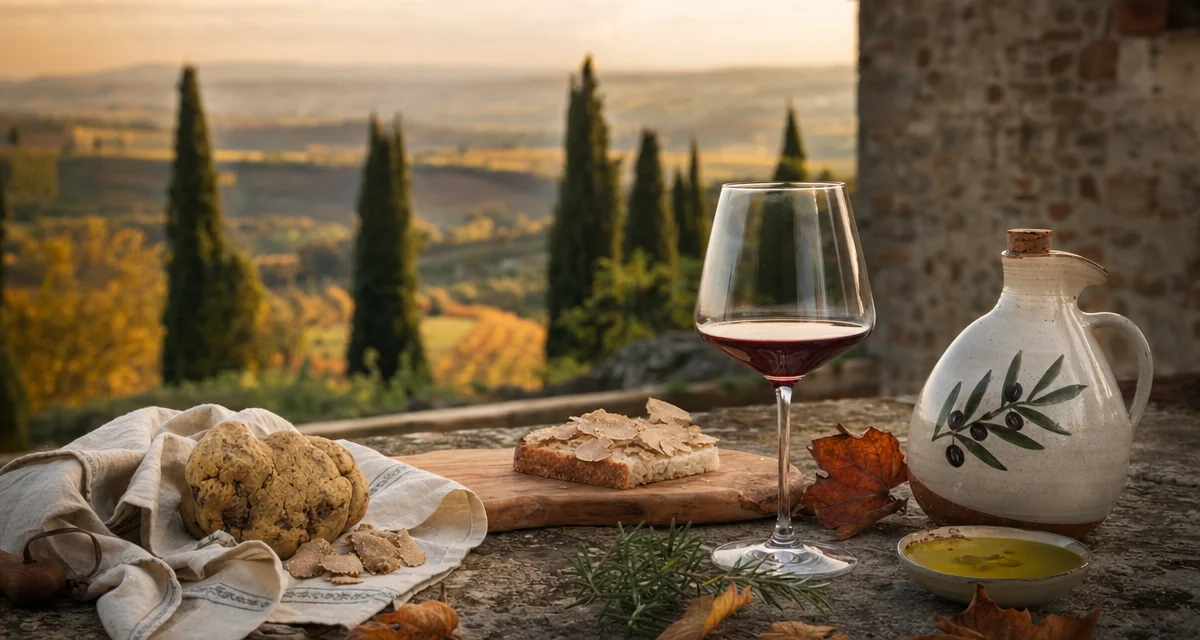
An olive oil tour in Tuscany is a short, guided visit to an olive estate or mill where you walk the groves, watch the olives being crushed and separated, and taste several extra-virgin oils with someone who makes them. Most last 60 to 90 minutes, and the longer formats add lunch, wine or hands-on picking. The word you will hear everywhere is frantoio, which means two things in Tuscany: the mill itself, and the region's signature olive variety. A modern frantoio washes the olives, grinds them into a paste, mixes it slowly (the gramolatura), then spins out the oil in a centrifuge, all within hours of picking. Between late October and December you also get the noise, the bright green oil at the spout and farmers queuing with their crates, which is why this window is worth planning around.
The olive oil mill tour, step by step
A classic olive oil mill tour in Tuscany starts in the grove, where the guide explains pruning, the nets laid under the trees and why early-picked olives give less oil but more flavour. You then move indoors to the line: the washer, the crusher, the malaxer and the decanter, usually explained in 15 to 20 minutes. The tasting comes last, typically 3 oils at smaller mills and up to 6 at larger estates, served in small blue or amber glasses so the colour does not bias you.
An olive oil farm tour versus a mill visit
An olive oil farm tour in Tuscany is slightly different: it happens on an estate that grows its own olives and often makes wine, so you see one family's trees and one family's oil. A cooperative or independent mill presses for dozens of local growers, so the November atmosphere is busier and more communal. If you want to understand the process, choose a working mill during the pressing; if you want a view, a long lunch and a single estate's character, choose a farm.
When is the olive harvest in Italy, and when does the new oil arrive?
The olive harvest in Italy runs broadly from October to December, and in Tuscany it is concentrated between late October and the end of November. Visit Tuscany, the regional tourism board, places the picking between late October and early November, while the region's tickets.toscana.it olive oil guide widens the window to mid-October through November, sometimes into December. Tuscan growers tend to pick earlier than southern Italy because colder hills and the risk of frost push them to harvest before the olives fully ripen, and early picking is precisely what gives Tuscan oil its grassy, peppery bite. The new oil, olio nuovo, is the oil of the first few weeks after pressing: unfiltered, slightly cloudy and an almost electric green, with a bitterness and a peppery catch at the back of the throat that soften over the following months.
Olive harvest season in Tuscany, week by week
In a typical year, the first estates on lower, warmer slopes start picking in mid-October; the bulk of the Chianti and Florentine hills harvest from the last week of October to the third week of November; and higher or later groves, plus the smaller growers who pick at weekends, keep the mills busy into early December. Treat any date as a range of 2 to 3 weeks and confirm with the mill. The festival calendar follows the oil: Reggello's ReOlio takes place on a weekend in late October, PrimOlio in Bagno a Ripoli in mid-November, and towns further south such as San Quirico d'Orcia hold their own oil festival between November and December. Our month-by-month calendar of Tuscan food festivals lists the autumn sagre (village food festivals) that pair well with a mill visit.
Olive picking in Tuscany: can you join the harvest?
Olive picking in Tuscany is possible for visitors, but it is sold as a structured experience rather than a casual 'help yourself'. Tenuta Torciano near San Gimignano, for example, runs a three-hour olive harvest experience in November and December at €250 per person (minimum 2 guests), including a picking lesson, the pressing of your olives, lunch and a wine tasting. Smaller farms occasionally let villa guests pick for an hour on request, usually with rakes and nets in the morning when the olives are dry.
How much does an olive oil tasting in Tuscany cost?
An olive oil tasting in Tuscany usually costs €20 to €60 per person with a short mill tour, according to the regional tickets.toscana.it guide, rising to about €80 to €150 when lunch or a transfer from Florence is included. Private tours priced per group look expensive for two people and become reasonable for six or more. The table below compares published offers, checked on November 23, 2026; confirm them before booking.
| Experience | Where | Format | Published price |
|---|---|---|---|
| Frantoio del Monte Pisano tour and tasting | Vicopisano, Pisa hills | 1 hour, grove and mill, 3 oils, minimum 4 people | €25 per person |
| Frantoio del Monte Pisano with light lunch | Vicopisano, Pisa hills | Tour, tasting of 3 oils, fettunta lunch, minimum 2 people | €47 per person |
| Castelfalfi estate oil tasting | Montaione, Florence province | About 90 minutes, 6 estate oils, ages 10 and over | €65 per person |
| Arianna and Friends private mill tour | Terricciola, Pisa province | Private tour with tasting and snacks | €290 for 2 people, €410 for 6 |
| Tenuta Torciano harvest experience | San Gimignano, Siena province | 3 hours, picking lesson, pressing, lunch, wine | €250 per person, minimum 2 |
| Regional average (tickets.toscana.it) | Across Tuscany | Mill visit with tasting / with lunch or transfer | €20 to €60 / €80 to €150 per person |
Two patterns stand out. First, the cheapest options are shared visits at working mills in the Pisa hills, where Frantoio del Monte Pisano lists its tour at €25 for one hour. Second, the per-person cost of a private tour falls quickly with group size: Arianna and Friends' private mill tour works out at €145 per person for 2 guests and about €68 per person for 6. A family of six staying in a villa is often better served by a private visit than by joining a shared group.
Where should you go for an olive oil tour in Tuscany?
The best olive oil tour in Tuscany is the one closest to where you are staying, because the oil changes from hill to hill and the point is to taste your own landscape. That said, four areas concentrate the most interesting mills, and each has a slightly different oil.
Chianti Classico and its DOP oil
Chianti Classico, the hill country between Florence and Siena, has its own protected oil. According to Visit Tuscany's profile of Chianti Classico DOP extra-virgin olive oil, it comes from registered groves where at least 80% of the trees are Frantoio, Correggiolo, Moraiolo and Leccino, grown across Castellina, Gaiole, Greve and Radda in Chianti plus parts of five neighbouring municipalities. The taste is green and full, with raw artichoke bitterness and a long chilli-like finish. If your villa is near Greve in Chianti or Radda in Chianti, several wineries there also press their own oil in November, which makes this the easiest area to combine both.
Florentine hills and an olive oil tour from Florence
If you are based in the city, an olive oil tour from Florence usually heads east to the hills of Fiesole, Pontassieve or Reggello, a town about 35 km south-east of Florence on the slopes of the Pratomagno whose oil is a local point of pride. Half-day trips run 4 to 6 hours with transfer. Guests staying in Florence often prefer to rent a car for one day and visit a mill in the morning, then return in time for dinner.
Pisa hills, Montaione and the quieter west
The hills between Pisa, Volterra and Montaione are less visited and noticeably cheaper, which is why the €25 to €65 tastings in the table sit here. Many mills here are run by families who have pressed for three or four generations.
Montalcino, the Val d'Orcia and a wine and olive oil tour
A wine and olive oil tour in Tuscany works best in the south, around Montalcino and the Val d'Orcia, the UNESCO-listed valley of cypress-lined hills that appears on most Tuscan postcards. Here you can visit a mill in the morning and a Brunello di Montalcino cellar in the afternoon. Brunello is a 100% Sangiovese red, aged at least five years before release, with notes of black cherry, leather and tobacco; it is the wine Tuscans pour with a steak, but it is also lovely alongside beans dressed in new oil.
What does an olive oil tasting teach you?
An olive oil tasting teaches you to judge extra-virgin oil the way professionals do: by smell first, then by bitterness on the tongue and pepperiness in the throat, which are signs of freshness and healthy polyphenols rather than defects. Most visitors leave understanding why a cough after the first sip is a compliment. The method below is the one most Tuscan mills use, and you can repeat it with any bottle at your villa.
- Warm the glass in your palm for 30 seconds, covering the top with your other hand, so the aromas build up.
- Smell the oil and name what you find: cut grass, green tomato, artichoke, almond or apple are all typical Tuscan notes.
- Sip a small amount, about a teaspoon, and hold it on your tongue.
- Draw air through your teeth with a slurping sound, which spreads the oil across your palate and releases the flavour.
- Notice the bitterness on the tongue first and the peppery catch in the throat a few seconds later.
- Cleanse your palate with a slice of green apple or a sip of water before the next oil.
The tasting also explains the labels. Toscano IGP, the regional protected designation, has guarded Tuscan oil since 1998, and the Toscano IGP consortium notes that every step from harvest to pressing to bottling must happen inside Tuscany, with chemical and panel-tasting checks before an oil earns the seal; the consortium counts almost 9,000 member companies. Chianti Classico DOP is narrower, tied to one area and its varieties. The varieties themselves are worth learning: Frantoio is the backbone of Tuscan oil, fruity and peppery; Moraiolo is a small, dark olive that gives intense bitterness and a long shelf life; Leccino is milder and rounder, and resists cold well; and Pendolino is planted mainly to pollinate the others, adding a softer, almond note to the blend.
Tuscany olive oil: where to buy and how to bring it home
The best place to buy Tuscan olive oil is the mill where you tasted it, usually in 0.5 litre bottles or 1, 3 and 5 litre tins, which travel better than glass. Enoteche (wine shops) and covered markets also stock certified oils; our guide to Tuscany's food markets lists the ones worth a morning. For the flight home, liquids in hand luggage must sit in containers of 100 ml or less inside a clear bag, so a half-litre bottle will not pass security: wrap tins in clothing and put them in your checked suitcase.
What is an olio nuovo dinner, and how does a villa chef cook it?
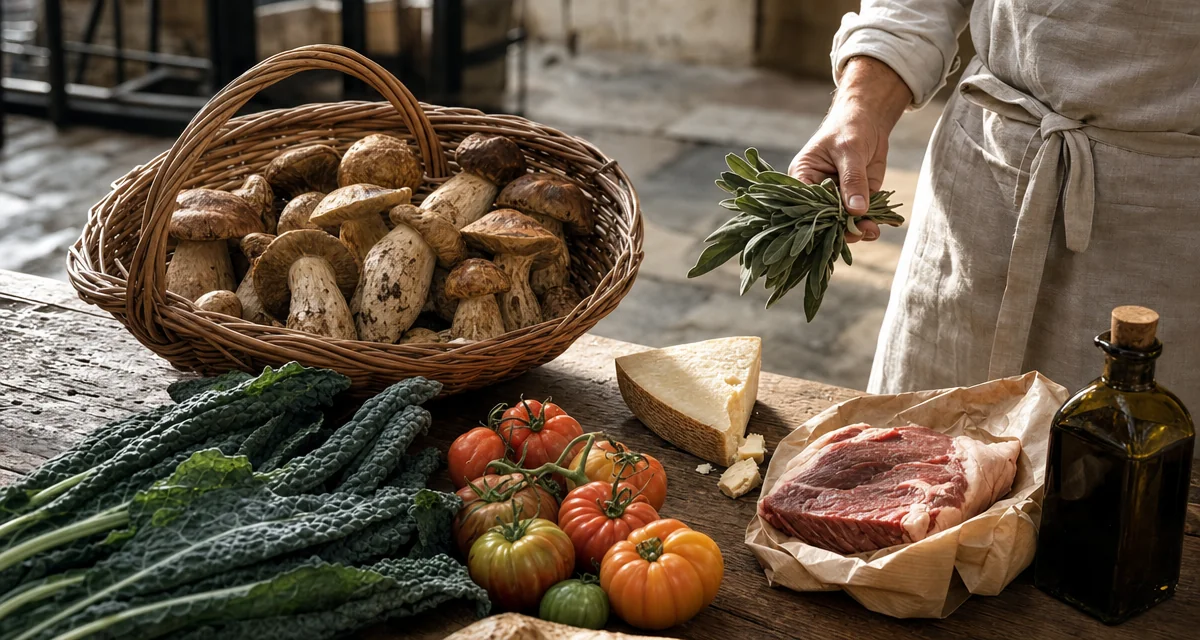
An olio nuovo dinner is a simple, seasonal Tuscan meal built to show off the new oil: grilled bread, slow-cooked beans, a thick vegetable soup and dark winter greens, each finished with a generous pour of oil pressed days earlier. It is peasant food, cucina povera, and that is the point, because plain dishes let the oil be the flavour. At Chef On Demand this is a regular single-event dinner, not a special package: the chef shops that morning, often from the same mill you visited, cooks in your villa kitchen, serves at your table and cleans up before leaving. A typical menu runs like this:
- Fettunta: Tuscan bread with no salt, toasted over embers, rubbed with garlic and soaked in new oil. Tuscans consider it the only honest way to taste olio nuovo; elsewhere in Italy it is called bruschetta.
- Ribollita: a thick Florentine soup of bread, cannellini beans and vegetables whose name means 'reboiled', because it is made the day before and reheated. The chef usually prepares it in the morning.
- Fagioli all'uccelletto: white beans stewed with sage, garlic and tomato, or simply boiled cannellini dressed with oil, salt and pepper at the table.
- Cavolo nero: the Tuscan black kale at its best after the first cold nights of November, blanched and served on fettunta.
- Pecorino Toscano: the region's sheep's milk cheese, young or aged, with a drizzle of oil and a little honey to close.
In November I am not really cooking with olive oil, I am cooking for it. The bread, the beans and the soup are only there to carry the new oil to the table, so I keep everything else as quiet as possible. Chef Lorenzo, Siena-based ambassador of Chef On Demand Tuscany
Pricing follows the standard tiers and depends on group size, so here is what an olio nuovo dinner costs in a rural villa in the province of Siena (Chianti's Radda, Gaiole and Castellina, the Val d'Orcia, Montalcino). Villas in the Florence metropolitan area, which includes Greve in Chianti and San Casciano, carry a €15 per person supplement, and November 1 (All Saints' Day) and December 8 (the Immaculate Conception) are holidays priced 35% higher. You can explore menus and chefs who cook across Tuscany before you decide on a tier.
| Tier | Courses | 6 guests | 10 guests |
|---|---|---|---|
| Essential | 4 courses (fettunta, ribollita, beans, dessert) | €95 per person | €85 per person |
| Taste of Italy | At least 5 courses, adds a fresh pasta with cavolo nero | €120 per person | €100 per person |
| Luxury | 6 or more courses, with white truffle or aged cuts in season | €180 per person | €150 per person |
A Taste of Italy olio nuovo dinner of 5 courses for 6 guests in a Siena-province villa costs about €120 per person, dropping to about €100 per head at 10 guests. In mid-November the Luxury tier often adds white truffle shaved at the table, which overlaps neatly with the season described in our truffle hunting guide. If you are staying a week, a multi-day booking is quoted on request: the chef can stay at the property, commute from nearby, or take lodging close by, and each option changes the day rate, so there is no single per-person figure. Guests rate the service 4.7/5 on Trustpilot, and the most common note in November reviews is simply that the oil tasted different at home.
How do you plan a harvest day around the mill and the dinner?
The easiest rhythm for an autumn day in Tuscany is a mill in the morning, a long lunch or market stop, and dinner at the villa. Mills are calmest between 9am and 11am, when the night shift has finished and the afternoon deliveries have not yet arrived; aim to arrive by 10am and allow 90 minutes. Leave the afternoon open, because November light fades by 5pm. Share the mill's name with your chef when you book, ideally 7 to 10 days ahead, so they can either buy the oil there or bring a comparable one from a producer they trust. If you want more than one food experience during the week, our overview of food and wine holidays in Tuscany shows how to spread mill visits, wineries and cooking evenings over five to seven days without spending every day in the car. Hill villas are cold in late autumn, so ask your host to light the fireplace early: fettunta toasted over real embers beats anything from an oven, and most chefs will use the hearth if it draws well.
Why this matters for an autumn stay in Tuscany
Most visitors know Tuscany in June. November is quieter and, for anyone who loves food, more honest: it is the month the region's most important product is made, in mills you can walk into. An olive oil tour gives you the method and the vocabulary; an evening at your villa gives you the taste in context, with the people you travelled with around the table. Chef On Demand makes that second part effortless, matching you with a chef who knows the local mills and seasons. Many of our chefs trained in Michelin-starred kitchens and Gambero Rosso-rated restaurants, and in autumn they cook with the same oil the farmers take home. If you are still deciding where to stay, you can browse our Tuscan chef network by area, or start from our private chef service across Italy if Tuscany is one stop of a longer trip. Either way, picture the end of the day: a bottle of Chianti Classico (the Sangiovese red of the same hills) open, bread charring on the embers, and a stream of green oil poured over it while everyone watches. That image is the whole season in one plate, and it is easier to arrange than most people think when hiring a chef for a Tuscan villa.