What is a Tuscan food and wine vacation with a private chef?
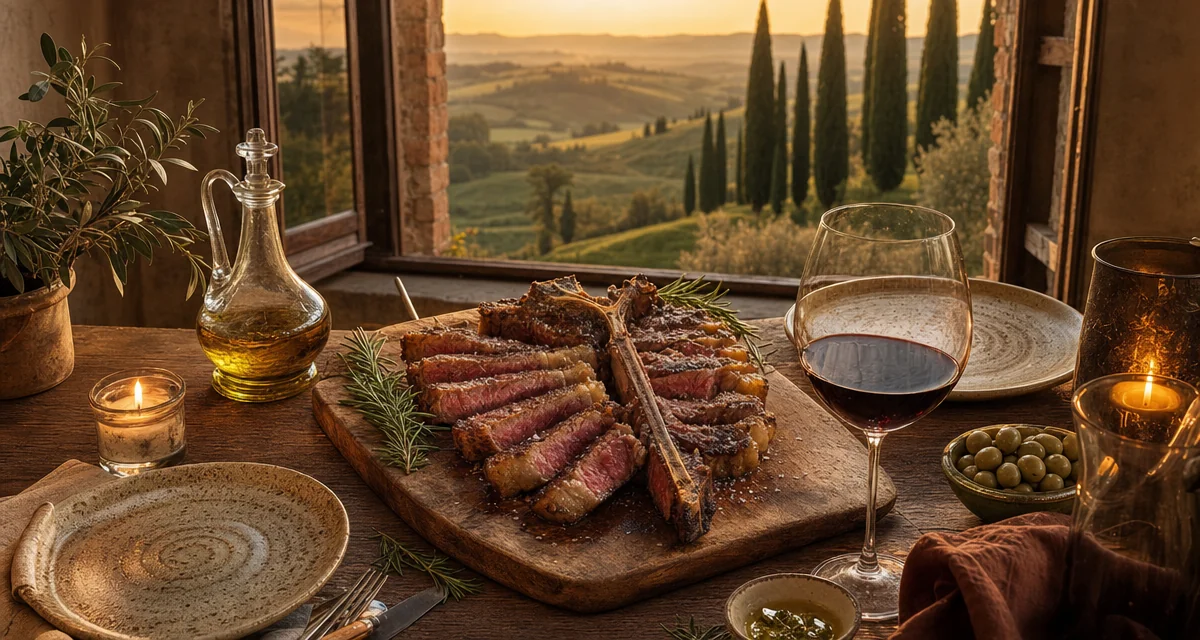
A Tuscan food and wine vacation with a private chef is a multi-day stay — usually 5 to 10 nights — where a chef accompanies your group at a villa or apartment you've rented, cooking the meals you choose and shopping daily at local markets. Unlike a fixed-date group tour, the schedule is yours: the chef cooks two or three dinners, a long lunch, and runs a hands-on pasta class one afternoon, while the rest of the week is open for winery visits, hilltop towns and the pool. You sit down to bistecca alla fiorentina (a 1.2–1.5 kg T-bone steak from Chianina cattle, grilled over hardwood embers and served rare on the bone), pappardelle al cinghiale (wide ribbon pasta with wild boar ragù) and a wine flight of Chianti Classico DOCG (a Sangiovese-based red from the zone between Florence and Siena, marked by the Black Rooster seal) and Brunello di Montalcino DOCG (a 100% Sangiovese from Montalcino, aged at least 5 years before release). The villa becomes the stage and the kitchen, instead of the bus and the hotel restaurant.
How does a villa-with-chef vacation compare to a group food and wine tour?
Group tours from Tauck, G Adventures, Backroads or EF Go Ahead are typically 7–10 days, fixed dates, 12–20 strangers, $6,500–10,500 per person all-in, and a coach moving every 1–2 nights. They handle every logistic — and remove every choice. A villa-with-chef vacation flips the model: you rent one base property in a single area (Chianti, Val d'Orcia or the Bolgheri coast), the chef comes to you, and you radiate out for winery visits when you feel like it. For two couples or a multi-gen party of 6–8, the per-head cost lands lower than the group tour, and the experience is private, customised to dietary needs and paced to your group. Trade-off: you book villa, chef and one or two winery transfers separately rather than getting a pre-printed itinerary. For most repeat travellers — especially those who've already done one Tauck or cruise — that's the upgrade they were looking for. Browse our private chefs across Tuscany for a feel of the network.
| Format | Villa + Private Chef | Luxury Wine Resort | Group Tour (Tauck / G Adventures / Backroads) |
|---|---|---|---|
| Duration | 5–10 nights, your dates | 3–7 nights, your dates | 7–10 nights, fixed departures |
| Group | Your party only (4–12) | Your party + other resort guests | 12–20 strangers |
| Daily pace | You decide each morning | Resort programme + private excursions | Coach + 8–12 hours scheduled |
| Dining anchor | Chef cooks 4–7 meals at the villa | Resort restaurants + a few off-site | Restaurants + welcome dinners |
| Cooking class | On-site at the villa, your group only | Resort culinary school, mixed cohort | One group class at a school |
| Cost (party of 6, 7 nights) | €8,000–14,000 total | €18,000–30,000 (Casole / Santo Pietro tier) | $39,000–63,000 ($6,500–10,500 × 6) |
| Best for | Families, multi-gen, dietary needs | Couples, special occasions, no-planning luxury | First-time visitors who want zero planning |
What does a 7-day Tuscan food and wine itinerary look like?
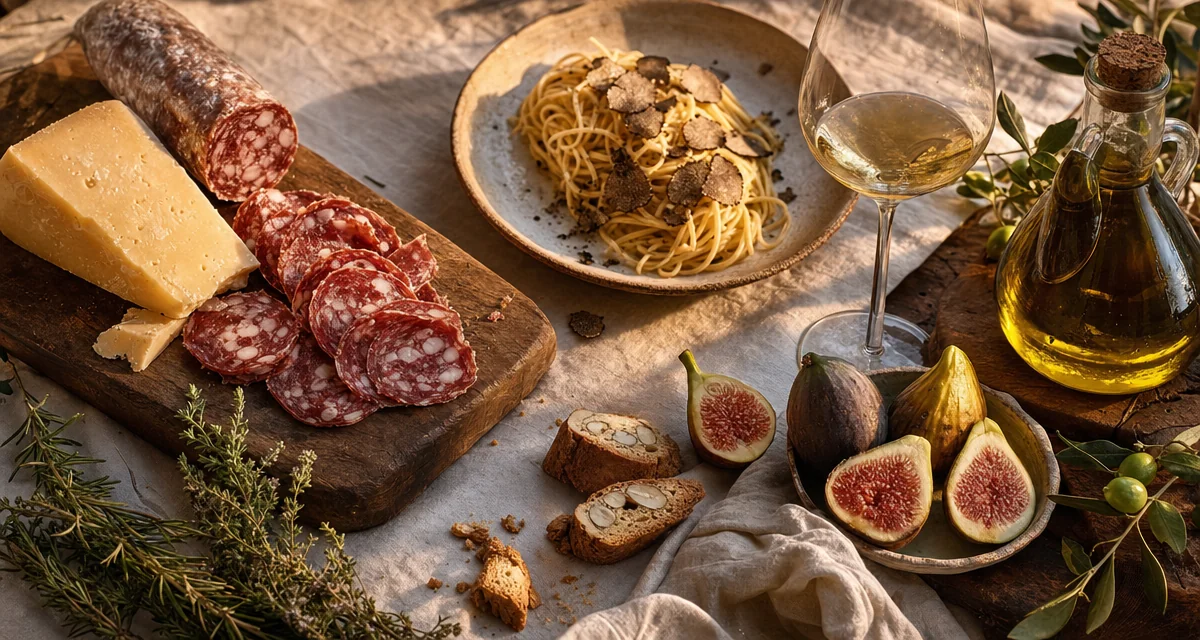
A clean 7-night structure with one base villa in Chianti and two day-trips works for most groups. Day 1: arrive in Florence, drive to the villa (45–90 min into Chianti), welcome dinner from the chef — antipasti of Tuscan crostini and pecorino, ribollita (a Tuscan bread-and-bean soup, originally a peasant dish reusing yesterday's vegetables), pici al ragù di cinghiale and cantucci with vin santo. Day 2: market morning in Greve in Chianti with the chef, open afternoon, light dinner. Day 3: Pasta Class + Dinner Experience at the villa — a 4–5 hour bundled experience entirely on-site (detailed below). Day 4: Montalcino for a Brunello tasting and cantina lunch. Day 5: Siena and San Gimignano, dinner with the chef. Day 6: optional Bolgheri coast day for Sassicaia and Ornellaia (Super Tuscan reds blending Cabernet Sauvignon and Merlot, made famous on the Tyrrhenian coast since the 1970s), or a quieter day in Pienza for pecorino tasting. Day 7: chef's farewell dinner, often Luxury tier with truffle pasta and a Brunello flight.
How much does a Tuscan food and wine vacation cost in 2026?
The chef-cooking cost for a Tuscan multi-day stay is built bottom-up, meal by meal — not as a single per-person package. For a party of 6 guests at your villa in 2026, an Essential 4-course dinner costs around €95 per person (€570 total); a Taste of Italy 5-course dinner (the brand's signature regional showcase) lands at €120 per person (€720 total); a Luxury menu with truffle and aged cuts at €180 per person (€1,080 total). At 10 guests the per-head drops: Essential €85 (€850), Taste of Italy €100 (€1,000), Luxury €150 (€1,500). Multi-day quotes also include a per-day chef retainer that depends on lodging configuration — chef at the villa (cheapest), local commute (no lodging cost), or chef-booked nearby accommodation. Add villa rental (€3,500–8,000/week for 6 in a good Chianti farmhouse), wines (€40–120/bottle for Chianti Classico and Brunello), and 1–2 winery visit fees (€80–200 per group). For a 7-night stay with 4 chef-cooked meals plus the Pasta Class, expect a chef line-item of €3,500–7,500 for a party of 6, depending on tier mix and lodging.
The American families that book me in Chianti for a week always tell me the same thing on day three: 'we should have done this five years ago instead of the bus tour'. They thought a private chef was the splurge — and then they realised it's actually how you save the holiday from feeling like work. Chef Lorenzo, Florence-based ambassador of Chef On Demand Tuscany
What's included in a multi-day private chef package — meals, classes, market trips?
A standard multi-day private chef package across Tuscany includes daily market shopping by the chef, cooking on-site at your villa for the meals you've chosen day by day (most groups pick 2–3 dinners, 1 long lunch and 1 breakfast across a week — not three meals every day), full menu personalisation with no repeats unless you ask, table service, and cleanup. The chef brings ingredients and professional equipment. The Pasta Class + Dinner Experience is bundled when requested as one of the meals — 2 hours of hands-on pasta-making (one long shape, one short shape), then the chef prepares two sauces, antipasti and tiramisù, all at your villa. Optional add-ons: a market visit alongside the chef, a private wine tasting at the villa, dietary-led menu design (coeliac-safe, kosher, vegetarian, allergy-anchored), and welcome aperitivo on arrival. Not included by default: villa rental itself, transfers to wineries, restaurant lunches on self-organised days, and bottles above the chef's pairing recommendation.
- Decide your base region first — Chianti for the classic gateway, Val d'Orcia for Brunello immersion, or the Bolgheri coast for Super Tuscans.
- Lock the villa 4–6 months ahead for June–September dates; the truffle window in late October sometimes opens 2–3 months ahead.
- Tell the chef your group's full dietary picture in writing upfront — allergies, vegetarians, mid-week anniversary — so the menu reads as one arc.
- Pick the lodging configuration that suits the property — chef at the villa, local commute, or nearby accommodation.
- Schedule the Pasta Class on a midweek afternoon, not arrival day.
- Reserve the truffle dinner for the second-to-last evening: climax, not welcome.
Where to stay: luxury wine resort vs villa vs private villa with chef
Three lodging archetypes dominate Tuscan food and wine vacations in 2026, and the right choice depends on your group's appetite for autonomy. Luxury wine resorts like Castello di Casole (a restored 10th-century castle estate near Casole d'Elsa) or Borgo Santo Pietro (a hand-restored hamlet near Chiusdino with a Michelin-starred restaurant on-site) offer hotel-grade service and a culinary academy — €1,000–2,500 per couple per night, no kitchen of your own, no menu negotiation. Villa (a working farm legally required to derive a minimum share of revenue from agriculture, that also rents rooms and serves meals from its own produce) sits at the opposite end: €120–250 per night for two, dinner cooked by the family from the estate's vegetables, wine and olive oil — but you eat what they cook on the night. The private villa with chef sits between them: a full kitchen, four to ten bedrooms, a private pool and the autonomy to design the week, plus the chef who turns the kitchen into the resort. For a multi-generational family of 8 with a coeliac and two teenagers who don't drink, this is almost always the right answer — the villa absorbs everyone, the chef accommodates everyone, and the per-head cost is lower than booking three rooms at the resort.
When is the best time to book a Tuscan food and wine vacation?
The Tuscan food and wine calendar pivots around the vendemmia (the grape harvest, typically September through early October). Early September lands you in vineyards alive with picking but still warm enough for villa pool evenings — peak villa rates and peak chef demand, so book 5–6 months ahead. Late October and early November bring the white truffle window in San Miniato and the Crete Senesi south of Siena: cooler nights, fewer crowds, lower villa rates, and chef menus that swing toward truffle pasta and game. May and early June are the underrated sweet spot — fields green, asparagus and artichoke at the markets, sagre (small village food festivals tied to a single ingredient or dish, run by volunteers in the piazza or parish hall) starting up, and chef availability open. Avoid the first half of August: the Italian summer holiday, many trattorie close in their owners' home villages, and chef availability across our verified network of 12+ chefs in Tuscany tightens. Realistically book 4–6 months ahead for villa + chef pairing in peak season — the chef alone can usually be confirmed in 2–3 weeks through our verified network of private chefs across Tuscany once your villa is locked.
Why this matters for your Italian food-and-wine holiday
The reason a villa-with-chef week beats a group tour for most repeat Italy travellers isn't really about the food — though the food, on a good evening in Chianti with the chef breaking down a Chianina steak on the kitchen island, is hard to argue with. It's that the format gives you back the parts of a holiday a bus tour eats first: the unscheduled afternoon, the grandmother who doesn't want to walk another piazza, the teenager who'd rather swim. You wake up where you went to sleep. You sit down to a 5-course Taste of Italy menu at the table you've been eating breakfast at all week, with the wine you bought Tuesday at the cantina down the road. Chef On Demand operates a verified network of 12+ private chefs across Tuscany, with 4.7/5 Trustpilot rating from 800+ guests served since 2025; many come from Michelin-starred kitchens, Gambero Rosso–rated restaurants and MasterChef Italia. If you want a single contact to coordinate chef, menu plan and class, our private chef hub for Italy is the entry point. You bring the villa, the dates and the appetite.