What does a cooking class in Tuscany actually include?
A standard 2026 Tuscan cooking class includes a hands-on lesson on at least one fresh-pasta shape, the preparation of two or three regional dishes, and a sit-down meal with wine of what you cooked. The walk-around tasting model is rare here. You shape the dough, you sauce it, you eat it, and that sequence is the whole point. Classes run between 2 and 4 hours, stretching to 5 when a market visit is added. Group sizes vary: Florence city schools take 8 to 12 guests at a shared counter, countryside agriturismo classes cap at 6 to 8, and a private chef class at your villa is yours alone (4 to 12 people from your party). English is the default teaching language in classes marketed to international visitors. Wine is almost always included; the apron almost always isn't; and the meal at the end is a real meal, not a tasting flight.
How much does a cooking class in Tuscany cost in 2026?
Tuscan cooking-class prices in 2026 sit between €58 and €310 per person, and the spread is driven almost entirely by format and group size. At the bottom, OTAs such as Viator and GetYourGuide list Florence walking-tour-plus-class hybrids from €58 per person, but these are typically 90-minute group sessions with limited hands-on time. The middle band, €95 to €160, is where most quality classes live: a small-group countryside experience in Chianti or near Lucca, with a market visit, 2 hours at the counter and a 3-course lunch. Above €180 you enter the private tier: a personal chef, your villa kitchen, a menu shaped to your dietary preferences, and a proper seated dinner rather than a shared table. Multi-day cooking vacations at villas (Tuscookany, Toscana Saporita, Casa Ombuto) sit on a different axis at €1.800 to €3.200 per person for 5 to 7 days, accommodation and meals included. Wine is bundled into the per-head price in 70% of classes we surveyed; the rest charge wine at €15 to €40 per person.
| Format | 2026 price per person | What you actually do |
|---|---|---|
| Florence city group class (OTA-booked) | €58 to €110 | 8 to 12 guests at shared counter, 90 min to 2.5 hours, one pasta shape plus tiramisù, glass of house Chianti |
| Countryside agriturismo small-group class | €95 to €160 | 4 to 8 guests, 3 to 4 hours, optional market visit, two pasta shapes plus one Tuscan classic, sit-down lunch with farm wine |
| Private chef class in your villa (Pasta Class + Dinner) | €150 to €230 | Your group only, 4 to 5 hours at your villa, two pasta shapes (one long + one short), two sauces, antipasti, tiramisù, seated dinner |
| Multi-day villa cooking vacation | €1.800 to €3.200 (5 to 7 days) | Accommodation, daily lessons, market trips, olive-oil tasting, wine producer visit, full board |
Where in Tuscany should you actually take a cooking class?
Three sub-regions matter for international visitors. Florence is the densest market by far: more than 200 schools and freelance chefs operate inside the historic centre, and most of the Viator and Tripadvisor inventory points here. It's the right answer for one afternoon, low logistics, no driving. Chianti (Greve, Castellina, Radda, Gaiole in Chianti) suits travellers in a rented farmhouse for the week: classes lean agriturismo, the wine list builds around Chianti Classico DOCG (the 100% Sangiovese red from the delimited zone between Florence and Siena), and the kitchens often double as the family's own. Siena and the Val d'Orcia (Pienza, Montalcino, Montepulciano, San Gimignano) is the right answer if your priority is pici, pecorino di Pienza DOP, and a Brunello pairing in the place Brunello is made. Pici, the hand-rolled pasta of Siena province, is thicker than spaghetti and shaped one strand at a time on a wooden board; the test of any class here is whether they teach you to roll it. For a wider listing of verified Tuscan options, see our cooking classes across Tuscany page.
Cooking classes in Florence, Italy
Florence is where most international visitors take their first Tuscan class. The dominant format is the walk-to-market-then-cook half-day experience anchored around Mercato Centrale (the 19th-century covered market in San Lorenzo) or Sant'Ambrogio market. Prices in 2026 run €58 to €110 per person for a group session of 8 to 12 guests, lasting 3 to 4 hours including the market visit. For first-timers with a tight itinerary, Florence offers the best logistical fit. For travellers in a rented apartment or villa, a private chef class at your address is often a better investment per euro. Our team has covered the city options in the dedicated best cooking classes in Florence guide, and you can browse the underlying chef roster on our private chef in Florence page.
Cooking classes in the Tuscan countryside
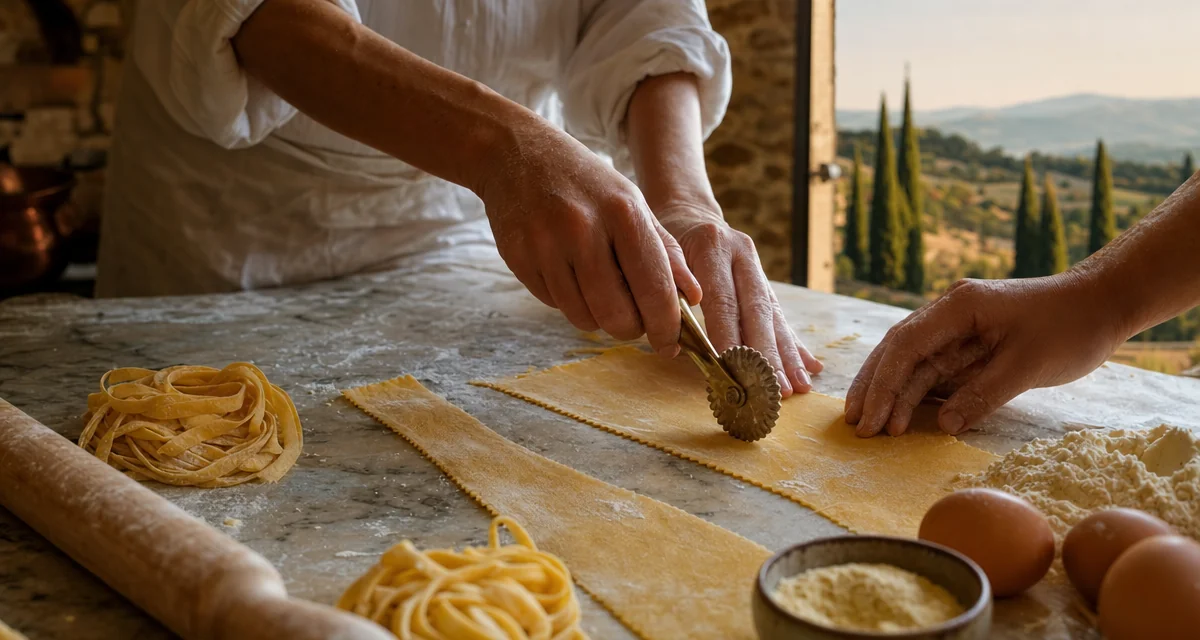
The countryside version is what most travellers picture: a stone farmhouse, a long wooden table, a kitchen open to a courtyard, herbs from the garden. The dominant venue is the agriturismo, a working farm legally required to derive a minimum share of revenue from agriculture (olive oil, wine, vegetables, sometimes meat) and licensed to host guests and serve meals from its own produce. Agriturismo classes in Chianti, Val d'Orcia and the Maremma run 3 to 4 hours, cap at 6 to 8 guests, and cost €95 to €160 per person including the meal. The trade-off is logistics: most require driving 30 to 60 minutes from a Tuscan hub city, and some include minivan transfer from Florence at an extra €25 to €45 per person. If your group has rented a villa in the same valley, a private chef coming to you eliminates the transfer entirely.
The biggest mistake I see international guests make is booking a city centre class on the day they're moving from Rome to their Tuscan villa. They arrive exhausted, the class is rushed, the pici turns to glue. Do the class on day two or three, when you've slept and you're hungry for the food, not just the experience. Chef Lorenzo, Florence-based ambassador of Chef On Demand Tuscany
What Tuscan dishes will you actually learn to cook?
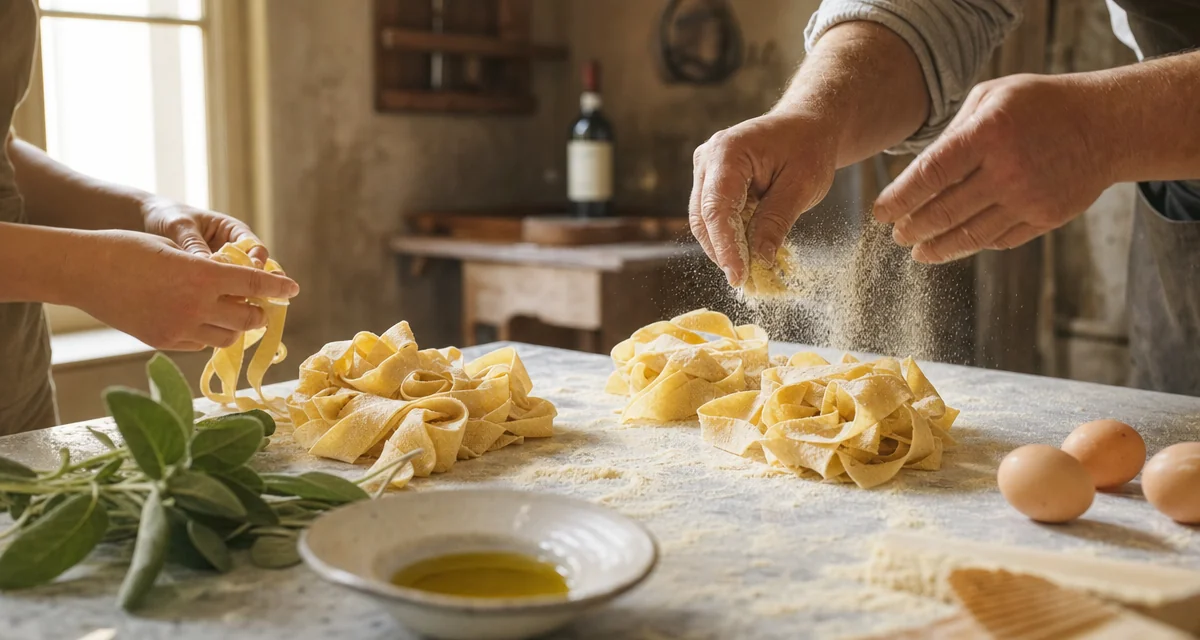
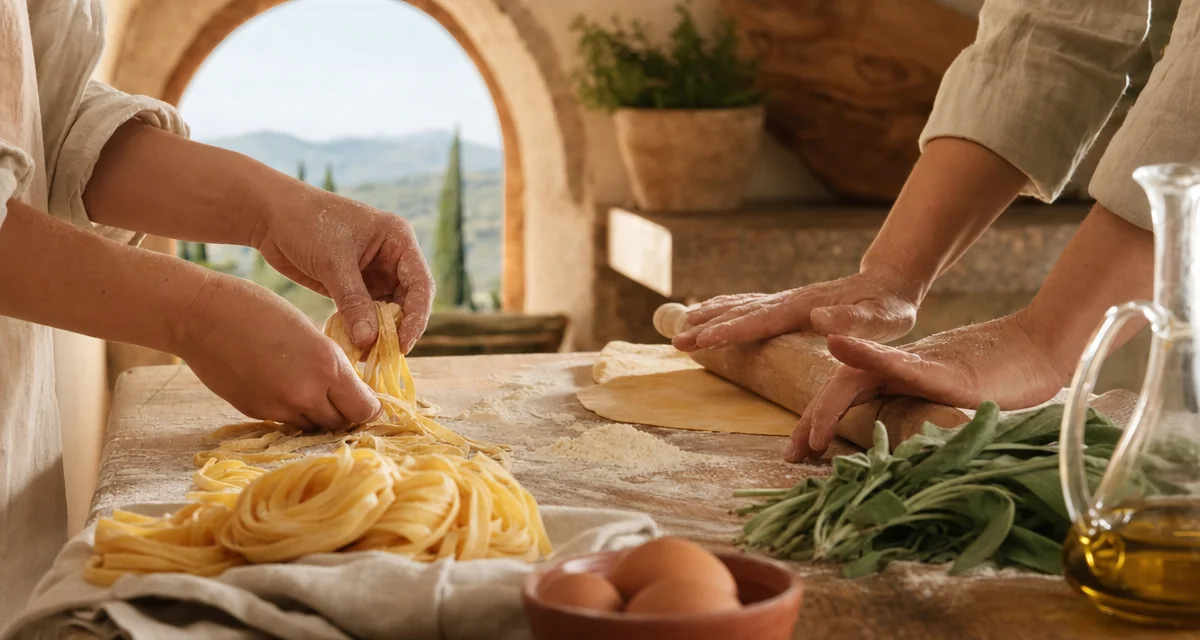
Any Tuscan class worth the price teaches at least one of the region's structural dishes; the better classes teach two or three. The fresh-pasta entry point is almost always pici, the hand-rolled spaghetti-thick noodle from Siena province made with flour and water only (no eggs), shaped one strand at a time and traditionally sauced with aglione (garlic-tomato) or wild boar ragù. The wider-ribbon counterpart, pappardelle, is the second teaching shape, paired with a slow-cooked cinghiale (wild boar) sauce often started the day before. On the antipasti side, expect panzanella in summer (the bread-and-tomato salad of stale Tuscan bread, ripe tomato, red onion, basil and good olive oil) and ribollita in winter (a thick reboiled soup of cannellini beans, black kale, carrots, celery and stale bread, originally a way to repurpose leftovers). Schiacciata (the flat dimpled Tuscan bread closer to focaccia than pizza) appears in about half of classes. Cantucci (hard almond biscuits dipped in Vin Santo) and tiramisù are the standard dessert closers. Bistecca alla fiorentina, the thick T-bone from Chianina cattle grilled rare on the bone, is rarely cooked in class because of its size, but the better Florentine classes will at least demonstrate it.
- Pici hand-rolling: the Sienese signature, the only Tuscan technique that travels home with you in your hands rather than a recipe.
- Pappardelle al cinghiale: long wide ribbons with slow-cooked wild boar ragù, the Chianti hill kitchen's headline dish.
- Ribollita or panzanella: winter or summer, the season decides which one the chef teaches.
- Schiacciata all'olio: the dimpled Tuscan bread finished with new-pressing olive oil, almost always served alongside.
- Tiramisù: the dessert closer in 90% of Tuscan cooking classes, taught as the final hands-on step before you sit down to eat.
Group class or private chef in your villa: which is right for your trip?
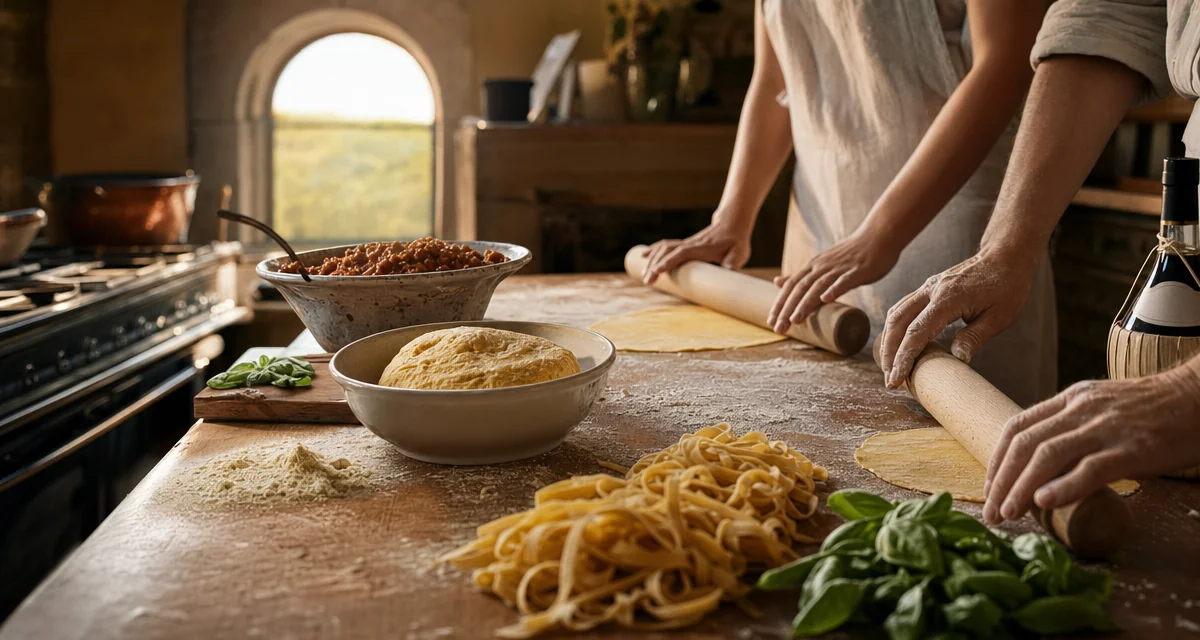
The honest answer depends on where you're sleeping. Spending two or three nights at a Florence hotel? A city centre group class is fast, social and well-priced at €58 to €110 per person; you meet other travellers, the chef has run the same class 400 times this year, you walk back through Oltrarno feeling pleasantly tipsy. Renting a villa in Chianti or Val d'Orcia for a week? The maths flips. A Florence class costs you a 60 to 90 minute drive each way (with a designated driver, since wine is included), the transfer eats two hours of villa time, and you're still cooking in someone else's kitchen with strangers. A private chef at your villa, bringing ingredients, boards, rolling pins and menu, means the lesson happens in your kitchen, your group only, your pace; dinner is on your own table, terrace or pool deck. The format we sell for this scenario is the Pasta Class + Dinner Experience: a 2-hour class teaching one long pasta shape and one short shape, followed by the chef cooking dinner with two sauces, antipasti and tiramisù, all at your villa, all in one booking. For groups of 6 or more, the per-head economics compete favourably with a high-end Florence private class once you factor the transfer.
When is the best time of year to take a cooking class in Tuscany?
The peak windows for Tuscan cooking classes are late April through late June and mid-September through late October. Both give you stable weather (highs 22–28°C), full local-produce availability, and instructors who haven't yet hit August burnout. April through June favours panzanella, broad beans, artichokes and the first stone fruit. September through October is the season of new-press olive oil, wild boar (the autumn cinghiale hunt opens in early November), and the late tomato. July and August are doable but hotter (highs 32–36°C in Florence); many agriturismo properties close kitchens for two weeks around Ferragosto (August 15). November brings olive-harvest experiences at several Chianti and Val d'Orcia operations. December through March is the quietest window: about 60% of countryside operations close completely, but Florence schools stay open and prices drop 15-25% versus peak.
How do you book a cooking class in Tuscany without getting burned?
Three rules cover most disappointment cases we hear about. First, book at least 7 to 14 days ahead in peak season (June, September, October); the best countryside classes cap at 6 to 8 guests and fill 3 to 4 weeks ahead. Second, read the cancellation policy before paying. OTAs (Viator, GetYourGuide) offer 24-hour cancellation windows on most listings, but direct school bookings often have stricter terms (48 to 72 hours, sometimes non-refundable on multi-day vacations). Third, check if wine and transfers are included in the headline price. The cheapest-looking classes often add €15 to €45 per person for wine pairing and another €25 to €45 for the minivan from Florence; by the time you've paid both, you're within €10 to €15 of a small-group class that bundled everything. For private chef classes at your villa, our verified Tuscan cooking-class chef network confirms within 24 hours and locks the menu in a single email exchange.
Why a cooking class in Tuscany matters for your Italian holiday
The reason a Tuscan cooking class is worth the money in 2026 isn't the food. The food, you can buy in any reasonable Florence or Siena restaurant for half the per-head price. It's the muscle memory: the moment, six months later, when you're back in your kitchen in Boston or Munich or Sydney and your hands remember how to roll pici against the wooden board. The chef coached your hands for two hours, and that coaching is what travels home with you. The dinner at the end is the prelude to the takeaway, not the takeaway itself. The right format lets you concentrate on the technique: no transfer, no shared counter with strangers, no rush to end by 6pm because the next group is coming in. For groups of four or more in a Tuscan villa, the in-villa Pasta Class + Dinner format compounds the value. To see verified chefs across the region, browse our private chef hub for international travellers in Tuscany or the dedicated Tuscan cooking-class regional page. Either way: roll the pici with your own hands. Six months later, that's what you'll remember.