What does a beginner cooking class in Rome actually involve?
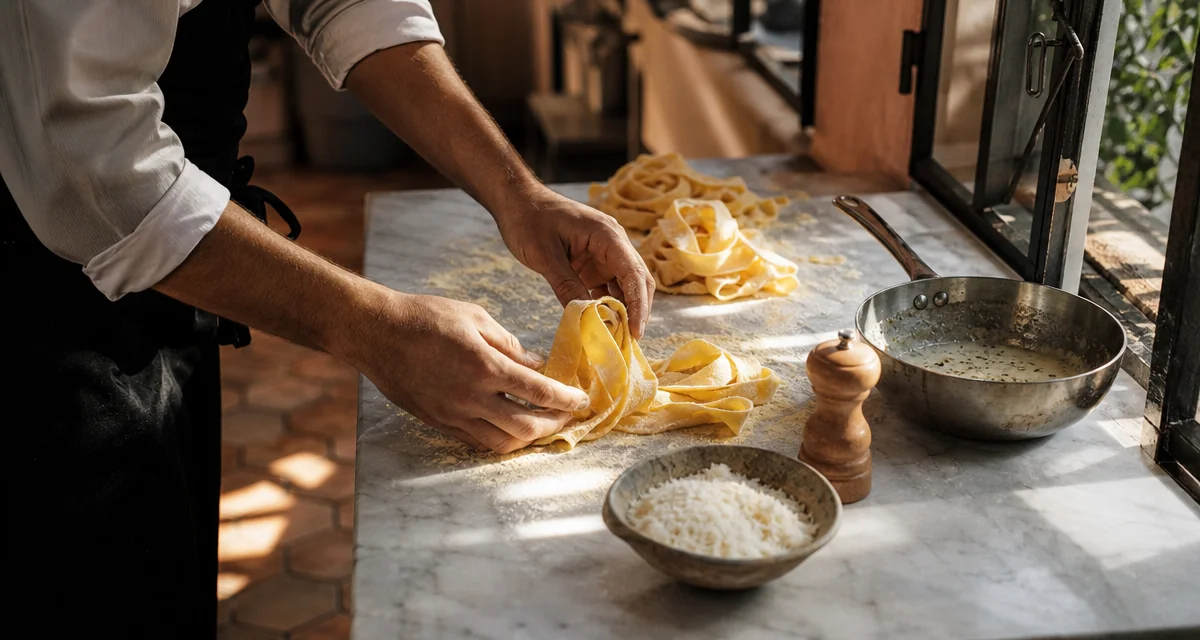
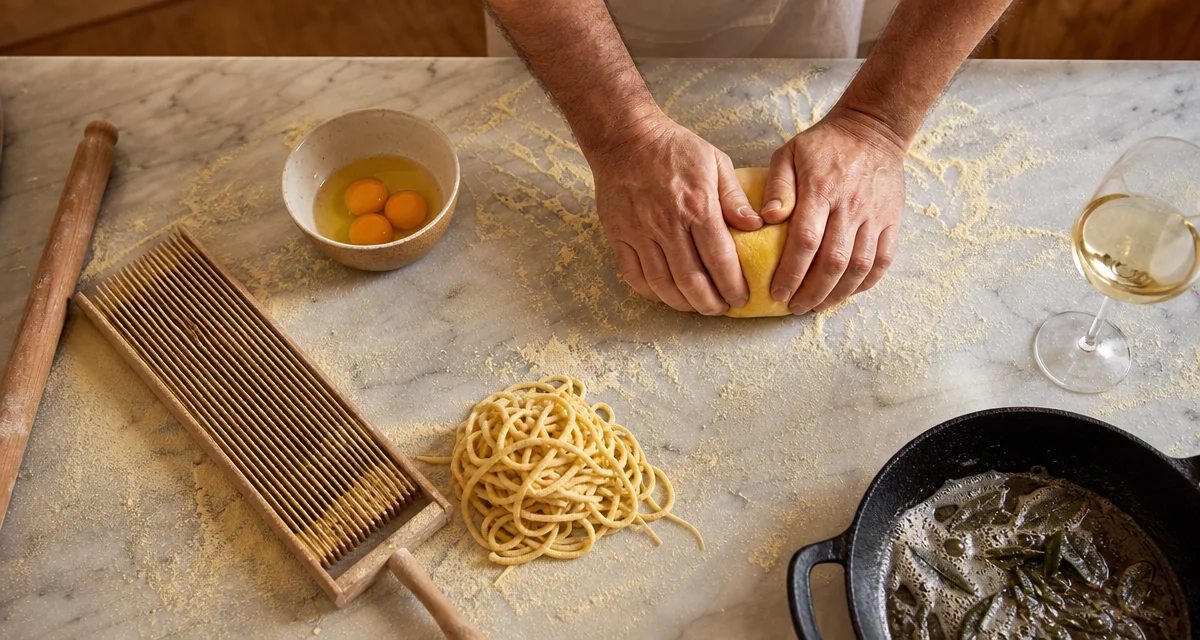
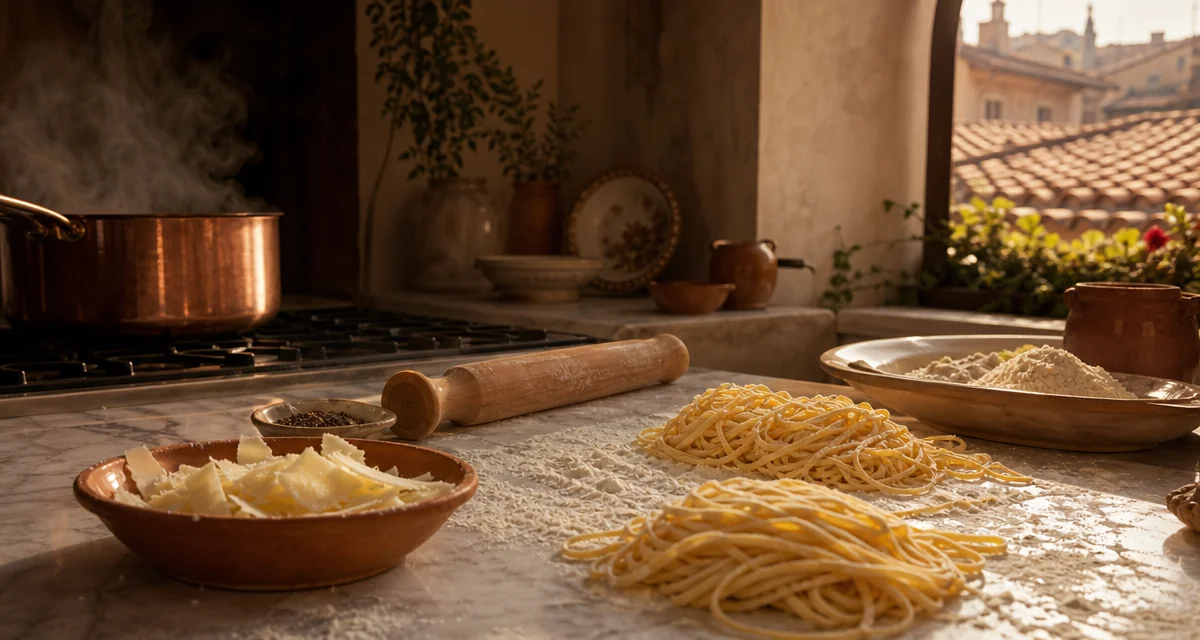
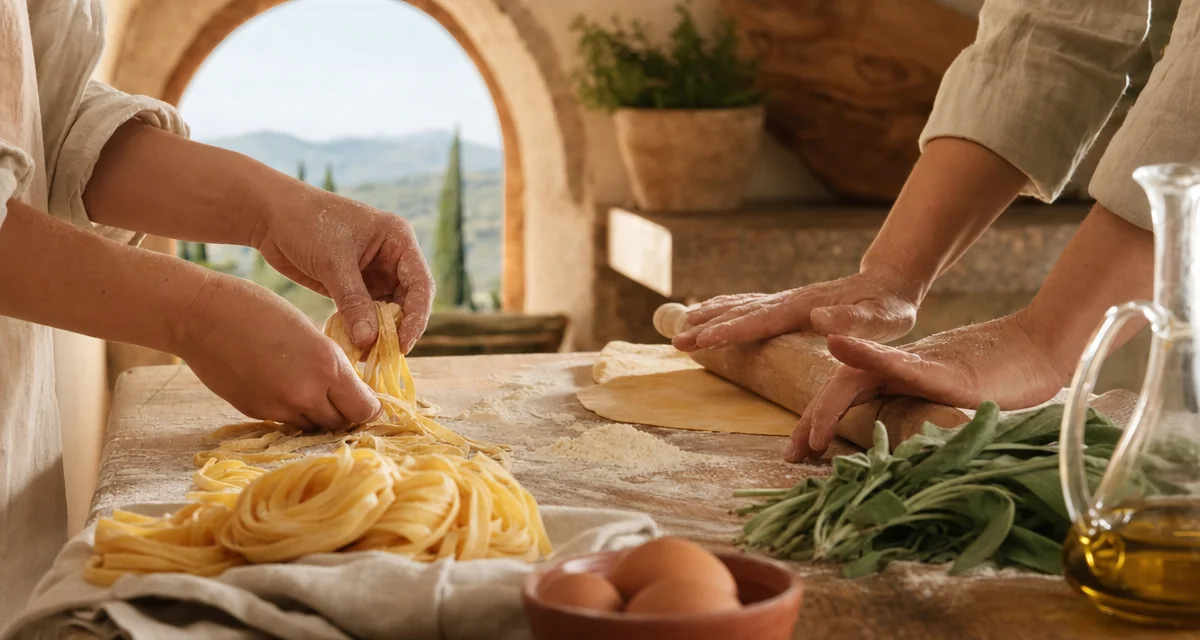
A beginner cooking class in Rome puts a chef at your elbow and walks you, step by step, through making fresh pasta and one or two Roman sauces with your own hands, then sits you down to eat what you made. There is no test, no prior skill, and no chopping speed contest. A good beginner format spends most of its time on the hands-on part. You will typically knead a simple flour-and-egg dough, rest it, roll it, and shape it into two forms: a long pasta like fettuccine or tonnarelli (a square-cut fresh spaghetti from Rome and Abruzzo, the traditional vehicle for cacio e pepe) and a short or filled shape like ravioli. The chef then pairs each shape with a sauce, usually cacio e pepe, a deceptively simple sauce of Pecorino Romano DOP cheese and black pepper emulsified with starchy pasta water, or carbonara, made with egg yolk, Pecorino, black pepper and crisped guanciale (cured pork jowl, fattier and sweeter than pancetta). Most beginners are genuinely surprised that the plate in front of them is their own work. Across our network, the typical beginner spends 2 to 4 hours from apron-on to the last bite of tiramisù, and the pace is set by the slowest hands at the table, not the fastest.
How can I tell a real beginner class from a tourist-trap demo?
The difference comes down to three numbers: group size, hands-on percentage, and chef-to-guest ratio. A real beginner class keeps groups small (2 to 8 people is the comfortable band), spends at least 70% of the session with your hands in the dough, and gives the chef enough room to fix your technique in real time. A tourist-trap demo crams 12 to 16 people into a room where one person performs and the rest mostly taste and clap, sometimes giving each guest barely 20 minutes of real hands-on time. Both can cost similar money, which is why reading the listing carefully matters more than reading the price. Operators who write ‘zero experience needed, we walk you through every step’ and state a clear maximum group size are usually telling the truth. Be wary of vague phrases like ‘interactive experience’ with no group cap, or photos that show a long communal counter with a single chef up front. Location is a softer signal: Trastevere (the cobbled, ivy-draped neighbourhood across the Tiber that locals still treat as their village) and the working-class food district of Testaccio, home to one of Rome's most authentic markets, both host serious small-group kitchens, but the neighbourhood alone guarantees nothing. The structure does. If you want to skip the studio entirely, a private chef who comes to your apartment or villa removes the cohort problem at a stroke, because the only people kneading are your group.
I can teach anyone to make pasta in two hours, but only if I am teaching four people, not fourteen. With a small group I can actually put my hands over yours and fix the pressure on the rolling pin. That is the whole job, and it is impossible in a crowd. Chef Lorenzo, Rome-based ambassador of Chef On Demand
What will I learn, and which Roman dishes are beginner-friendly?
You will learn the two skills that carry every fresh-pasta dish: making and resting an egg dough, and shaping it into one long and one short form. Beginners cope best with fettuccine or tonnarelli for the long shape and ravioli or maltagliati for the short one, because none of them demand machine precision. On the sauce side, the classic Roman trio is the right place to start. Cacio e pepe is the famous test of nerve, just 3 ingredients (Pecorino Romano DOP, black pepper and pasta water), but the technique of emulsifying cheese without it clumping is exactly the kind of thing a chef should coach you through hands-on. Carbonara teaches you to fold egg and cheese off the heat so it turns silky rather than scrambled. Amatriciana, the tomato-and-guanciale sauce that originated in the town of Amatrice in Lazio, teaches you to render cured pork properly. For a deeper single-skill dive, our companion guide to a Rome pasta-making class explains shape-by-shape technique in detail, while our broader overview of the best cooking classes in Rome helps you weigh studios against private options. You can also see who is cooking near you through our network of private chefs in Rome. Dessert is almost always tiramisù, layered with mascarpone, coffee-soaked savoiardi (ladyfinger sponge biscuits) and cocoa, and it is the easiest crowd-pleaser to master in one sitting. The point of a beginner class is not a chef's full repertoire; it is to give you three or four things you can genuinely repeat in your own kitchen.
- Confirm the group size and the chef-to-guest ratio before you pay, and treat anything above 10 guests as a demo rather than a lesson.
- Check that you personally shape at least two pasta forms, not just one, so you leave with real range.
- Ask which sauces are taught, and look for the Roman classics: cacio e pepe, carbonara or amatriciana.
- Tell the operator about allergies and dietary needs in writing at booking, listing each one as a separate line.
- Decide early whether you want a studio in town or a private chef at your accommodation, because that single choice shapes price, pace and privacy.
- Build in time to actually sit and eat: a class that ends with a rushed tasting at the counter has missed the best part.
| Feature | Group studio class | Private at-home Pasta Class + Dinner |
|---|---|---|
| Price (2026) | €60 to €130 per person | Around €150 per guest, dinner included |
| Group size | Often 8 to 16 strangers | Only your own party |
| Hands-on time | Variable, sometimes demo-heavy | Fully hands-on, your pace |
| Where | A studio in town, you travel to it | Your apartment, villa or rental |
| What you cook | Usually 1 to 2 shapes, 1 sauce | Two shapes (long and short), two sauces, antipasti, tiramisù |
| Best for | Solo travellers, sociable couples | Nervous first-timers, families, mixed-age groups |
How much do beginner cooking classes in Rome cost in 2026?
In 2026, a beginner group cooking class in Rome typically costs €60 to €130 per person, with most sociable pasta-and-tiramisù sessions landing between €85 and €115 per head. A private at-home Pasta Class + Dinner through Chef On Demand runs around €150 per adult, with children counted at roughly €60, and that figure already includes the groceries, the equipment, the lesson, a full seated dinner and the clean-up. The maths is more interesting than it first looks. A private class for 4 adults comes to about €600 in total, which is €150 per head, while the same experience for 6 adults is around €900, still €150 per head, because this format is priced per guest rather than per group. The break-even usually arrives around four to six guests, where a private chef at your accommodation often costs little more per person than a busy studio yet delivers far more cooking and a proper dinner. Chef On Demand operates a verified network of private chefs across Rome and Lazio, and our typical cooking-class booking serves 4 to 8 guests in a single 4 to 5 hour experience. Prices above are indicative for a standard, non-holiday date; festive periods carry a surcharge.
Is a private at-home class better for nervous first-timers?
For genuine first-timers, a private at-home class is usually the gentlest way in, because it strips out the three things that make beginners freeze: the crowd, the clock and the commute. The Chef On Demand Pasta Class + Dinner is a single booking that brings one chef to the apartment, villa or holiday rental you are already staying in, so there is no studio to find and no transfer for a group of six. The format is a roughly 4 to 5 hour experience built around you. The first two hours are the class itself, where the chef arrives with all the ingredients and equipment and teaches your group two fresh-pasta shapes, one long and one short, entirely in your own kitchen. While the pasta rests, the chef prepares two sauces (one per shape), two or three regional antipasti and a homemade tiramisù, and you watch and help as much or as little as you like. Then everyone sits down at your own table for a proper seated dinner of everything you shaped, plated and served by the chef, with clean-up included. The privacy matters more than people expect: only your group is at the table, the menu and pace bend to your party, children can drift in and out of the kitchen, and timing is yours rather than a fixed studio shift. You also drink whatever wine you like, from the villa cellar or the local enoteca (a wine shop or bar). What you take home is not a sheet of paper. It is the muscle memory of rolling tonnarelli under the chef's hands, the feel of an emulsified cacio e pepe, and a dinner you cooked together. To book one, request a quote and tell us about your stay; you can also browse our Rome private chef network to see who is available for your dates.
Why this matters for your Roman holiday
A beginner cooking class is one of the few holiday experiences that follows you home. The Colosseum is a photograph; a plate of carbonara you can actually make on a wet Tuesday in November is a skill, and skills are what turn a trip into a story you keep telling. For nervous first-timers especially, the format you choose is the whole game. A good small-group studio in Trastevere or Testaccio can be a warm, sociable afternoon, and we link to more options in our overview of how to choose the best cooking classes in Rome and our look at how long Rome classes typically run. But if you are travelling with family or with anyone who quietly dreads being the slowest hand in a room of strangers, a private chef at your accommodation removes every source of stress and ends in the dinner the whole evening was built around. The same logic applies in other Italian cities, which is why we wrote a parallel guide to cooking classes in Florence for beginners. Chef On Demand holds a 4.7/5 Trustpilot rating based on 800+ guests served since 2025. You can explore the wider network through our private chef hub, but the simplest start is to picture it: your rented Roman kitchen, flour on the counter, your own pasta drying on a rack, and a chef who makes the whole thing feel like the easiest thing you have ever done.