What does a pasta making class in Rome actually involve?
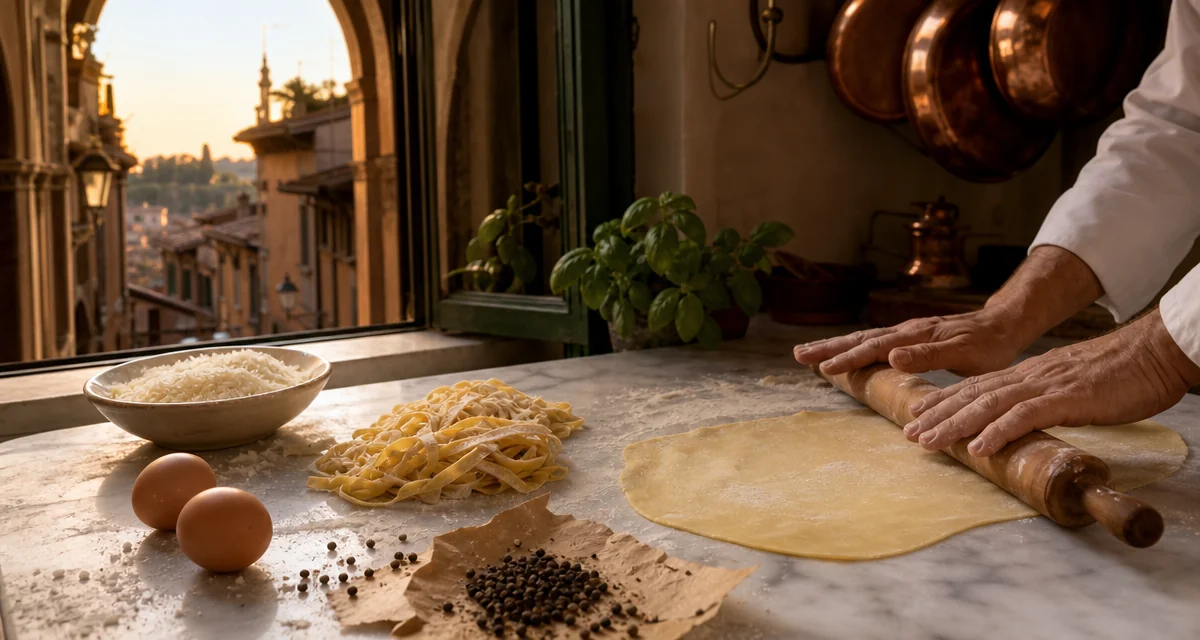
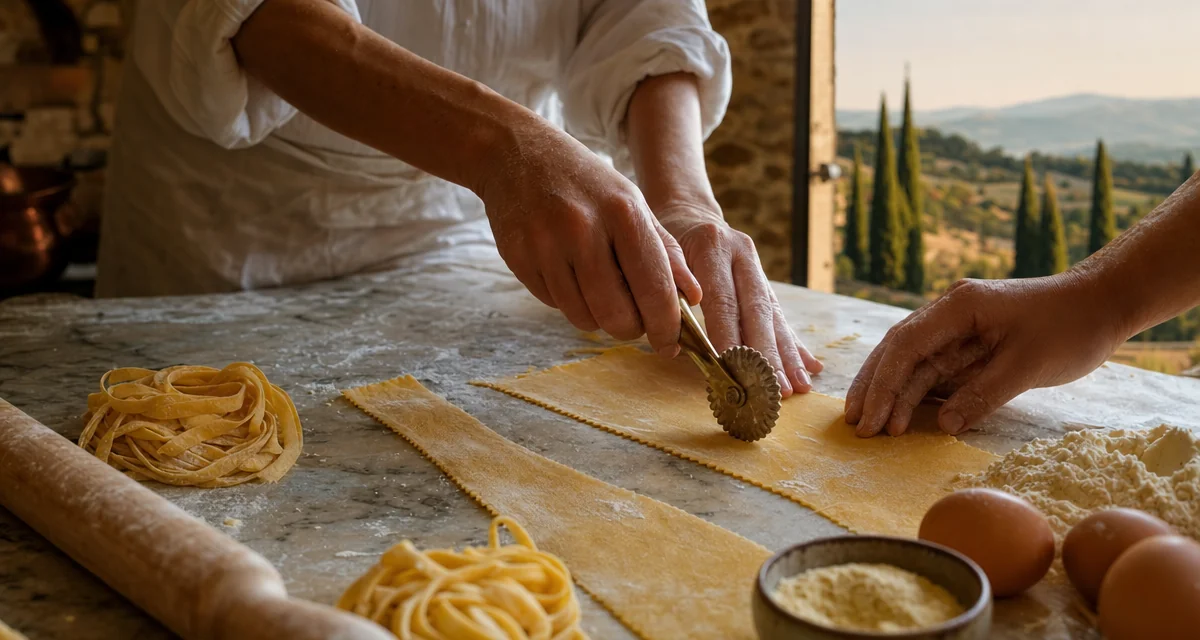
A proper pasta making class in Rome is hands-on from the first minute: you mix the flour and egg, knead the dough until it is smooth and elastic (about 8 to 10 minutes of real work), let it rest, then roll and cut it into shape yourself. A good class teaches two shapes rather than one, so you leave understanding both a long pasta and a short pasta. In Rome the long shape is usually tonnarelli, the city's signature square-cut strand made on a chitarra, a wooden frame strung with wires that the dough is pressed through (think of a guitar laid flat, hence the name). The short shape might be ricotta-and-spinach ravioli or maltagliati, the rustic offcuts that translate to 'badly cut'. While the dough rests, the chef shows you the sauces: this is where the Roman canon arrives. You meet cacio e pepe, a deceptively simple sauce of Pecorino Romano cheese and black pepper emulsified with starchy pasta water into a glossy cream, and often amatriciana, made with guanciale (cured pork cheek), tomato and Pecorino. The class is a workshop, not a demonstration: you do the work and the chef coaches your hands.
How much does a pasta making class in Rome cost in 2026?
A pasta making class in Rome costs roughly €60 to €130 per person for a group studio session, and €110 to €215 per person for a private class with dinner at your accommodation, depending on tier and group size. The single biggest variable is group size: per-person prices drop sharply as your party grows, because the chef's time is shared across more guests. For Chef On Demand's private Pasta Class plus Dinner in Rome (which carries a small city premium over rural Italy), the Essential tier runs about €125 per person for 4 guests and around €100 per head for 10, while the Taste of Italy tier runs about €155 per person for 4 and roughly €115 per head for 10. The Luxury tier, with truffle or seafood and a wider wine flight, sits near €215 per person for 4 and about €165 for 10. Those figures include all ingredients, equipment, wine and cleanup; nobody in your group lifts a sponge. You can compare these tiers against the wider Chef On Demand network in Rome, which serves groups of 2 to 12 guests across the city. Always read a quote against the group size it assumes, because a headline 'from €60' almost always means a large studio cohort, not a private afternoon for your family of four.
| Tier (course count) | 4 guests | 6 guests | 10 guests |
|---|---|---|---|
| Essential (4 courses) | around €125 pp | around €110 pp | around €100 pp |
| Taste of Italy (5 courses) | around €155 pp | around €135 pp | around €115 pp |
| Luxury (6+ courses) | around €215 pp | around €195 pp | around €165 pp |
Tourists arrive thinking pasta is about the recipe. By the time they have rolled their own tonnarelli, they understand it is about the hands. That is the souvenir they take home, and it never fits in a suitcase. Chef Lorenzo, Rome-based ambassador of Chef On Demand
Private class at your apartment vs a group studio: which is right for you?
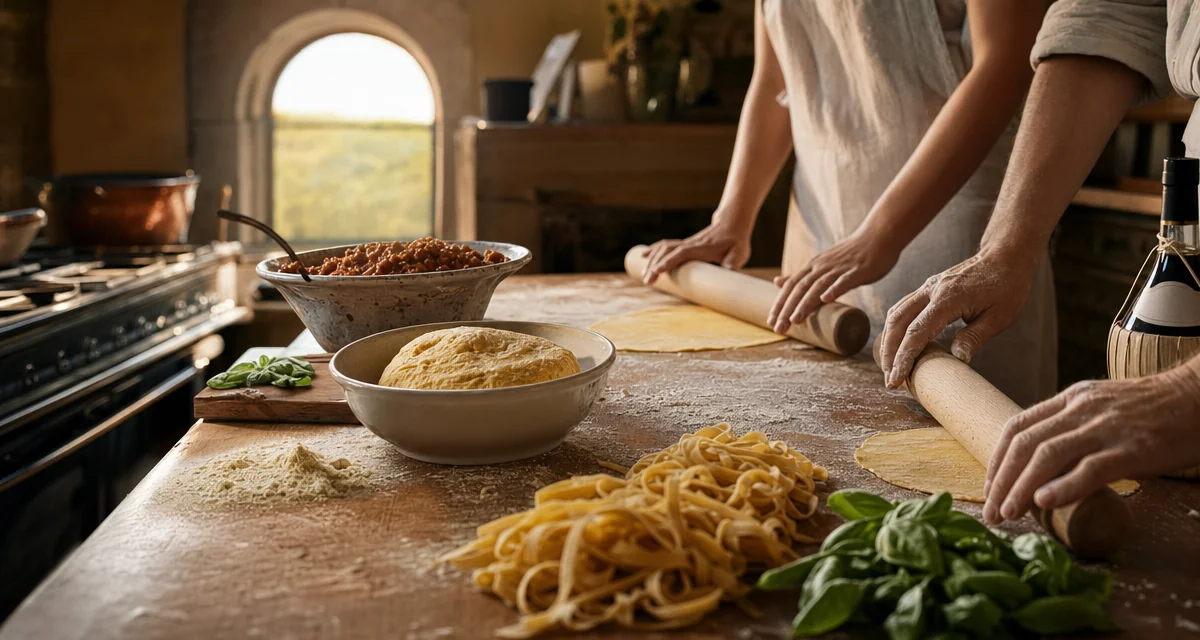
The honest difference is privacy and personalisation. A group studio class in Trastevere or near Piazza Navona puts you at a shared counter with 7 to 14 strangers, working through a fixed menu on the studio's schedule, then eating at a communal table before the next class files in. It is sociable and usually cheaper per head, often €60 to €90 per person, and for solo travellers or couples who enjoy meeting people it can be the better choice. A private Pasta Class plus Dinner is the opposite: the chef comes to the apartment, villa or holiday rental you have already booked, brings every ingredient and tool, and the afternoon belongs to your party alone. The menu bends to your group, allergies are handled properly rather than on a shared surface, children can drift in and out of the kitchen, and the relatives who would rather not knead can still sit down to the same dinner. There is no 40-minute taxi across the city for eight people, no rigid finish time, and no rule against opening the wine you bought at the local enoteca (the neighbourhood wine shop). You also experience the home you are paying for instead of trading its terrace for a classroom. If you are searching for a private chef in Rome who can teach as well as cook, this is the format that delivers both. For travellers who want a broader picture first, our guide to broader Rome cooking class options compares studio, market-and-cook and private formats across the city.
- Confirm the format: a real Pasta Class plus Dinner teaches two shapes and ends with a full seated meal, not a quick tasting.
- State your group size and any allergies up front, so the per-person quote and the menu are accurate from the first reply.
- Ask which Roman sauces are included; cacio e pepe and amatriciana are the classics worth requesting by name.
- Check the kitchen has counter space and a stovetop; the chef brings the boards, rolling pins and chitarra, but needs room to work.
- Lock the date 7 to 14 days ahead in summer, and tell the chef your preferred start time so the dinner lands when your group is hungry.
What pasta shapes and dishes will you actually make?
In a Rome-specific pasta making class you will most often make tonnarelli, the city's defining fresh pasta: a square-section strand a little thicker than spaghetti, cut on the chitarra and built to hold a clinging sauce. Pair it with cacio e pepe and you have eaten Rome in a single forkful. Many classes add a second, shorter shape so you leave with range: ricotta-and-spinach ravioli (filled parcels you crimp by hand), fettuccine (the ribbon pasta Romans pile with rich sauces), or maltagliati. On the sauce side, expect at least one or two of the four Roman pasta pillars: cacio e pepe (Pecorino and pepper), gricia (guanciale and Pecorino, no tomato, the ancestor of amatriciana), amatriciana (gricia plus tomato), and carbonara (egg, guanciale, Pecorino and pepper, with no cream, ever). A Chef On Demand Pasta Class plus Dinner then rounds the meal out with 2 to 3 regional antipasti and a homemade tiramisù, the cocoa-dusted layered dessert of mascarpone, coffee-soaked savoiardi biscuits and egg. The dough itself rests for 30 minutes before you roll it, which is exactly the window the chef uses to teach the sauces. By the end you will have made two pastas and tasted the Roman canon the way Romans actually eat it.
How do you book a private pasta making class in Rome?
Booking a private class is simpler than booking a restaurant for a large group. You share your dates, your party size, the address where you are staying, and any dietary needs, and within 24 hours you receive proposals from chefs in the network. You can also browse private chefs in Rome to see the cooks who teach this format before you enquire. Chef On Demand operates a verified network of 12+ private chefs across Rome and Lazio, many of them from Michelin-starred kitchens, Gambero Rosso-rated restaurants and Top Chef Italia, and holds a 4.7/5 Trustpilot rating based on 800+ guests served since 2025. The typical group we serve is 4 to 12 guests, with a 2 to 4 hour service window for a standard dinner and a little longer for the full Pasta Class plus Dinner. Lead time matters: average booking lead time across our network is 7 to 14 days in peak season (June to September), so the earlier you confirm, the wider your choice of chef and slot. Payment, menu personalisation and the final timing are all handled before the day, which means the only thing left to do when the chef arrives is wash your hands and reach for the flour. If your travels continue north, the same format awaits in Tuscany; our pasta making class in a Florence villa covers it city by city.
Why this matters for your Roman holiday
Rome rewards travellers who slow down. You can spend a morning being herded past the Colosseum and an evening fighting for a table, or you can give one afternoon to something that stays with you: the weight of dough under your palms, the chef's hand steadying yours on the chitarra, the smell of guanciale rendering while your tonnarelli dries on the counter of the apartment you came home to. A pasta making class is not a box to tick. It is the moment Rome stops being a list of monuments and becomes a kitchen you were briefly part of. When you book a chef to teach and cook in the home you have rented, you also keep the privacy, the pace and the wine that a studio full of strangers cannot offer. Explore the wider network of chefs and experiences on our private chef hub, and picture your group six weeks from now, back home, rolling out the pasta you first learned to shape in Rome, the muscle memory still in your hands. That is what this matters for: not a meal you bought, but a skill you carried out the door, and a dinner you will be telling people about long after the trip is over.