What makes a cooking class in Rome actually 'the best'?
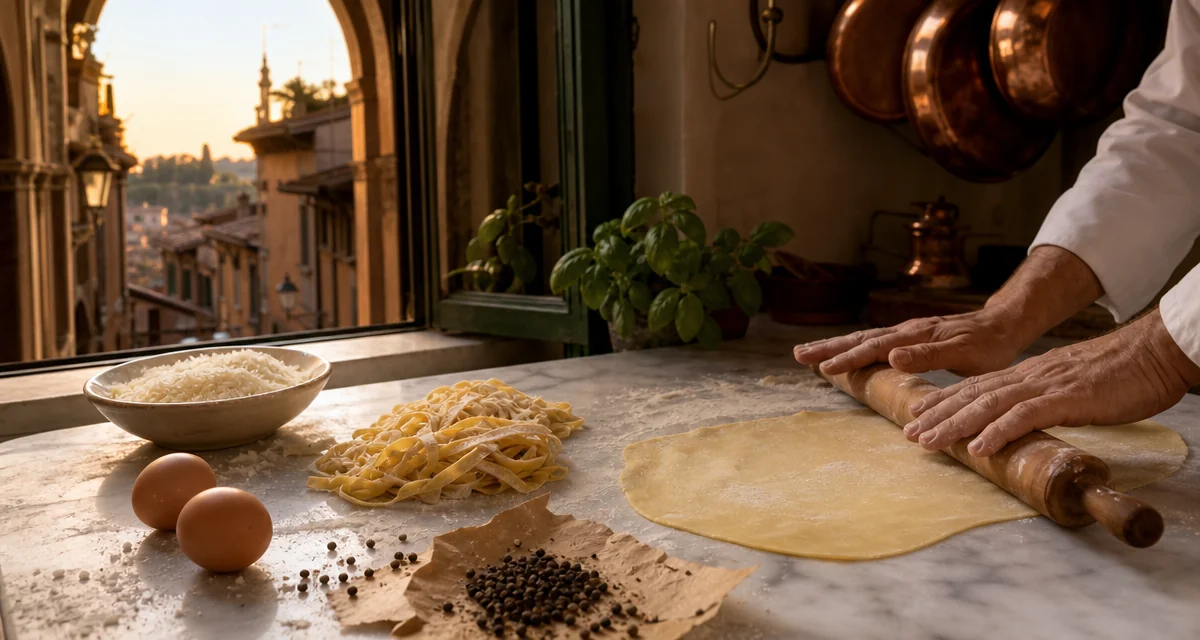
The best cooking classes in Rome share four traits: a small group (8 to 14 guests), a working chef rather than a host reading from a script, genuinely Roman recipes, and enough hands-on time that you finish able to repeat the dish. Price barely correlates with quality past a certain floor. A EUR 75 class with ten people and a patient chef will teach you more than a EUR 120 class for twenty-five. When you read the reviews, skip the star count and look for specifics: do guests mention the chef by name, do they describe what they learned, do they say they have cooked it since. Vague praise ('lovely afternoon, lots of wine') often signals a class built for atmosphere rather than skill. Rome's home cooking is famously simple and unforgiving, so technique matters. Cacio e pepe, the city's emblematic pasta of Pecorino Romano and black pepper, has only three ingredients and a dozen ways to split into a greasy mess; a good chef spends real minutes on the emulsion, the pasta water, the off-heat tossing. That is the kind of detail that separates a memory from a souvenir, and it is worth checking before you pay.
How much do the best cooking classes in Rome cost in 2026?
In 2026, a good small-group cooking class in Rome costs roughly EUR 70 to EUR 130 per person, while a private group class in a commercial kitchen runs from about EUR 200 for two people up to EUR 280 per head for a fully bespoke experience. The spread is wide because 'cooking class' covers very different things. A two-hour pasta-and-tiramisu group session near Piazza Navona sits at the lower end. Add a market visit, a four-course menu, and a wine pairing and you climb toward EUR 130. Most classes include everything: ingredients, equipment, an apron, the wine, and the meal you cook and then sit down to eat. The genuinely private option, where a chef comes to you, is priced differently. A Chef On Demand Pasta Class plus Dinner in Rome is around EUR 150 per adult (children count at EUR 60), and that buys the whole experience for your group alone, at the apartment or villa you have rented. The number to interrogate is not the headline price but the per-head value: a EUR 120 class for 20 people is paying mostly for the venue, while a EUR 150 at-home experience for 6 guests is paying for a chef's undivided afternoon. Always ask what the cap is before you compare two prices, because a per-person figure means nothing without the group size behind it.
Tourists ask me for the secret to carbonara and expect a long answer. The secret is restraint: guanciale, egg yolk, Pecorino, pepper, pasta water, and the discipline to never let the eggs scramble. A good class teaches you to stop, not to add. Chef Lorenzo, Rome-based ambassador of Chef On Demand
Group, private or market tour: which cooking class format suits you?
Rome offers three broad formats and they suit different travellers. Small-group classes (8 to 14 guests, EUR 70 to EUR 130 per person) are the default and the most social; you will share a table with strangers, which some love and some do not. Private classes put a chef with your group alone, either in a commercial cooking studio (from around EUR 200 for two) or, with Chef On Demand, in your own kitchen. Market tour plus cooking classes start with a guided shop, usually at Campo de' Fiori in the centre or the Mercato di Testaccio further south, before you cook what you bought. If your group has children, mixed dietary needs, or simply does not want to spend the evening making small talk, a private format wins easily. If you are a solo traveller or a couple who enjoy meeting people, a small group is cheaper and livelier. The market tours are the most educational about Roman ingredients but the longest (often 4 hours), so factor that into a packed sightseeing day. For a deeper look at a single neighbourhood class, our guide to booking a cooking class in Rome without the tourist traps walks through one full booking start to finish. For travellers staying near the centre, our Rome private chef network can run the class wherever you are based.
- Confirm the group cap in writing (aim for 8 to 12) and ask whether the session is hands-on or part demonstration.
- Check the menu: a genuinely Roman class teaches cacio e pepe, carbonara, amatriciana or fresh tonnarelli, not a generic 'Italian pasta'.
- Verify what is included (ingredients, wine, the sit-down meal) so you are not comparing a 90-minute taster against a 3-hour full menu.
- Read the reviews for the chef's name and specifics, and discount any listing where praise is only about the wine and the views.
- Decide the format by your group: private at-home for families and dietary needs, small group for couples and solo travellers, market tour for ingredient-curious foodies.
- Book 1 to 2 weeks ahead for peak season (April to June, September to October), when the best small classes fill first.
| Feature | Small-group class | Market tour plus cooking | Private at-home chef class |
|---|---|---|---|
| Typical price | EUR 70 to EUR 130 pp | EUR 90 to EUR 150 pp | Around EUR 150 per adult |
| Group | 8 to 14 strangers | 6 to 12 strangers | Your party only |
| Duration | 2 to 3 hours | 3.5 to 4 hours | 4 to 5 hours (class plus dinner) |
| Location | Studio or restaurant kitchen | Market then kitchen | Your apartment or villa |
| Best for | Couples, solo travellers | Ingredient-curious foodies | Families, dietary needs, privacy |
| Personalisation | Fixed menu | Some menu choice | Fully tailored menu and pace |
Where in Rome should you take a cooking class?
The neighbourhood shapes the experience as much as the menu. Trastevere, the tangle of cobbled lanes and ivy-draped houses across the Tiber, is the romantic favourite; most of the best-known small classes cluster here, and an evening session ends with a stroll through Rome's prettiest quarter. The Centro Storico around Piazza Navona and the Pantheon is the most convenient if your hotel is central, and many classes pair with a visit to Campo de' Fiori, the lively morning market square where Romans have bought produce since the 1800s. For the real food heart of the city, head to Testaccio, the working-class district built around the old slaughterhouse where the cuisine of offal and frugal genius was born; the covered Mercato di Testaccio is where a market tour feels least staged. Best pasta making classes in Rome tend to advertise Trastevere or the centre because that is where visitors stay, but the location that matters most is the one you do not have to travel to. If you have rented an apartment or a villa, a private chef class in your own kitchen removes the taxi, the 6pm start and the rush back. For the wider food map, the official board at Turismo Roma keeps a current guide to markets and food districts.
Group class or a private chef at your apartment: which is better?
A commercial group class is cheaper and more social; a private chef at your apartment is more personal, more flexible, and built around your party alone. The trade-off is exactly that simple. With Chef On Demand, the Pasta Class plus Dinner happens entirely at your villa or the apartment you have rented, never at a school or a restaurant kitchen. The chef arrives with all the ingredients and equipment and works in your kitchen, so there is no transfer, no shared cohort of strangers, and no rigid finish time. The format is specific: a 2-hour hands-on pasta class teaching two shapes, one long (such as tonnarelli or pappardelle) and one short, then the chef prepares two matching sauces plus a few antipasti and a homemade tiramisu, and finally you sit down to a full seated dinner of everything you shaped. It runs 4 to 5 hours start to finish, for around EUR 150 per adult. The advantages over a school class are concrete: privacy, a menu and pace tailored to your group, the freedom for children to join in or play in the next room, your own terrace or garden as the setting, and the wine you choose rather than a no-alcohol cooking rule. You also skip the logistics entirely, which in a rural villa near Rome can mean a 40-minute drive each way to reach a class venue. The school class wins on price and on meeting people; the private class wins on everything that makes the afternoon yours.
What will you actually cook, and what can you keep?
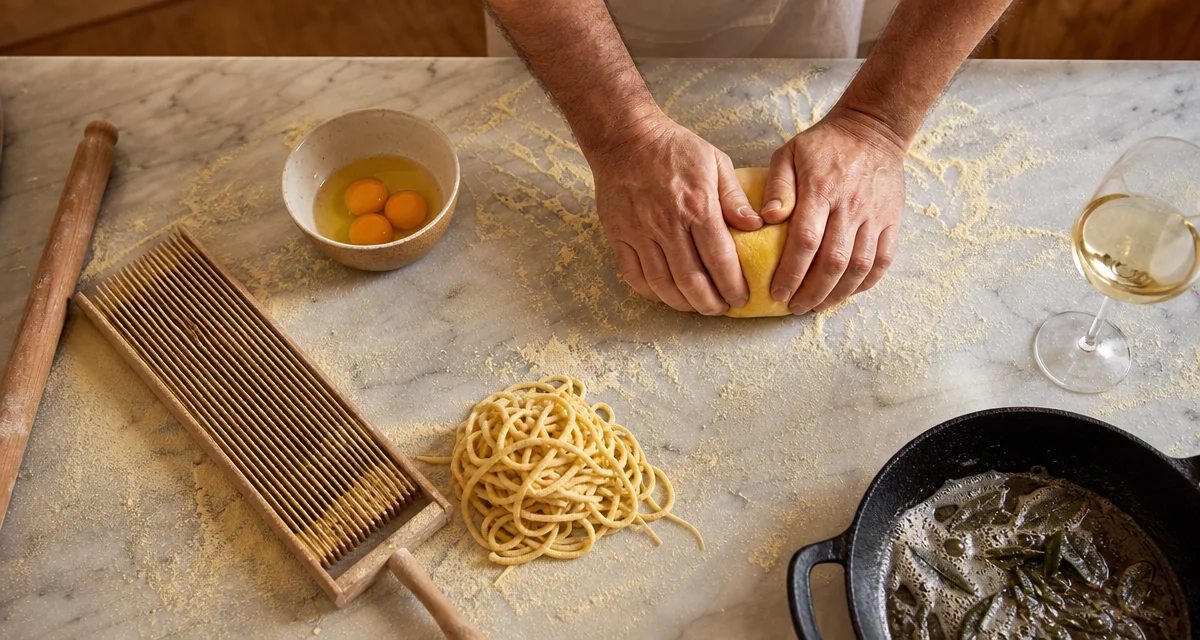
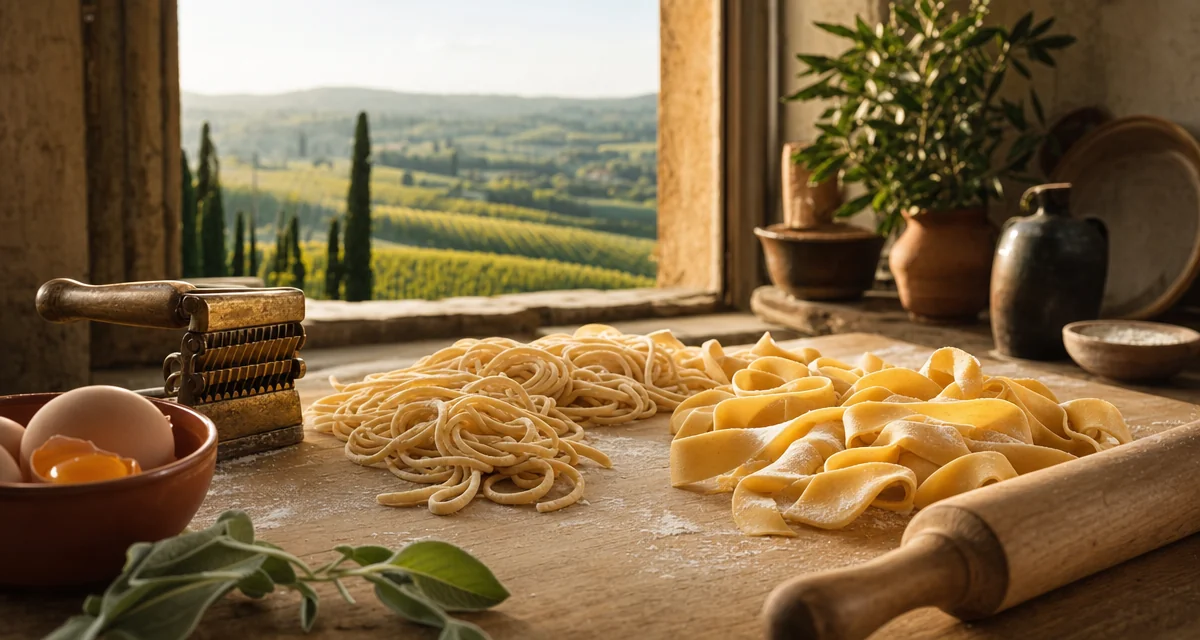
A proper Roman class teaches the dishes the city is built on, and the takeaway is the skill, not a printout. Expect fresh pasta from scratch, almost always tonnarelli (Rome's square-cut, slightly thicker cousin of spaghetti) or fettuccine, and at least one of the four Roman pasta classics. Carbonara is eggs, Pecorino, black pepper and guanciale (cured pork cheek, never bacon), bound off the heat so the yolks stay creamy. Amatriciana adds tomato and a hit of chilli to guanciale and Pecorino, while gricia is carbonara without the egg, the oldest of the four. Many classes finish with tiramisu (the layered mascarpone, coffee and cocoa dessert that has become Italy's most exported sweet) and pour a glass of Frascati, the crisp white wine from the volcanic hills just southeast of the city. What you keep is not a recipe card or an emailed PDF; Chef On Demand does not provide printed or digital recipes. The real takeaway is the technique coached under the chef's hands, the muscle memory of rolling and cutting your own pasta, the timing of the emulsion and the dinner you shared with what you made. Guests tell us they cook the carbonara again within a fortnight of getting home, and that is the point: a good class lives in your kitchen, not in your inbox.
Why this matters for your trip to Rome
Rome gives you ruins, fountains and crowds in abundance, most of it shared with thousands of strangers on the same itinerary. A cooking afternoon is one of the few experiences you can make genuinely yours, and choosing well is the difference between a fun couple of hours and a memory you carry for years. The criteria are not complicated: a small group, a real chef, honestly Roman food, and a setting you actually want to be in. Whether you pick a beloved Trastevere studio, a Testaccio market tour or a private chef who comes to your apartment, the test is the same, and you now know how to apply it. If you would rather keep the whole afternoon to your own party, our chefs across the city, and our wider network of verified private chefs across Italy, can bring the class and the dinner to wherever you are staying. Picture it: late afternoon light on a Roman terrace, flour on your hands, a glass of Frascati within reach, and a plate of pasta you shaped yourself about to come off the heat. That is the version of Rome worth booking for.