What is the most popular city for cooking classes in Italy, and is it the right one for you?
Florence is statistically the most popular Italian city for cooking classes, with the highest density of English-speaking schools per square kilometre. The catch: classes are well-organised but rarely intimate, often shared with cohorts of 10–14 strangers. Florence wins when you're staying in the centre 2–3 nights and want a low-friction intro to fresh pasta. It loses when you've rented a Tuscan villa 40 minutes away and sit in traffic on the SS222 Chiantigiana to attend a class that finishes 90 minutes from where you sleep. Rome is the second-easiest city — Trastevere and Monti host English-language classes from €70 per person. Bologna is the dark horse: less convenient but technically the deepest, with full-day workshops that send you home with actual tortellini (small ring-shaped fresh pasta filled with prosciutto and Parmigiano, served in capon broth — Bologna's defining dish since the 14th century).
How much does a cooking class in Italy cost in 2026?
A group class in an Italian city studio runs €60–€110 per person for a 3–4 hour session with a small meal — Rome, Florence and Naples cluster at the lower end, Bologna and Venice slightly higher. Half-day classes with market visit cost €110–€180; full-day countryside formats reach €180–€250 per person. Multi-day cooking holidays (Tuscookany-style villa programmes) start around €1,800 per person for three nights and climb to €4,000+ for week-long immersion. Chef On Demand's Pasta Class + Dinner Experience at your villa runs €150 per adult and €60 per child — a family of 4 (2 adults, 2 children) costs €420 total, comparable to two adults paying for a city class plus dinner separately. Per-person economics improve as the party grows: villa-stay families of 6–8 often find the at-home format cheaper than 8 school spots.
Which Italian region is best for which traveller profile?
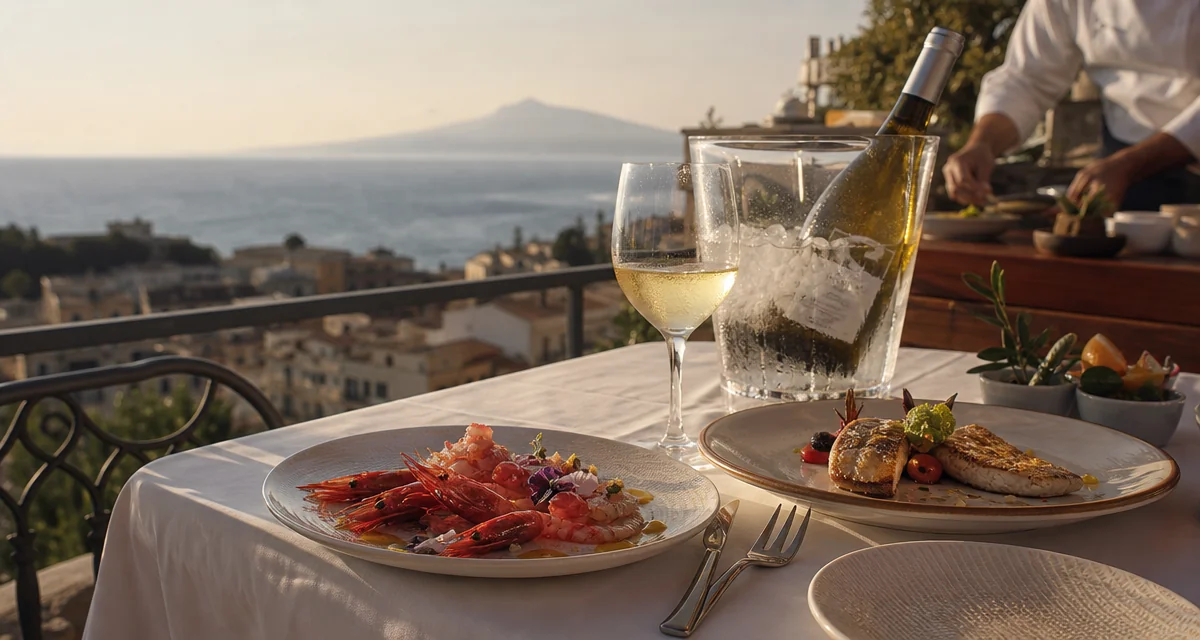
Four traveller profiles cover 80% of international travellers, each with a clean recommended location. The luxury villa-stay seeker in Chianti, Val d'Orcia or the Amalfi Coast should not commute to a city class — book a chef to the villa and have the class on the terrace. The cruise day-tripper docking in Civitavecchia (Rome), Naples or Livorno (Florence/Pisa) needs a 3-hour class within walking distance of the port; Trastevere, Sorrento and central Florence are the realistic choices. The food-focused itinerary planner on a 10-day eating-led trip should split time: Bologna for technique, Sicily or Puglia for ingredient immersion, Florence or Rome for urban convenience. The family with teens wants Naples for pizza (kids love the wood-fired oven theatre), Florence or Bologna for pasta-shaping, and ideally an at-villa private chef on a Tuscan or Amalfi base — see availability in Florence, Sorrento, Amalfi and across the Amalfi Coast.
When a family rents a villa in Chianti for a week, the worst thing they can do is drive 45 minutes to Florence for a class. The class should drive to them — and the dinner the children just helped roll should be served on the same terrace where they had aperitivo the night before. Chef Lorenzo, Florence-based ambassador of Chef On Demand Tuscany
Cooking classes in Florence: who they suit best
Florence is the default answer for first-timers: dense, walkable and overflowing with English-speaking instructors. A typical class starts at the Mercato Centrale (a 19th-century covered market in San Lorenzo, the city's main food market since 1874), continues to a kitchen in Oltrarno or near Piazza Santa Croce, and finishes with two pasta courses plus cantucci (twice-baked Tuscan almond biscuits served with Vin Santo for dipping — the classic Tuscan finish since the 16th century). Florence is also where the pasta-making class with unlimited wine trope was invented. The shortcoming is volume: in high season studios run three classes a day with cohorts of 10–14 strangers. For Florence's curriculum without the crowd, our private chef network replicates the same lesson in your apartment — same skill, no shared bench.
Cooking classes in Rome: when the capital makes sense
Rome's cooking class scene is more relaxed than Florence's — fewer industrial-scale studios, more apartment-kitchen formats run by individual chefs or small families. Trastevere, Monti and Prati (just north of the Vatican) host most English-friendly classes, with 3.5–4 hour sessions ending in a four-course Roman meal: cacio e pepe (a Roman pasta made with only pecorino romano, black pepper and pasta water — deceptively technical), amatriciana, supplì and tiramisù. Pick Rome if you're in town 3+ nights without Florence or Bologna on the itinerary; it's also the right answer for cruise passengers docking at Civitavecchia with 8–9 hours ashore. Villa-stay travellers in the Castelli Romani or Sabina hills should consider our Rome chef network rather than driving back to the city.
- Check class language — many 'English-friendly' listings translate on the fly, slowing the pace.
- Confirm group size in writing — 'max 8 guests' classes sometimes balloon to 14 in peak season.
- Verify the kitchen address — some schools advertise central locations but cook 30 minutes away.
- Confirm dietary handling in writing — celiac and severe allergies need dedicated equipment, not 'we'll be careful'.
- Match class length to your day plan — a 4-hour class with full dinner clashes with an evening opera ticket.
Cooking classes in Bologna and Emilia-Romagna: the technique capital
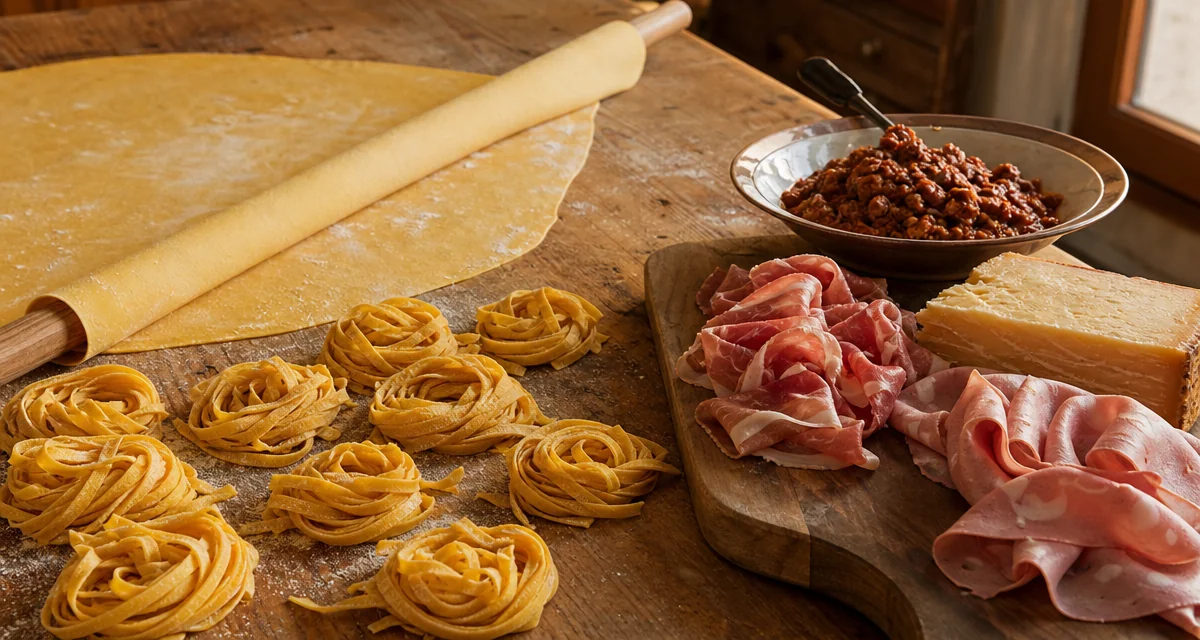
Bologna is where Italian cooking technique lives. Emilia-Romagna gave Italy tagliatelle al ragù (long flat fresh egg-pasta ribbons coated in a slow-cooked meat and tomato sauce — the dish foreigners call 'spaghetti bolognese' actually originated here and never used spaghetti), tortellini, Parmigiano Reggiano DOP and traditional balsamic of Modena. Classes run 5–6 hours, focused on hand-rolled fresh pasta with a wooden pin (matterello), not the cranked machine of Florence. You leave able to roll a pasta sheet at home. Bologna sits 95 minutes by Frecciarossa from Florence, 2h 10min from Rome, 2h 20min from Milan. Pair it with a half-day in Modena for a traditional balsamic acetaia visit (a vinegar attic where balsamic ages 12–25 years in progressively smaller barrels — Modena DOP and Reggio Emilia DOP are the only two protected origins for aceto balsamico tradizionale).
Cooking classes in Tuscany, the Amalfi Coast and Sicily: the immersive choices
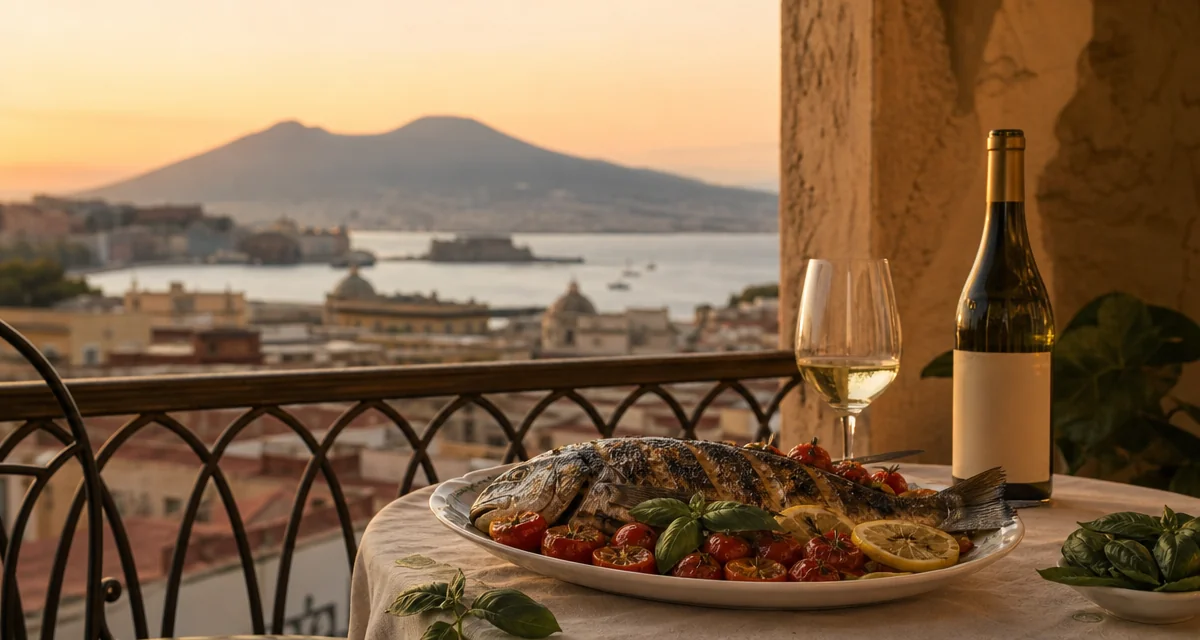
Three regions deserve their own bucket because the class is no longer a class — it's an afternoon. Tuscany countryside (Chianti Classico, Val d'Orcia, Maremma) hosts farm-to-table formats: garden walk, kitchen overlooking cypress-stippled hills, long lunch with Chianti Classico DOCG or Brunello di Montalcino (a 100% Sangiovese red aged at least five years, one of Italy's three benchmark reds). The Amalfi Coast (Sorrento, Positano, Amalfi, Ravello) leans on lemons, seafood and the sfusato amalfitano; classes often include a limoncello workshop and scialatielli (a thick handmade Amalfi pasta dressed with seafood or zucchini). Sicily is the richest culturally — Arab, Greek and Spanish layers in every dish, from caponata to arancini to cannoli — with Palermo, Catania, Ortigia and Taormina all hosting classes. All three regions assume a rental car or private transfer. To have the chef come to you, browse the at-villa cooking classes across Italy or our listings in Positano, Palermo and Catania.
Cooking classes in Venice, Naples and Puglia: the specialist picks
Three more destinations matter for travellers with a specific food agenda. Venice teaches a cuisine you cannot learn elsewhere: sarde in saor (sweet-and-sour sardines with onions, pine nuts and raisins — a 14th-century Venetian merchant dish), risi e bisi (rice and peas, historically served to the Doge), baccalà mantecato (whipped salt cod). Pick Venice if routing through the Veneto. Naples is the unambiguous answer for Neapolitan pizza, recognised by UNESCO as Intangible Cultural Heritage in 2017. Classes include dough fermentation, San Marzano DOP tomato sauce, fior di latte mozzarella and a turn at a wood-fired oven. Puglia (Bari, Lecce, Alberobello) is the rising star: orecchiette (small ear-shaped fresh pasta hand-shaped against a wooden board, traditionally paired with cime di rapa) classes run in Bari Vecchia, taught by street-corner pasta nonnas.
How does the at-villa Pasta Class + Dinner experience compare to a school cooking class?
The format we run at Chef On Demand is a single bundled experience: a 2-hour pasta-making class teaching two fresh-pasta shapes — one long (tagliatelle, pappardelle or pici) and one short (orecchiette, farfalle or maltagliati) — followed by a seated dinner of antipasti, both pastas with their sauces (a meat ragù with the long shape, a vegetable or seafood sauce with the short), and homemade tiramisù. The chef travels to your villa or apartment, brings every ingredient and tool, teaches in your kitchen, cooks, plates, serves and cleans up. One booking, one chef, one location — 4–5 hours total, typically 14:00 to 19:00. Compared to a school class you keep group privacy, the view of your villa, per-guest menu personalisation, no transfer logistics across rural Tuscany or the Amalfi Coast, and continuity from class straight to seated dinner. The cooking is the deliverable: muscle memory of rolling pici, the rhythm of folding farfalle, the timing of finishing pasta in its sauce. No recipe cards or follow-up emails — the class itself is what you take home.
| Destination | Best for | Transfer from main airport / hub | English availability | Group class price band (per person) |
|---|---|---|---|---|
| Florence | First-timer, half-day urban window, pasta + tiramisù | FLR: 15 min; Pisa PSA: 75 min | Excellent — daily English | €60–€110 |
| Rome | City-stay 3+ nights, Civitavecchia cruise day-trip | FCO: 35–45 min Leonardo Express | Excellent — daily English | €70–€120 |
| Bologna / Emilia-Romagna | Technique depth, fresh pasta mastery | BLQ: 20 min; Florence Frecciarossa: 95 min | Good — most days English | €90–€160 |
| Tuscany countryside | Villa-stay seeker, afternoon immersion, wine | FLR + 30–60 min to Chianti or Val d'Orcia | Excellent at villa formats | €110–€250 |
| Amalfi Coast / Sorrento | Seafood, lemon-led, villa families with teens | NAP: 55–90 min to Sorrento / Positano | Excellent — tourist demand | €100–€220 |
| Sicily (Palermo / Ortigia / Taormina) | Ingredient-driven, multi-day food planners | PMO or CTA: 30–90 min depending on base | Good hubs, patchy inland | €80–€200 |
| Venice / Veneto | Already routing through, niche cuisine | VCE: 30 min by Alilaguna to historic centre | Good — daily in centre | €90–€180 |
| Naples | Pizza, families with teens, UNESCO experience | NAP: 25 min to centre | Good — daily English | €55–€110 |
| Puglia (Bari / Lecce / Alberobello) | Off-the-beaten-track, orecchiette, slower trips | BRI: 20 min; BDS: 50 min to Lecce | Improving — book ahead | €60–€130 |
| Your villa (Pasta Class + Dinner) | Villa groups of 4–10, families, full privacy | Zero — chef comes to you | Always English | €150 adult / €60 child |
When is the best time of year to take a cooking class in Italy?
April–June and September–October are the best windows. Spring markets are loaded with asparagus, fava beans, artichokes, peas and stone fruit. Late September–October is harvest season: porcini in Tuscany and Piedmont, white truffles in Alba (a small town in southern Piedmont whose Fiera Internazionale del Tartufo Bianco draws chefs every October–November), the grape vendemmia (harvest, typically mid-September to mid-October) in full swing, olive oil pressing in November. July and August work but heat punishes kitchens without aircon and cohorts are largest. December–February are quietest: smaller class sizes, deeper attention. Book 4–8 weeks ahead for spring and autumn; August villa formats in Tuscany and Amalfi Coast often fill by March.
Why this matters for your Italian holiday
The cooking class you'll remember isn't the most-followed on Tripadvisor — it's the one that fitted your trip. A two-hour rush between the Uffizi and an evening train to Rome is a different memory from an afternoon at your Chianti farmhouse where the chef arrived at 14:00, taught three teenagers to roll pappardelle, then served dinner on the same terrace at sunset. Both are legitimate; the mistake is to optimise for the wrong one. Travellers on short urban stretches benefit from a city school — save the time, get a clean experience, move on. Travellers committed to a villa, coast or farmhouse already paid for the most precious ingredient (the setting); the smarter spend is bringing the chef into the kitchen they're already using. Browse our at-villa cooking classes across Italy alongside the private chef network and decide once trip shape is clear.