What is Slow Food, and why does it matter in Tuscany?
Slow Food is a global movement founded by Carlo Petrini and a circle of left-wing Italian intellectuals in 1986, formally established as an association in Bra (Piedmont) in 1989. Its founding manifesto was signed at the Opéra Comique in Paris by representatives of 15 countries the same year. The trigger was the opening of a McDonald's at the foot of Rome's Spanish Steps: Petrini's response was to defend 'good, clean and fair' food — flavourful (good), produced without harming the environment or animal welfare (clean), and at prices that pay producers fairly (fair). Tuscany matters because the region punches dramatically above its weight: 25 Slow Food Presidia (a Presidio is a Slow Food–coordinated network of small producers protecting a single traditional product at risk of disappearing), placing Tuscany third worldwide. Tuscan convivia (local Slow Food chapters) were among the first founded in Italy and the region has the highest membership density on Earth. In practical terms for a visitor, this means a much higher concentration of restaurants, butcher shops, dairies and farms that still operate on pre-industrial logic — and that any honest local will know by name.
Which Tuscan Slow Food Presidia should I look for?
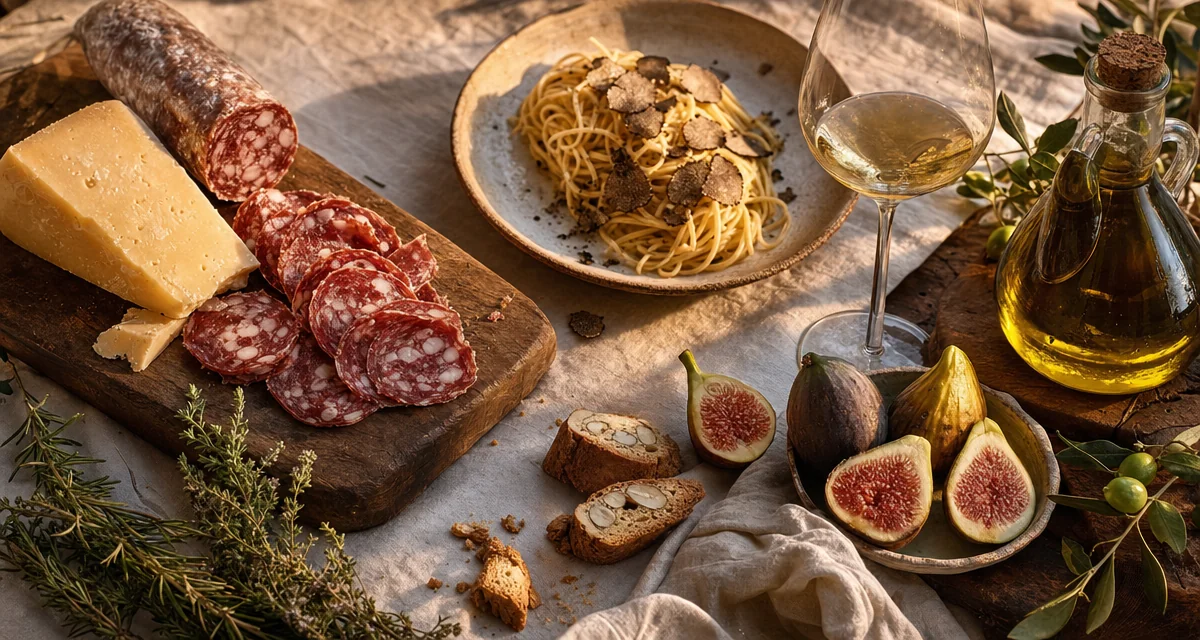
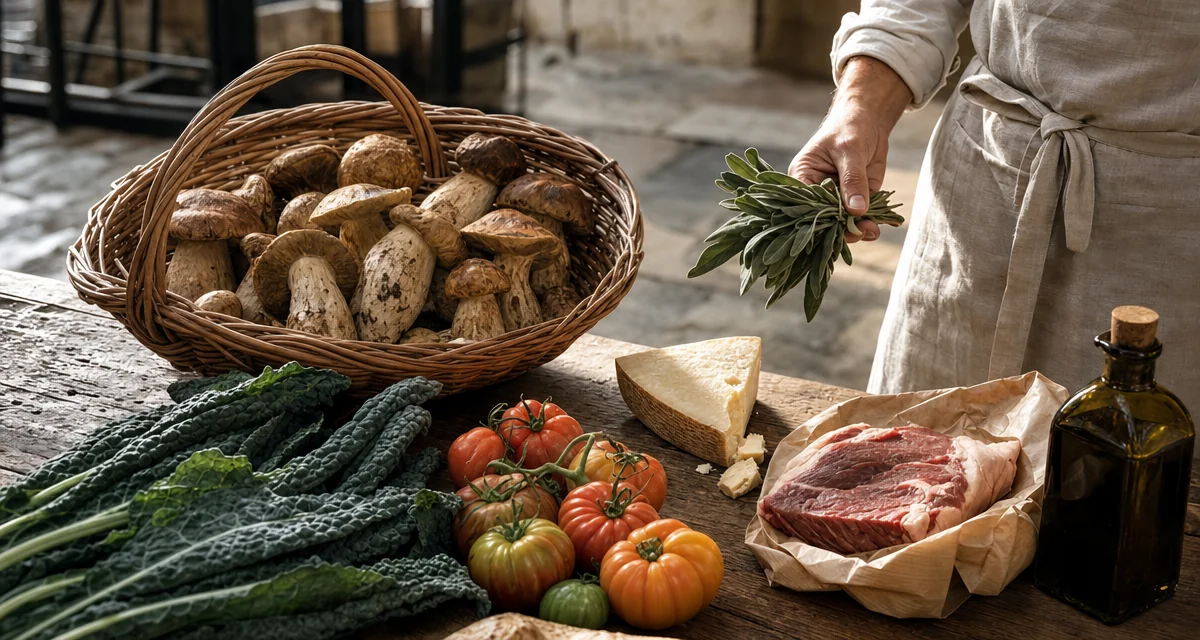
Tuscany's 25 Presidia span four broad categories — cured meats, cheese, grains/legumes, and seafood. The ones most likely to appear on a private chef's shopping list are: cinta senese (the indigenous belted pig of the Sienese hills, a Cinta Senese DOP since 2012 after teetering on extinction — its capocollo and lardo carry an unmistakable hazelnut sweetness); Pecorino della Montagna Pistoiese (a raw-milk sheep cheese aged in the chestnut forests above Pistoia, with a sharp grassy bite); farro della Garfagnana IGP (an ancient hulled wheat grown in the Apuan Alps north of Lucca, used in zuppa di farro and salads); biroldo della Garfagnana (a spiced blood-and-pork sausage); fagiolo zolfino (a tiny sulphur-yellow bean from the Pratomagno slopes, prized for its thin skin and creamy texture); Casentino prosciutto (cured in the chestnut-and-beech valleys east of Florence); mallegato (a Tuscan-style black pudding); bottarga di Orbetello (cured grey mullet roe from the Maremma lagoon); and the lamb of Zeri (a rare breed from the Lunigiana). Ark of Taste — Slow Food's catalogue of endangered foods, broader than the Presidia — adds dozens more, from heirloom tomato varieties to the Garfagnana potato. A chef trained on Slow Food principles will know which of these are in season the week you're visiting.
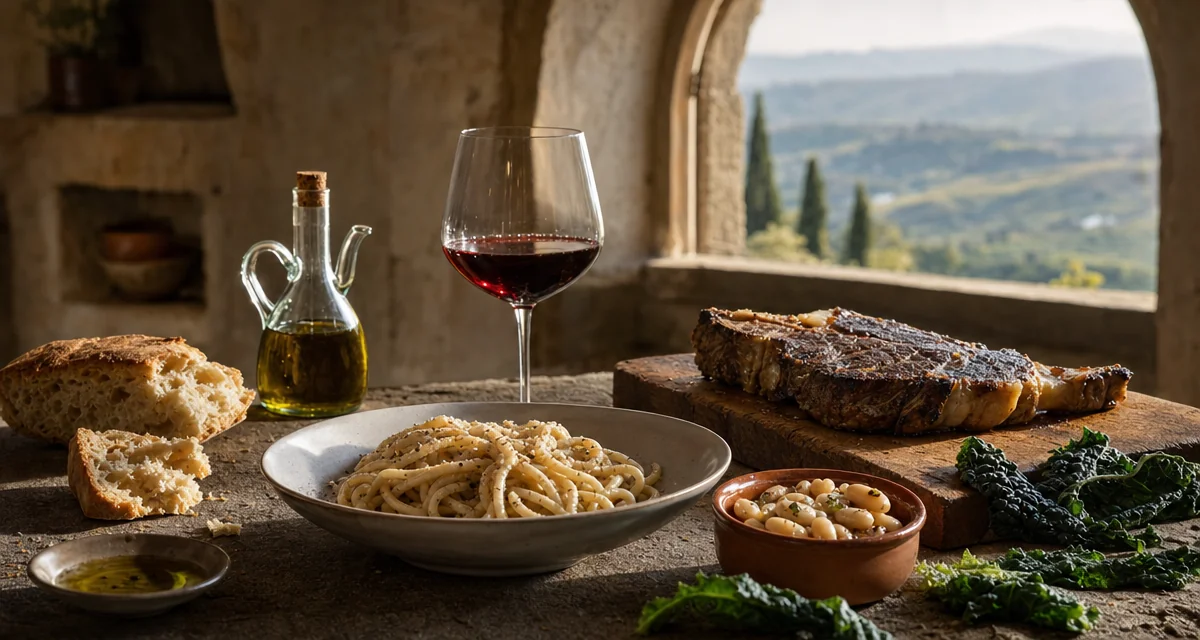
When clients ask me 'what's Tuscan?' I cook them ribollita with farro della Garfagnana instead of stale bread, and a slow-cooked cinta senese shoulder with zolfino beans. Two dishes, four Slow Food Presidia on one table — and they cost less than truffle pasta in a tourist restaurant. Chef Lorenzo, Florence-based ambassador of Chef On Demand Tuscany
Where can I eat Slow Food in Tuscany — osterie, presidia farms, festivals?
There are three reliable routes, each with its own logistics. (1) Slow Food–certified osterie: the Osterie d'Italia 2026 guide (published by Slow Food Editore every November) lists 30 Tuscan restaurants, of which 28 carry the Chiocciola symbol — the highest mark, awarded only to places that combine genuine territorial cuisine, fair prices, and welcoming atmosphere. Notable names include La Botte Piena in Montefollonico (south of Siena, famous for stracotto of cinta senese), Osteria Mangiando Mangiando in Greve in Chianti (peposo cooked in Chianti Classico), and a cluster of seaside addresses in Livorno and the Maremma for cacciucco. A full meal at a Chiocciola osteria caps at €40 per head excluding wine — the guide's price ceiling. (2) Presidia farm visits: most cinta senese breeders in the Sienese hills, Garfagnana grain mills and Pratomagno cheese-makers welcome small group visits with one to two weeks' notice. (3) Festivals: Cheese in Bra (Piedmont, every two years, next in September 2026) and the smaller Slow Travel Fest in Monteriggioni (May, Tuscany) are the calendar fixtures. Our chefs across the region coordinate market shopping, producer introductions and the dinner itself in a single booking.
- Check the producer's Slow Food Presidio listing on fondazioneslowfood.com before you visit — every legitimate Presidio has its own page with contacts.
- Email the producer 7-14 days ahead in summer (June-September) — Tuscan small farms are family-run and can't accommodate walk-ins during harvest.
- Combine two Presidia in one drive — e.g. a cinta senese farm in the Crete Senesi plus a pecorino dairy in Pienza fits one afternoon.
- Buy in vacuum-sealed packs to bring home — cured meats and aged cheeses travel well; ask the producer to add the Presidio sticker.
- Ask your private chef to cook what you've bought that evening — most are delighted to integrate a guest-sourced ingredient into the menu.
How much does a Slow Food private chef dinner in a Tuscan villa cost?
A private chef in Tuscany cooks on the same per-person tier system used elsewhere on the platform, with three options: Essential (4 courses, classic Tuscan set menu), Taste of Italy (5 courses, the brand's signature mid-tier showcasing seasonal regional produce), and Luxury (6+ courses with truffle, aged Chianina, or coastal seafood plus a wine flight). For a group of 6 adults in a Chianti villa, expect around €95 per person for Essential, €120 per person for Taste of Italy, and €180 per person for Luxury. At 10 adults the per-head price drops materially: roughly €85, €100 and €150 respectively. Children under a certain age count at 50% in the chef-fee calculation but are not charged to the client. A Slow Food angle does not change these tiers — it changes the shopping list. The chef simply diverts the grocery budget toward Presidio cinta senese instead of generic supermarket pork, Garfagnana farro instead of white pasta, raw-milk Pecorino instead of vacuum-packed cheese. Tell the chef on the booking form 'we'd like a Slow Food–led menu' and the team builds a draft around what's in season at the local markets that week.
| Tier | Courses | 6 guests (per person) | 10 guests (per person) | What's on the plate |
|---|---|---|---|---|
| Essential | 4 | €95 | €85 (flat from 9+) | Crostini neri, ribollita with farro della Garfagnana, peposo, cantucci & vin santo |
| Taste of Italy | 5 | €120 | €100 (flat from 9+) | Pecorino & cinta senese antipasti, pici cacio e pepe, stracotto al Chianti, panna cotta with zolfino honey |
| Luxury | 6+ | €180 | €150 (flat from 9+) | Casentino prosciutto with figs, raw seabass with bottarga di Orbetello, pici with white truffle, Chianina tagliata, raw-milk pecorino flight, tiramisù |
Restaurant vs private chef vs presidia tour: which Slow Food route should you choose?
If your priority is maximum atmosphere and you don't mind a 30-40 minute drive each evening, the Chiocciola osteria route is unbeatable value — €40 per head buys you a complete regional meal in a setting unchanged in decades. Reservations are essential in July and August. If your priority is education — meeting the actual farmers, holding the salami before it's sliced, walking the chestnut woods where Pecorino della Montagna Pistoiese ages — a Presidia farm tour on one or two afternoons is the answer. Most charge €15-€30 per person for a tasting; a handful waive the visit fee entirely and rely on shop sales afterwards. Book 7-14 days ahead. If your priority is comfort, privacy, and translating Slow Food into a relaxed dinner you don't have to drive home from, a private chef at your villa is the most immersive option — the chef does the market shopping at dawn (the same Presidia producers a farm tour would visit), drives to your property, cooks on-site, plates and serves, and cleans up. Most groups we serve combine two of the three routes across a 7-day stay: a Chiocciola osteria one night, a Presidia farm visit one afternoon, and two or three villa dinners with the chef pulling everything together. Browse our Tuscan chef network if you want to start there.
Can I build a multi-day Slow Food stay with a private chef?
Yes — and Tuscany is the region where it makes most sense, because Presidia producers are clustered within a 60 km radius around Florence, Siena and Lucca. A multi-day chef arrangement (the platform's multi-day stays service) accompanies your group for 3-7 days. For each day, you pick which meals the chef cooks — typically 2-3 dinners plus a long lunch over a week, not three meals every day. Three logistical configurations affect cost: (1) chef stays at the property when your villa has chef quarters; (2) local chef commuting daily in dense regions like Chianti, Val d'Orcia and the Lucca plain; (3) chef takes lodging nearby when neither of the above works, with the surcharge line-itemed transparently in the quote. Quotes are built bottom-up from the per-meal cost (the tier table above) plus a per-day retainer that depends on configuration. Daily market shopping at Slow Food Presidia producers is part of the standard service: tell the chef which producers you'd like prioritised. Many of our Tuscan chefs come from Michelin-starred kitchens, Gambero Rosso–rated restaurants, MasterChef and Top Chef Italia, so the technique sits alongside the Presidia ingredients rather than apologising for them.
Why this matters for your Tuscan holiday
Slow Food started in 1986 as a defensive reflex — Italian intellectuals worried that a McDonald's at the Spanish Steps signalled the end of regional taste. Forty years on, the movement is the closest thing Tuscany has to a quality stamp that prices itself for everyday eating, not luxury tourism. The 25 Presidia, the 28 Chiocciole, the Ark of Taste catalogue — all of it amounts to a navigation system for visitors who don't want to confuse typical with touristic. The most rewarding way to use that system on holiday is to set up base in a villa or farmhouse, hire a chef who already knows the producers, and let one or two evenings unfold around food that hasn't been industrialised yet. Slow Food principles produce dinners with the longest possible chain of provenance and the shortest possible chain of intermediaries. A private chef at your table is, by definition, the shortest version of that chain. Start with our private chef network in Italy, narrow down to Tuscany, and tell us in the form that you'd like a Slow Food–led menu. Twenty-four hours later you'll have a draft built around the Presidia in season the week you're staying.