What does it actually mean to rent a chef in Italy?
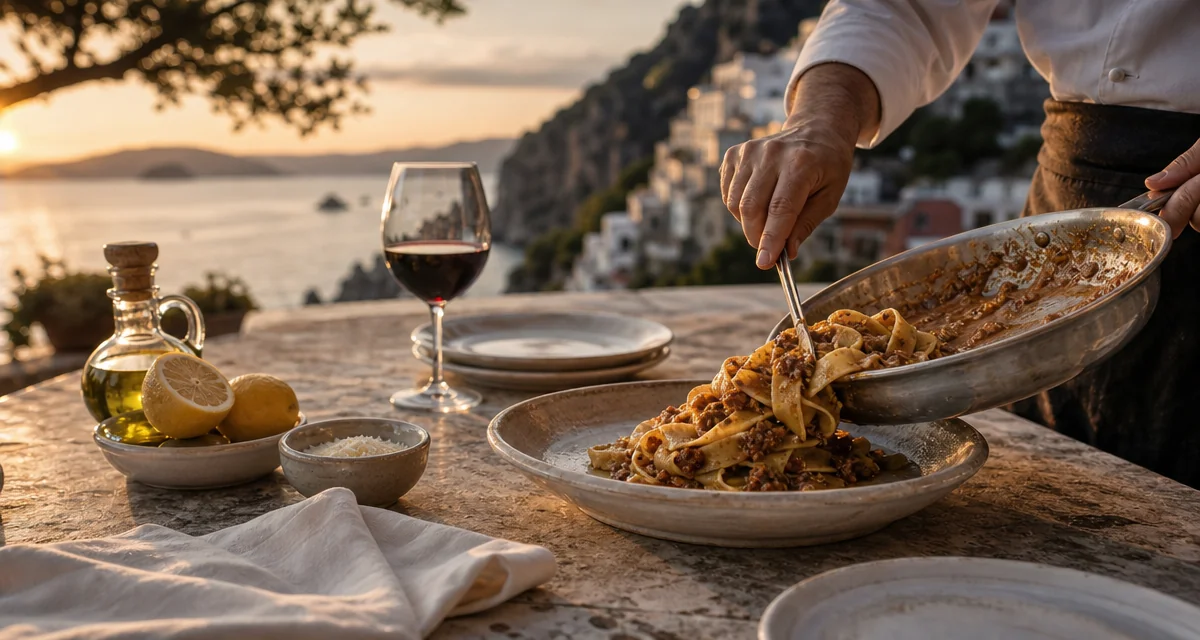
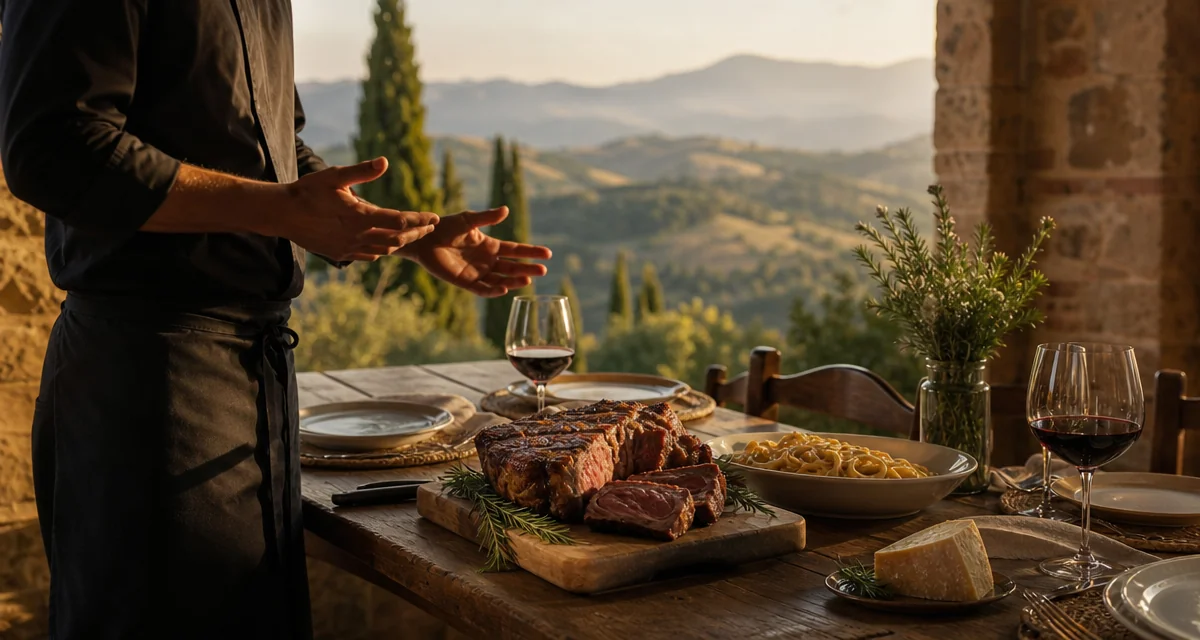
Renting a chef in Italy means one professional cook comes to the villa, apartment or farmhouse you have rented, brings the groceries and the equipment, cooks the full meal in your kitchen, plates and serves every course, then cleans up and leaves. Nothing is dropped off, nothing is reheated, and nobody in your group touches a pan unless they want to. The chef arrives roughly 90 minutes to 2 hours before service, unpacks, and works quietly while you carry on with your evening. Service itself runs 2–4 hours depending on the number of courses, and the kitchen is left cleaner than the chef found it. The word 'rent' is the one travellers reach for, and it is a fair description of the commercial shape of the thing, though what you are really buying is a night of someone else's craft rather than a piece of equipment. Most people who search for a chef for hire in Italy have pictured a caterer with trays. It is closer to the opposite: one person, one menu, your table. If you want the long version of the mechanics, deposits and etiquette, our companion piece on how to hire a private chef in Italy covers the full process step by step. This article is the fast lane.
Personal chef or private chef in Italy, is there a difference?
In everyday search language, no. People type personal chef Italy, private chef Italy and chef rental Italy interchangeably, and they all land on the same service. In professional usage there is a shade of difference: a personal chef traditionally cooks on a recurring basis for one household, while a private chef is booked for a defined event or stay. For a traveller renting a property for a week, that distinction has no practical consequence. What matters is whether the chef cooks in your kitchen (yes), whether they shop for the ingredients (yes), and whether the price is per person or per hour (per person, in Italy, for single events).
How fast can you actually get a quote?
A first quote from the Chef On Demand network typically arrives the same day, and during peak season it often lands within a few hours of the request going out. The reason is structural rather than heroic. When you submit your details, the request is matched against chefs who are already resident in your zone and already have that date open, so nobody is being asked to invent availability. They read the brief, price the menu against the group size, and reply. According to Chef On Demand's network data across 800+ bookings since 2024, average booking lead time sits at 7–14 days for the June–September peak, but that is the comfortable average, not the floor. The floor is considerably lower. We regularly place chefs on 48 hours' notice in Rome, Florence and Milan, where the network is dense and someone always has a Thursday open. Same-day is possible, though it narrows your menu options and it depends entirely on who happens to be uncommitted. What genuinely slows a request down is not the calendar. It is vagueness. 'Dinner for a group in Tuscany sometime next week' generates questions. 'Dinner for 8 adults and 2 children, Thursday 23rd, villa near Greve in Chianti, one gluten intolerance, no shellfish' generates a menu.
The travellers who get a chef on Friday are the ones who told me the guest count and the allergies on Tuesday. The ones who are still deciding on Thursday are the ones who eat out. Chef Lorenzo, Rome-based ambassador of Chef On Demand
How much does it cost per person to rent a chef in Italy?
Renting a chef in Italy costs €85–€180 per guest for a single evening in 2026, and where you land inside that band depends on two things: how many people are at the table and how many courses you want. Group size does most of the work, because the chef's time and travel are spread across more heads. An Essential menu of 4 courses runs €95 per person for 6 guests and drops to €85 per person at 10. A Taste of Italy menu, our 5-course regional showcase and the tier most travellers choose, is €120 per person at 6 guests and €100 per person at 10. Luxury, which is 6 or more courses and brings in truffle, seafood or aged cuts with a multi-glass wine flight, sits at €180 per person for 6 and €150 for 10. Small groups pay more per head, and there is no way around the arithmetic: a table of 4 on the Essential menu is €110 each. Two surcharges are worth knowing before you plan. Premium zones, which include Rome and Milan, add €15 per person. Christian holidays such as Easter or Ferragosto weekend add 35% to the client price, and Christmas Eve through New Year's Day switches to fixed group pricing entirely. If you want the full anatomy of what drives those numbers, read our breakdown of what a private chef costs in Italy.
| Tier | Courses | 6 guests | 10 guests |
|---|---|---|---|
| Essential | 4 courses | €95 per person | €85 per person |
| Taste of Italy | 5 courses | €120 per person | €100 per person |
| Luxury | 6+ courses | €180 per person | €150 per person |
Renting a private chef in Italy for a villa group
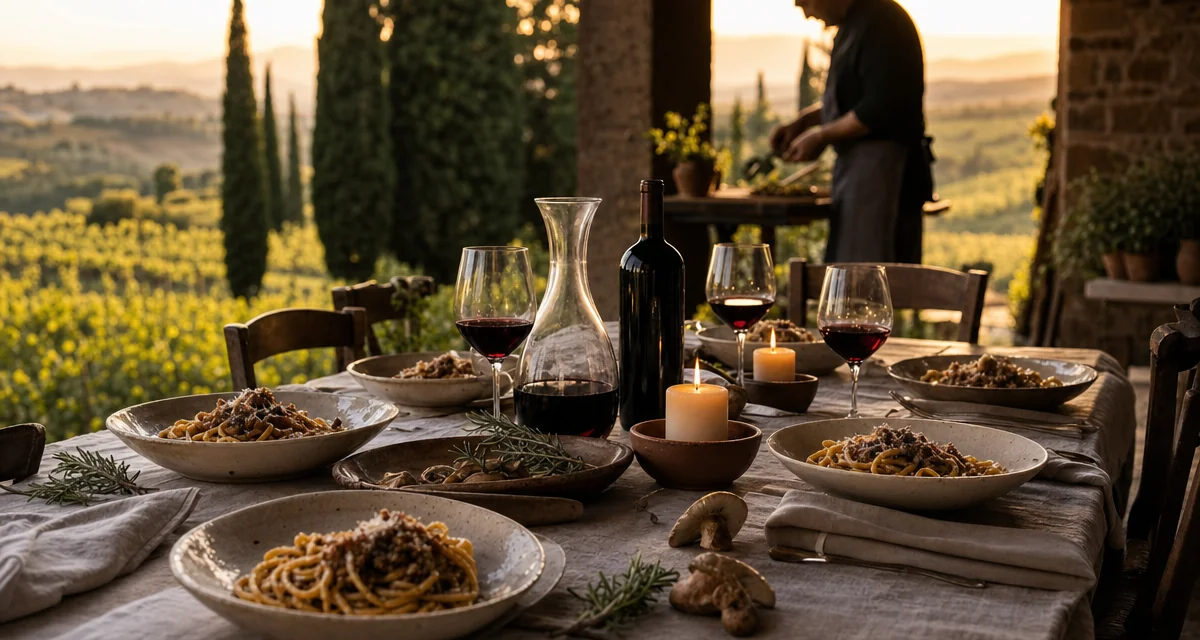
Villa groups are where the maths turns friendly. A party of 10 in a Val d'Orcia farmhouse, the cypress-lined valley in southern Tuscany that produces pecorino di Pienza DOP and Brunello di Montalcino DOCG within a 30 km radius, pays €100 a head for five courses. That is a good Florence trattoria with a tourist markup, except nobody drives, nobody parks, and nobody has to be back by 22:30. The typical group we serve is 4–12 guests in a private property with a 2–4 hour service window, and villas remain the format the whole model was built around. If the property is remote, say a stone house above Bagno a Ripoli or a place on the wrong side of a Chianti ridge, mention it. A chef will still come, but the driving time affects who is willing to take the date.
Which Italian cities and regions are covered?
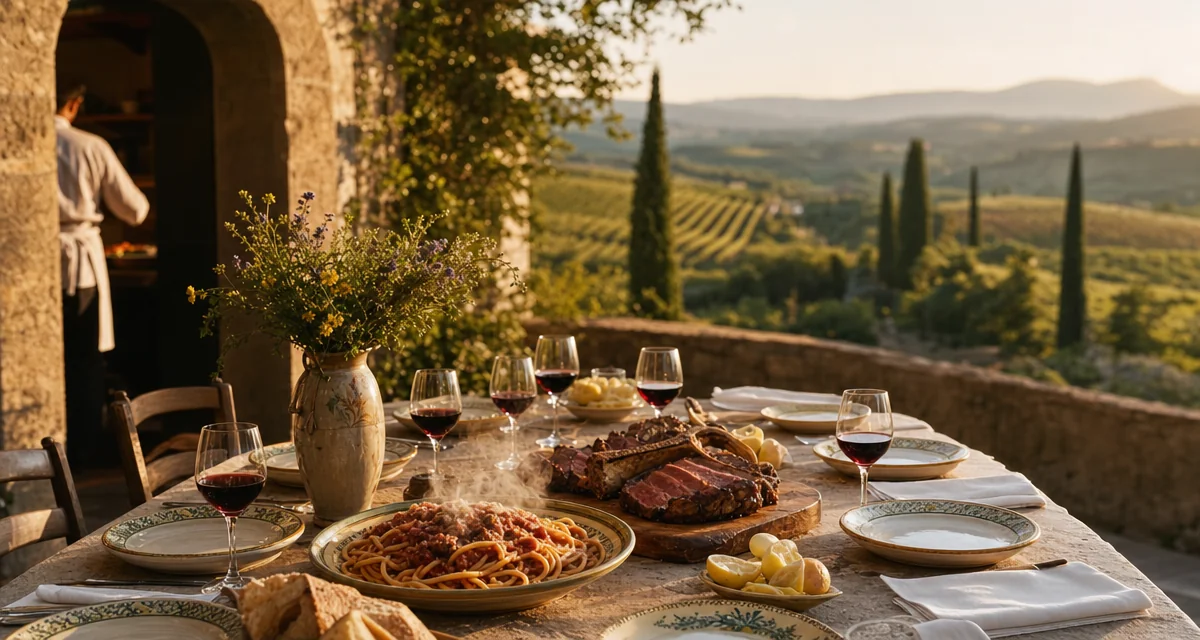
Chef On Demand covers 150+ Italian towns and cities, and the network is deepest exactly where holiday rentals cluster. In Rome the chefs work the whole city, from a Trastevere apartment kitchen to an EUR penthouse, and the house dish is inevitably cacio e pepe, a Roman pasta of nothing but pecorino romano, black pepper and starchy pasta water emulsified into a glossy sauce, which is far harder to execute than its three ingredients suggest (Wikipedia has a good history of the dish if you want the background). Florence and the Tuscan hills are the villa heartland, where the flagship is bistecca alla fiorentina, a 1.2–1.5 kg T-bone cut 4–5 cm thick from Chianina cattle and grilled over hardwood embers, served rare on the bone with salt and a finishing pour of Tuscan olive oil. The Amalfi Coast, the 50 km stretch of cliff villages between Sorrento and Salerno, runs on lemons and Aegean-blue seafood, and mozzarella di bufala campana DOP arrives in the kitchen the same morning it was made. Milan, Venice and Lake Como round out the core. You can browse our Roman chef network to see how a single city page is structured.
Chef rental in Italy beyond the big four cities
The interesting bookings happen off the main axis. Positano, Sorrento, Siena, Capri, Verona, Bologna, the Barolo villages in Piedmont, the Val d'Orcia hill towns: all covered, all with resident chefs rather than someone driving three hours from a city. Lead times run slightly longer in the thinner zones, so where private chefs across Rome might absorb a 48-hour request, a Barolo farmhouse in October during the vendemmia (the grape harvest, which pulls every local cook into some family's cantina) is better asked 10 days out. Coverage is not the same as density, and it is worth being honest about which one you are dealing with.
Can you rent a chef for more than one night?
Yes, and it is the format most week-long villa groups drift towards once they do the sums. A multi-day booking means the chef accompanies your party for the whole stay, typically 3–7 days, and you choose meal by meal which ones they cook. The realistic pattern is 2–3 dinners plus one long lunch across a week, not three meals a day, because most groups still want a few nights out. The chef shops at local markets every morning, cooks on-site, personalises the menu day by day so nothing repeats, serves and cleans up. Cost depends on which of three lodging configurations applies. If the property has a spare room and the chef stays with you, the day rate is at its lowest, because you are absorbing the accommodation. If a local chef commutes daily, which is common in dense zones like Chianti or the Amalfi Coast where the network has residents within 30–45 minutes, there is no lodging cost at all. If neither applies and the chef books a room nearby, the quote line-items that surcharge openly. There is no single multi-day per-person rate, and anyone who quotes you one has not asked where the chef will sleep. Quotes are built bottom-up from the per-meal cost plus a daily retainer that tracks the configuration.
What else can you book alongside the dinner?
The format international guests ask for most, after a straight dinner, is the Pasta Class + Dinner Experience, and it happens entirely at your villa or the apartment you have rented. There is no cooking school, no transfer, no cohort of strangers. The chef arrives at the property you are staying in with every ingredient, board, rolling pin and pot, and the whole thing runs 4–5 hours in one place. The first 2 hours are the class: you are taught two fresh pasta shapes, one long and one short, say pappardelle and orecchiette, kneading and rolling and cutting under the chef's hands on your own countertop. While the dough rests, the chef builds two sauces (one for each shape, typically a meat ragù against the long pasta and a vegetable or seafood sauce against the short), a handful of regional antipasti, and a tiramisù. Then you sit down at your own table, on the terrace or in the garden, and eat the pasta you shaped, plated and served properly. Cleanup included. The advantages over an off-site class compound quickly: only your group at the table, a menu tuned to your allergies rather than a fixed syllabus, the Tuscan farmhouse or Amalfi terrace you are already paying for as the setting, zero driving for a party of eight, timing you control rather than a 6pm-to-9pm shift, children who can join or wander off, and whatever wine you bought at the local enoteca (a wine shop and bar, usually with a knowledgeable owner who will pick for you if you describe the menu). There are no recipe cards, printed or digital, and no follow-up email. The class itself is the takeaway: the technique, the muscle memory of the shapes, and the dinner you sat through with your people.
- Fix the guest count first, splitting adults and children, because every per-person price in Italy hangs off it.
- Photograph the kitchen from the doorway and send it with your request.
- List allergies and intolerances as separate bullet points, never buried in a paragraph of prose.
- Name the tier you want (Essential, Taste of Italy or Luxury) so chefs quote against the same brief.
- Say whether you want wine handled by the chef or you are buying it yourself.
- Check whether your date falls on a Christian holiday, which adds 35% to the client price in Italy.
- Submit the request 7–14 days out for June–September, or as early as you can for a villa in the hills.
Why this matters for your Italian holiday
There is a specific kind of tiredness that arrives on the fourth night of an Italian holiday. Everyone has walked 12 kilometres, the restaurant you wanted is booked until 21:45, the children are past the point of sitting still, and the villa you spent months choosing has been used mostly as a place to sleep. That is the night worth renting a chef for. Not because it is cheaper than eating out, though at 10 guests it very often is, but because it is the only evening of the week where the group stays put and the setting you actually paid for does the work. Many of the chefs in our network came out of Michelin-starred kitchens, Gambero Rosso–rated restaurants, MasterChef and Top Chef Italia, and they carry Slow Food habits into a rented kitchen without making a performance of it: the Slow Food Presidia products, the market fish that was swimming that morning, the Chianti Classico DOCG (a Sangiovese-based red from the hills between Florence and Siena, cherry-driven and firmly tannic, built for grilled meat) opened at the right moment. The brand holds a 4.7/5 Trustpilot rating across 800+ guests served since 2025, and the pattern in the feedback is remarkably consistent: nobody writes about the food first. They write about the fact that the table lasted until midnight. You can start from our private chef network across Italy, or read what the service includes end to end in our traveller's guide to private chef service in Italy. Either way, the good version of the story ends the same: eight people, one long table, the last of the Vin Santo, and a chef who left an hour ago without anyone noticing.