What is the difference between a private chef and a personal chef?
A private chef works for one client at a time, cooking meals fresh and serving them immediately, either as a live-in household employee or as a chef booked for a specific occasion. A personal chef serves several clients in rotation, cooking a batch of meals in one visit for the client to reheat over the following days. Both terms describe qualified professionals, and plenty of chefs move between the two over a career. The distinction that matters to you as a client sits in four places: how long the engagement lasts, who employs the chef, whether the food is eaten hot from the pan or reheated on a Tuesday, and who buys the groceries. The personal chef role as it is usually defined emerged in the United States in the 1990s as a middle-class answer to household staffing, which is why so much of the vocabulary online is American and so much of the pricing is quoted in dollars per cook day. That vocabulary travels badly. In Italy, Spain and Greece the everyday reality is closer to a booked occasion than to a standing weekly service, and travellers who search using American terms end up reading about a job market rather than about dinner.
| Dimension | Private chef | Personal chef |
|---|---|---|
| Engagement length | One household, ongoing (or one booked occasion: a dinner, a villa week) | Several households in rotation, usually one session per client per week |
| Who employs them | The family directly (payroll staff), or the client via a booking for a single event | Nobody: self-employed, running their own business with multiple clients |
| Where and how they cook | On site, to order, plated and served as the guests sit down | On site, cooked ahead in one 4–6 hour block, then chilled or frozen |
| Groceries | Chef shops daily; on event bookings the ingredients are inside the quoted price | Chef shops for the session; groceries usually invoiced on top of the labour fee |
| Pricing model | Annual salary for household staff, or per person and per event for occasion bookings | Per cook day or per portion, plus a separate grocery bill |
| Typical use case | A principal residence with daily service needs, or a group of 4–12 guests marking an occasion | A dual-income household that wants the week's dinners handled without cooking |
What does a personal chef actually do in a week?
A personal chef plans a menu with the client, shops for it, arrives at the house for a single session of roughly 4–6 hours, cooks between 10 and 20 portions, packages and labels them, cleans the kitchen and leaves. The client eats those meals over the following 4 to 7 days, reheating as needed. Repeat weekly or fortnightly. Almost all of the work that clients never see happens before the session: sourcing, portion planning, and adapting a rotating menu so the same household does not eat the same braise three weeks running. It is a genuinely skilled job with a specific discipline behind it, because food that has to taste good after 72 hours in a fridge is cooked differently from food that goes straight to the table. Sauces are held back, pasta is undercooked deliberately, and anything that relies on a crisp surface is either avoided or built to be finished by the client. The economics follow the same logic. A personal chef amortises one shopping trip and one kitchen setup across a dozen meals, which is why the cost per portion lands well below restaurant prices even though the chef's day rate does not.
Personal chef vs meal prep service: where the line sits
A meal prep service ships you portions cooked in a central kitchen from a fixed weekly menu. A personal chef cooks in your kitchen, from a menu written for your household, using ingredients bought that morning. The difference shows up fastest with allergies and with children: a subscription box offers you an allergen filter and hopes for the best, while a personal chef simply never brings the allergen into the house. Cost follows the same curve. Meal prep services in most European markets sit somewhere between 8 and 15 euros a portion, while a personal chef session that produces 16 portions in 5 hours typically lands higher per head once labour and groceries are counted. You are paying for bespoke menu design and for a real cook standing in your kitchen, not for logistics at scale.
Who employs a private chef, and how does the pay work?
A full-time private chef is normally an employee of the household, on payroll, with a contract, holiday entitlement and often accommodation. A personal chef is normally self-employed, invoicing each client as an independent business. That single legal distinction, which the IRS sets out through its behavioural and financial control tests, drives almost everything else you read about the two roles: who controls the schedule, who supplies the tools, who carries the insurance, and who absorbs the risk of a quiet month. A household that directs when the chef works, what they cook and how they do it has, in most jurisdictions, hired an employee rather than engaged a contractor. Marketplace bookings sit outside both models. When you book a chef for one dinner or one villa week through a platform, the chef is an independent professional under contract for a defined service, the platform handles matching, quoting and payment, and nobody is on anybody's payroll. That is worth understanding before you read an American article quoting six-figure salaries and conclude that a chef is out of reach for a family holiday. Those numbers describe a job, not a dinner.
Private chef vs personal chef salary: two different sums
Salary comparisons between the two roles are apples and oranges, and reading them side by side is where most of the confusion online begins. A private chef in a full-time household post is quoted an annual figure, typically in the 80,000 to 150,000 dollar band in the United States for experienced staff, sometimes with lodging on top. A personal chef has no salary at all: income is the sum of cook days sold, so the honest figure is a day rate multiplied by however many clients the chef can hold in a week without the quality slipping. Most working personal chefs cap out around 4 or 5 sessions a week, because shopping, menu writing and travel absorb the rest. Neither number tells you what an evening costs. For that you need a per-event quote, which is the only figure a traveller actually needs.
People ask me whether I am a private chef or a personal chef and honestly, in Italy the question does not translate. I cook for the family who rented the farmhouse, for the four nights they want me, and on the fifth they go out for pizza. That is the whole job. Chef Lorenzo, Florence-based ambassador of Chef On Demand Tuscany
Which one do you actually need for a holiday in Italy?
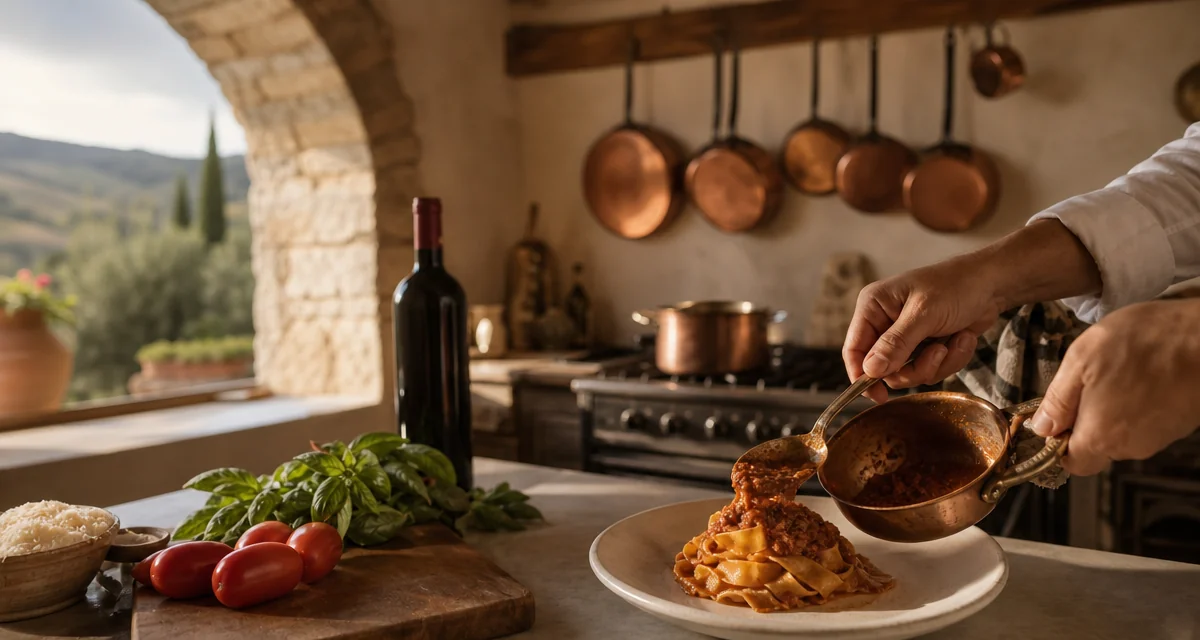
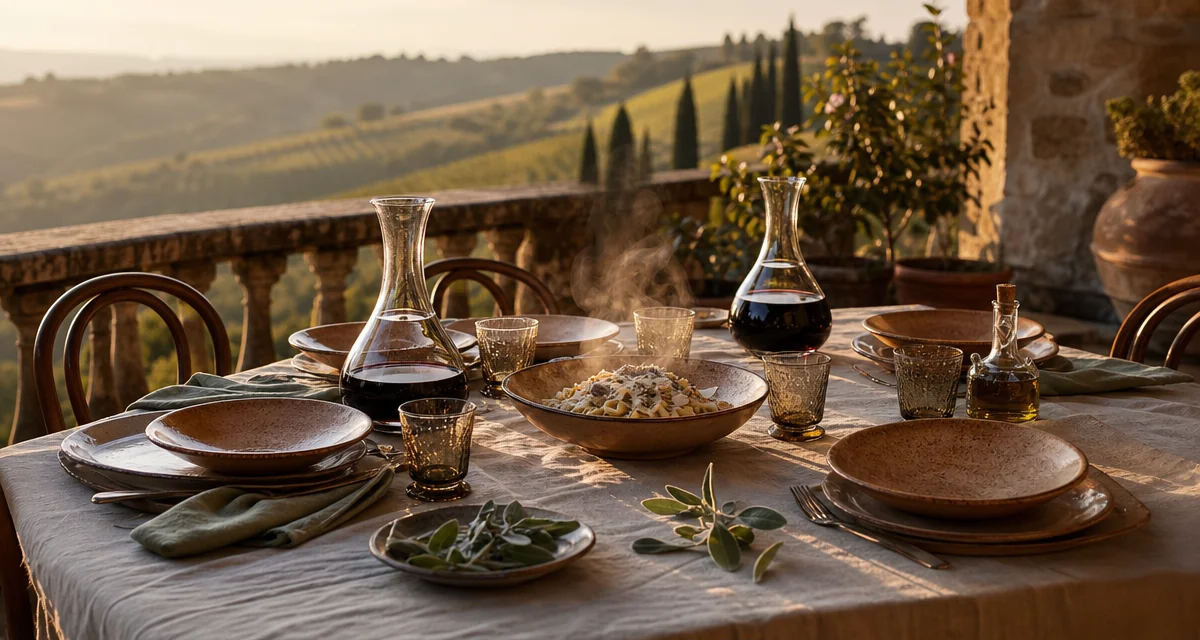
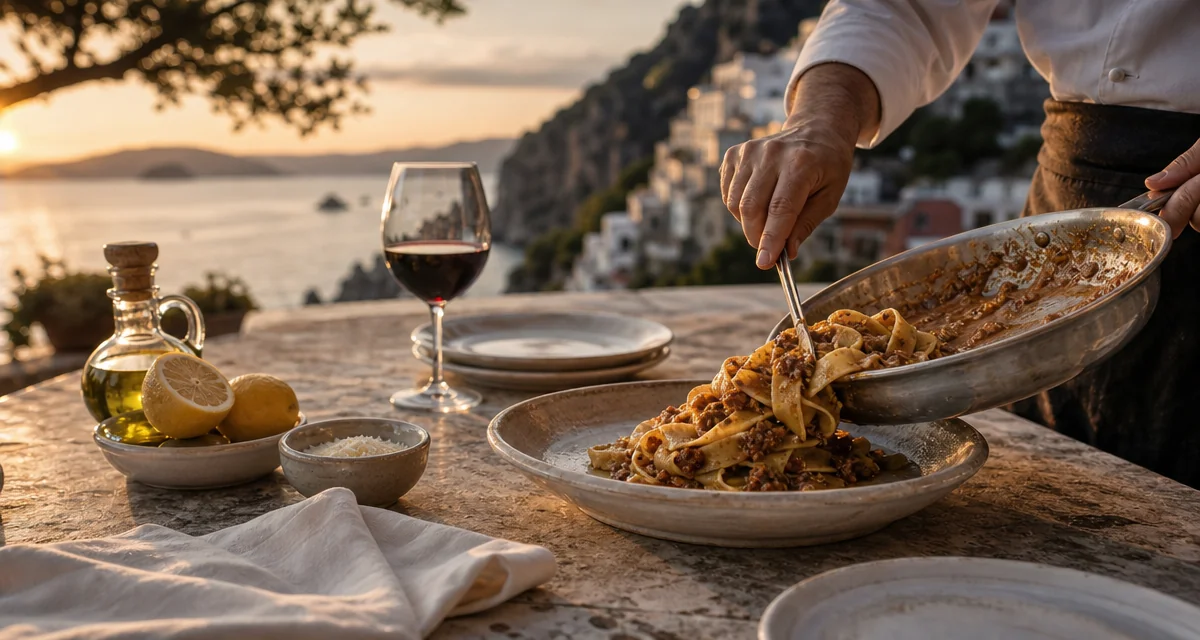
For a holiday you need neither of the classic models. You need an occasion-based booking, which is a private chef in the strict sense (cooking to order, for your group only) engaged for a defined service rather than a job. The chef arrives at the property you have rented, brings the groceries and the equipment, cooks in your kitchen, plates and serves at your table, then cleans up and leaves. Typical group size we serve is 4–12 guests in private villas, with a 2–4 hour service window, and the format works identically for dinner, for a long lunch, or for breakfast on a morning when nobody wants to drive into town for a cornetto. The setting is doing a lot of the work here, and that is the point. A group who has paid for a Chianti farmhouse with a stone terrace, or an apartment above the rooftops in Florence, generally does not want to spend the best evening of the week in a restaurant dining room 30 minutes away by taxi. Our chefs work across the region through private chefs across Tuscany and in the villa-dense pockets around Siena, Lake Como and the Amalfi Coast, where the drive to a decent restaurant is exactly the problem the booking solves.
Hiring a private chef for a week in a villa
A multi-day booking is the closest thing in our catalogue to the classic private chef arrangement, and it is the format most travellers are groping for when they search 'personal chef for a week'. The chef accompanies your party for the length of the stay, usually 3 to 7 nights, and you choose meal by meal which ones they cook: a common pattern is 2 or 3 dinners plus one long lunch across a week, leaving the other evenings for restaurants. Daily market shopping is included, menus are personalised across the days so nothing repeats, and service and cleanup are part of the arrangement. Cost turns on one variable that almost no competing article explains, which is where the chef sleeps. There are three configurations. In the first the chef stays at the property, in a spare room or dedicated chef quarters, which carries the lowest daily rate because you are absorbing the lodging. In the second a local chef commutes daily from home, which works beautifully in dense areas like Chianti or the Amalfi Coast and carries no accommodation cost at all. In the third the chef books a room nearby, and the surcharge is line-itemed openly in the quote. There is no single per-person multi-day rate, and any source that gives you one is guessing. Across our chef network in the Tuscan countryside the second configuration covers most of Chianti and the Val d’Orcia, which is why week-long bookings there often price lower than travellers expect.
- Count the meals, not the days. Decide how many dinners, lunches and breakfasts you genuinely want cooked before you request anything, because 3 dinners across 7 nights is a completely different quote from 21 meals.
- State the group properly. Give adults and children separately, and flag anyone whose dietary needs are medical rather than preferential, because allergen handling changes how the chef shops.
- Describe the kitchen. Photograph the hob, the oven and the counter space, and say whether there is an outdoor grill. A chef planning a bistecca needs to know before arriving, not after.
- Ask which lodging configuration applies to your property. It is the single biggest lever on a multi-day price, and any serious quote will name it.
- Confirm what the price includes. In Italy an occasion booking quotes per guest with ingredients, service and cleanup inside the figure, so wine and any equipment hire are the only usual extras.
- Book 7 to 14 days ahead for June through September. That is the average lead time across our network in peak season, and the best chefs in a given valley go first.
How much does each model cost in 2026?
In Italy an occasion booking is priced per guest, and the figure falls as the group grows because one chef, one shop and one kitchen setup are spread across more plates. Our Essential menu (4 courses) works out at roughly €95 per person for 6 guests and about €85 per head at 8 guests. Taste of Italy, the 5-course regional showcase most holiday groups choose, sits near €120 per person for 6 guests and drops to around €110 at 8 guests and €100 from 10 guests upward. The Luxury tier (6 or more courses, with truffle, seafood or aged cuts and a multi-pairing wine flight) starts around €180 per person for 6 guests and eases to €160 at 8. Those numbers include the ingredients, the cooking, the service and the cleanup, which is the comparison people forget when they set them against a restaurant bill that excludes the taxi. The American models read completely differently. A personal chef quotes a cook-day fee with groceries invoiced separately, and a household private chef quotes a salary. If you want the Italian pricing pulled apart line by line, we have done it in how much a personal chef costs in Tuscany and Italy in 2026, and the mechanics of the request, the quote and the deposit are covered in hiring a private chef in Italy.
| Menu tier | Courses | Around, per guest at 6 guests |
|---|---|---|
| Essential | 4 courses, classic regional set menu | €95 (about €85 per head at 8 guests) |
| Taste of Italy | 5 courses, curated regional showcase | €120 (about €110 at 8 guests, €100 from 10 guests) |
| Luxury | 6 or more courses, truffle, seafood or aged cuts, wine flight | €180 (about €160 at 8 guests, €150 from 10 guests) |
Do private and personal chefs need a certification?
No jurisdiction requires a specific 'personal chef' licence, but two American bodies issue voluntary credentials that signal experience. The United States Personal Chef Association has run its Certified Personal Chef programme since 1996, and it asks candidates for at least 2 years of working experience plus demonstrated competence in menu planning, food safety, sanitation and the business side of running a solo operation. The American Culinary Federation, the largest professional chefs' body in North America, runs a parallel ladder with Personal Certified Chef and Personal Certified Executive Chef designations, gated behind mandatory coursework in nutrition, business management and food safety. Neither credential exists in Italy, and looking for one here is a dead end. What Italian chefs carry instead is a HACCP food-safety qualification (the EU-wide hazard control standard, mandatory for anyone handling food commercially), professional liability insurance, and a working history you can actually check. That last item is the one that matters. Our vetting looks at where a chef has cooked rather than at what they have printed, which in practice means kitchens rated by the Michelin Guide or Gambero Rosso, and in several cases television kitchens such as MasterChef and Top Chef Italia.
Why this matters for your Italian holiday
The vocabulary problem is not academic, because it changes what people believe is available to them. Every summer we take enquiries from families who spent a fortnight convinced that hiring a chef meant employing one, and who had quietly decided that a proper dinner at the villa was a thing other people did. What they wanted was one evening: eight around a table on a terrace above the vines, a chef who knows that bistecca alla fiorentina means a thick T-bone from Chianina cattle grilled over hardwood embers and served rare on the bone, a bottle of Chianti Classico DOCG (the Sangiovese-based red from the hills between Florence and Siena, marked by the black rooster on its neck), and a wedge of pecorino di Pienza DOP, the sheep's-milk cheese from the Val d'Orcia that ages under ash or in walnut leaves. That evening was always bookable. It just was not called what they were searching for. If you are weighing an occasion booking against the alternatives, the arithmetic against a caterer is laid out in private chef vs catering, and the mechanics of the whole thing sit in our guide to hiring a personal chef in Italy. You can also browse our chefs across Italy by city, or start from our Tuscan chef network if the villa is already booked in Chianti. Chef On Demand holds a 4.7/5 Trustpilot rating based on 800+ guests served since 2025, and the single most common line in those reviews is some version of the same sentence: we did not know we were allowed to do this.