What does a cooking class in Rome actually include?
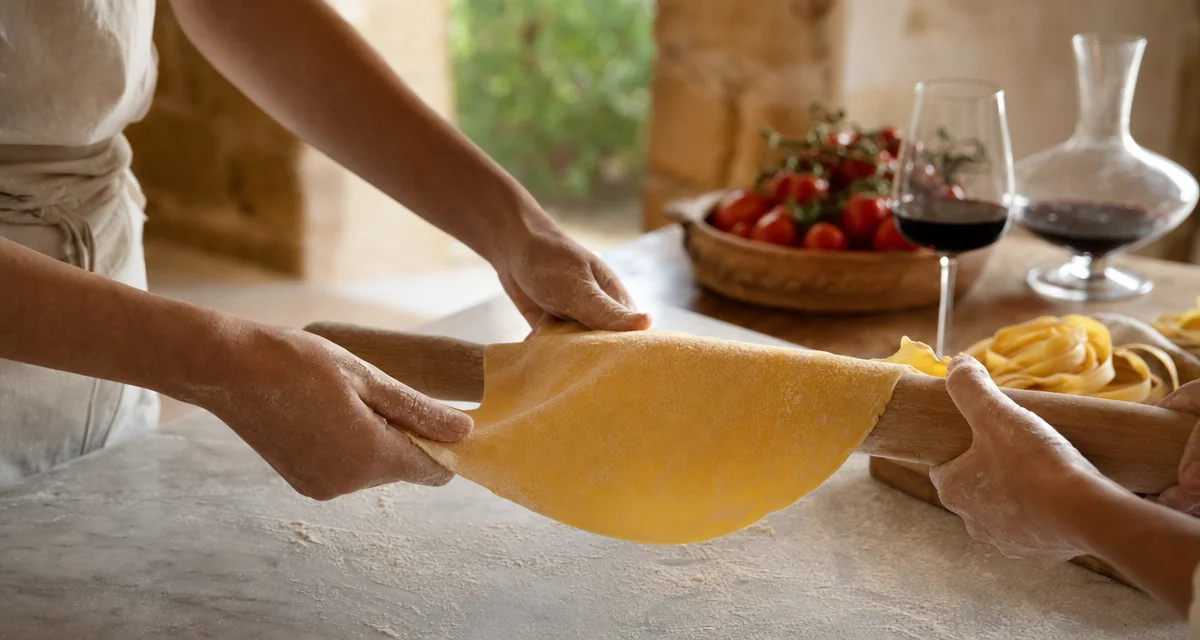
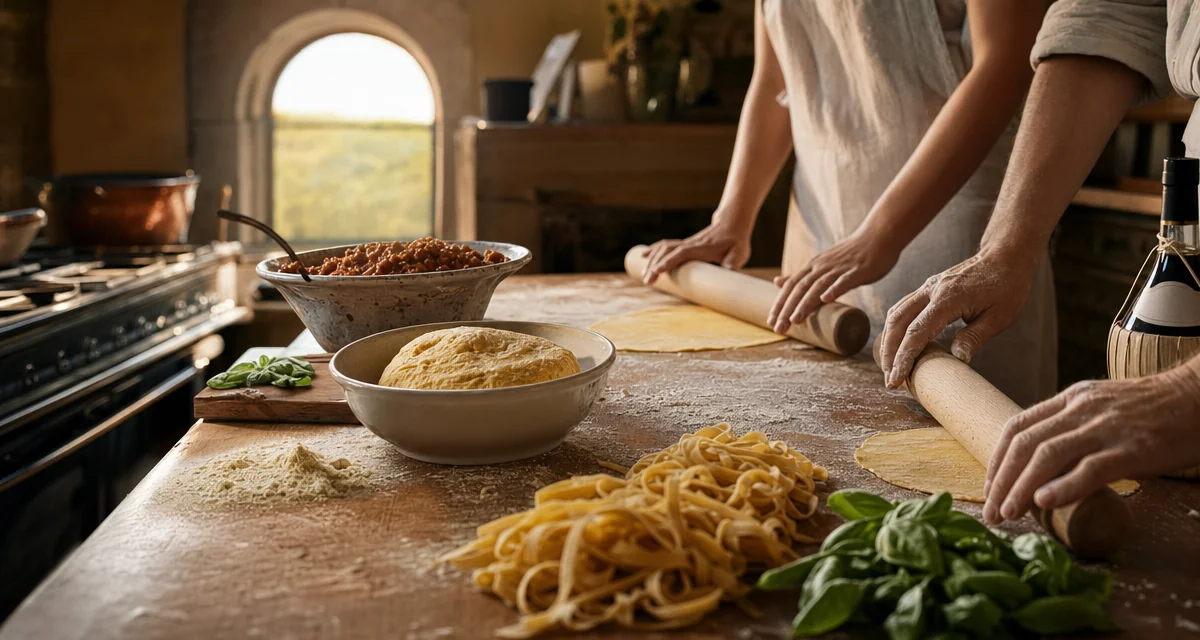
A typical Rome cooking class lasts 2 to 3 hours for a group studio session and 4 to 5 hours when it bundles a class with a seated dinner, and it covers three core skills: making fresh egg pasta by hand (usually tonnarelli, fettuccine or ravioli), preparing one or two Roman sauces from scratch, and finishing with a classical Italian dessert. Group studios in Trastevere and Centro Storico cap at 8 to 14 guests, work in a fitted teaching kitchen with multiple workstations, and finish with everyone sitting down at a long communal table to eat what they made, usually with one glass of wine included. The Pasta Class plus Dinner format we deliver runs differently: one chef, your group only, your kitchen, and a proper four-course seated dinner at the end rather than a quick communal tasting. Both formats include ingredients, equipment, an apron and the meal itself. Prices in the 2026 market sit at €60 to €90 per person for the studio group format and around €150 per adult for the private at-apartment Pasta Class plus Dinner with 4 to 8 guests. Wine flows freely in private formats and is usually capped at one or two glasses in studios. Nothing in Rome's cooking-class market includes printed recipe cards or follow-up emails with recipes; the lesson itself is the deliverable.
How much does a cooking class in Rome cost in 2026?
Rome cooking-class prices in 2026 split cleanly into four tiers. The cheapest are the studio group classes near Piazza Navona and across Trastevere at €55 to €90 per person for a 2 to 3 hour hands-on session with 8 to 14 guests sharing the room. Mid-range are the market-tour-plus-cooking experiences, typically €120 to €170 per person, where a chef or food guide walks you through Mercato di Testaccio or Campo de' Fiori first and then cooks back at a studio. Premium are the small-group private classes led by a named Roman chef, usually €180 to €280 per person for groups of 2 to 6, often at a heritage location like a restaurant kitchen off-hours. And then there's the at-apartment private chef format we operate, where a single chef arrives at the villa, apartment or hotel suite you have already rented, with all the groceries and equipment, runs a 2 hour pasta class for your group alone and then cooks the full seated dinner: around €150 per adult for the bundled Pasta Class plus Dinner with 4 to 8 guests. Group size matters more than tier label. A two-person dinner sits well above €200 per head in every format because the chef's day rate is divided by two; the same booking at 8 guests drops the per-head cost meaningfully. Children under 12 typically count at half-rate.
Trastevere, Testaccio, Monti or Prati: which Rome neighbourhood?
The neighbourhood you cook in matters because Rome cooking classes are almost always followed by either a walk home or a taxi, and Roman taxis at 11pm on a Saturday in Trastevere take time. Trastevere, the old artisans' quarter across the Tiber, holds the densest concentration of cooking studios and is the right pick if you want the cobblestoned, fairy-lit atmosphere and don't mind crowds. Testaccio, the old slaughterhouse quarter and Rome's most genuinely Roman food neighbourhood, is the right pick if you want a class that starts at Mercato di Testaccio with a real market walk. Monti and Centro Storico work best for guests staying near the Colosseum or Pantheon who want to walk back to their hotel. Prati, the elegant grid north of the Vatican, has fewer studios but suits guests in Vatican-area apartments who prefer a quieter post-dinner walk. The key decision: if you have rented an apartment or villa anywhere in central Rome, the private at-apartment format means no neighbourhood choice at all, because the cooking happens in your kitchen, on your dining table, in the apartment you are already paying for. Browse private chefs across Rome by area to see which network chef operates closest to where you're staying.
The guests who come to me already half-knowing what carbonara is, who have eaten one in a trattoria in Trastevere the night before, learn faster and remember more. Don't book the class on day one. Eat first, cook second. Chef Marco, Rome-based ambassador of Chef On Demand
Studio class, private at-apartment, or market-and-cook: which format?
The format dictates almost everything else: who's in the room with you, how much you actually cook with your hands, what you eat at the end, and how much wine you can drink. The studio group class is the right choice for solo travellers and pairs who want to meet other people and pay the least, accepting that you'll share workstations and the meal lasts about 30 minutes at a communal table. The market-tour-plus-cooking hybrid is the right choice for travellers who care as much about the food culture as the cooking, who want to see a Roman market, taste pecorino romano and guanciale at the source, and then carry a basket back to a teaching kitchen. The private at-apartment Pasta Class plus Dinner is the right choice for families, couples celebrating a milestone, and groups of 4 to 8 who want a proper four-course seated dinner with wine flowing freely, no strangers in the room, the menu adjusted to their dietary needs (no gluten, no pork, vegetarian sauces) and the chef coming to them at the apartment they've already rented. There's no transfer, no shared cohort, no rigid 3pm-to-6pm shift, and children can drop in and out of the cooking part while the adults stay engaged. Browse our Rome private chef network to see availability for the dates of your stay.
- Eat at a real Roman trattoria the night before the class so your tongue knows what carbonara, cacio e pepe and amatriciana should taste like when you make them.
- Confirm in writing whether the class is hands-on dough kneading from flour or assembly from pre-made sheets, because vague answers are a red flag.
- Tell the operator about every allergy and dietary preference at booking time, not on arrival, because Roman sauces lean heavily on guanciale (cured pork jowl) and pecorino romano.
- If you're booking a private at-apartment class, send the chef a photo of your kitchen so they can plan: gas or induction, dining table seats, prep counter length.
- Build the class into the afternoon, not the morning. Lunch in Rome runs late, the markets quiet around 1pm, and the best chefs in town are not at their best at 9am.
- Decide your wine plan in advance. Studios cap pours; private chefs at your apartment work around what you've already bought at the local enoteca or the wines they bring.
| Format | Typical price per person | Group composition | What you actually do | What's included |
|---|---|---|---|---|
| Studio group class (Trastevere / Centro Storico) | €55–€90 | 8–14 strangers, mixed-language | Shared workstations, one pasta shape + one sauce + tiramisù, communal table dinner | Ingredients, apron, 1–2 glasses wine, ~30 min meal |
| Market tour + cooking (Testaccio / Campo de' Fiori) | €120–€170 | 6–10 strangers + a guide | 1 hour market walk with tastings, then 2 hour cook at studio | Market tastings, ingredients, wine, seated lunch or dinner |
| Small-group private (named chef, off-hours restaurant) | €180–€280 | Your group of 2–6 only | Two pasta shapes, multiple sauces, dessert, longer seated meal | Ingredients, full meal, wine, named-chef instruction |
| At-apartment Pasta Class + Dinner (Chef On Demand) | Around €150 per adult, 4–8 guests | Your group only, your kitchen | 2 hour class teaching one long + one short pasta shape, full seated 4-course dinner | Ingredients, equipment, antipasti, two pastas with sauces, tiramisù, cleanup |
What dishes will you actually cook in a Rome class?
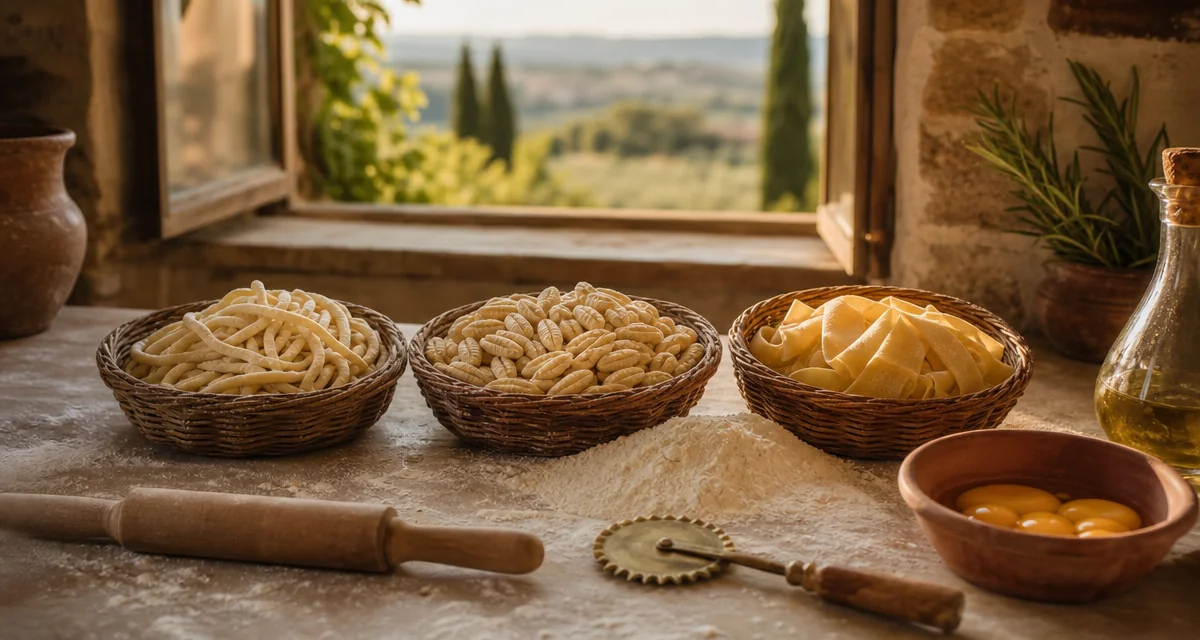
Roman cuisine is famously narrow and famously good, built around a handful of cheap, mostly Tiber-valley ingredients turned into dishes that have survived in the same kitchens for a century. The four pastas every serious class should teach in some form are carbonara (a 1940s emulsion of egg yolk, pecorino romano, black pepper and guanciale, served on tonnarelli or rigatoni and bound off the heat, never with cream), cacio e pepe (the technical exam of Roman pasta: pecorino romano and black pepper whisked with starchy pasta water into a silken sauce, traditionally on tonnarelli), gricia (carbonara without the egg, the ancestor of the carbonara family), and amatriciana (gricia plus tomato, from the town of Amatrice in the Apennines northeast of Rome). Beyond pasta, expect a vegetable antipasto (often carciofi alla giudia, the Jewish-Roman deep-fried artichoke, or fiori di zucca fritti, fried zucchini blossoms stuffed with mozzarella and anchovy) and a dessert of tiramisù (the late-twentieth-century Veneto classic that has since become Italy's house dessert; layers of espresso-soaked savoiardi biscuits with mascarpone cream and cocoa). A class that promises pizza-and-pasta-and-tiramisù-and-gelato in 90 minutes is teaching you nothing of any of them; pick the two dishes you genuinely want to learn and spend the time on those.
How do you book a private cooking class in Rome?
Booking a studio group class is usually a same-week affair through GetYourGuide, Cookly or directly with schools like InRome Cooking, Eat and Walk Italy or Rome with Chef, with cancellation windows of 24 to 48 hours. Booking a private at-apartment cooking class takes more lead time and more conversation, because the chef needs your address, kitchen specifics, group composition, dietary requirements and the wine plan. The typical Chef On Demand lead time for Rome is 7 to 14 days for peak season (April to June, September, late December), shorter in February or November. Once you submit the form you'll receive personalised proposals from one or two matched Roman chefs within 24 hours; you pick the chef whose menu, English level and rate fit, the chef confirms the menu in writing 48 hours before the booking, and arrives at your address with the ingredients on the day. Across our network we serve groups of 2 to 12 guests in private villas, apartments and hotel suites with a 4 to 5 hour service window. Many of our chefs come from Michelin-starred kitchens and Gambero Rosso–rated restaurants; the rating across 800+ guests served since 2025 sits at 4.7 out of 5 on Trustpilot.
Why this matters for your Roman holiday
Rome rewards the traveller who slows down. A cooking class is one of the few experiences in the city that pulls you out of the cycle of monuments and aperitivi and into something quieter: an actual kitchen, an actual chef, a pasta shape you didn't know existed two hours earlier, a dinner around a table you don't have to leave when the next group arrives. The Trastevere studios will give you a memory of cobblestones and shared laughter; the Testaccio market hybrids will give you a fluency in pecorino and guanciale you'll carry to every Italian restaurant for the rest of your life; the private at-apartment Pasta Class plus Dinner format we deliver gives you something else, the experience of your own group, around your own table, in the apartment you chose, learning two pasta shapes from one chef and then sitting down to a four-course dinner you helped make. Browse the full private chef network across Italy if you're combining Rome with another city, or jump directly into our Roman chef listings to see who's available the week of your stay. Pick honestly: the format that matches your group, your kitchen and your appetite, not the one with the most photos on Instagram.