1. Bistecca alla Fiorentina — Florence (Trattoria Sostanza)
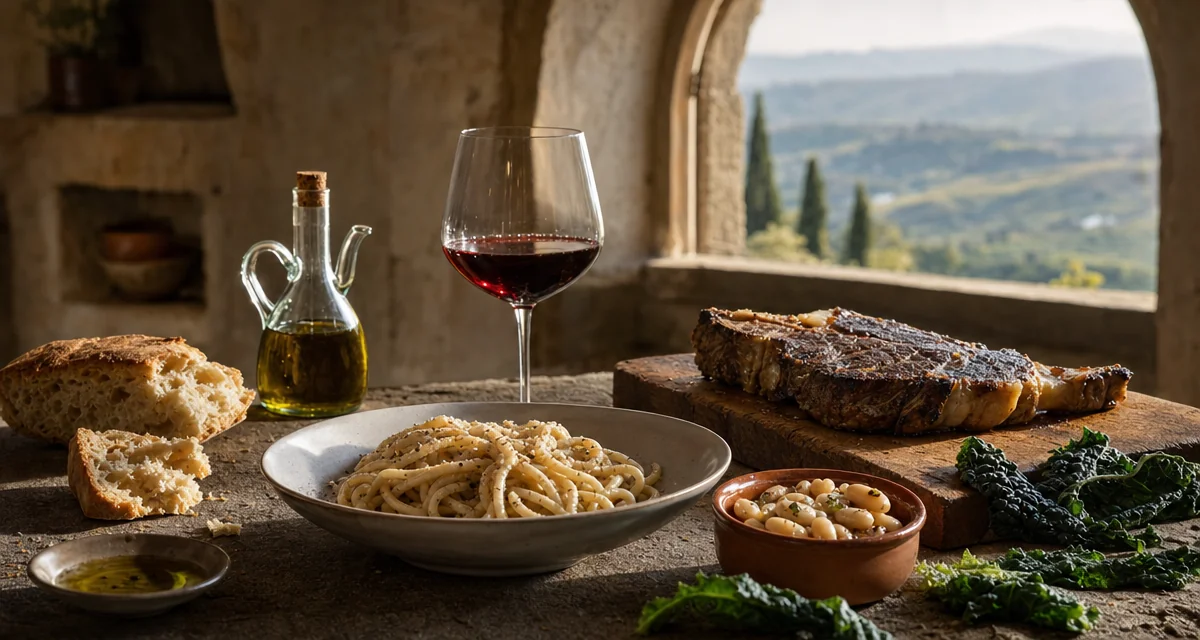
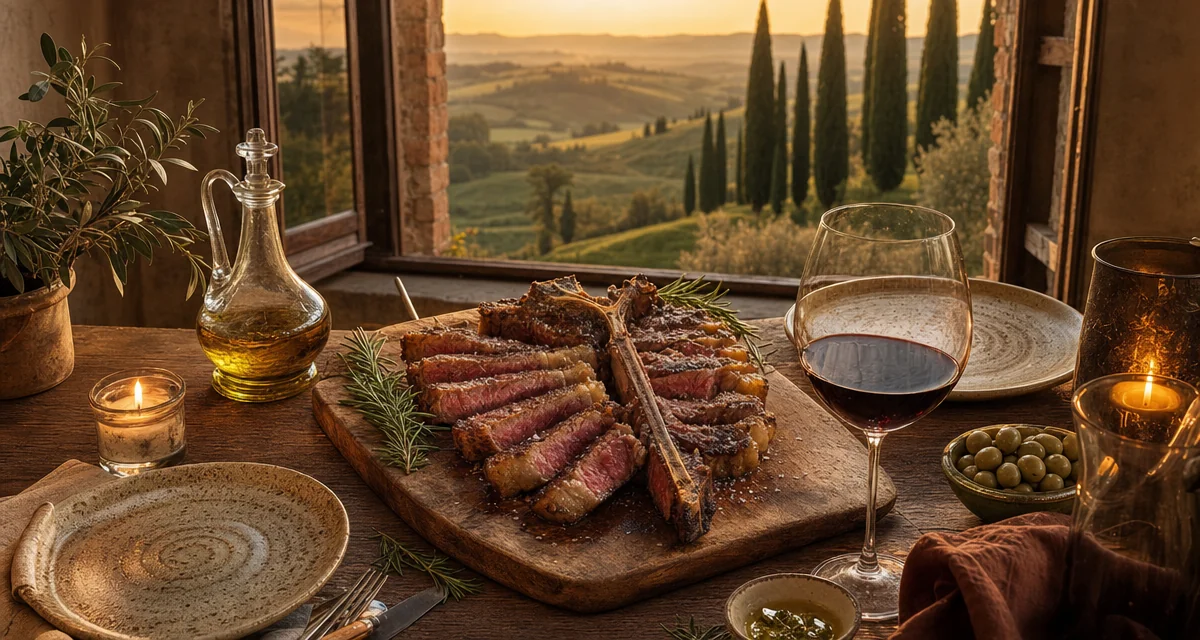
Bistecca alla fiorentina is a thick T-bone steak (1.2-1.5 kg, 4-5 cm tall) cut from Chianina IGP cattle — the giant white breed of the Val di Chiana — grilled over hardwood embers and served deliberately rare on the bone, finished with salt, pepper and Tuscan olive oil. It is the defining icon of the region's cuisine, and the only dish on this list where ordering it well-done will get you a polite refusal. The reference address in 2026 is Trattoria Sostanza in Florence (Via del Porcellana 25r, open since 1869, locals call it Il Troia) — cash only, reserve 7 days ahead in high season, expect €55-75 for the steak. For a more theatrical pilgrimage, drive 35 km south into Chianti to Antica Macelleria Cecchini in Panzano, Dario Cecchini's eight-generation butcher shop, where the Officina della Bistecca serves a fixed-menu beef tasting around €50 per person.
2. Ribollita — Florence & Chianti (Trattoria Cibrèo)
Ribollita means 'reboiled' — a dense winter soup of stale Tuscan bread, cannellini beans, cavolo nero (black kale) and seasonal greens, traditionally cooked on a Friday and reheated through the weekend. It is the purest expression of cucina povera, the Tuscan philosophy of wasting nothing. Expect €10-14 a bowl, served with new-pressing olive oil swirled in at the table. In Florence the benchmark is Trattoria Cibrèo in Via dei Macci 122r (Sant'Ambrogio) — Fabio Picchi's four-decade institution. For a Chianti countryside version, Solociccia in Panzano opens its meat tasting with a ribollita. Order it from October to March only — outside winter the kale isn't right, and most honest trattorias take it off the menu.
3. Pici cacio e pepe — Siena (Osteria Le Logge)
Pici are hand-rolled, eggless pasta strings the thickness of a pencil, native to Siena and the southern hills around Montepulciano and Pienza. Each piece is rolled by hand from flour and water alone — that's why pici grip sauce the way no machine pasta can. The classic Sienese preparation is cacio e pepe (pecorino, black pepper, pasta water, nothing else); the other emblem is all'aglione, with a giant local garlic and tomato. The reference address in Siena is Osteria Le Logge in Via del Porrione 33, two minutes from Piazza del Campo, open since 1977 — pici cacio e pepe runs €16-18. For a more rustic version, drive south into the Val d'Orcia to Osteria del Conte in Montepulciano for pici all'aglione under €14. Browse private chefs across Tuscany if you'd rather have pici rolled fresh in your own villa kitchen.
4. Pappardelle al cinghiale — Chianti (Osteria di Passignano)
Pappardelle al cinghiale is the Tuscan answer to ragù: wide flat egg-pasta ribbons (2-3 cm across) tossed with a slow-cooked wild-boar sauce simmered 4-5 hours with red wine, juniper, rosemary and tomato. Cinghiale (wild boar) is still hunted in the Chianti hills and the Maremma, and the long braise mellows the gamy bite into something deep and almost sweet. The benchmark in Chianti Classico is Osteria di Passignano in Badia a Passignano — owned by the Antinori family, set against an 11th-century Vallombrosan abbey, one Michelin star continuously since 2007. Pappardelle al cinghiale runs €28-32; pair it with Antinori's Badia a Passignano Chianti Classico Gran Selezione, aged in cellars under the monastery. For cheaper versions, trattorias around Greve in Chianti serve them for €16-22. Order it October-February when boar season peaks.
5. Pappa al pomodoro — Florence (Trattoria Cammillo)
Pappa al pomodoro is the summer twin of ribollita: stale bread, ripe San Marzano-style tomatoes, garlic, basil and olive oil cooked into a thick porridge-like puree. Served warm or at room temperature with a final drizzle of fresh-pressed olive oil and torn basil, it converts sceptical first-time visitors to the gospel of cucina povera. Expect €9-13 a bowl. Our pick is Trattoria Cammillo in Borgo San Jacopo 57r, Oltrarno — a Florentine institution since 1945, where the tomato sauce is finished tableside. Cammillo also serves an excellent panzanella (the cold bread-and-tomato salad version) in summer. Order pappa al pomodoro June through September, when the tomatoes are at their peak — outside that window, ask for ribollita instead.
6. Lampredotto sandwich — Florence street (Da Nerbone, Mercato Centrale)
Lampredotto is the fourth stomach of the cow (abomasum), simmered for hours in a vegetable broth with celery, onion, parsley and tomato until melting and almost sweet, then sliced thin, dunked in its own broth and stuffed into a soft panino with green salsa (parsley, garlic, capers, anchovy) and a pinch of red salsa piccante. It is Florence's defining street food and one of the cheapest authentic meals in the region — €5-7 from a stall, eaten standing. The pilgrimage address is Da Nerbone at the Mercato Centrale (San Lorenzo), open since 1872 — order the panino bagnato (bread dipped in broth before stuffing) and you'll understand why Florentines have been queuing here for 150 years. Hours are 8am-2pm weekdays only — this is a workers' lunch, not a dinner.
7. Cacciucco alla livornese — Livorno (Trattoria Da Galileo)
Cacciucco is the spicy fish stew of Livorno, the port city on the Tuscan coast, made with at least 5 species of fish and shellfish (one for each 'C' in cacciucco) — typically scorpionfish, gurnard, dogfish, octopus, mantis shrimp, mussels and clams — simmered in red wine, tomato, garlic and chilli, then ladled over toasted garlic-rubbed bread. It tastes nothing like the rest of Tuscany: hot, briny, unmistakably Mediterranean port-city food. Expect €25-35 for a generous portion. The temple is Trattoria Da Galileo in the Pontino neighbourhood — open since 1959, run by the Piagnerò brothers, known locally as Il Tempio del Cacciucco. The daily catch dictates the species in the pot.
If a guest asks for one Tuscan dinner that 'tells them the whole region in one meal', I cook crostini neri to start, hand-rolled pici cacio e pepe as a primo, a small bistecca on the embers, and cantucci with Vin Santo to close. Four courses, four provinces, three centuries of recipes — that's Tuscany on a single table. Chef Lorenzo, Florence-based ambassador of Chef On Demand Tuscany
8. Crostini neri (chicken-liver pâté) — Tuscany-wide
Crostini neri ('black crostini', or crostini di fegatini) are toasted slices of Tuscan bread topped with a coarse pâté of chicken livers, onion, capers, anchovy, sage and a splash of Vin Santo, simmered 40 minutes and served warm. They open virtually every traditional Tuscan lunch and are the single best test of a trattoria — if the crostini neri are good, the rest of the meal will be. Expect €6-10 for a plate of 4-6 pieces. The most quoted reference is Trattoria Mario in Via Rosina 2r near the Mercato Centrale, Florence — open lunch only since 1953, no reservations, communal tables, antipasto plus a glass of Sangiovese around €8. The dish travels the whole region: you'll find equally good versions in Siena, Lucca and Cortona.
9. Schiacciata sandwich — Florence street (All'Antico Vinaio)
Schiacciata is the flat, dimpled, deliberately crispy Tuscan flatbread — kin to focaccia but rougher, drier and less olive-rich. Florentines split it horizontally and stuff it with cured meats, pecorino creams and seasonal vegetables to make the city's other defining street sandwich. The world reference is All'Antico Vinaio in Via dei Neri 65r, run by the Mazzanti family since 1991 — Saveur magazine ranked their schiacciata among the best sandwiches in the world. The signature La Favolosa (sbriciolona salami, pecorino cream, artichoke cream, fried aubergine) is around €8. The Via dei Neri shop serves roughly 10,000 sandwiches every weekend — go off-peak (11am or 4pm) to avoid a 30-minute queue. A second pilgrimage is I Fratellini in Via dei Cimatori, a hole-in-the-wall serving panini and Chianti from a hatch since 1875.
- Reserve historic trattorias 7-10 days ahead for high season (June-September). Sostanza, Cammillo, Cibrèo and Da Galileo all hit capacity nightly.
- Eat lunch where workers eat (Da Nerbone, Trattoria Mario, I Fratellini). Lunch is the cheapest and most honest meal in Florence — €10-15 instead of €40 at dinner.
- Drink local: Chianti Classico DOCG with bistecca and pappardelle al cinghiale; Vernaccia di San Gimignano DOCG with cacciucco; Brunello di Montalcino DOCG with the steak if you want to spend; Vin Santo del Chianti DOC with cantucci.
- Ask for the unsalted bread (pane sciocco). Tear it, drizzle olive oil and salt on the inside, eat it with cured meats — that's the Tuscan ritual.
- Cash matters. Sostanza, Da Nerbone, Trattoria Mario and many historic addresses still don't take cards, or charge a 3-4% surcharge.
10. Pecorino Toscano DOP & honey — Pienza (Val d'Orcia)
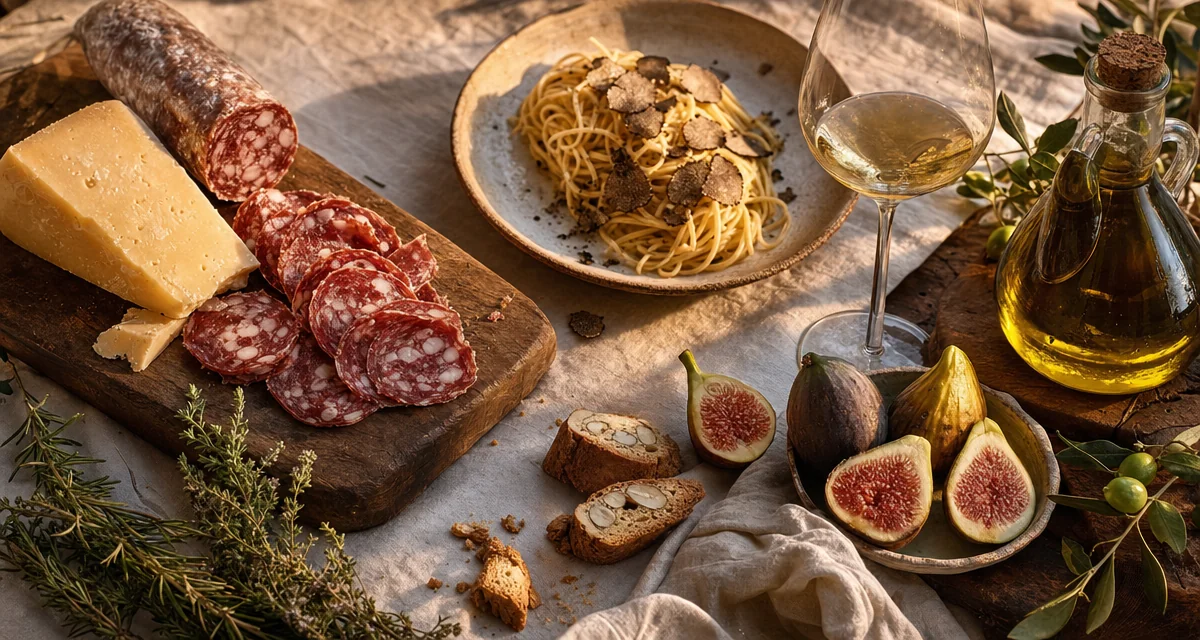
Pecorino Toscano DOP is the sheep's-milk cheese of southern Tuscany, protected by Denominazione di Origine Protetta status since 1996. The capital is Pienza — a UNESCO-listed Renaissance hilltop town in the Val d'Orcia, surrounded by the cypress-stippled hillsides on every Tuscan postcard — where shop windows are stacked with wheels at three ages: fresco (under 30 days, milky and soft), semi-stagionato (1-3 months), and stagionato (4+ months, dense and complex). The traditional pairing is a sliver of aged pecorino with a spoon of miele di castagno (chestnut honey) or fig jam, eaten as a dessert course. Expect €25-40 per kg in Pienza's specialist caseifici; taste-and-buy at Caseificio Cugusi just outside town. Within a 30 km radius you also have Montalcino (Brunello DOCG) and Montepulciano (Vino Nobile DOCG) — three benchmark food-and-wine appellations in an easy day.
| Dish | Region / city | Reference address (2026) |
|---|---|---|
| Bistecca alla fiorentina | Florence (Chianina cattle, Val di Chiana) | Trattoria Sostanza, Florence — or Cecchini, Panzano |
| Ribollita | Florence & Chianti (winter) | Trattoria Cibrèo, Florence (Sant'Ambrogio) |
| Pici cacio e pepe | Siena & Val d'Orcia | Osteria Le Logge, Siena |
| Pappardelle al cinghiale | Chianti Classico | Osteria di Passignano, Tavarnelle |
| Lampredotto sandwich | Florence street | Da Nerbone, Mercato Centrale |
| Cacciucco | Livorno (coast) | Trattoria Da Galileo, Livorno |
| Schiacciata sandwich | Florence street | All'Antico Vinaio, Via dei Neri |
| Pecorino Toscano DOP | Val d'Orcia (Pienza) | Caseificio Cugusi, Pienza |
| Cantucci + Vin Santo | Siena & Prato | Pasticceria Nannini, Siena |
| Panforte di Siena IGP | Siena | Pasticceria Nannini, Siena |
11. Cantucci with Vin Santo — Prato & Siena (Pasticceria Nannini)
Cantucci (also called biscotti di Prato) are twice-baked almond biscuits — a long loaf studded with whole unblanched almonds is baked, sliced on the diagonal while warm, and returned to the oven until rock-hard. They are then dipped, ritually, into a small glass of Vin Santo — Tuscany's amber dessert wine, made from late-harvest Trebbiano and Malvasia grapes air-dried for 3-4 months and aged 3+ years in small caratelli casks. The biscuit softens in the wine; the wine takes a hint of almond. It is how every traditional Tuscan meal ends. Pasticceria Nannini in Siena (Banchi di Sopra 24) has baked cantucci, ricciarelli, panforte and panpepato continuously since 1948 — €18-25 per kg. For the Prato origin story, Antonio Mattei in Prato has baked the original recipe since 1858.
12. Panforte di Siena IGP — Siena
Panforte di Siena IGP is the medieval Sienese spiced cake — a dense, chewy disc of almonds, candied citron, candied melon and orange peel, honey, sugar and a precise blend of black pepper, cinnamon, cloves, nutmeg and coriander, bound with just enough flour to hold together. The earliest recipes date to the 13th century, when Siena's spice trade made the city the Florence of cakes. Two versions exist: panforte nero (the original, dark, with melon and pepper) and the lighter panforte bianco dusted with icing sugar. The reference shop is again Pasticceria Nannini in Siena. Expect €15-25 for a 350g wheel — vacuum-sealed, luggage-friendly, keeps 6 months, the best edible souvenir from Tuscany. Eat it in slim wedges with espresso or Vin Santo, or — Sienese-style — with aged pecorino as a cheese course.
13. Pappa al cinghiale, ravioli al tartufo and the next 7 dishes
If you're staying longer than a week, a second tier of Tuscan must-tries deserves the slot. Tagliata di Chianina is bistecca's smaller sister — sliced grilled beef on rocket, €30-40 per person. Trippa alla fiorentina is lampredotto's cousin, slow-cooked in tomato. Farro alla garfagnana is the spelt soup of the Lucca highlands — try it at Buca di Sant'Antonio in Lucca, the city's oldest restaurant (open since 1782, in the 2026 Michelin Guide). Tordelli lucchesi are stuffed pasta pillows in meat ragù. Cinta senese DOP is the heritage Tuscan black pig — try the salumi at any honest norcineria in Siena. White truffle from San Miniato shaved over tagliolini al burro is a November-only experience. And schiacciata con l'uva (sweet flatbread stuffed with wine grapes) appears only in September during the vendemmia (grape harvest). A private chef can plate several of these in a single tasting menu — browse our Tuscan chef network for a curated dinner in your villa.
Why this matters for your Tuscan holiday
Tuscany rewards travellers who arrive with a list. The region holds 11 DOCG wine appellations — Italy's highest tier — and 31 DOP/IGP food-and-wine designations, but its true depth is in the dishes that never made it onto a label: the bowl of ribollita reheating since Friday, the panino al lampredotto eaten standing at the Mercato Centrale, the wedge of aged pecorino with chestnut honey overlooking the Val d'Orcia. The 13 dishes above are not a complete map — they are the shortest path from 'I'm visiting Tuscany' to 'I have actually eaten in Tuscany'. Tick them off as you go. If you're staying in a villa and would rather have Chef Lorenzo or one of our 12+ verified chefs across Tuscany cook several of these on the same table — bistecca on the embers, pici rolled fresh, cantucci dipped in Vin Santo as the sun goes down over the cypresses — start with our private chef network and ask. The villa kitchen is, in our experience after 800+ bookings since 2024, the single best restaurant in Tuscany — because it's the one menu you wrote yourself.