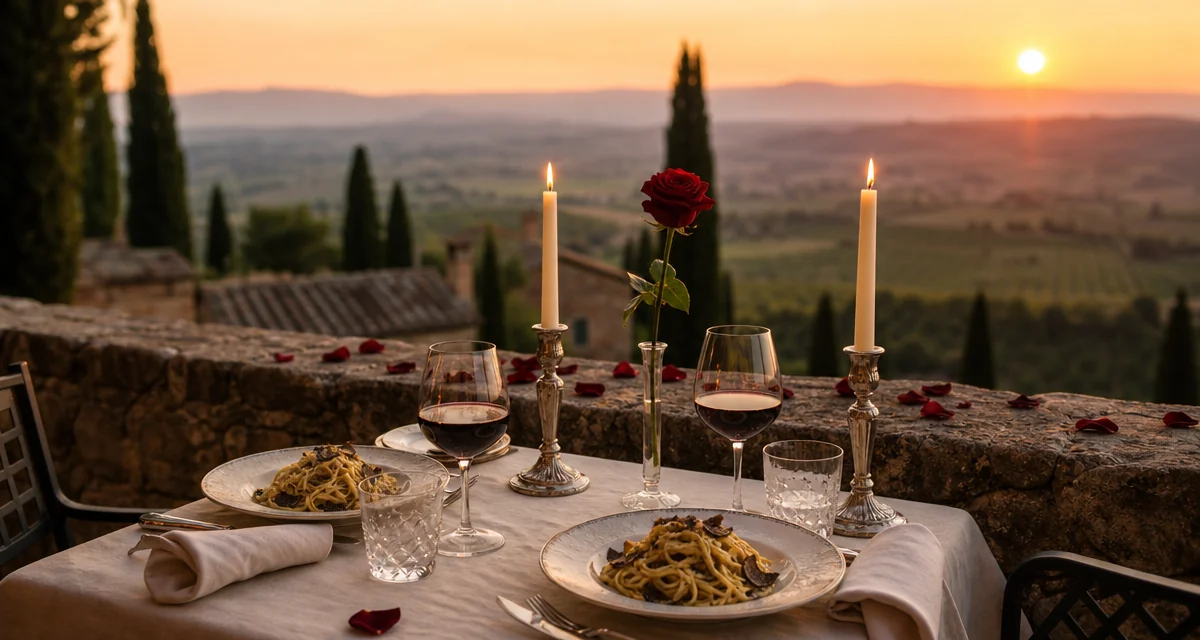
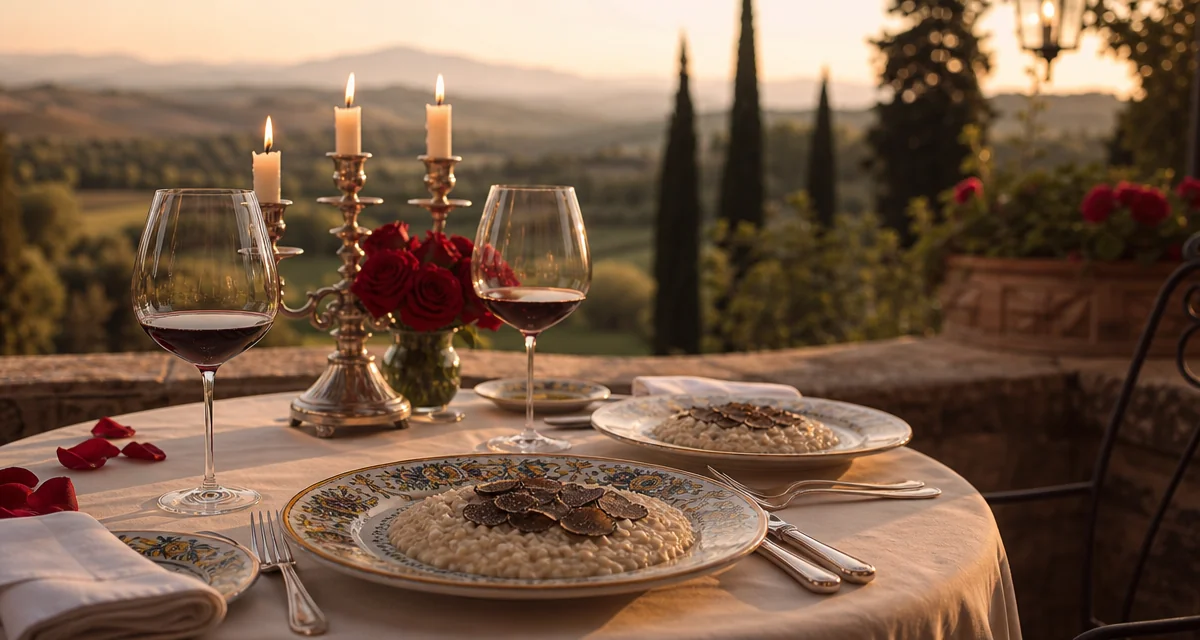
What makes a babymoon in Italy different from any other Italian trip?
A babymoon in Italy is a slower version of the classic Italian holiday: fewer cities, one or two bases instead of five, mornings for walking and afternoons for resting, and dinners where the menu has been shaped around pregnancy food guidance. Most couples take it for 5 to 8 nights, and the best ones feel more like a long exhale than an itinerary. That matters because Italy's greatest hits are often the worst fit for a pregnant traveller. Rome in July regularly tops 32°C, the Cinque Terre trails are steep and uneven, and a seven-city Italy babymoon itinerary squeezed into 10 days means a lot of luggage, train platforms and early starts. The food question is just as real. Italian tables are generous with salumi (cured meats such as prosciutto crudo, salami and finocchiona), soft fresh cheeses like burrata, and raw seafood served as crudo, and these are precisely the dishes that UK, US and Italian health authorities flag in pregnancy. None of this means Italy is a bad choice. In fact a well-planned babymoon here is one of the easiest trips you can take, because the country runs on long lunches, shaded terraces and cooking that is naturally built from vegetables, legumes, pasta and slow-cooked meat. The trick is choosing the right region, the right month and the right way to eat, which is what the next sections walk through.
When is the best time for a babymoon in Italy?
The best time for a babymoon in Italy is the second trimester, roughly weeks 14 to 28, in the shoulder months of April to early June or September to mid-October, when temperatures sit around 18–26°C and the villages are calmer. That window lines up with what clinicians say and with what Italy's weather allows. The American College of Obstetricians and Gynecologists says in its guidance on travel during pregnancy that mid-pregnancy, 14 to 28 weeks, is the best time to travel, because energy has usually returned and morning sickness has eased. The UK's Royal College of Obstetricians and Gynaecologists notes in its air travel and pregnancy leaflet that the safest time to fly is before 37 weeks with one baby, or before 32 weeks with an uncomplicated twin pregnancy, and that after 28 weeks your airline may ask for a letter confirming your due date and good health. The NHS adds a detail most babymoon guides miss: in its advice on travelling in pregnancy it says ferry companies often refuse heavily pregnant passengers beyond 32 weeks on standard crossings and 28 weeks on high-speed crossings, which is exactly how most visitors reach Capri, Positano and the Lake Como villages. On flights longer than 4 hours, the NHS recommends drinking plenty of water and moving around every 30 minutes or so. Summer is possible, of course, but August brings heat, crowds and closed family restaurants, so if you can choose, aim for May or late September.
Which Italian regions suit a slow babymoon?
The Italian regions that suit a slow babymoon are those where you can stay put, walk on level ground and eat well without long transfers: southern Tuscany, the central lake villages of Lake Como and the upper Amalfi Coast around Ravello. Each has a different rhythm, and the right one depends on whether you want countryside, water or sea views. Puglia's Valle d'Itria and its whitewashed masserie (fortified farmhouses turned into country hotels) are a strong fourth choice for late spring. If you are weighing Italy against other best European babymoon destinations, the deciding factor is usually food: few places make it this easy to eat a full, celebratory menu that still respects the rules.
Babymoon Tuscany: the Val d'Orcia and Chianti
For a babymoon in Tuscany, base yourselves in the Val d'Orcia, the UNESCO-listed valley in southern Tuscany whose cypress-lined hills appear on almost every Tuscan postcard, or in Chianti, the wine country between Florence and Siena. Both are villa country, with country lanes, olive groves and towns you can see in a morning. Pienza, a Renaissance hill town rebuilt in the 1460s, is famous for pecorino di Pienza (a sheep's milk cheese); the aged versions sit on the NHS list of hard cheeses that are fine in pregnancy, and chefs who cook around Pienza will know which local producers age their wheels for months rather than weeks. In Chianti, our chefs near Greve in Chianti cook dishes that are naturally pregnancy-friendly: ribollita, a thick bread and black-cabbage soup simmered for hours, and pici, hand-rolled fat spaghetti from the Siena area, usually served with a slow tomato and garlic sauce. Chef On Demand works with more than 20 chefs based in Tuscany, and you can browse private chefs across Tuscany by area before you request anything.
Babymoon Amalfi Coast: choose Ravello over Positano
A babymoon on the Amalfi Coast is beautiful but steep, so the base matters more here than anywhere. Positano is a vertical village of staircases, and its beach and ferry pier sit at the bottom of them; plenty of pregnant travellers manage it, but it is tiring by the third day. Ravello, more than 300 metres above the sea, is quieter, cooler in summer and has flat garden walks at Villa Rufolo and Villa Cimbrone. Look for a villa with parking at road level and use cars rather than high-speed ferries if you are past 28 weeks. Chefs working around Ravello cook the coast's lemon, tomato and seafood classics with the fish fully cooked, and our Positano chefs can do the same on a terrace if you do stay lower down. Expect a €15 per person zone supplement on dinners here, roughly 7% on a Taste of Italy menu for 2 guests.
Lake Como babymoon: flat lakefronts and slow boats
A Lake Como babymoon is the gentlest of the three. The central villages of Bellagio, Tremezzo, Menaggio and Varenna have level lakefront promenades, and the slow public boats (not the fast hydrofoils) make day trips easy. Late May and September are ideal, with water temperatures pleasant for a paddle and evenings that cool down. Lake fish such as perch is traditionally served fried or baked, both fully cooked, and risotto with perch fillets is a local classic. Chefs who work around Bellagio can cook on your villa terrace overlooking the water; the €15 zone supplement applies across Lombardy.
| Region | Walking and stairs | Getting around | Best months | Food note |
|---|---|---|---|---|
| Val d'Orcia and Chianti (Tuscany) | Gentle lanes, some hill-town slopes | Car; 45–120 minutes from Florence airport | April–June, September–October | Aged pecorino and ribollita easy; skip raw finocchiona unless cooked |
| Lake Como (Bellagio, Tremezzo, Varenna) | Flat lakefronts | Slow boats and cars; about 90 minutes from Milan Malpensa | May–June, September | Lake perch served fried or baked; €15 zone supplement on dinners |
| Ravello (Amalfi Coast) | Some steps, flat garden walks | Car from Naples, about 90 minutes; avoid high-speed ferries after 28 weeks | May, late September | Seafood cooked through, lemon desserts; €15 zone supplement |
| Positano (Amalfi Coast) | Hundreds of steps | Ferries and stairs; tiring later in pregnancy | May, late September | Crudo is common on menus; ask for cooked fish |
| Valle d'Itria (Puglia) | Flat countryside | Car from Bari or Brindisi | May–June, September | Fresh burrata is everywhere; check pasteurisation with your clinician's advice in mind |
Eating in Italy while pregnant: what does the official guidance say?
Eating in Italy while pregnant comes down to four groups to watch: raw cured meats, raw or cold-smoked fish, soft and short-aged cheeses, and raw eggs, plus alcohol. The reasons are two infections, toxoplasmosis and listeriosis, and the guidance from the UK, the US and Italy broadly agrees, with a few differences worth knowing. On cured meats, the NHS foods to avoid in pregnancy page says cold cured meats such as salami, pepperoni, chorizo and prosciutto should be cooked until steaming hot. Italy's Istituto Superiore di Sanità explains on its toxoplasmosis page that a European study found 30–63% of infections in pregnant women were linked to undercooked meat, and it advises washing fruit and vegetables carefully. On fish, the NHS lists raw fish, raw shellfish and sushi made with raw fish as foods to avoid, even if previously frozen, while cooked fish and cooked shellfish are fine. On cheese, ACOG's listeria guidance says to avoid raw-milk foods and soft cheeses made from raw milk, adding that soft cheeses made with pasteurised milk are safe. The NHS goes further, listing pasteurised mozzarella, ricotta, mascarpone and burrata as safe, and Parmigiano Reggiano among the hard cheeses that are fine whether or not the milk was pasteurised. Italy is a little more cautious: the ISS listeria page advises people at risk, including pregnant women, to avoid fresh dairy, especially soft, short-aged and blue cheeses, short-aged cured meats, ready-to-eat smoked fish and dishes eaten without any heat treatment. The European Food Safety Authority confirms on its listeria page that pregnant women are among the groups the disease mainly affects. On alcohol, the NHS says the safest approach is not to drink at all. Guidance differs between countries and changes over time, so check with your own doctor or midwife before you travel.
| Italian classic | What the guidance says | How the chef adapts it |
|---|---|---|
| Prosciutto crudo, salami, finocchiona | NHS: cook cold cured meats until steaming hot | Crisped prosciutto over figs, salami baked into a focaccia, pancetta cooked into a sauce |
| Burrata, fresh mozzarella, ricotta | NHS: pasteurised versions safe; ISS: caution with fresh soft cheeses | Pasteurised cheeses only, or baked until bubbling, as in parmigiana di melanzane |
| Gorgonzola and other blue cheeses | NHS: cook thoroughly, pasteurised or not | Melted into a hot risotto or a baked gnocchi sauce |
| Parmigiano Reggiano, aged pecorino | NHS: hard cheeses safe even from raw milk | Served as they are, grated or in shavings |
| Crudo, carpaccio di pesce, raw oysters | NHS and ACOG: avoid raw fish and shellfish | Fish roasted, grilled or baked whole; prawns cooked through |
| Tiramisù with raw egg | NHS: non-British Lion eggs only well cooked; ACOG: avoid raw eggs | Pasteurised eggs, a cooked zabaglione base, or an eggless mascarpone cream |
| Aperitivo spritz, wine pairing | NHS: safest not to drink alcohol | Non-alcoholic aperitivo with blood orange, chinotto, rosemary and tonic |
How does a private chef cook a full Italian menu around those rules?
A private chef cooks a full Italian menu around pregnancy guidance by planning it from your written list before buying a single ingredient: cured meats cooked through, cheeses pasteurised or aged hard, fish and seafood cooked, desserts made without raw egg, and a non-alcoholic aperitivo that feels as celebratory as the wine. The chef arrives at your villa or apartment with the groceries and equipment, cooks on-site in your kitchen, serves each course at your table and leaves the kitchen clean, usually across an evening of 2 to 4 hours. What the chef does not do is give medical or clinical dietary advice. The chef follows the list you provide, based on your clinician's guidance, and tells you exactly what went into each dish if you ask. A typical babymoon menu might open with focaccia topped with crisped prosciutto and rosemary, move to hand-rolled pici with a slow tomato sauce, then a whole sea bream baked with lemon and potatoes, and finish with a tiramisù built on pasteurised eggs. The partner can still have a glass of Chianti Classico, the Sangiovese-based red from the hills between Florence and Siena, while the mother-to-be has a chinotto and rosemary spritz.
'Most Tuscan cooking is already cooked for hours, so a babymoon menu rarely loses anything. I just move the prosciutto into the oven and the burrata becomes a hot parmigiana.' Chef Lorenzo, Florence-based ambassador of Chef On Demand in Tuscany
- Write the list once, in bullet points, based on your doctor's or midwife's advice: cured meats, cheeses, fish, eggs, alcohol, plus any aversions or nausea triggers.
- Send it with your booking request at least 7–14 days ahead, since that is the typical lead time across our network in peak season.
- Ask for the menu in writing and confirm each course, including the dessert and the aperitivo.
- Mention timing: many pregnant guests prefer dinner at 7:30pm rather than 9pm, and lighter courses.
- Tell the chef about seating, shade and stairs if you are eating outdoors on a terrace.
- Agree how leftovers are stored, since the NHS advises keeping chilled foods cold and eating them before the use-by date.
How much does a babymoon dinner with a private chef cost in Italy?
A babymoon dinner for 2 guests cooked by a private chef in Italy costs around €200 per person for a 5-course Taste of Italy menu and around €250 per person for a Luxury menu of 6 or more courses, in 2026, with ingredients, cooking, service and clean-up included. On the Amalfi Coast and Lake Como, a €15 per person zone supplement brings those figures to €215 and €265. The 4-course Essential menu starts from 3 guests, at around €120 per person, so it suits a babymoon with family or friends rather than a couple. If you are travelling as 6 guests, say with parents or a sister, prices per head drop: around €95 for Essential, €120 for Taste of Italy and €180 for Luxury. Dinners on Christian holidays such as Easter cost 35% more, so a €200 menu becomes €270. Payment in Italy is by card or bank transfer, and you receive a full refund for cancellations made more than 30 days before your event. For a longer stay, a chef can cook several meals across 3–7 days; those quotes are custom, built from the per-meal price plus a daily rate that depends on whether the chef stays at the villa, commutes locally or books lodging nearby. Most babymoon couples choose 2 or 3 dinners and one long lunch in a week, leaving the other evenings for restaurants. Chef On Demand holds a 4.7/5 rating on Trustpilot.
| Tier | Courses | 2 guests | 6 guests | Good for |
|---|---|---|---|---|
| Essential | 4 courses | From 3 guests (about €120 at 3) | About €95 | A babymoon shared with family or friends |
| Taste of Italy | 5 courses | About €200 | About €120 | The classic celebration dinner for two |
| Luxury | 6 or more courses | About €250 | About €180 | A tasting menu with premium cooked seafood and aged cuts |
Restaurant, cooking school or villa dinner: which suits a pregnant traveller?
A villa dinner suits most pregnant travellers best for at least one or two evenings, because the menu is planned around your list in advance, there is no drive home on dark roads, and you can lie on the sofa between courses if you want to. Restaurants are still a joy, and Italian waiters are used to the request, but menus change daily, the antipasto board arrives loaded with salumi, and confirming whether the burrata is pasteurised in a second language is harder than it sounds. Cooking schools add a different problem: a fixed menu, a shared table with 10 or 12 strangers, and often a 30–40 minute drive each way from a rural villa. The format we suggest instead is the Pasta Class + Dinner, which happens entirely at your villa or apartment. The chef arrives with every ingredient and tool, and for 2 hours teaches you two fresh-pasta shapes, one long such as tagliatelle or pici and one short such as orecchiette or farfalle. While the pasta rests on your counter, the chef prepares two sauces, 2–3 antipasti and a homemade tiramisù, made here with pasteurised eggs, then serves the full dinner at your own table. You can sit down to knead, stop whenever you are tired, and eat 30 minutes later in the same room. What you take home is the technique in your hands and the memory of a long evening at your own table.
Why this matters for your babymoon in Italy
A babymoon is one of the last trips you take as two, and the point is not to see everything but to feel looked after. Italy is unusually good at that, as long as the plan works with your body rather than against it: one calm base, a second-trimester date, and food you can enjoy without reading every menu twice. If the trip doubles as a celebration of something else, our guides to a honeymoon with a chef at your villa and to marking a wedding anniversary in Italy cover the romantic side, and if you are still choosing a house, read our notes on Tuscany villa rentals that come with a chef. When you are ready, you can book a Tuscany villa dinner with one of our chefs, explore our Tuscan chef network area by area, or look at private chefs across Italy for Lake Como, the Amalfi Coast and beyond. Then picture it: the table laid on the terrace, the pici drying on a floured board, the sun dropping behind the hills, and nothing left for either of you to do but sit down.