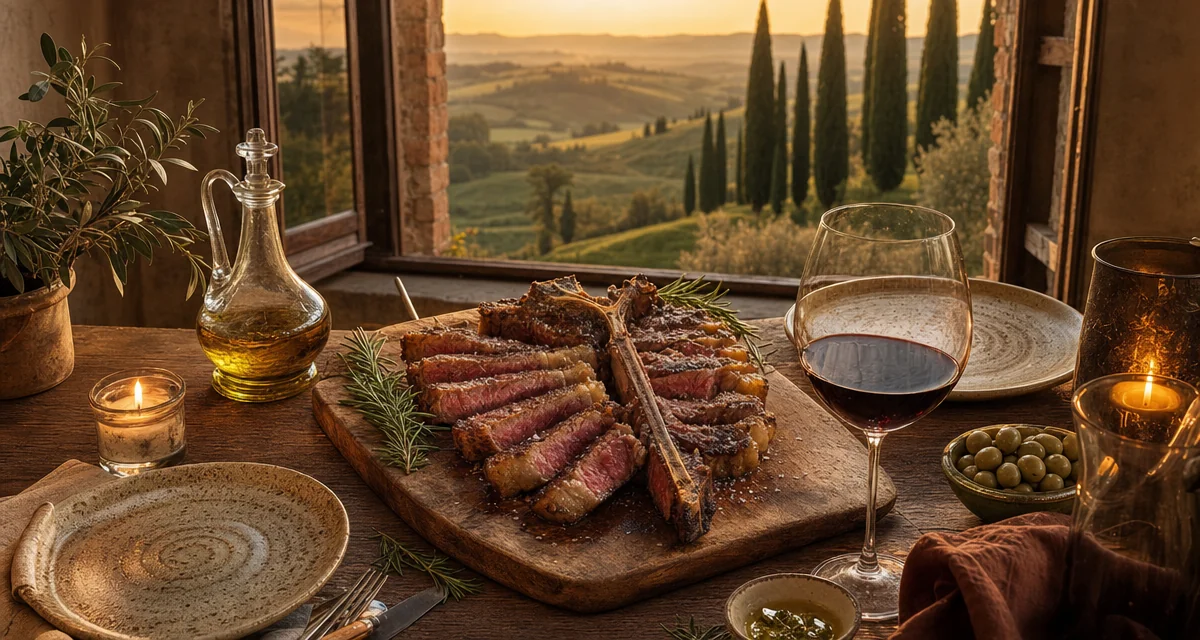
What does 'kosher in Tuscany' actually mean in practice?
Kosher in Tuscany is a spectrum, not a single product. At one end, kosher style means a chef simply avoids pork, shellfish and the mixing of meat and dairy in the same dish — your ribollita stays parve, your bistecca is served without parmigiano on top. At the other end, glatt kosher means every meat cut comes from a slaughterhouse under continuous rabbinical supervision (typically Rabbinato Centrale di Roma, OK Kosher or Kosher Italia), the villa kitchen is kashered before service, separate utensils are used for basari (meat) and chalavi (dairy), and a mashgiach may be on site. Strictly kosher sits between: supervised ingredients only, but logistics are usually lighter than full glatt. The conversation with your chef must start by naming which tier you keep — vagueness here is what creates problems on the ground. A serious Tuscan chef can deliver kosher style without prep time, can deliver strictly kosher with 7–10 days' notice and an ingredient list, and will refer the glatt brief out to specialised partners (Cantina Giuliano, Elite Kosher) when a mashgiach and full kashering are required. Be explicit: write your tier on the booking form.
Where do kosher Tuscan ingredients actually come from?
Tuscany has fewer kosher-certified suppliers than Rome or Milan, but enough to build a serious menu. The supply chain a chef will use depends on observance tier. Florence is the practical hub: Ba'Ghetto Firenze at Via Luigi Carlo Farini 5/r (a kosher Roman-Jewish meat restaurant under the supervision of the Florence Jewish Community, the Comunita' Ebraica di Firenze) and Ruth's next door (dairy, Mediterranean) both sit beside the city's 19th-century synagogue and double as supply points for chefs. The Chabad of Tuscany in Florence supplies Shabbat meals, challah and supervised products; many of our chefs collect from there for villas in Chianti and Val d'Orcia. For wine, Tuscany now produces two kosher DOCG reds: Terra di Seta in Castelnuovo Berardenga (Chianti Classico, fully kosher and mevushal options) and Cantina Giuliano on the Tuscan coast — both ship to villas across the region. For meat, glatt cuts typically arrive from Rome's kosher butchers via overnight refrigerated delivery, or from northern Italy via Kosher Italia. Browse our private chefs across Tuscany for chefs who already have these supplier relationships warmed up.
On a Tuscan kosher booking I never start from the menu — I start from the supply chain. If I can't get supervised meat to the villa by Thursday afternoon, the rest of the week doesn't happen. The Friday market in Florence is my reset button. Chef Lorenzo, Florence-based ambassador of Chef On Demand Tuscany
How does Shabbat work in a Tuscan villa rental?
Shabbat in a villa is the single most logistically dense piece of a kosher Tuscan holiday — and the part where a private chef earns their keep. The chef does all cooking before sundown on Friday, leaves prepared dishes on a blech (a metal sheet over a low flame) or an electric warming tray that has been switched on before Shabbat begins, and is not present during Shabbat itself. A typical Friday-night sequence: kiddush over a cup of Terra di Seta wine, hand-washing, challah, fish course (often poached branzino or salmon parve), a slow-cooked meat or chamin/cholent, sides of seasonal Tuscan vegetables, fruit and biscotti. Saturday lunch is the warming-tray meal — the same cholent if your party loves it, or a cold meat platter with kosher pickles and salads. Crucially, your chef should brief the villa staff on what not to switch off on Friday afternoon (warming tray, fridge light bypass if relevant) and on Havdalah candles for Saturday night. Multi-day stays are the natural format for this — see the next section. If you're choosing the property, our Tuscan villa-with-chef guide goes deeper on kitchen specs.
- Confirm with your villa that the kitchen has at minimum a gas hob (for blech use), an electric warming tray or hot plate, and a fridge — and that turning these on Friday afternoon is allowed under the rental contract.
- Brief your chef 10 days before arrival on the Shabbat meal count (Friday dinner + Saturday lunch + Saturday seudah shlishit if observed) and how many guests join each.
- Order kosher wine in advance: Terra di Seta or Cantina Giuliano deliver to most Tuscan postcodes within 48 hours; mevushal versions are essential if non-Jewish villa staff will pour.
- Ask whether your tier requires a mashgiach (full glatt usually does); if yes, factor lodging and per-day fee into the quote, separately from the chef's fee.
- Plan a Saturday morning that doesn't depend on the car: walk in the villa garden, visit a nearby church/abbey by foot, or simply rest. Tuscany rewards slowness.
Kosher restaurants in Tuscany vs an in-villa kosher private chef: which to choose?
Tuscany's certified kosher restaurants are real but small in number — essentially Ba'Ghetto and Ruth's beside the Florence synagogue, plus Cantina Giuliano's restaurant on its winery estate. For a single Florence dinner this is fine. For a week's holiday in Greve in Chianti, Montalcino or Forte dei Marmi, the maths flips: a 90-minute drive each way, plus parking, plus Shabbat constraints, becomes prohibitive. An in-villa kosher private chef collapses the logistics into one decision — your chef sources, kashers, cooks and serves, and your group never leaves the property after sundown on Friday. Cost-wise, a 5-course kosher-style Taste of Italy menu for 6 guests in Tuscany sits around €120 per person (around €95 at 10 guests); strictly kosher and glatt kosher are quoted custom because supervised ingredient costs and mashgiach fees vary materially. Compare that to a kosher restaurant with a transfer round-trip and you almost always come out ahead in time and often in money — without sacrificing observance.
| Aspect | Tuscan kosher restaurant (Florence) | In-villa kosher private chef |
|---|---|---|
| Observance levels covered | Strictly kosher and glatt (under community supervision) | Kosher style, strictly kosher, glatt — chef adapts to your tier |
| Logistics each evening | Drive 60–120 min round-trip + parking + Shabbat blocks Friday/Saturday | Zero transfer; meals served at the villa, including Shabbat blech |
| Menu personalisation | Fixed à la carte; limited adaptation to allergies and Tuscan ingredients | Bespoke per dietary brief; uses Chianti produce, kosher wines, regional dishes |
| Price guide (6 guests, dinner) | €60–95 per person at table + drinks + transfer cost | From around €120 per person (kosher-style Taste of Italy 5 courses), custom for glatt |
| Best for | One celebratory Florence dinner mid-week | The week itself, including all Shabbat meals and special-occasion dinners |
What about a kosher multi-day chef stay across Tuscany?
If you're spending a full week in Tuscany, the multi-day chef format is built for kosher observance. A typical kosher week is 2–3 cooked dinners + 1 long lunch + the full Shabbat block (Friday dinner, Saturday lunch); the rest of the week the group eats independently, with the chef returning when needed. Logistics depend on lodging configuration: (1) the chef stays at the villa (chef quarters required) — lowest day rate, highest immersion, common for villas in Chianti and Val d'Orcia; (2) a local Tuscan chef commutes daily — viable when the villa is within 45 minutes of Florence, Siena or Lucca, no lodging cost; (3) the chef takes nearby lodging — quoted as a transparent line item, used in remote Maremma or Crete Senesi properties. Each day, the chef shops the kosher supply chain (Florence butcher, Chabad, supervised wine), cooks at the villa, plates, serves and cleans up. Quotes are bottom-up from the per-meal cost plus a per-day chef retainer that depends on the lodging configuration above. A glatt week with mashgiach is materially more expensive than a kosher-style week — name the tier upfront so the quote is realistic. Within our Tuscan chef network, the multi-day brief is one of the most common formats for kosher-keeping families.
Where should kosher travellers eat, drink and visit in Tuscany?
A Tuscan holiday is more than dinners. Pitigliano, in southern Tuscany's Maremma, is the unmissable anchor — a tufa-stone village carved into a cliff that has been called Piccola Gerusalemme ('Little Jerusalem') since the 16th century, when it became a refuge for Jews fleeing the Papal States. You can still visit the synagogue, the kosher bakery (the famous sfratti, a walnut-and-honey biscuit baked locally for centuries), the matzo oven and the Jewish museum carved into the rock; pair it with a Saturday-night dinner once Shabbat ends. Florence gives you the central synagogue (Tempio Maggiore, 1882, Moorish-revival domes), the Jewish museum upstairs and Ba'Ghetto for a kosher Roman-Jewish lunch — carciofi alla giudia parve, fried artichokes the way they've been done in the Roman Ghetto since the 1500s. Livorno on the coast was a refuge city for Sephardic Jews from the late 1500s and still has a small but vital community plus a stunning rebuilt synagogue. For wine: tour Terra di Seta in Castelnuovo Berardenga (Chianti Classico DOCG, 100% Sangiovese, kosher and mevushal options) and Cantina Giuliano on the Tirrenian coast. For Sangiovese-led Tuscan dinners back at the villa, the Terra di Seta Chianti Classico Riserva is the natural reach — black cherry, leather, tobacco; ages beautifully alongside a slow-braised glatt brisket. The same wine is the one our chefs most often pair with the kosher Friday-night menu when guests book a Tuscany private chef experience.
Why this matters for your Tuscan holiday
Keeping kosher should not be the part of your Tuscan trip that absorbs the most worry. Tuscany is built for slow lunches under fig trees, for golden-hour walks through Chianti vineyards, for a Saturday-morning silence broken only by cypresses in wind — and your dietary commitments belong inside that calm, not against it. The travellers we've worked with from New York, London, Tel Aviv and Frankfurt almost all describe the same arc: weeks of anxious planning before arrival, then a Friday evening in the villa where the Terra di Seta is poured, the challah is broken, and the rest of the week unspools without a single supply-chain question. That's the brief our Tuscan chefs train for: browse our private chefs across Italy or read our broader private chef Tuscany guide for the wider context. Chef On Demand operates a verified network of 12+ private chefs across Tuscany, with a 4.7/5 Trustpilot rating from 800+ guests served since 2025; many come from Michelin-starred kitchens, Gambero Rosso–rated restaurants and MasterChef Italia. Tell us your tier of observance, your dates and your villa, and the rest is our work — so the only thing you remember from Friday afternoon is the smell of slow-cooked cholent and the long Tuscan light on the table.