When is Easter in Italy in 2027?
Easter in Italy in 2027 falls on Sunday 28 March, one of the earliest dates of the decade, which means Holy Week opens with Palm Sunday on 21 March and closes with Pasquetta on Monday 29 March. Because the date moves every year with the spring full moon, Italians plan the whole season backwards from it, and so should you.
An early Easter changes the trip. Daytime highs in Florence and Rome usually sit in the mid-teens Celsius, with evenings cold enough for a fire. The produce is late winter turning to spring: Roman artichokes at their peak, wild asparagus, the first peas and fresh ricotta, but no summer tomatoes. And because school calendars across Europe don't line up, the italy easter holidays 2027 crowd is spread over late March and early April. One quirk is worth writing in your diary: Easter Sunday 2027 is also the night European summer time begins, when clocks jump from 2am to 3am.
Easter in Italy 2027: the dates that matter
| Date (2027) | What happens | Public holiday in Italy? | Private chef pricing |
|---|---|---|---|
| Sunday 21 March | Palm Sunday, olive branches blessed at Mass | No (already a Sunday) | Standard rates |
| Thursday 25 March | Holy Thursday, evening Mass, Naples' struscio stroll | No | Standard rates |
| Friday 26 March | Good Friday, Via Crucis processions, Rome's Colosseum service | No, a working day | Holiday rate, +35% |
| Saturday 27 March | Holy Saturday, Easter Vigil at night | No | Standard rates |
| Sunday 28 March | Easter Sunday, family lunch, Scoppio del Carro in Florence | Yes | Holiday rate, +35% |
| Monday 29 March | Pasquetta, picnics and day trips | Yes | Holiday rate, +35% |
What happens during Holy Week in Italy?
Holy Week in Italy, the Settimana Santa, is the eight days from Palm Sunday to Easter Sunday, filled with Masses, candlelit processions and passion plays. Even small villages hold at least one silent, torchlit procession on Good Friday evening.
The easter in italy traditions that travellers remember are mostly regional, and the south is where they are most intense. In Sicily, the Misteri di Trapani is a Good Friday procession of 20 carved and painted wooden groups showing the Passion, carried through the old town for more than 20 hours by bearers who sway to the band's dirge; it has run since the early 17th century. In Puglia, Taranto's hooded penitents walk barefoot in pairs, so slowly that a few hundred metres can take a whole night. Everywhere, church bells fall silent from Holy Thursday until the Easter Vigil on Saturday night, when they ring out at once.
Rome and the Vatican at Easter
Rome is the centre of Catholic Easter, and the papal calendar shapes the whole week. The Pope leads the Way of the Cross at the Colosseum on Good Friday evening, presides at the Easter Vigil in St Peter's Basilica on Saturday night, and on Easter Sunday celebrates Mass in St Peter's Square before giving the Urbi et Orbi blessing, 'to the city and to the world', from the central loggia at noon. The square fills hours before, so arrive by 7am. Romans, meanwhile, start the day with a vast Easter breakfast: hard-boiled eggs blessed at church, corallina salami (a soft, coarse-grained pork salami studded with whole peppercorns), an artichoke frittata and slices of colomba. If you're weighing up an easter dinner in Rome, Italy, our private chefs in Rome often cook this breakfast as a late brunch instead.
What do Italians eat on Easter Sunday?
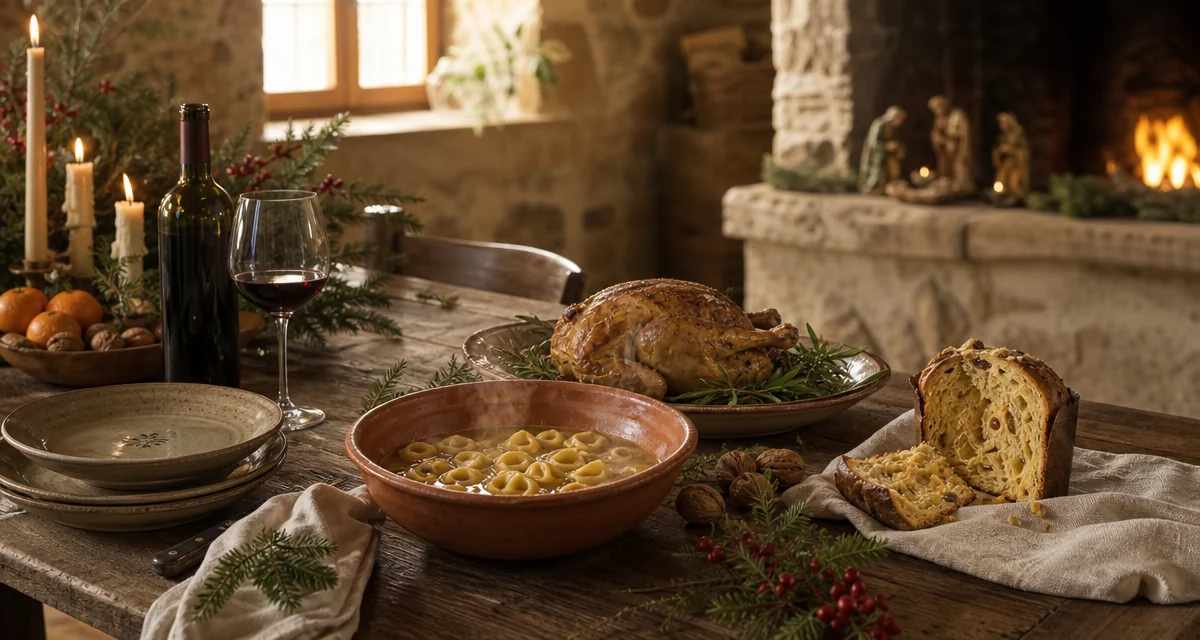
On Easter Sunday most Italians eat a long family lunch that starts around 1pm and runs well past 4pm, built on spring lamb, eggs in every form, fresh cheeses and a sweet bread or tart to finish. The menu changes from one region to the next, yet the logic is the same everywhere: after 40 days of Lent, the table celebrates eggs, meat and dairy all at once.
Lamb is the anchor. In Rome it is abbacchio, a milk-fed lamb of under about six weeks, roasted with rosemary, garlic and potatoes or cut into small chops called scottadito ('burn your fingers') and grilled. Its offal becomes coratella con i carciofi, heart, lungs and liver sautéed with artichokes, a dish Romans love and visitors either adore or politely pass. For dessert, almost every household buys or bakes a colomba, a dove-shaped leavened cake from Milan, made like panettone but with candied orange instead of raisins and a crackling crust of almonds and pearl sugar. The national pairing is a glass of Moscato d'Asti, a gently sparkling, low-alcohol white from Piedmont that smells of peach and orange blossom and never overwhelms a sweet bread.
Easter dinner in Florence and Tuscany
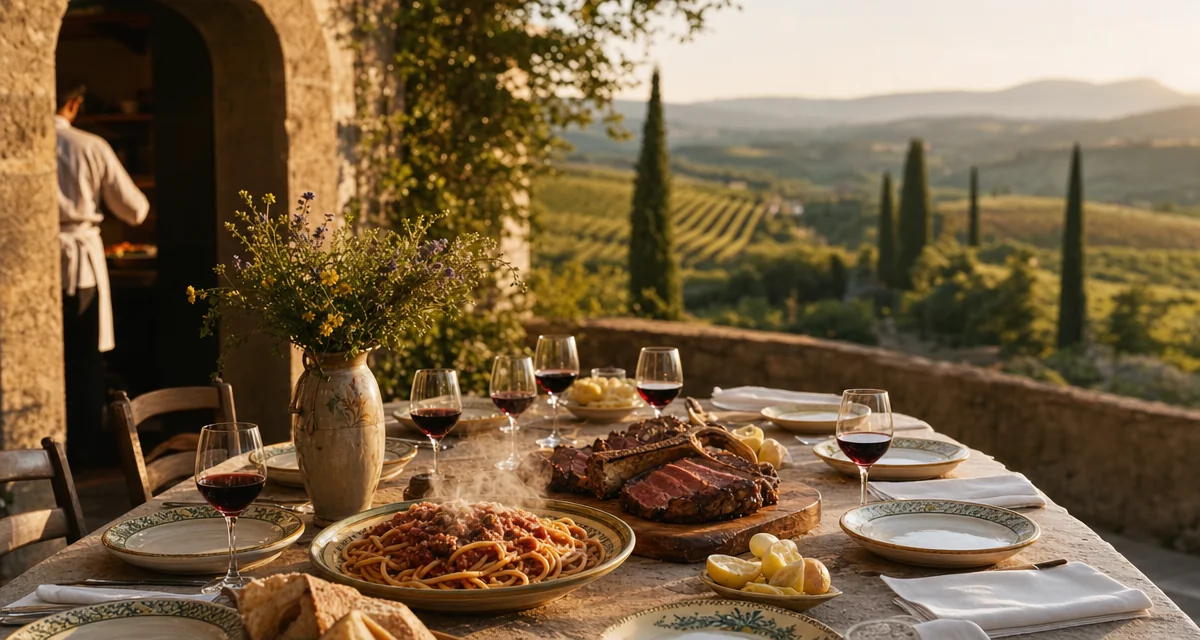
An easter dinner in Florence, Italy is quieter and more rustic than the Roman feast. Tuscan families often begin with blessed boiled eggs and salami, then move to a pasta with a rich lamb or chicken-liver sauce, lamb roasted or cooked alla cacciatora (braised with garlic, rosemary, vinegar and a little tomato), and fried artichokes. Near the coast the sweet of the season is the schiacciata di Pasqua, a tall, airy sweet bread from Livorno scented with aniseed and orange. Pour a Chianti Classico DOCG, the Sangiovese-based red from the hills between Florence and Siena, with the lamb; its cherry fruit and firm acidity cut straight through the fat. Our private chefs across Tuscany cook this menu in villas from the Val d'Orcia to the Chianti hills.
Easter food in Italy, region by region
The wider map of easter food in Italy is mostly a map of pies and breads. Naples bakes two icons: the casatiello, a savoury ring loaf made with lard, pecorino and salami, with whole eggs set into the crust under strips of dough, and the pastiera, a shortcrust tart filled with cooked wheat berries, ricotta and orange-flower water. Genoa and Liguria answer with torta pasqualina, a savoury pie of chard or artichokes and ricotta with whole eggs hidden inside, traditionally made with dozens of paper-thin layers of pastry. In Umbria and the Marche, breakfast means pizza di Pasqua, a tall cheese bread eaten with capocollo cured pork. Puglia's children receive the scarcella, a biscuit shaped like a dove with a whole egg baked on top.
'At Easter I never bring a dish the family hasn't asked for. I ask them what their grandmother cooked, and then I cook the spring lamb, the artichokes and the eggs of whatever valley they happen to be sleeping in that week.' Chef Lorenzo, Florence-based ambassador of Chef On Demand Tuscany
Where should you spend Easter in Italy?
Florence, Rome, Naples and Sicily are the four strongest bases for Easter in Italy, each for a different reason: Florence for one spectacular Easter Sunday ritual, Rome for the papal services, Naples for the food, and Sicily or Puglia for the most dramatic Good Friday processions.
Florence and the Scoppio del Carro
Florence owns the most theatrical moment of the Italian Easter. The Scoppio del Carro, the 'explosion of the cart', has been held for more than 500 years: on Easter Sunday morning a towering 18th-century wagon known as the Brindellone, about 9 metres high, is pulled by white oxen from Porta al Prato to the square between the Duomo and the Baptistery. During Mass the archbishop lights a rocket shaped like a dove, the colombina, which flies along a wire out of the cathedral and sets off roughly 20 minutes of fireworks on the cart. The square fills by 9am, so many visitors watch, then escape to the hills for lunch. A chef can cook in a Florence apartment as well (see our private chefs in Florence), but city addresses carry a supplement, while a farmhouse 30 minutes away in Greve or Radda does not. You can also browse our Tuscan chef network by area before you book a villa.
Naples, the Amalfi Coast and the south
Naples treats Easter as a food festival with church bells attached. On Holy Thursday the city's old struscio survives, a dressed-up evening stroll from church to church, and by Saturday every pastry shop has pastiera stacked in the window. Spend the weekend on the Sorrento peninsula or the Amalfi Coast and you get the same food with sea views. If processions are the point of the trip, head instead for Sicily, where Trapani, Enna and Caltanissetta stage the island's great Good Friday rites, or for Puglia, where Taranto's night processions and the whitewashed towns of the Valle d'Itria make a quieter, deeply local Easter week.
What is Pasquetta in Italy?
Pasquetta, 'little Easter', is the Italian name for Easter Monday, a national public holiday officially called Lunedì dell'Angelo, when families and friends leave town for a picnic, a barbecue or a day in the countryside. In 2027 it falls on 29 March, which makes it the first big outdoor day of the year for many Italians, weather allowing.
For travellers, pasquetta italy is the day that catches people out: roads to the lakes, the coast and the Chianti hills are busy by 10am, and agriturismo restaurants (working farms that serve meals from their own produce) are booked out by early March. Lunch is usually leftovers turned into a feast: slices of casatiello or torta pasqualina, cold lamb, hard-boiled eggs, broad beans eaten raw with pecorino where they are already in season, and the last of the colomba. In a villa garden, a chef can grill outdoors or cook a relaxed Pasquetta menu so nobody in your group shops or washes up two days running.
What is open and closed in Italy at Easter?
Easter Sunday and Pasquetta are public holidays in Italy, so banks, offices and most shops close, many family-run restaurants shut or serve only booked tables, and public transport runs a reduced holiday timetable. Major state museums and archaeological sites, however, usually stay open, and Good Friday is a normal working day with full opening hours.
The practical answer to easter in italy what is open depends on the day. Good Friday runs almost as normal, apart from evening processions. Holy Saturday is the busiest shopping day of the season, so reach the bakery before 10am. On Easter Sunday most shops are shut, and in villages expect little beyond a bar for coffee. State museums such as the Colosseum and the Uffizi generally open on both holidays, although Pasquetta falls on a Monday, the regular closing day of many museums, so hours vary. The Vatican Museums follow their own calendar and typically close on both Easter Sunday and Easter Monday, so check the official list of Italian public holidays and each venue's hours before you build an itinerary around them.
How do you host Easter lunch in a rented villa with a private chef?
To host Easter lunch in a rented villa with a private chef, you book a single-event lunch: the chef shops the local markets on Holy Saturday, arrives with the groceries and equipment, cooks the menu in your kitchen, serves it at your table and leaves the kitchen clean. A typical Easter lunch for 4–12 guests runs 2–4 hours, longer if your group lingers over the colomba.
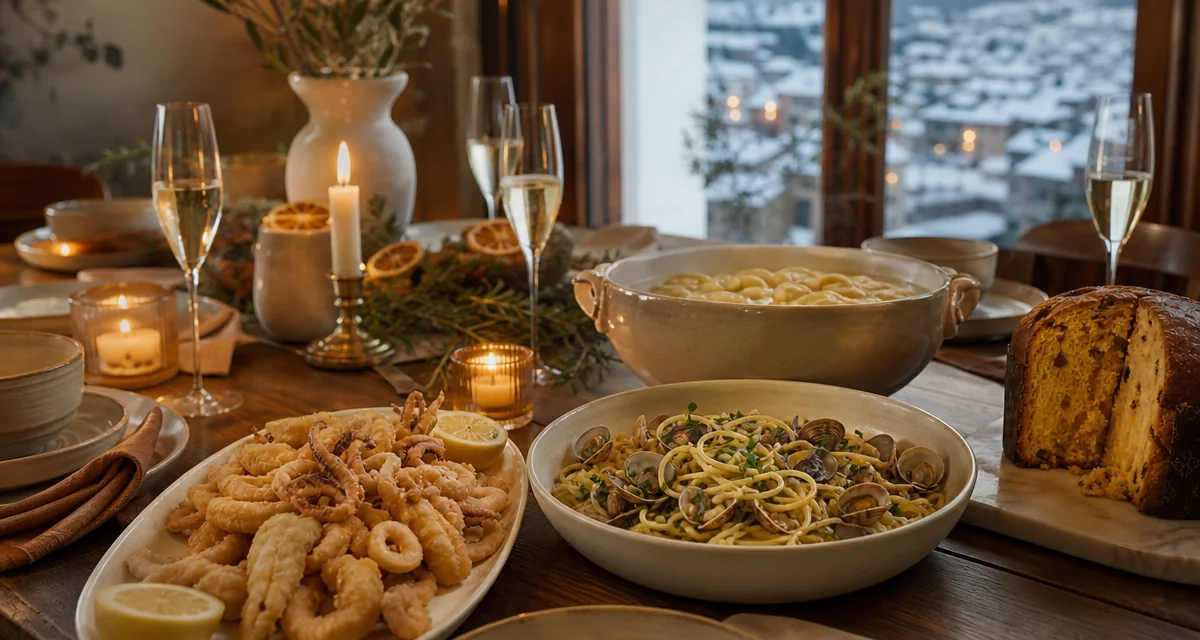
The best Easter lunches lean into what late March actually offers. A chef in Tuscany might open with fried artichokes and a slice of pecorino with raw broad beans, follow with pappardelle in a slow lamb ragù, serve the roast lamb with rosemary potatoes, and finish with colomba or a ricotta tart. In the south the same structure could start with casatiello and end with pastiera. Lunch, dinner and breakfast are all bookable as single events, priced in three tiers: Essential (4 courses), Taste of Italy (5 courses, the regional showcase most of our Easter guests choose) and Luxury (6 or more courses, with premium cuts and a fuller wine flight).
- Choose your feast day first: Easter Sunday for tradition, Holy Saturday evening to avoid the holiday rate, or Pasquetta for a relaxed garden lunch.
- Count adults and children separately, since in Italy children are not counted in the client price.
- Share allergies and dislikes in a short written list, including anyone who will not eat lamb or offal.
- Tell the chef about your kitchen: number of hobs, oven size, an outdoor grill or a wood oven if the villa has one.
- Ask for one regional Easter dish you've never tried, such as casatiello, torta pasqualina or coratella, so lunch becomes part of the trip.
- Confirm the serving time after the clocks go forward on 28 March, so the chef and your guests agree on what '1pm' means.
Two other formats suit an Easter stay. Families who want a hands-on afternoon can book our Pasta Class + Dinner, entirely at your villa or apartment: a 2-hour class in your kitchen in which the chef teaches two fresh pasta shapes, one long (such as tagliatelle or pici) and one short (such as orecchiette or farfalle), then prepares two sauces, a few regional antipasti and a homemade tiramisù while the pasta rests, and serves the whole dinner at your own table. Nobody drives anywhere, children can join in or wander off to play, and you drink the wines you bought in the village. The indicative guide price in our booking form is €150 per adult and €60 per child. Groups staying the whole of Easter week can book a multi-day stay instead, choosing which meals the chef cooks each day. Those quotes are custom and depend on whether the chef stays at the property, commutes daily from nearby, or books lodging close by.
How much does a private chef cost for Easter in Italy?
A private chef for Easter in Italy costs 35% more than on an ordinary date when you book Good Friday, Easter Sunday or Pasquetta, because our booking platform treats all three as holiday dates. For 6 guests at a Tuscan countryside villa, a Taste of Italy lunch is around €162 per person on Easter Sunday 2027, and about €120 on Holy Saturday.
Group size moves the per-person price as much as the date does. At 10 guests the same Taste of Italy menu drops to around €135 per head on the holiday dates. City addresses in Florence and Rome carry a €15 per person supplement before the holiday rate is applied, so 6 guests in a Florence apartment pay around €183 per person for Taste of Italy on Easter Sunday. Children are not counted in the client price in Italy. Christmas works differently, with fixed group prices on 24–26 December, which is why our Christmas in Italy guide quotes other figures. For the full year-round picture, see how much a private chef costs in Italy.
| Tier | Courses | 6 guests, holiday date | 6 guests, Holy Saturday | 10 guests, holiday date | 10 guests, Holy Saturday |
|---|---|---|---|---|---|
| Essential | 4 | €129 | €95 | €115 | €85 |
| Taste of Italy | 5 | €162 | €120 | €135 | €100 |
| Luxury | 6 or more | €243 | €180 | €203 | €150 |
Those figures are indicative per-person prices from the same table our booking form uses, and the final quote reflects your menu and wines. To book a Tuscany private chef experience for Easter Sunday, send your request by early February 2027, since the chefs who know the regional dishes best fill their holiday weekend first.
Why this matters for your Easter in Italy
Easter is the moment Italy comes back outdoors: the first long lunches on the terrace, the bells after three silent days, rosemary lamb in every farmhouse kitchen. It is the most family-centred day of the Italian year, and the more authentic you want it, the harder it is to find a seat.
That is where Chef On Demand fits in. Rated 4.7 out of 5 on Trustpilot, we bring chefs into the villa, farmhouse or apartment you've already rented, and many of them come from Michelin-starred kitchens, Gambero Rosso–rated restaurants, MasterChef and Top Chef Italia. Explore private chefs across Italy and you'll find cooks who can make the casatiello of Naples, the lamb of the Roman Campagna or the Tuscan Easter table of a Chianti grandmother. Watch the Scoppio del Carro in the morning, drive into the hills, and by 1pm (summer time) sit down to a lunch of artichokes, lamb and colomba with nobody in your group on their feet but the chef.