What does villa paella catering in Marbella actually involve?
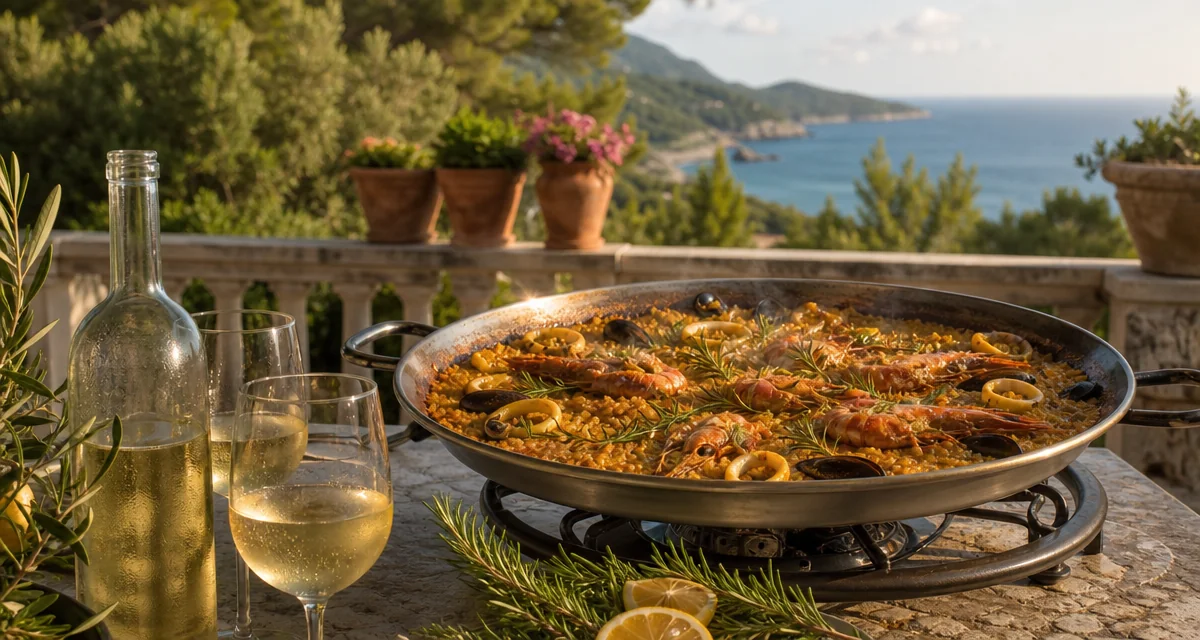
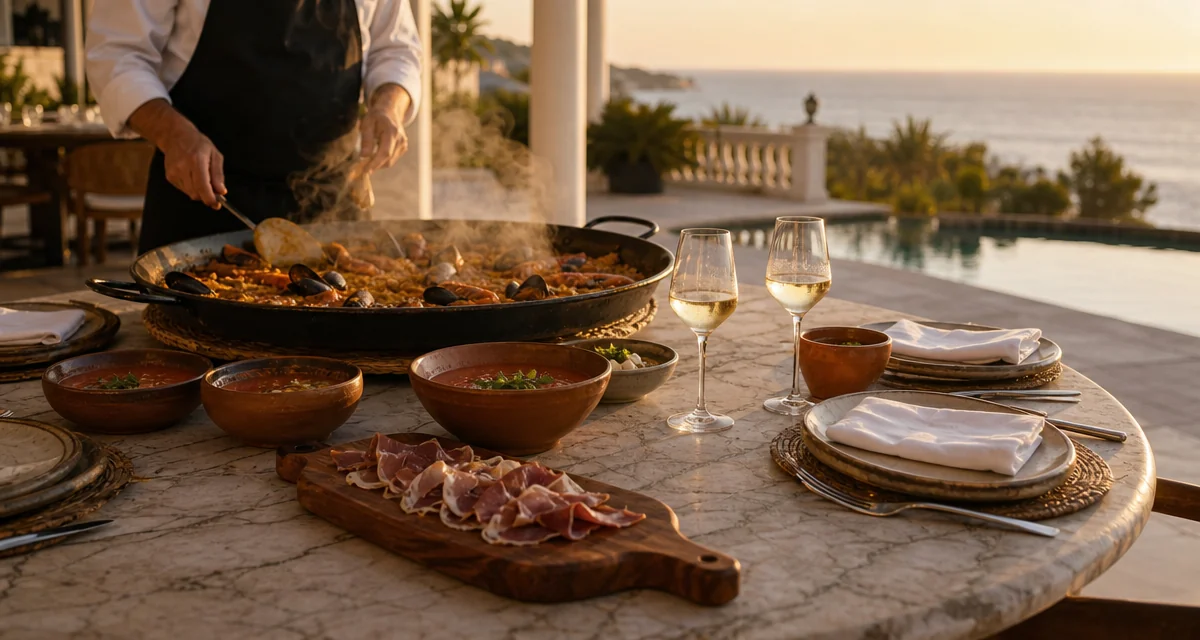
Villa paella catering on the Costa del Sol means a private chef brings the groceries, the gas burner or a wood brasero, the wide steel pan, the rice and the saffron to your rented villa, then cooks the paella from raw in front of your group before plating and serving it. There is no restaurant, no transfer, and no shared cohort, because the cooking is the entertainment. A good chef arrives 60 to 90 minutes before service to mise en place, builds the sofrito base, layers the rice and stock, and times the finish so the socarrat (the prized caramelised crust at the bottom of the pan) forms just as guests sit down. Marbella, the resort city at the heart of the Costa del Sol coastline in Andalusia, is unusually well suited to this format because so many holiday properties come with generous terraces, outdoor kitchens and sea views that turn a working pan into theatre. The chef handles everything, from the morning market shop to the live cook, the service and the clean-up, so you and your group never leave the villa or lift a finger. That last detail matters more than people expect, because a villa terrace at golden hour is exactly the setting you booked the property for.
Which paella should you order, and what is authentic?
The honest answer surprises most visitors: the original paella valenciana contains no seafood at all. It is the rice dish born in the paddies around the Albufera lagoon south of Valencia, traditionally made with chicken, rabbit, snails, green beans and white beans, coloured and perfumed with sweet paprika and a few threads of saffron. The coastal seafood version you will see all over Marbella, paella de marisco, is a later evolution loaded with prawns, mussels, clams and squid, and there is also a mixed paella that combines meat and shellfish. None is more correct than another for your villa, but knowing the difference lets you brief your chef precisely. What truly separates a great paella from a tourist-trap one is the rice. Authentic versions use a short, round grain such as bomba, Calasparra or Senia, varieties that absorb up to three times their volume in stock while staying firm and separate rather than turning to risotto. The other non-negotiable is that the rice is never stirred once the stock goes in, because stirring destroys the socarrat. If the article you read elsewhere skips the rice question entirely, it is selling you a tray, not a paella. Decide your variety, confirm the rice, and the rest takes care of itself.
People ask me for seafood paella and then taste a real valenciana with rabbit and snails and change their order on the spot. The pan, the bomba rice and the patience to never stir it, that is ninety percent of it. The view from a Marbella terrace does the rest. Chef Alejandro, Marbella-based ambassador for Chef On Demand Costa del Sol
How much does paella catering in Marbella cost?
Villa paella catering in Marbella is priced per person and scales with group size, menu and how premium the ingredients are, rather than a single flat rate. Across the Costa del Sol you will see private-chef paella experiences quoted from roughly the same level as a generous mid-range tasting menu on the island, climbing sharply once you add lobster, gambas de Huelva or an Iberico jamon carving station. Two structural rules shape every quote. First, group size: a paella for 8 guests costs noticeably more per head than the same menu for 20, because the chef's time, travel and set-up are fixed costs spread across more covers. Second, the minimum: most chefs apply a minimum charge at around 10 guests, so a party of 6 often pays the 10-cover rate. Because Chef On Demand builds each Marbella quote bespoke rather than from a fixed price list, the right way to read a number is always to ask for two group-size points (your real number and one higher) so you can see how the per-head figure moves. A typical villa paella for a holiday group also bundles in antipasti-style Spanish starters, a salad, and a simple dessert, which is why comparing it course-for-course with a restaurant bill, rather than dish-for-dish, gives you the fairest picture. We will not quote you a single per-person figure here, because an honest number depends on your party and your menu, and a made-up one would help nobody.
- Confirm the rice variety: insist on bomba, Calasparra or Senia, never long-grain.
- Choose your paella type up front: valenciana (chicken, rabbit, snails), de marisco (seafood) or mixed.
- Check the minimum guest count and how your real group size changes the per-head price.
- Ask what the heat source is and whether the chef brings a freestanding paella burner for your terrace.
- Clarify what is included beyond the pan: starters, salad, dessert, sangria or wine, and clean-up.
- State all allergies and dietary needs in a written list, especially shellfish, which is central to marisco paella.
| Factor | Private chef at your villa | Marbella restaurant | Generic catering company |
|---|---|---|---|
| Where you eat | Your villa terrace or pool, sea view included | Their dining room, fixed table time | Your villa, but food often arrives pre-cooked |
| The cooking | Live on-site, socarrat formed at the table | Cooked in their kitchen, plated for service | Frequently cooked off-site and reheated |
| Group privacy | Only your group, fully private | Shared room with other diners | Private, but no chef performance |
| Personalisation | Variety, rice, allergies tailored to you | Limited to the printed menu | Set packages, little flexibility |
| Best for | Special occasions, families, milestone trips | A night out away from the villa | Large volume, lowest cost per head |
What is included, and what should you provide?
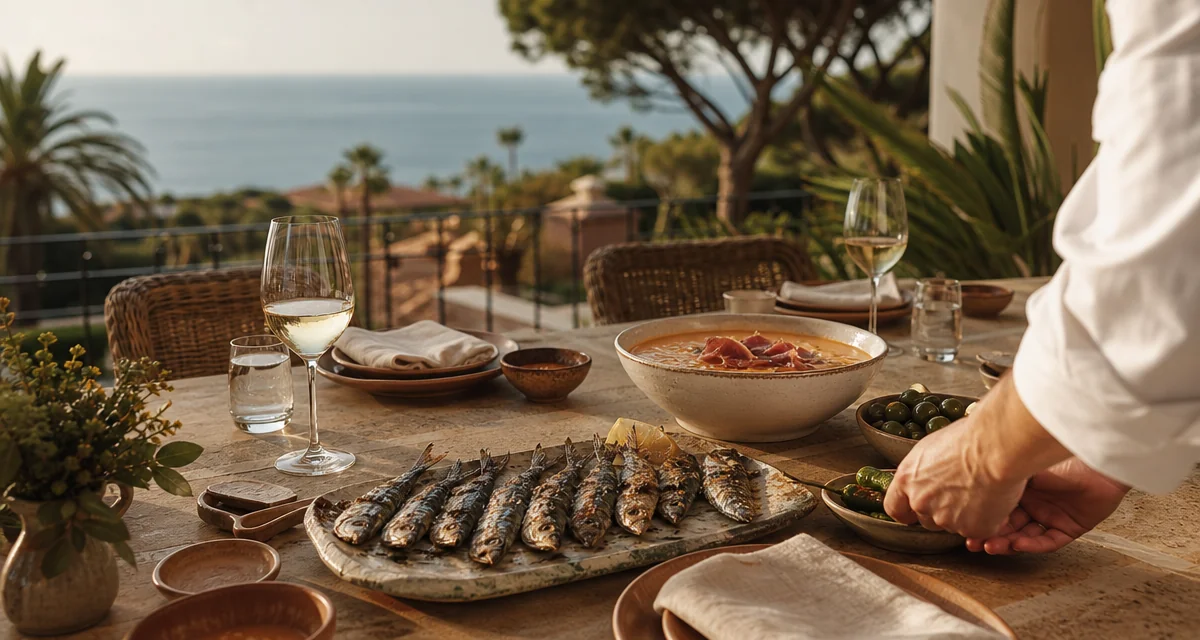
A well-run villa paella service includes far more than the rice. The chef brings the groceries bought fresh that morning, the paella pan and the heat source, all the cooking equipment, the live cook, the plating, the service and the full clean-up, so your villa kitchen is left exactly as it was found. Most Marbella paella menus also bundle a short run of Spanish starters such as pan con tomate, a wedge of Manchego or a plate of jamon, a crisp salad alongside the rice, and a simple dessert, often fresh seasonal fruit or a creamy crema catalana. Drinks vary: some chefs include a jug of red sangria, while wine pairings (a chilled Rueda Verdejo with seafood paella, a soft Rioja with the valenciana) are usually offered as an add-on or simply pulled from the villa cellar. From your side, the chef needs very little: a level outdoor space for the pan, access to running water and a bin, a dining table set for your group, and an honest brief on numbers and allergies at least 48 hours ahead. If your villa sits in the hills behind San Pedro or up towards Ojen, flag the access and parking too. None of this is complicated, but a clear brief is what turns a good paella into a flawless one.
How do you book, and when should you do it?
Booking a paella chef for a Marbella villa works best when you treat it like any other peak-season reservation: early. Across our network the average lead time is 7 to 14 days for the high season of June to September, and the most in-demand weekends along the Golden Mile and around Puerto Banus go first. The process itself is short. You share your villa location, your dates, your group size and the kind of paella you want, and you receive personalised proposals back, typically within 24 hours, from verified chefs who actually cover your area. Chef On Demand operates a curated network of chefs across the Costa del Sol, many of whom have trained in professional and fine-dining kitchens, and the platform carries a 4.7 out of 5 Trustpilot rating based on 800+ guests served since 2025. When the proposals arrive, compare them on the things that matter from the checklist above (rice, variety, what is included, the heat source) rather than on headline price alone. Confirm the menu and the timing, send your allergy list, and that is essentially it. If you are weighing a paella night against a sit-down menu, our companion guide to a Marbella villa dinner party walks through the alternative, and if you are travelling the wider Balearics our Mallorca paella catering guide covers the same format on the islands.
Why this matters for your Marbella holiday
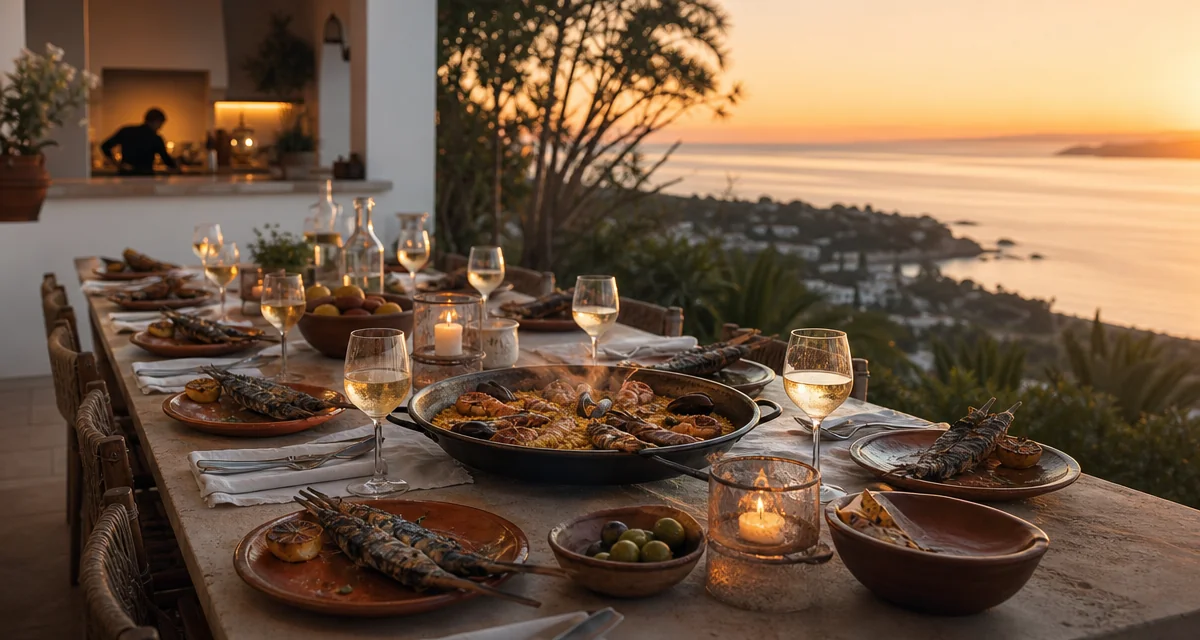
The reason villa paella has overtaken the restaurant dinner for so many groups on the Costa del Sol is simple: it gives you back the thing you actually paid for, which is the villa itself. You rented a terrace with a sea view, a pool that glows at dusk, a garden built for long evenings, and a generic restaurant trip trades all of that for a car journey and a shared dining room. A live paella keeps you exactly where you want to be, with only your own people, around a pan that becomes the centre of the night. Children can watch the rice go in, grandparents can stay seated, and the chef carries the whole thing while you pour another glass of Verdejo. It is the difference between visiting Spain and living in it for an evening. If you are still deciding what your villa dining should look like, start by browsing private chefs across Marbella, read how the wider service works through our Costa del Sol chef network, and when you are ready to compare other destinations and formats, our private chef hub gathers everything in one place. Picture it one more time: the sun low over the bay, saffron in the air, the socarrat just starting to sing, and not a single reason to leave your terrace. To book a Marbella paella experience, you only need to tell us where you are staying.