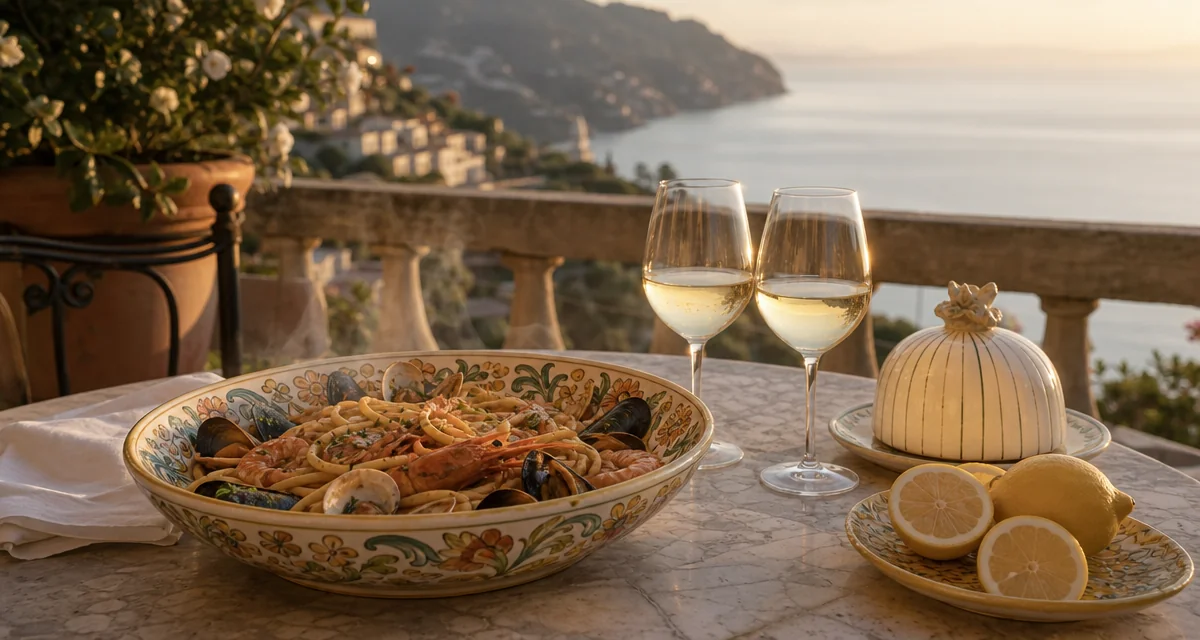
How many courses are in a private chef dinner?
Most private chef dinners are three to four courses: a starter, a main, and a dessert, often with a small opening bite or a course between. Five-course menus suit anniversaries and landmark birthdays, while six or seven courses turn the meal into a full tasting menu for a real celebration. The course count is the single biggest lever you have over the evening. Fewer courses mean a warmer, more conversational pace where the food supports the table talk; more courses turn dinner into the event itself, with each plate a small performance. In our network across Italy the median booking lands at four to five courses for 4 to 12 guests, which is the sweet spot between menu progression and a kitchen that can keep everything moving without a queue of cooling plates. If you are still choosing, start from the feeling you want rather than a number, because a good private chef dinner menu is built backwards from the mood of the night, not forwards from a template.
What does each Italian course actually do?
A course is not just another plate; each one has a job. The classic full-course structure moves from light to rich and back to sweet, so your palate and your appetite are led rather than ambushed. Italian dinners follow their own logic, which is where a chef trained in Italy differs from the French appetizer-soup-salad-main model most guides describe. Understanding the Italian sequence helps you read a proposed menu and know exactly what you are getting for each price tier.
The Italian five-course order: antipasto to dolce
A traditional Italian meal runs in a fixed order. The antipasto is the opener served before the meal proper, think crostini toscani (toasted bread topped with a warm chicken-liver pâté, a Tuscan staple) or cured meats and pecorino. The primo or first course is starch-led and rarely meat: pasta, risotto, or soup such as pappa al pomodoro (a thick Tuscan bread-and-tomato soup). The secondo is the protein main, in Tuscany often bistecca alla fiorentina, a thick T-bone from Chianina cattle grilled rare over embers. Alongside it comes the contorno, a vegetable side that accompanies the main but is not counted as its own course. Dinner closes with the dolce, the dessert, classically cantucci (twice-baked almond biscuits) dunked in Vin Santo, a sweet Tuscan dessert wine. This is why a five-course private chef menu can reach your table as six or seven small plates, because the side and the coffee ride along without inflating the count.
Amuse-bouche and palate cleanser: the extra touches
Two French terms show up on tasting menus and confuse a lot of guests. An amuse-bouche is a single, chef-chosen bite served before the antipasto, not chosen by you, meant to wake up the palate and signal the ambition of the meal. A palate cleanser, often a small sorbet or granita, arrives between the richer courses to reset your taste before the next plate. Neither is counted in the headline number, so a menu described as six courses might actually deliver an amuse-bouche, five numbered courses, a palate cleanser, and petit fours with coffee. On our Luxury tier these touches are standard; on a four-course Essential dinner they are usually skipped to keep the evening warm and unhurried. If you love the theatre of a proper degustazione, it is worth asking your chef whether these extras are included, because they are the details that make a private chef tasting menu feel like a restaurant experience in your own villa.
People fixate on the number, but the real skill is the rhythm. Four courses paced beautifully beat seven courses rushed to the table every time. Chef Lorenzo, Florence-based ambassador of Chef On Demand Tuscany
How many courses by occasion?
The occasion should choose the course count, not the other way around. A casual family dinner on your first night in the villa wants three or four courses so nobody is exhausted by dessert and the children can peel off to bed. A milestone, an anniversary or a landmark birthday, justifies five courses, where the extra plates create a sense of ceremony without becoming a marathon. A genuine celebration, a proposal, a reunion, the night the whole trip was built around, is where six or seven courses earn their keep, because the meal itself becomes the memory. Group size matters too: the larger the table, the more a longer menu risks pacing problems, so for a private chef dinner party of ten or more we often recommend five well-executed courses over seven ambitious ones, a call the chefs across our Tuscany network make routinely. Below is the pattern we see most often across bookings.
- Choose 3 courses for a relaxed weeknight supper, a first-night arrival, or a group with young children.
- Choose 4 courses for a comfortable dinner party where the food matters but conversation leads.
- Choose 5 courses for anniversaries, landmark birthdays, and dinners that need a sense of occasion.
- Choose 6 to 7 courses for proposals, reunions, and celebrations where the meal is the main event.
- Cap it at 5 courses for tables of 10 or more, where pacing is harder and slower service shows.
How long does a private chef dinner last?
At the table, a private chef dinner lasts roughly two to three hours, and the count drives the clock. A four-course dinner runs about 2 to 2.5 hours from first plate to dessert; a five-course menu lands around 2.5 to 3 hours; a six or seven-course tasting menu stretches to 3 to 3.5 hours. Chefs aim to pace each course 13 to 18 minutes apart, the interval that industry service data links to the highest guest satisfaction, with the experience dropping off sharply once gaps pass 22 minutes. Remember the chef's total on-site time is longer than your time at the table: plan for the chef to arrive 60 to 90 minutes before service to set up and prep, and to stay 30 to 45 minutes after dessert to clean the kitchen, so a three-hour dinner is closer to a four to five-hour visit. If you have a hard stop, a sunset boat, a babysitter, tell the chef when you book, because a good chef can compress a five-course menu into a tighter window without it feeling rushed. This is exactly why asking how long does a private chef dinner last is as useful as asking how many courses.
How much does each course tier cost?
Price tracks the course count, the ingredients, and, heavily, your group size, because a smaller table pays more per head. For our Essential menu of 4 courses in Tuscany, expect around €110 per person at 4 guests, dropping to roughly €95 per head at 6 guests and €85 at 8. The 5-course Taste of Italy menu runs about €140 per person at 4 guests, around €120 at 6, and €110 at 8. The 6-plus-course Luxury menu, the one that brings truffle, seafood and aged cuts, sits near €200 per person at 4 guests, about €180 at 6, and €160 at 8. Every quote from our network of Tuscan private chefs includes the chef shopping at local markets, cooking on-site, serving, and cleaning up, so the per-head figure is the all-in cost, not a starting rate. Prices rise for Christmas, New Year and Easter, and a premium city location can add a little per person, which is why we quote each event individually rather than publishing a flat menu price. The tiers are worth comparing side by side before you decide.
| Tier | Courses | Time at the table | Per person (6 guests) | Best for |
|---|---|---|---|---|
| Essential | 4 courses | 2 to 2.5 hours | around €95 | Relaxed family suppers, first nights |
| Taste of Italy | 5 courses | 2.5 to 3 hours | around €120 | Anniversaries, landmark birthdays |
| Luxury | 6 or more courses | 3 to 3.5 hours | around €180 | Proposals, reunions, big celebrations |
When should you add or cut a course?
Once you have a base menu, three signals tell you whether to add or cut. Add a course when the occasion outgrows the food: if a simple dinner quietly became the celebration of the trip, a cheese course before dessert or an amuse-bouche to open gives the evening the ceremony it now deserves. Add one, too, when you have a long, warm evening and no hard stop, because the extra 20 minutes are a pleasure rather than a chore. Cut a course when the table skews toward young children, jet lag, or a group that has told you plainly they want to eat, drink, and talk rather than watch plates arrive. Cut one when your group is 12 or more, where an extra course multiplies the pacing risk across a big table. And cut without hesitation if a dietary need makes a course awkward: a beautifully simple four-course menu everyone can eat beats a five-course one where somebody watches a plate go by. Your chef will guide these calls, but knowing the levers means you brief them well, which is the difference between a menu that fits your night and one that merely fills it.
Why this matters for your Italian holiday
The number of courses is really a question about what kind of night you want in the place you have travelled so far to reach. A three-course supper on the terrace lets you sink into the holiday; a six-course tasting menu makes an ordinary Tuesday in Tuscany the story you tell for years. Both are right, and the only wrong choice is booking a menu that fights the mood of your group. That is the whole point of a chef who comes to you: the meal bends to your evening, not the other way around, and the antipasto lands when your table is ready, not when a restaurant floor plan says so. If you are weighing it up, our guide to hiring a private chef in Tuscany walks through menus, timing and logistics in one place, and you can browse chefs by town across our private chef network in Italy, from Florence and Siena to the vineyards around Montalcino. With a 4.7/5 Trustpilot rating based on 800+ guests served since 2025, our chefs across Tuscany have paced enough terraces to know that the best dinners are measured in laughter, not in courses. Decide the feeling first, and the number will look after itself, one golden plate at a time as the vines go dark.