What food is Sardinia most famous for?
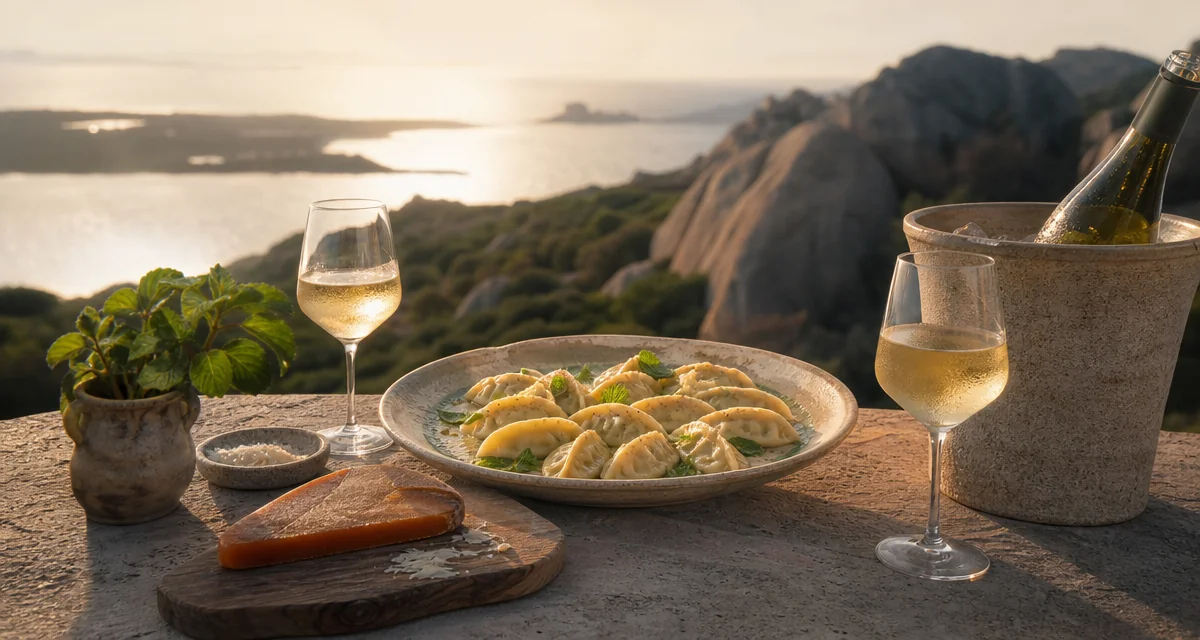
Sardinia is most famous for porceddu, its spit-roasted suckling pig, alongside pane carasau flatbread, culurgiones pasta and seadas for dessert. These four dishes trace back to a shepherd culture that shaped the island's cooking far more than the sea ever did. Porceddu is a young pig (roughly 4 to 6 kg) slow-roasted for 4 to 5 hours over juniper, myrtle or olive wood, then rested for 20 minutes before carving, until the skin crackles and the meat pulls apart; it is the centrepiece of every Sardinian feast. Pane carasau, also called carta da musica (music-sheet paper) for its wafer thinness, is a twice-baked flatbread that shepherds carried for weeks in the mountains because it keeps almost indefinitely. Culurgiones are hand-pleated pasta parcels, sealed with a distinctive wheat-ear crimp and filled with potato, aged pecorino and mint, a technique so specific it earned a protected geographical mark. And seadas, a fried semolina pastry stuffed with young cheese and drenched in bitter Sardinian honey, closes almost every traditional meal. This is what to eat in Sardinia if you only have one dinner and want the island's whole story on a single table.
Sardinia's land cuisine: the shepherd tradition of the interior
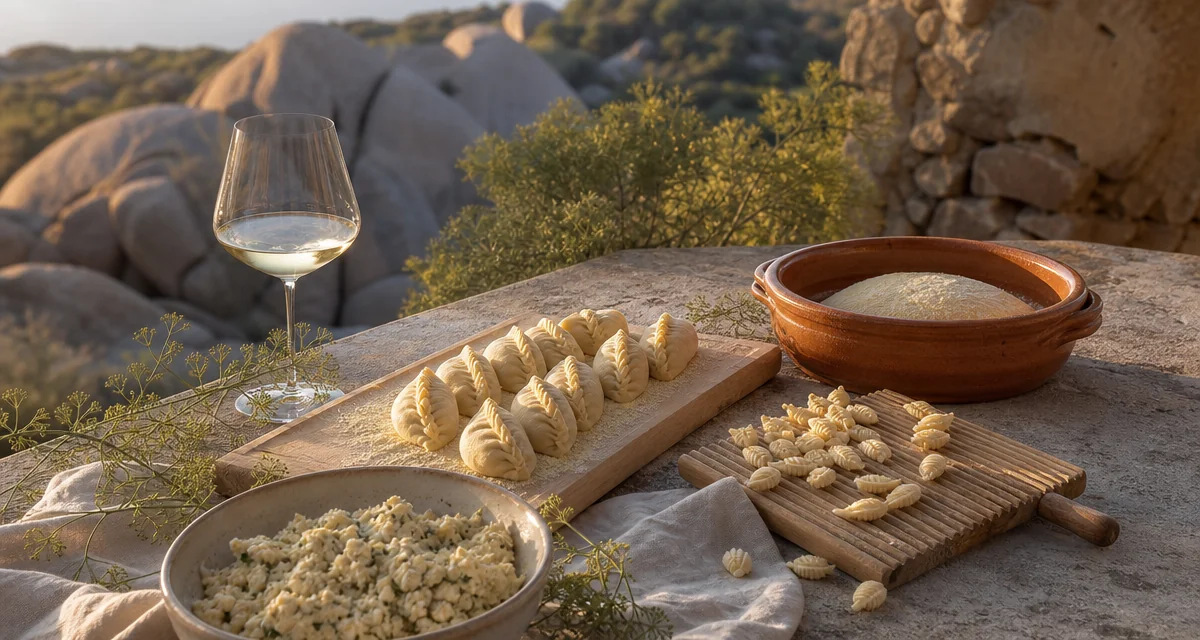
The heart of Sardinian cooking sits inland, in Barbagia, the rugged mountain zone around Nuoro and the Gennargentu massif where sheep and pig herding has continued almost unchanged for centuries. This is where porceddu belongs, cooked in the open air, and where the island's cheeses are made: pecorino sardo DOP, a firm sheep's-milk cheese sold young and mild or aged sharp and crumbly, plus the notorious fermented styles the locals keep for themselves. Pasta here is malloreddus, the small ridged 'Sardinian gnocchi' (also called gnocchetti sardi) shaped on a straw basket and served alla campidanese with a saffron-and-fennel pork sausage ragu. Soups carry the shepherd logic too: zuppa gallurese, despite the name, is not a soup but a baked casserole of pane carasau layered with pecorino and ladled sheep's broth until the bread drinks it all in. To taste this cooking at its source, look for an agriturismo, a working farm that also feeds guests from its own flock and fields, or bring a chef who trained in the interior to your rental near Olbia. Sardinia is a designated Blue Zone, one of the world's rare longevity hotspots with an unusual share of residents living past 100 years, and this lean, herb-heavy pastoral diet is a big part of why.
Where does culurgiones come from?
Culurgiones come from Ogliastra, the wild, sparsely populated province on Sardinia's central-east coast where the mountains fall almost straight into the sea. The dish is a point of local pride: the potato, pecorino and mint filling reflects a highland pantry, while the hand-sealed spighitta (little wheat-ear) crimp along the top is a skill passed down through generations and now protected under a European geographical mark. Traditionally they are dressed simply, with tomato and basil or just sage butter and grated cheese, so nothing competes with the parcel itself. If a chef offers to teach your group the crimp, say yes; it is the single most satisfying piece of hand-work in Sardinian cooking, and a highlight of any Sardinia villa cooking class.
Sardinia's sea cuisine: bottarga, fregola and the coast
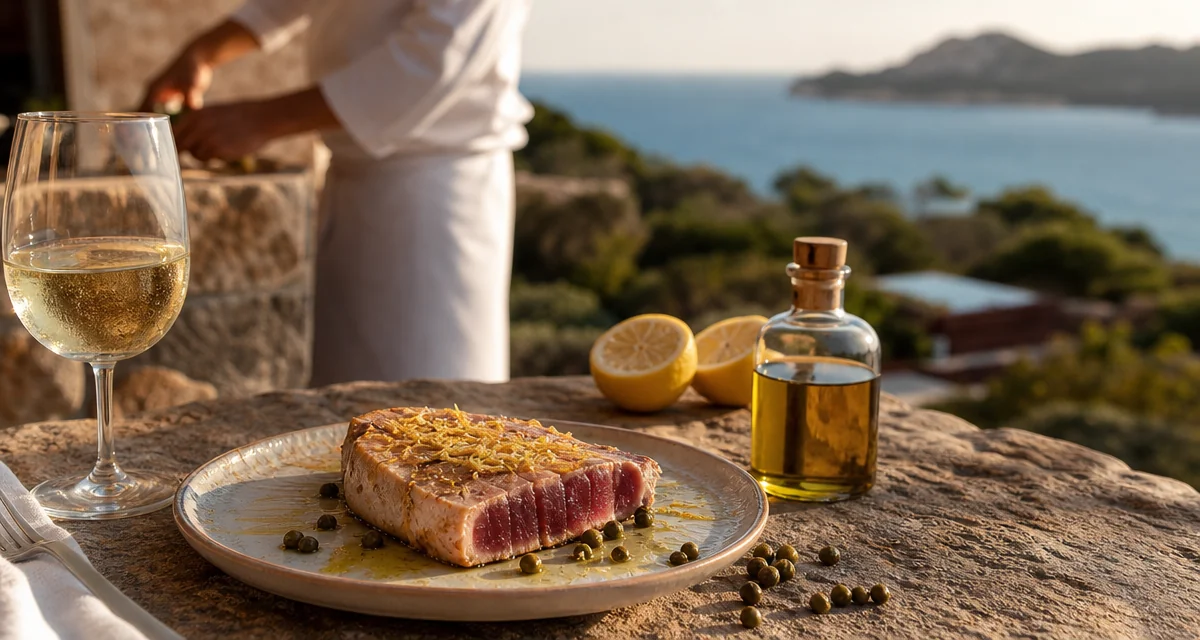
For centuries Sardinians treated the coast with suspicion, keeping their backs to a sea that brought raiders, so the island's seafood cooking is younger and more concentrated than its mountain food, but no less brilliant. Its star is bottarga di Cabras, the cured, pressed and sun-dried roe of grey mullet from the Cabras lagoon near Oristano, about 90 km up the coast from Cagliari, shaved paper-thin over pasta or eaten with a drop of olive oil; locals call it the island's Parmesan and its Caviar in the same breath. The coastal signature dish is fregola con arselle, toasted semolina pearls (fregola looks like large, roasted couscous and tastes gently nutty) simmered with small clams, garlic, tomato and a thread of saffron. Then there is lobster: aragosta alla catalana in Alghero, a legacy of the town's Catalan past, serves the meat cold with tomato and sweet onion. Down south around Cagliari and the Campidano plain, sea urchins (ricci) are a winter obsession, tossed through spaghetti in the first cold months of the year. This is the other half of what to eat in Sardinia, and the half most travellers meet first because it lives where the beaches are.
Sardinian desserts: seadas, pardulas and Sardinian honey
Sardinian desserts lean on sheep's-milk cheese, almonds and honey rather than cream. Beyond seadas, look for pardulas (also called casadinas), little baked tartlets of fresh ricotta or cheese scented with saffron and lemon or orange zest, traditionally an Easter sweet now eaten year-round. Almond biscuits called amaretti and gueffus appear at every celebration, and the local Sardinian honey, often the bitter corbezzolo (strawberry-tree) variety, is prized enough to be a Slow Food product in its own right. Ask your chef to finish a dinner with seadas and a small glass of chilled mirto rather than a heavy cake; it is lighter, more Sardinian and far more memorable.
What are the iconic dishes area by area?
Sardinia is really four food regions stitched together, and knowing which dish belongs where turns a good trip into a great one. In the north, Gallura, the granite hinterland behind the Costa Smeralda, is the land of zuppa gallurese, suppa cuata and the grape that made the island famous: Vermentino. In the centre-east, Barbagia is porceddu, pecorino, malloreddus and Cannonau country. Down the east coast, Ogliastra owns culurgiones and some of the island's oldest bread traditions. And in the south, the Cagliari and Campidano area is the seafood capital: fregola con arselle, bottarga, burrida (dogfish in a walnut-and-vinegar sauce) and sea urchins. Traditional Sardinian dishes rarely travel far from home, so eating culurgiones in Gallura or fregola in Nuoro means eating a copy, not the original. The table below maps the four areas so you can plan by region, whether you are basing yourself near Arzachena and Porto Cervo or down south by the capital.
| Area | Signature dishes | Wine to drink | Base yourself near |
|---|---|---|---|
| Gallura (north-east) | Zuppa gallurese, suppa cuata, grilled fish | Vermentino di Gallura DOCG | Olbia, Arzachena, Costa Smeralda |
| Barbagia (centre-east) | Porceddu, malloreddus, pecorino, seadas | Cannonau di Sardegna | Nuoro and the interior |
| Ogliastra (east coast) | Culurgiones, pane carasau, roast kid | Cannonau, Nepente di Oliena | Tortoli, Baunei |
| Cagliari / Campidano (south) | Fregola con arselle, bottarga, burrida, ricci | Nuragus, Vermentino, Vernaccia | Cagliari, Pula, Chia |
Guests always ask me for the beach dishes first. Then I cook them a proper Barbagia dinner, porceddu, my grandmother's culurgiones, a good Cannonau, and by dessert they have forgotten the beach entirely. Chef Efisio, Cagliari-based ambassador of Chef On Demand Sardinia
Which Sardinian wines should you drink?
Two wines carry Sardinia, and they map neatly onto the island's two cuisines. Cannonau di Sardegna is the great red, made from the grape known elsewhere as Grenache, deep and warm with notes of dark cherry, myrtle and dried herbs; it is the natural partner for porceddu and aged pecorino, and the version from Oliena in the interior, about 20 km east of Nuoro, is bottled as Nepente. Vermentino di Gallura is the white that put the island on the fine-wine map, becoming Sardinia's first and only DOCG (Italy's top wine classification) in 1996; crisp, saline and citrus-bright, it is made for bottarga, clams and grilled fish. For something rarer, seek out Vernaccia di Oristano, an oxidative, sherry-like wine aged under a natural yeast veil around the Tirso river, traditionally sipped with bottarga or almond sweets. And every meal ends with mirto, the deep-purple liqueur made by steeping wild myrtle berries in alcohol; it is served ice-cold and is as close to a Sardinian ritual as drinking gets. When you book a private chef in Sardinia, ask them to bring a small regional wine flight rather than a single bottle, so a table of 8 guests tastes the island rather than one estate.
- Start with bottarga di Cabras shaved over buttered pasta, paired with a chilled Vermentino di Gallura.
- Order fregola con arselle at least once on the coast; it is Sardinia's most underrated first course.
- Book a porceddu evening inland, ideally at an agriturismo or cooked at your villa by a Barbagia chef.
- Learn to crimp culurgiones by hand; it is the most rewarding cooking skill on the island.
- Finish with seadas and bitter honey, then a glass of ice-cold mirto instead of a rich dessert.
- Match every meal to its area: sea dishes with Vermentino, mountain dishes with Cannonau.
How can you eat these dishes at your villa?
The simplest way to eat the real thing, especially on the Costa Smeralda where restaurant tables in August are scarce and pricey, is to bring the kitchen to your rental. A private chef in Sardinia arrives at your villa or apartment, shops that morning's market for bottarga, clams, pecorino or a whole suckling pig, cooks on-site and serves your group only, then cleans up. A single-event dinner or lunch typically runs 2 to 4 hours for 4 to 12 guests, which is the range we serve most often. If you are staying a week, a multi-day arrangement lets the chef cook a chosen pattern of meals across your holiday (a common rhythm is two or three dinners plus one long lunch, not every meal every day). Costs there depend on lodging logistics: the chef may stay at the property if there are quarters, commute daily where a resident chef lives nearby (common around Olbia and Arzachena), or take a room nearby, and each configuration is quoted transparently rather than as a fixed rate. For international guests who want the memory as well as the meal, there is also the pasta class and dinner format: a two-hour hands-on lesson shaping two pasta types (one long, one short) at your villa, followed by a seated dinner of antipasti, both pastas with their sauces and homemade dessert. We keep exact figures out of this guide; for numbers, see our dedicated Sardinia private chef cost guide.
When is the best season to eat well in Sardinia?
The eating calendar shifts with the pastoral year. Spring, roughly April to June, is peak season for lamb and kid, artichokes and the first pecorino, and it is when Easter tables show off pardulas and roast meats. High summer, July and August, is the coast's moment: clams, sea urchins fade but lobster and grilled fish peak, and every village runs a sagra (a food festival built around one local speciality) where you can taste bottarga, malloreddus or seadas cooked at scale, often feeding 200 people or more in a single evening for a few euros a plate. Autumn brings the grape harvest and, with it, the deepest Cannonau and the start of porceddu season, since roasting a whole pig makes most sense once the summer heat breaks. Winter is quiet, inland and honest: this is when Sardinians eat their richest soups and the fermented cheeses. Book a chef 7 to 14 days ahead for a peak-season date (June to September), because the best Sardinian cooks fill their calendars early, and market availability on the day shapes the menu more here than almost anywhere else in Italy.
Why this matters for your Sardinian holiday
Sardinia is not one cuisine but two, and the gap between them is exactly where most holidays fall short. Stay only on the beach and you meet the sea kitchen, bright and easy but only half the story; venture inland, or bring the interior to you, and the shepherd tradition of porceddu, culurgiones and Cannonau opens up the island's real character. That is why we treat a Sardinian food trip as a small itinerary rather than a single meal: a coastal lunch of clams and Vermentino near the water, a mountain dinner of roast pig and aged pecorino under the stars, a hand-crimped pasta class the children still talk about at home. Chef On Demand runs a verified network of chefs across the island, from Cagliari and Alghero to the Costa Smeralda, rated 4.7 out of 5 by 800+ guests served since 2025, and many trained for 10 years or more in Michelin-starred and Gambero Rosso-rated kitchens before coming home to cook their grandmothers' recipes. Whether you are planning a villa week near Porto Cervo or a quieter stay down south, you can explore the island through our private chef network across Italy or go straight to the Sardinia regional page. Come hungry, split your week between the hills and the shore, and let the island feed you the way it feeds its own: slowly, generously and with a glass of mirto to finish.